
 By Jia Lissa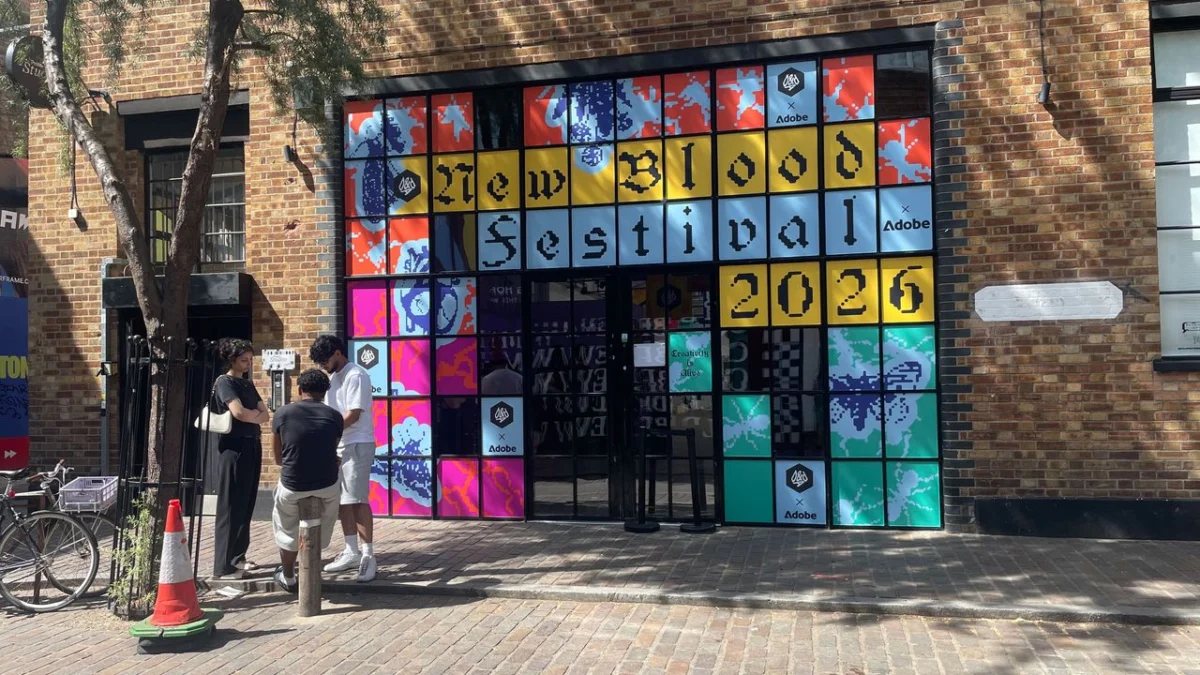
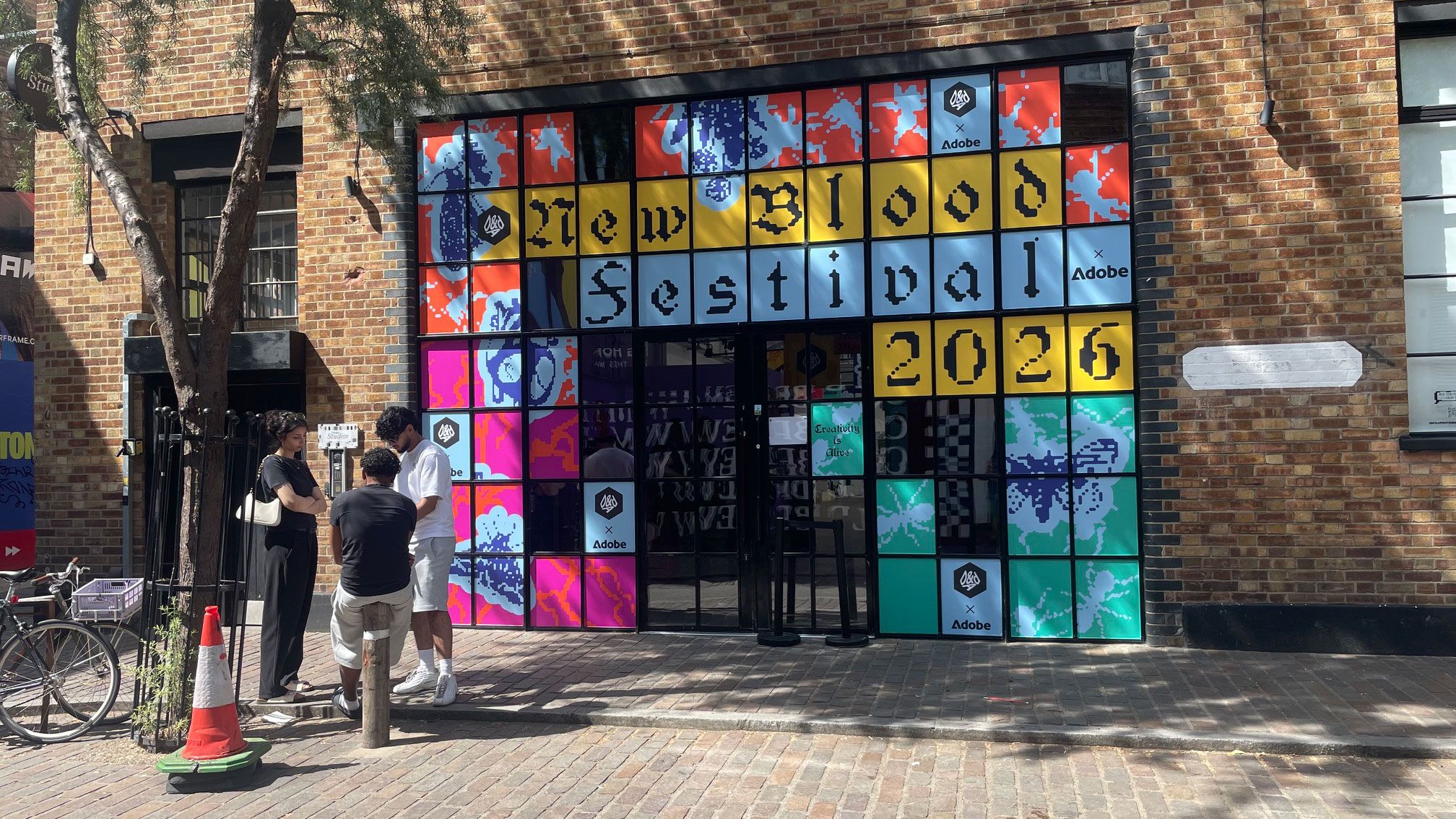
As the creative industry continues to evolve, the importance of physical showcases remains paramount. Having recently served as a judge for the Best Stand category at the D&AD New Blood Festival 2026, I had the privilege of walking the floor and observing dozens of universities from across the United Kingdom as they presented their graduating cohorts. The experience offered a masterclass in exhibition design—and, conversely, a cautionary tale on how easily exceptional student work can be obscured by poor presentation.
The D&AD New Blood Festival is more than just a degree show; it is a high-stakes professional arena where the next generation of creative talent meets the industry’s most discerning eyes. When a stand succeeds, the work breathes, the narrative flows, and the visitors are compelled to linger. When it fails, the brilliance of the individual students is often buried under clutter, confusion, or technical apathy. Based on my observations from this year’s judging process, here is a comprehensive guide to ensuring your graduate stand commands attention, engagement, and industry respect.
1. The Retail Philosophy: Think Like a Shop
The most effective stands at New Blood 2026 shared a common architectural logic: they treated the exhibition space like a premium retail environment. Think of your stand as a boutique or a curated concept store.
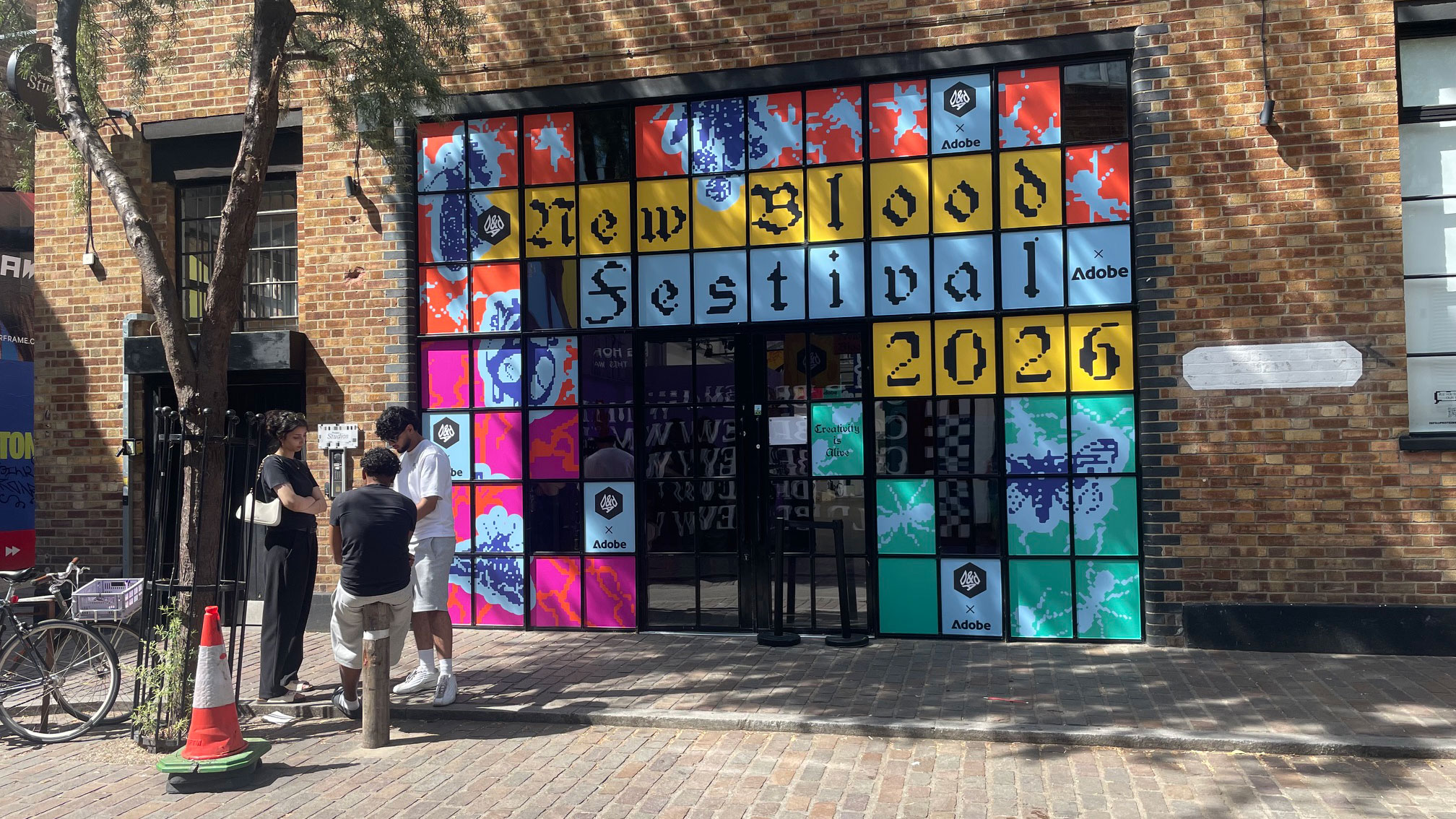
When a visitor walks into a well-designed shop, they are guided by an intuitive flow. The brand identity is unified, yet each individual product—or in this case, student portfolio—is given enough breathing room to be appreciated in isolation. For instance, the University of Plymouth’s stand was a standout example of this. It was effortlessly navigable, with a cohesive visual language that linked the diverse projects together without sacrificing the unique character of individual student pieces.
To achieve this, you must avoid the "wallpaper" trap. Do not crowd every square inch of your wall space with prints. Instead, create a hierarchy of information. Use negative space to frame your best work, and ensure that the transition between different students’ areas feels intentional rather than accidental. If a piece feels out of place, it creates friction; if it belongs, it adds to the overall narrative of the cohort.
2. The Power of Interaction: Creating "Sticky" Moments
In a crowded hall, passive observation is rarely enough. The stands that lingered in my memory long after I had finished my judging rounds were those that invited the viewer to participate.
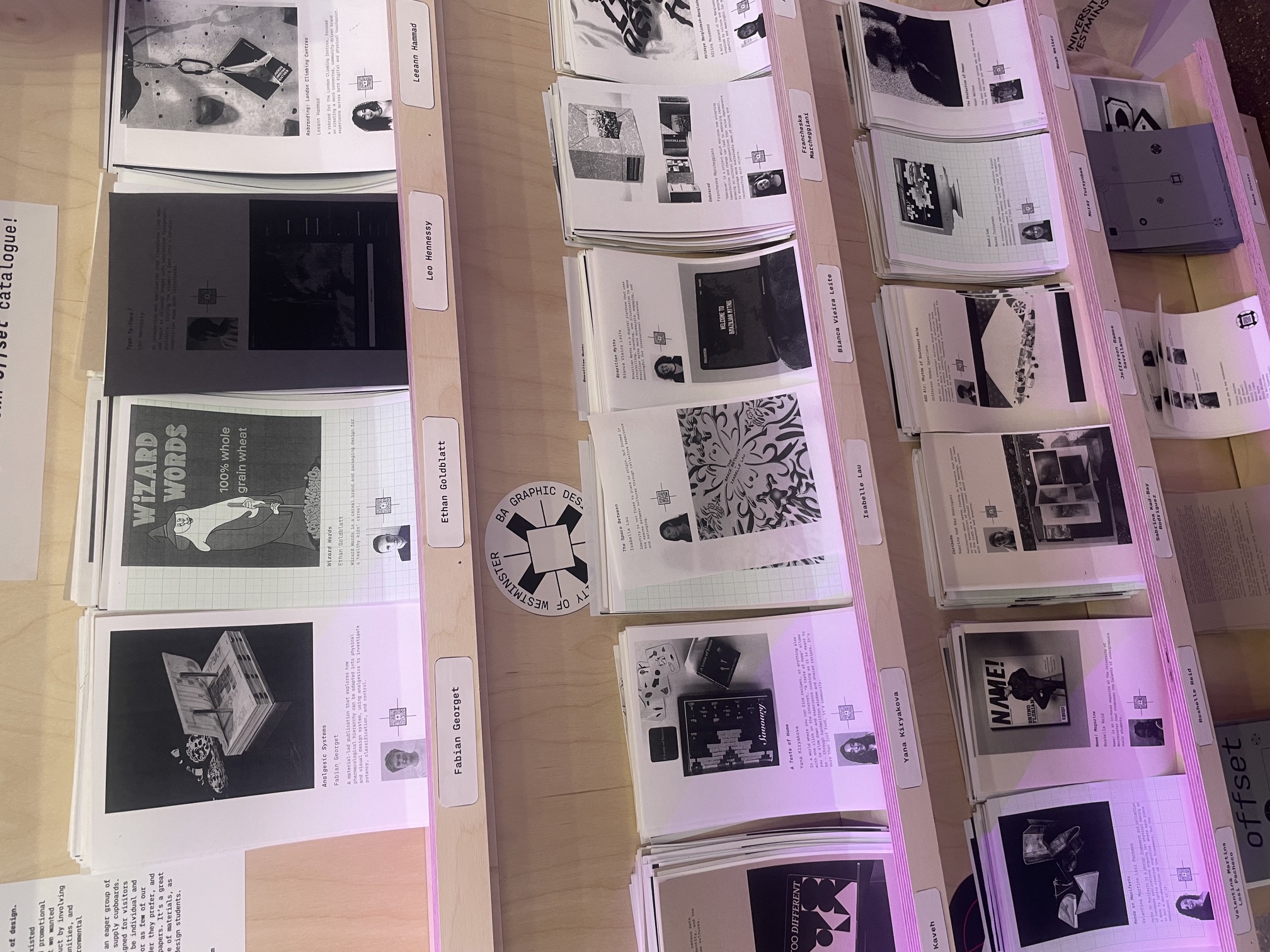
Interaction is the ultimate tool for engagement. The University of Westminster’s BA Graphic Design stand, for example, featured a brilliant modular display where visitors could assemble their own mini-magazines from provided pages. This was a masterstroke: it provided a tangible, branded takeaway that served as a physical reminder of the students’ work, and it transformed a casual bystander into an active participant.
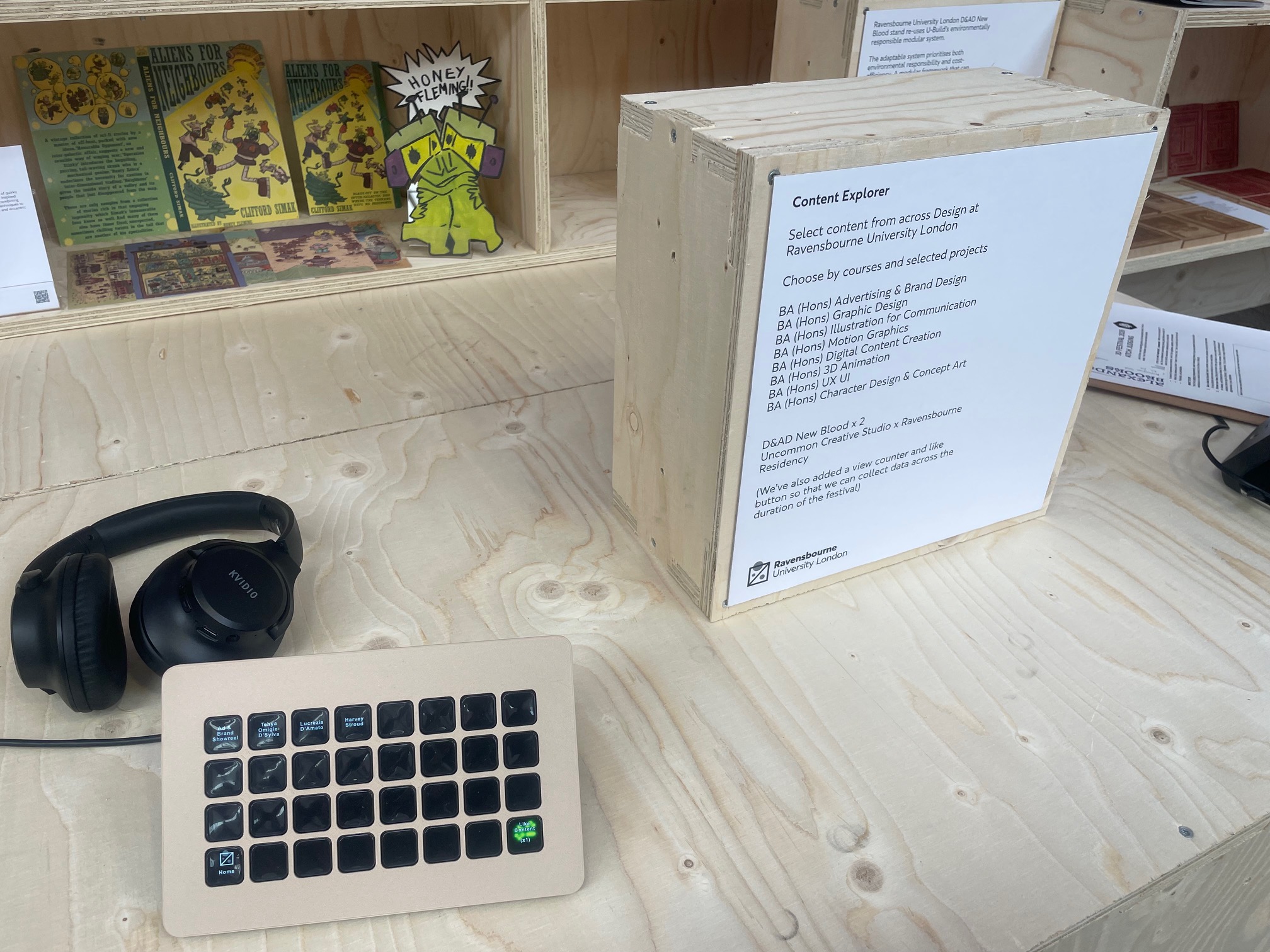
Similarly, Ravensbourne University London utilized an interactive console that moved beyond the standard static monitor. By allowing visitors to toggle through showreels via a tactile interface, they made the act of viewing digital work feel like an experience rather than a chore. Whether it is a touch-screen, a physical puzzle, or a collaborative mural, adding an interactive element ensures that your stand is not just a gallery to be walked past, but a destination to be experienced.
3. Clarity and Curation: The Architecture of Information
One of the most frequent points of failure during the judging process was the lack of clear, legible attribution. There is nothing more frustrating for an industry professional—who may be looking to hire—than finding a piece of work they love but being unable to identify its creator.
The best stands employed a rigorous labeling system. They treated names and contact details as part of the graphic design, rather than as an afterthought printed on a scrap of paper. Conversely, stands that relied on confusing, illegible, or missing labels suffered immensely. If I have to hunt for a name, I am less likely to remember the work.
Furthermore, consider the "boarding pass" approach pioneered by Arts University Bournemouth. By integrating contact details into a thematic design—in their case, a travel-inspired aesthetic—they made the act of sharing information feel like an extension of the creative work itself. Always ensure a QR code linking to your digital portfolio is prominent. In a high-pressure networking environment, reducing the "friction to connect" is essential.
4. Contextualizing the Creative: Defining the Brief
Creative work is rarely produced in a vacuum; it is the result of solving a specific problem. However, many students forget to share the "why" behind their "what."
While space is at a premium, providing a concise, one-sentence summary of the original brief is a massive advantage for judges and recruiters. It transforms your work from a "pretty picture" into a "solution." Understanding the parameters of your project allows an employer to see how you think, how you handle constraints, and how you articulate your process. If a visitor can clearly see both the challenge you were set and how you exceeded it, they are far more likely to see you as a "hireable" professional.
5. Technology: Precision Over Prevalence
We live in a digital age, but the use of technology at graduate shows is often surprisingly sloppy. If your work relies on video, animation, or digital media, you must ensure that your technical setup is bulletproof.
During my walk-through, I encountered several stands that featured headphones—the universal signal for "please listen to my work"—only for the audio to be disconnected, silent, or looped in a way that made it impossible to hear. Other displays were plagued by monitors that had been accidentally clicked off or screens that were so poorly calibrated that the work was invisible under the hall’s lighting.
If you are using technology, treat it as part of your craft. Ensure that videos are set to loop seamlessly, that sound levels are balanced for a busy environment, and that there is no risk of a viewer accidentally navigating away from your content. A broken tech display is a red flag that suggests a lack of attention to detail—a trait that, in the professional world, is often fatal.
6. The Professional Imperative: Why Presentation Matters
The implications of these design choices go far beyond a simple "best stand" award. For the graduate, the D&AD New Blood Festival is often the first real-world test of their professional identity.
When a student cohort takes the time to create a cohesive, interactive, and clearly labeled space, it signals to industry leaders that they understand the importance of user experience (UX) and audience engagement. It tells the viewer: "We understand that our work is meant to be consumed by others, and we have taken the time to make that consumption as seamless as possible."
In contrast, a messy or unclear stand can inadvertently communicate a lack of professional readiness. The industry is not just looking for great art; they are looking for great thinkers, collaborators, and communicators. Your stand is the first piece of communication you will have with your future employer. Treat it with the same rigor, creativity, and strategic intent as you would any high-profile client project.
Summary: A Checklist for Success
As you prepare for your future exhibitions, keep this hierarchy of needs in mind:
- Navigation: Can a stranger understand the layout in 30 seconds?
- Attribution: Is it impossible to miss who created each piece?
- Interaction: Is there a reason for a visitor to stop and engage?
- Context: Does the viewer understand the problem you were solving?
- Technical Integrity: Does every piece of technology work as intended?
By focusing on these pillars, you ensure that your work does not just sit on a wall—it speaks. You are not just presenting a degree show; you are presenting yourself as a professional ready to enter the global creative workforce. Use the space, honor the viewer, and make your mark.
For more insights into professional development and career progression in the creative sector, be sure to read my previous analysis on 6 things to do at your degree show, which remains a critical resource for any graduate looking to navigate their first year in the industry.
 Raul Delapena Setiawan
  Ammar Sabilarrohman
  Muslim