
 By Nana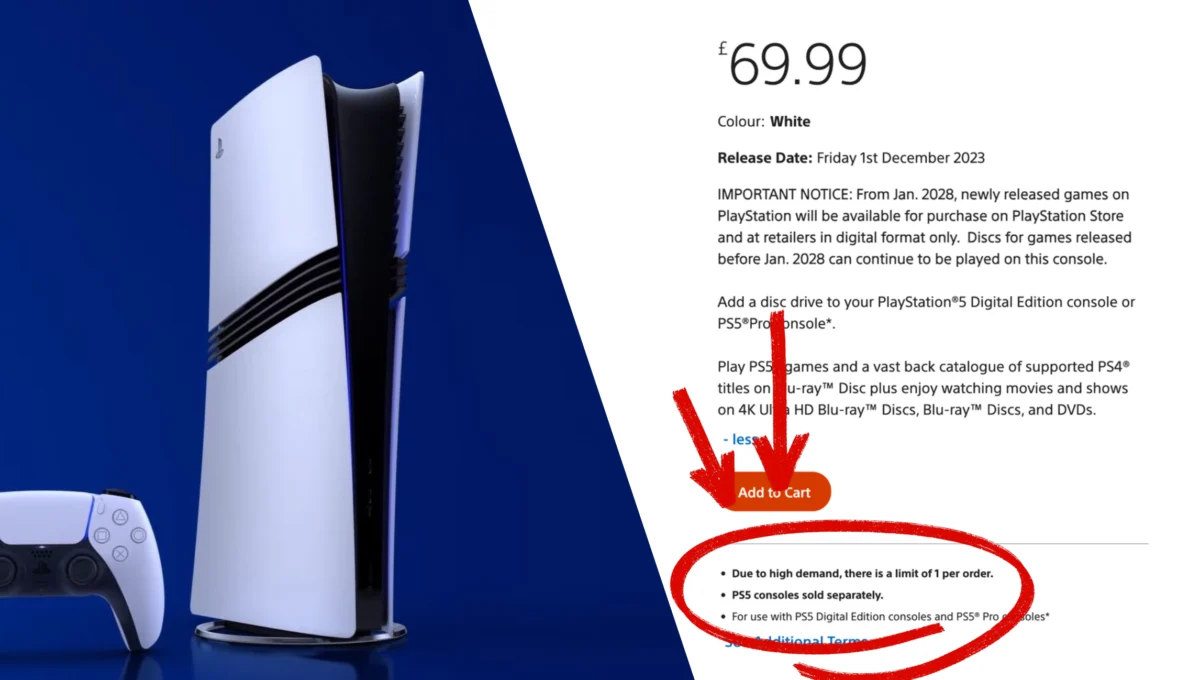
In a move that has sent tremors through the gaming industry, Sony Interactive Entertainment recently confirmed that it will cease the production of physical game discs for its PlayStation ecosystem, effective January 2028. The announcement, which effectively signals the death knell for the retail disc market as we have known it for decades, arrives at a moment of profound irony: despite the pivot toward a digital-only future, the demand for physical hardware—specifically the attachable disc drives for the PlayStation 5—remains so high that Sony continues to enforce strict purchasing limits.
This contradiction highlights the growing friction between corporate strategy and consumer sentiment. As Sony prepares to transition away from physical media, it finds itself in the strange position of rationing the very hardware that allows its current user base to engage with the medium it is slowly sunsetting.
A Chronology of the Decline
The transition to an all-digital future has not been a sudden shift, but rather a calculated, multi-year migration. To understand the current landscape, one must look at the timeline of Sony’s shifting priorities:
- Late 2020: The PlayStation 5 launches in two configurations: a standard model with an Ultra HD Blu-ray disc drive and a "Digital Edition." This was the first major signal that the console manufacturer intended to normalize the absence of physical media.
- Late 2023: Sony begins including "important notices" on its product pages for attachable disc drives, warning consumers about future software distribution changes.
- July 1, 2026: Sony officially announces that, starting in January 2028, all new PlayStation game releases will transition to digital-only formats. While physical retail presence will remain, these "retail" copies will no longer contain discs, likely functioning as digital entitlement vouchers.
- July 4, 2026: Just days after the announcement, observant fans note that the official PlayStation Store continues to restrict the purchase of attachable disc drives to "one per order," citing persistent high demand.
This chronology suggests that Sony’s internal data regarding "consumer trends"—the primary justification for the shift—is in direct tension with the actual behavior of its most dedicated players, many of whom are scrambling to secure the hardware necessary to preserve their physical collections.
The Hardware Paradox: Why the Demand Persists
The persistent rationing of the PS5 disc drive is a fascinating case study in supply chain management and consumer behavior. Despite the industry-wide push toward streaming and digital downloads, a significant segment of the gaming community remains deeply committed to physical ownership.
For many, physical media is not merely a preference for a plastic case; it is a hedge against digital obsolescence. The ability to own a game, lend it to a friend, resell it, or play it without an active internet connection remains a critical feature for a large demographic of players. When Sony signals that the PS6 will likely omit a disc drive entirely, it triggers a "pre-emptive hoarding" effect. Consumers who recognize that their future console may not support their current library are rushing to secure the final generation of plug-and-play hardware.
Furthermore, the secondary market for physical games—a multi-billion dollar ecosystem—depends entirely on the existence of optical media. By rationing the drives, Sony is effectively tightening the funnel, forcing consumers to interact with the PlayStation Store, where the company maintains total control over pricing, sales, and content availability.
The Digital Future: A Corporate Perspective
Sony’s rationale for the January 2028 cutoff is anchored in what they define as shifting consumer trends. In the eyes of the corporate suite, the convenience of high-speed downloads, the dominance of subscription services like PlayStation Plus, and the massive overhead costs associated with manufacturing, shipping, and recycling physical discs have made the format a liability.
By eliminating discs, Sony stands to:

- Reduce Logistics Costs: Removing physical distribution centers and global shipping requirements significantly improves profit margins.
- Curtail the Used Game Market: Digital licenses are non-transferable, ensuring that every transaction occurs within a Sony-monitored environment.
- Streamline Ecosystem Management: A unified digital infrastructure allows for seamless updates and tighter security against unauthorized software modification.
However, the "Important Notice" now appearing on the store page serves as a legal and PR buffer. By stating, "Discs for games released before Jan. 2028 can continue to be played on this console," Sony is attempting to soothe fears regarding backward compatibility while maintaining the narrative that the transition is an inevitable evolution of technology.
The Competitive Landscape: Microsoft and Project Helix
Sony is not acting in a vacuum. Industry rival Microsoft has been aggressively pursuing its own digital-first strategy. Reports surrounding "Project Helix"—the rumored next iteration of the Xbox hardware—suggest that Microsoft may also abandon the disc drive entirely.
The industry consensus appears to be that the cost of maintaining optical drive manufacturing is no longer justified by the diminishing returns of physical software sales. However, Microsoft’s approach, according to industry whispers, may include a "digital rights transfer" program. This would theoretically allow users who own a physical disc to claim a digital license, potentially mitigating the "sad" reality that many gamers currently face: the fear that their physical investments will become paperweights. Sony, by contrast, has yet to offer any such solution for its legacy users.
The Implications for Gamers and Preservation
The shift toward digital-only gaming has profound implications for the preservation of video game history. When physical media is removed from the equation, the "ownership" of a game becomes a "license to access." If a server is shut down, a licensing deal expires, or a store is taken offline, the software effectively vanishes.
The current rationing of disc drives is a microcosm of a much larger struggle. It represents the final attempt by a passionate consumer base to hold onto the tangible aspects of their hobby before the transition to an ethereal, cloud-dependent future is finalized.
Industry analysts have pointed out that while the move is logically sound from a balance-sheet perspective, it risks alienating the "pro-consumer" segment of the audience—the enthusiasts, the collectors, and the historians. The fact that demand for a piece of hardware meant for a sunsetting technology is still so high that it requires purchasing caps should be a loud message to the boardrooms in Tokyo and Redmond.
Conclusion: A Turning Point in Gaming History
As we approach January 2028, the industry stands at a crossroads. The transition to digital-only gaming is clearly the path the major players have chosen, prioritizing convenience and profit margins over the traditional model of physical ownership.
The paradox of the PS5 disc drive—a device that is being rationed even as its core purpose is being phased out—serves as a poignant reminder that while technology moves forward, consumer values often move much slower. Whether this transition will result in a more efficient gaming world or a loss of autonomy for the player remains the central question of the next five years. For now, gamers continue to line up, one per order, to secure their piece of a dying format, signaling that for many, the disc is far from obsolete.
 Sagoh
Sagoh  Lina Irawan
  Asep Darmawan