
 By Suro Senen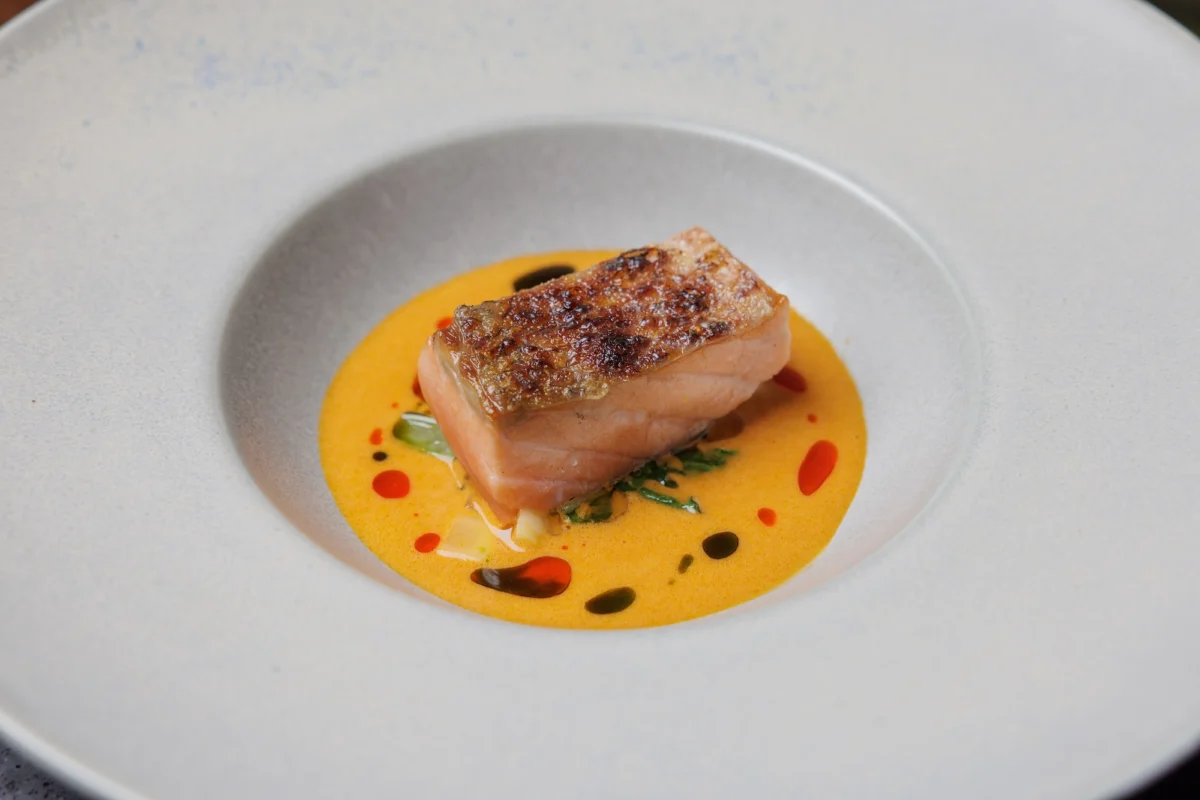
In the competitive landscape of New York City’s culinary scene, few names command as much respect as Chef Jungsik Yim. Known for pioneering the "New Korean" movement and securing three Michelin stars for his flagship TriBeCa establishment, Jungsik, Yim has spent over a decade redefining the boundaries of high-end dining. Now, the celebrated chef is embarking on a bold new chapter. With the opening of Muje—a restaurant situated at 151 W 30th Street, between the bustling nodes of Chelsea and Koreatown—Yim is stepping away from the strict confines of a single national identity to embrace a pan-Asian philosophy.
Muje, which translates to "untitled" or "undefined" in Korean, is more than just a new address for the Jungsik group; it is a manifestation of Yim’s personal culinary evolution and a strategic pivot toward a more approachable, albeit equally sophisticated, dining experience.
The Core Philosophy: A Culinary Passport
The inception of Muje was driven by a desire for creative liberation. While Jungsik remains a bastion of rigorous, contemporary Korean fine dining, Yim felt the need for a space where the kitchen’s geographic scope could be as diverse as the chefs manning the stoves.
"I’m Korean, but our head chef here is Chinese, and we have a lot of other Asian chefs on the crew," Yim explains. "We realized, ‘Look, why don’t we lean into what we’re actually good at?’ So we figured, let’s broaden our scope and go with Asian cuisine."
This "Asian cuisine without boundaries" is not a traditional fusion concept, which often relies on gimmickry. Instead, it is an exploration of the cross-pollination that has defined Asian culinary history for centuries. Yim points out that Korea itself has long embraced hybridized cuisines—Korean-Chinese and Korean-Japanese—much like the United States has developed its own unique iterations of immigrant food. Muje aims to capture that fluidity, offering a menu that feels familiar yet entirely unconstrained by borders.
A Chronology of Vision: From Seoul to 30th Street
The story of Muje begins long before the doors opened in mid-2024. Yim’s journey started at the Culinary Institute of America, followed by formative years working in the kitchens of Spain and France. When he opened the first Jungsik in Seoul in 2009, he was already experimenting with the idea of elevating Korean ingredients through European techniques. By the time he brought the concept to New York in 2011, he had firmly established himself as a visionary.

However, the path to Muje was paved by his earlier internal monologues. "Around that time [in 2011], I fell in love with Asian cuisines outside of Korea," Yim recalls. "I used to make those dishes a lot as staff meals."
These staff meals became the spiritual blueprint for his 2024 venture, "Sea," a casual Southeast Asian spot that occupied the 30th Street space. While Sea was a valuable experiment, Yim realized the space was better suited for the high-caliber precision his team is known for. After closing Sea earlier this spring, the team underwent a transformation, rebranding the location as Muje and refining the menu to bridge the gap between casual exploration and the meticulous tasting menus of his flagship restaurant.
The Tasting Menu Experience: Precision at a New Price Point
At the heart of Muje is an eight-course tasting menu, priced at $150—a strategic move to offer the "Jungsik quality" at a more accessible entry point.
The menu, executed under the guidance of Executive Chef Daeik Kim, who transitions from the kitchen at Jungsik, showcases a sophisticated dialogue between tradition and innovation. Among the standout courses is the Kong-guksu. Traditionally a cold, humble soybean noodle soup, Yim’s version is served warm, elevated with the saline punch of pollock roe and the richness of cured egg yolk.
Other highlights include:
- The Short Rib Wrap: A four-part ensemble where each wrap represents a distinct Asian culinary tradition, demonstrating the kitchen’s technical versatility.
- Binchotan Salmon: A masterclass in heat control, the salmon is grilled over traditional Japanese charcoal and served with razor clams and a vibrant red curry, bridging the gap between Japan and Southeast Asia.
- Dessert Explorations: The final courses are equally playful, featuring pineapple sorbet with lime granita and a creative interpretation of the "Merlion," a coconut-forward homage to Singaporean flavors.
While the food maintains a steadfast focus on the Asian continent, the beverage program offers a global counterpoint. A robust selection of European wines provides the backbone for the pairing options, while the cocktail list, led by drinks like the "Midnight in Samui"—a pea-infused rum concoction—serves to highlight the aromatic, fresh profiles of Asian ingredients.

Design and Atmosphere: The Art of Restraint
The physical space of Muje, designed by the firm Two Point Zero, reflects Yim’s belief that the environment should serve the food, not distract from it. The 48-seat dining room, supplemented by six bar seats and 12 lounge seats, is defined by an organic, neutral palette. Red oak and walnut millwork provide warmth, while raffia paper pendant lighting casts a soft, diffused glow across the tables.
"When I’m thinking about the space and the design of the interior, I always think it’s best to go minimal and simple," says Yim. "That’s how you actually focus on and enjoy the food more."
This commitment to minimalism creates an atmosphere of quiet confidence. There is no pretension in the design; it is a space intended for conversation and focused sensory engagement, stripping away the "fine dining" formalities that can sometimes feel stifling.
Implications for the New York Dining Landscape
The opening of Muje arrives at a time when the "tasting menu" format is facing scrutiny for its rising costs and often rigid structures. By offering a shorter, more affordable, and geographically diverse tasting menu, Yim is effectively creating a new tier of luxury. He is providing a solution for the diner who craves the pedigree of a three-Michelin-star chef but prefers a more relaxed, explorative atmosphere.
Furthermore, Muje validates a shift in how chefs of color are defining their own culinary narratives. For years, Asian chefs in the West were often pressured to either stick to traditional "authentic" recipes or adhere to the strictures of Western fine dining. Yim is arguing for a third way: the right to be "untitled." By refusing to be pinned down to one country or one technique, he is empowering his kitchen staff—and by extension, the industry—to view Asian cuisine as a vast, interconnected tapestry rather than a collection of separate silos.
Looking Ahead: The Philosophy of Deliciousness
Despite the intellectual rigor behind the menu, Yim remains grounded in the most fundamental rule of the hospitality industry. When asked about the ultimate goal for his latest project, he strips away the complexities of branding and culinary theory.

"Whether it’s Jungsik or Muje, when it comes to the philosophy of food, it’s just about making it delicious," he says.
As Muje settles into the rhythm of the city, it stands as a testament to Yim’s longevity. He has moved beyond the need to prove his technical prowess; he is now in a position to explore the joy of cooking. For the New York diner, this is a welcome development—a chance to experience the world of Asian flavors through the lens of one of the most capable chefs in the country, without the barriers of a three-star reservation waitlist or a high-concept price tag.
Muje is, in many ways, an invitation to a conversation that is still being written—a culinary "untitled" document that will evolve with every season, every new chef, and every new inspiration that crosses the threshold of the 30th Street kitchen.
 Neng Nana
  Ali Ikhwan
  Lina Hope