
 By Suro Senen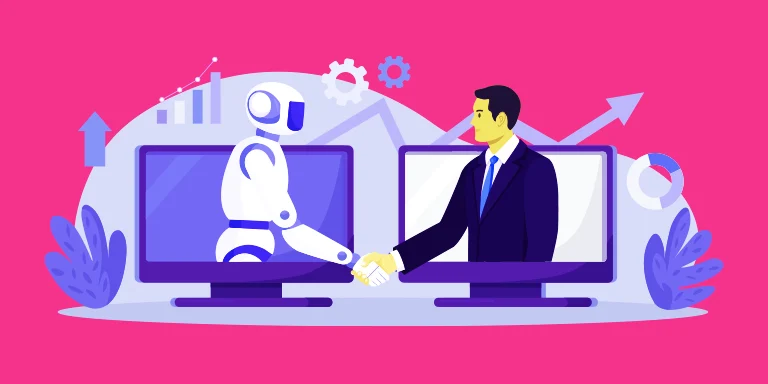
For decades, the barrier to entry for building a scalable tech-enabled business was high: it required either a massive capital infusion to hire a development team or the deep, specialized knowledge of a full-stack engineer. Today, that paradigm has shifted entirely. Artificial Intelligence has democratized the startup landscape, turning every laptop-wielding entrepreneur into a one-person powerhouse.
The misconception that AI is reserved for Silicon Valley elites or hoodie-wearing coders is not only outdated—it is a competitive liability. Whether you are a solopreneur refining your first Minimum Viable Product (MVP) or a founder looking to streamline operations, AI is no longer a "techy" luxury; it is the ultimate co-founder.
The Paradigm Shift: Why Technical Debt is a Thing of the Past
The Myth of the Technical Barrier
If you have ever sidelined an idea because you felt "not technical enough," you are not alone. However, the current landscape of AI tools—from Large Language Models (LLMs) like ChatGPT and Claude to no-code automation platforms like Zapier and Make—has rendered this concern moot.
Being "non-technical" is actually a strategic advantage. It forces founders to focus on business outcomes, customer value, and market fit rather than the nuances of backend architecture. Your role is not to build the engine; it is to act as the architect who directs it.
AI as the Ultimate Force Multiplier
In the modern startup environment, AI serves as an extension of the founder’s intent. It is an assistant that never sleeps, capable of synthesizing market research, drafting high-conversion copy, and automating complex workflows. By leveraging these tools, founders can now execute tasks that previously required a department of five, all while maintaining a lean, agile operation.
Chronology of the No-Code Revolution
The transition from specialized coding to accessible AI has happened in three distinct phases:
- The No-Code Era (2018–2021): Platforms like Webflow, Bubble, and Airtable allowed founders to build functional websites and databases without touching CSS or SQL. This laid the foundation for the "maker" culture.
- The Generative AI Explosion (2022–2023): The public release of ChatGPT transformed AI from a backend data-processing tool into a creative interface. Founders began using AI to generate content, code, and design assets instantly.
- The Agentic Future (2024–Present): We are currently entering a phase where AI doesn’t just respond to prompts; it executes sequences. AI "agents" can now monitor email inboxes, update CRM systems, and trigger marketing sequences, effectively automating entire business processes.
Practical Applications: Where to Start
To leverage AI effectively, founders must move beyond "gimmicky" usage and integrate it into the core workflow.
1. Market Research and Ideation
Instead of spending weeks on manual research, use AI to simulate customer personas. By providing a prompt that includes your competitors and your unique value proposition, you can generate detailed target audience reports, pain points, and platform strategies in seconds.
2. Content Design and Brand Identity
While human intuition remains supreme, AI tools are now capable of generating high-quality product mockups, logo concepts, and social media assets. These outputs provide a "creative starting point," drastically reducing the time spent iterating with external agencies.
3. Customer Data Analysis
Data-driven decision-making is often hampered by the sheer volume of information. By feeding anonymized survey responses or feedback logs into an AI model, you can identify patterns, sentiment shifts, and actionable insights that would take a human analyst days to uncover.
Mastering the "Prompt Engineering" Framework
If AI is your team member, prompts are your instructions. Prompt engineering is not about coding; it is about clear, structured communication. To get the most out of any AI tool, use the R-T-C-S-F formula:
- Role: Define who the AI is (e.g., "Act as a senior marketing strategist").
- Task: Clearly state the objective (e.g., "Write a 3-part welcome email sequence").
- Context: Provide the "why" and the audience (e.g., "Targeting women 25-35 interested in home workouts").
- Style: Define the tone (e.g., "Keep it encouraging, concise, and professional").
- Format: Specify how the output should look (e.g., "Use bullet points for the CTA and include subject lines").
Pro Tip: Treat your prompts like a proprietary asset. Maintain a "Prompt Library" in a shared workspace like Notion. As your business grows, these templates become a playbook that you can eventually hand off to a virtual assistant or a new team member.
The Risks: What Not to Automate
Despite the efficiency gains, founders must be cautious. Blindly automating core business functions can lead to brand erosion and catastrophic errors.
The "Hallucination" Trap
AI models are designed to be helpful, which sometimes means they will confidently provide factually incorrect information. Whether it’s a fake book title or a miscalculated financial projection, never publish AI output without a rigorous human review.
The "Generic" Problem
If you use AI to write everything, your voice will eventually sound like every other business online. AI should be used to draft, outline, and brainstorm, but the final editorial pass must be yours to ensure the content reflects your brand’s specific ethos.
High-Stakes Interactions
There are moments in a startup’s lifecycle—such as initial investor outreach, sensitive refund requests, or critical conflict resolution—where human empathy is non-negotiable. Using AI to handle these interactions can feel robotic and cold, ultimately damaging your reputation.
Implications: The Future of the Lean Founder
The implications of this shift are profound. We are moving toward a "Team of One" economy. Founders who embrace AI are not just saving time; they are buying back their focus.
By offloading the "grind" of administrative and operational tasks to intelligent systems, you stay in your "zone of genius." The ability to scale is no longer limited by your headcount, but by your ability to manage and orchestrate the AI tools at your disposal.
Strategic Roadmap for Founders:
- Phase 1 (Validation): Use AI to test business ideas, define customer segments, and draft your core value proposition.
- Phase 2 (Execution): Automate the repetitive tasks—scheduling, email drafts, basic design, and data entry.
- Phase 3 (Optimization): Use AI to analyze performance, refine your marketing based on customer feedback, and scale your content output.
Official Perspectives: The Industry Consensus
Industry experts and venture capitalists increasingly look for "AI-leveraged" founders during the pre-seed phase. The consensus is clear: the modern founder is expected to be a curator of technology.
"The best founders of the next decade won’t necessarily be the ones who write the most code," says a leading Silicon Valley incubator head. "They will be the ones who use AI to move faster, pivot quicker, and understand their customers deeper than any competitor relying on traditional methods."
Conclusion: Building Your Competitive Edge
The most successful entrepreneurs in the coming years will not be those who ignore AI because they aren’t "technical," but those who treat it as a fundamental layer of their business infrastructure.
You have the creativity, the vision, and the problem-solving skills. AI is simply the leverage. Whether you are building a fitness apparel brand, a SaaS platform, or a service-based agency, the tools to build, test, and scale are at your fingertips.
The question is no longer "Can I build this without a tech team?" The question is, "How fast can I build this with the help of AI?"
Ready to bridge the gap between idea and execution? For founders looking to master these workflows, Foundr+ offers a comprehensive library of expert-led courses designed to help you build, automate, and scale with confidence—no coding degree required.
 Asep Darmawan
  Evan Lee Salim