
 By Evan Lee Salim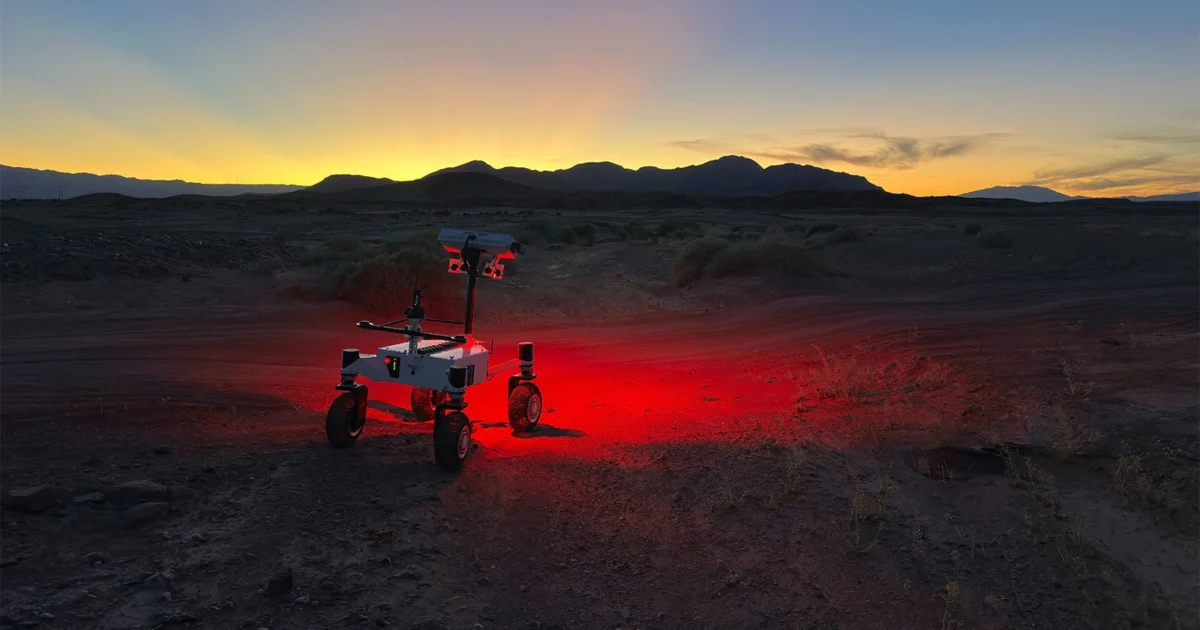
While the iconic Perseverance and Curiosity rovers continue to serve as the stalwarts of NASA’s Martian exploration program, a new, more agile successor is being prepared to push the boundaries of planetary science. NASA’s Jet Propulsion Laboratory (JPL) has unveiled the next generation of robotic exploration: the Exploration Rover for Navigating Extreme Sloped Terrain, or ERNEST. Designed with unprecedented autonomy and mobility, this four-wheeled pioneer is being built not just for the dusty plains of Mars, but to conquer the treacherous, shadowed craters of the Moon.
The Evolution of Robotic Mobility: Main Facts
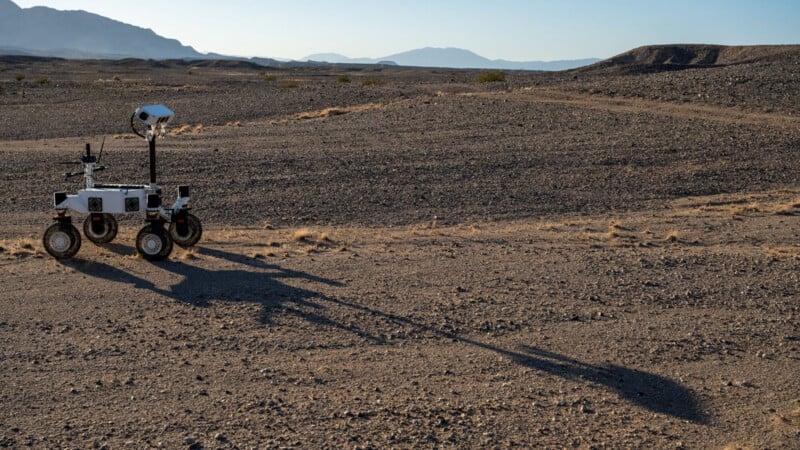
ERNEST represents a fundamental shift in how NASA approaches planetary surface exploration. Unlike its predecessors, which rely on heavy, six-wheeled chassis optimized for stability and scientific sampling, ERNEST is a master of agility. Standing approximately four feet (1.2 meters) in length, the rover is engineered to navigate terrain that would effectively immobilize larger, older models.
The defining feature of ERNEST is its independent wheel-articulation system. Each of its four wheels can be lifted and adjusted individually, allowing the rover to "step" over obstacles or maintain traction on steep, unstable slopes. This design choice is not merely an alternative to the six-wheeled configurations of Curiosity or Perseverance; it is a technological leap forward that prioritizes versatility in high-risk environments. By combining this mechanical dexterity with advanced onboard artificial intelligence, NASA is creating a vehicle capable of traversing distances that would previously have required months of slow, cautious, and highly supervised movement.
From Concept to Dust: A Chronological Development
The road to ERNEST has been a multi-year effort defined by rigorous simulation and iterative design.
- 2022: The project was formally initiated at NASA’s Jet Propulsion Laboratory. The initial phase focused on developing a core autonomy software stack capable of navigating complex topography without constant "hand-holding" from Earth-based engineers.
- 2023–2025: The development team spent years in the "virtual crucible," utilizing high-fidelity digital twins and physics simulations to test the rover’s suspension kinematics and decision-making algorithms across billions of potential terrain variables.
- March 2026: The program transitioned from the lab to the field. During a seven-day campaign in the Colorado Desert of Southern California, the team deployed a working prototype into the wild.
- Mid-2026: Following the successful desert trials, NASA began analyzing the 37 hours of telemetry data, confirming that the rover’s autonomous navigation systems functioned with near-perfect reliability under varied lighting and soil conditions.
Pushing the Limits: Supporting Data and Performance
The performance metrics observed during the California field trials have sent ripples of excitement through the planetary science community. During the test, ERNEST covered 16 miles (26 kilometers) across rugged desert terrain. To the layperson, that distance may seem modest, but in the context of autonomous planetary robotics, it is a staggering achievement.
NASA officials confirmed that the rover navigated this distance with "minimal intervention." When compared to the current Martian fleet, ERNEST is, according to agency reports, "orders of magnitude" faster.
The testing environment was intentionally punishing. JPL engineers subjected the rover to:
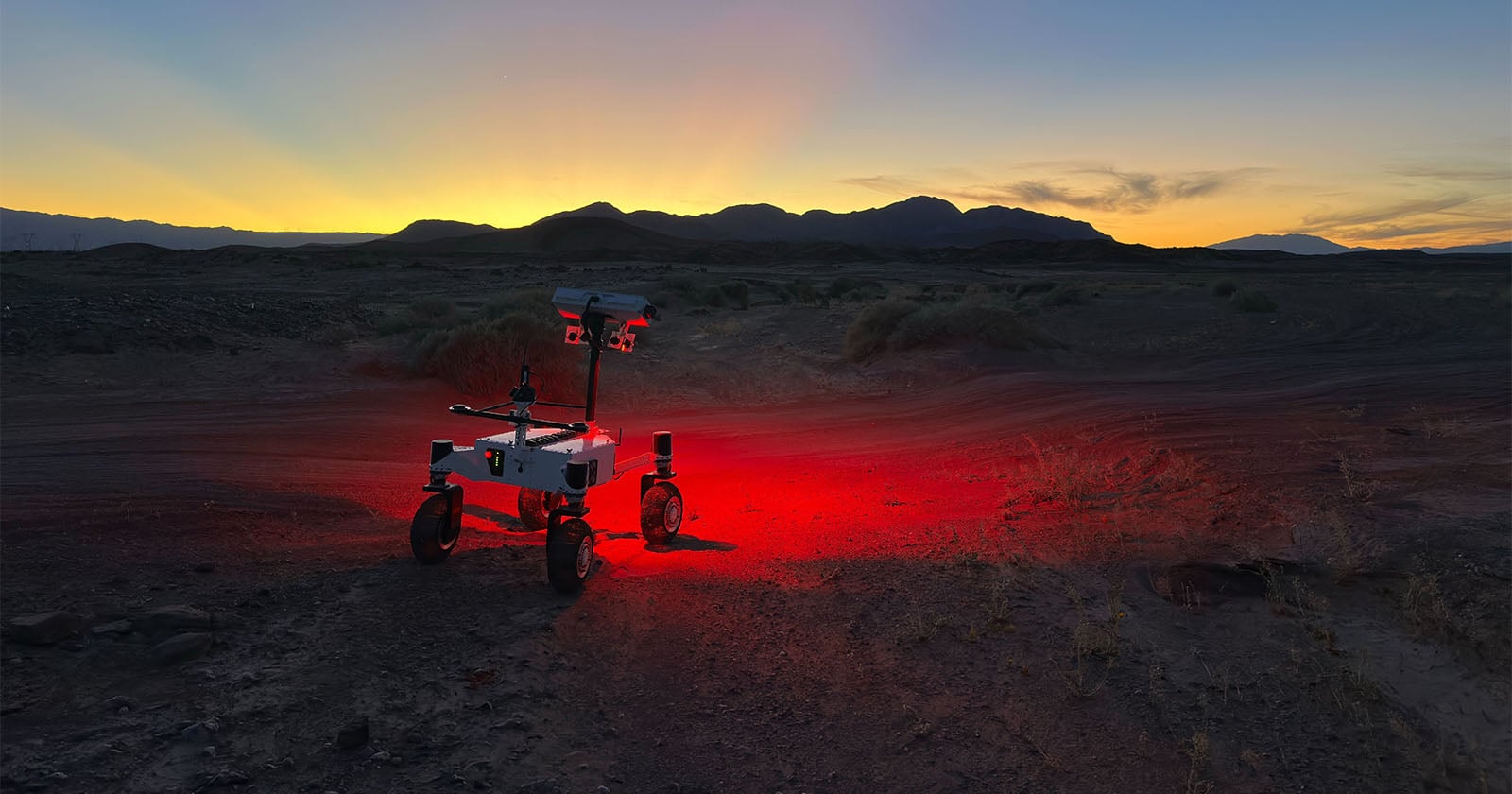
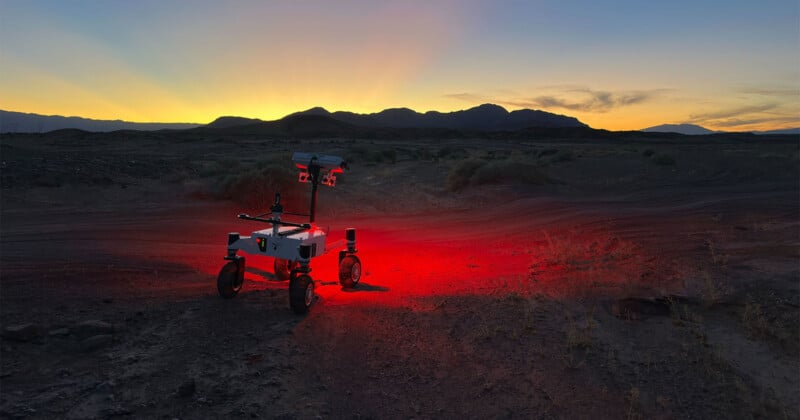
- Extreme Lighting Conditions: The team operated the rover through the transition of dawn, the harsh glare of midday, and the low-contrast shadows of dusk and night. By using external illuminators, researchers tested the rover’s ability to "see" and map terrain even when traditional solar-based navigation would be challenged.
- Obstacle Proliferation: The Colorado Desert was chosen for its geological diversity, providing a proxy for the rocky, uneven surfaces found in lunar polar craters or Martian volcanic fields.
- Speed-to-Reliability Ratio: Traditional rovers move at a glacial pace to ensure safety. ERNEST’s ability to sustain progress over 37 hours without requiring a remote stop-and-check signifies a maturation of AI-driven navigation that will be essential for future lunar "road trips."
Voices from the Field: Official Responses
The project is spearheaded by some of NASA’s most prominent minds in robotic architecture and planetary exploration.
"This testing is helping us refine the mobility hardware and autonomy software to navigate extreme distances across a wide range of terrain and lighting conditions anticipated on the Moon," says Issa Nesnas, a principal technologist at JPL. Nesnas, who serves as the head of autonomy for NASA’s next-gen lunar rover mission concept, emphasized that the goal is to shift from "target-to-target" exploration to a more fluid, long-range scientific survey.
James Keane, a JPL planetary scientist involved in the mission, underscored the broader vision for the vehicle: "You could do a science road trip across the Moon — or Mars — with this vehicle." The sentiment reflects a shift in mission philosophy; while past missions were designed to study a single landing site in excruciating detail, the ERNEST-class rovers are designed to act as mobile laboratories that can visit multiple geological sites in a single mission duration.
Implications for Future Space Exploration
The successful testing of ERNEST has profound implications for both the Artemis program (lunar exploration) and future Mars sample return or exploration missions.
1. The Lunar Frontier
The Moon presents unique challenges, particularly in its permanently shadowed regions at the poles. These areas contain water ice—a critical resource for long-term human presence—but they are shrouded in darkness and littered with jagged, high-contrast terrain. ERNEST’s ability to navigate these regions autonomously, without the need for constant communication with Earth, is a prerequisite for any permanent lunar base.
2. Democratizing Exploration
By increasing the speed and autonomy of rovers, NASA effectively increases the "scientific return on investment." If a rover can cover in two weeks what a previous generation took two years to explore, the scientific output of the mission increases exponentially. This allows for broader geological surveys, searching for life-signs in a wider range of habitats, and identifying resource-rich areas for potential human mining or habitation.
3. A New Paradigm of Autonomy
Perhaps the most significant legacy of ERNEST will be its software. The move toward "minimal intervention" autonomy suggests that future robots will be able to perform high-level tasks—such as prioritizing which rocks to sample or which slopes to avoid—without waiting for the light-speed delay of a command from Mission Control. This is the cornerstone of future deep-space exploration, where real-time human control is physically impossible.
Conclusion: The Horizon Ahead
As the prototype continues to undergo refinement, it remains clear that ERNEST is more than just a testbed; it is a promise of what is to come. While the journey from the Colorado Desert to the Sea of Tranquility or the Jezero Crater is still measured in years of development, the foundation laid by this project is solid.
The images released by NASA, showing the small, white rover casting long shadows against the backdrop of the California mountains, serve as a potent reminder of the ingenuity of the human spirit. Whether it ultimately traverses the gray, cratered regolith of the Moon or the rusted, wind-swept plains of Mars, ERNEST is destined to be a name synonymous with the next great leap in space exploration. For now, the rover waits, its sensors ready, its algorithms learning, prepared for the day it is finally set loose on another world.
 Raul Delapena Setiawan
  rifanmuazin
  Ammar Sabilarrohman