
 By Nana Muazin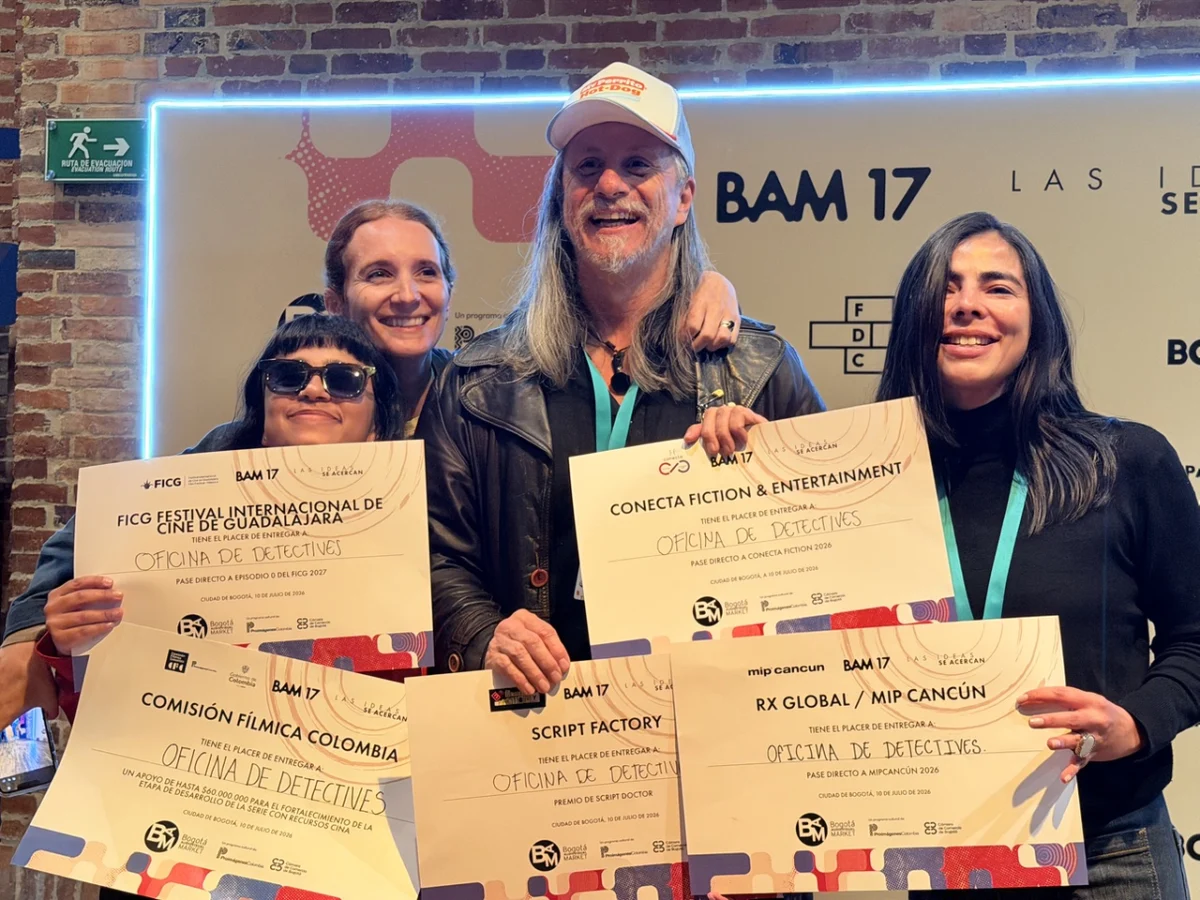
The 17th edition of the Bogotá Audiovisual Market (BAM) concluded on July 10, serving as a powerful barometer for the health and trajectory of the Latin American entertainment industry. As the dust settles on five days of intensive networking, deal-making, and critical discourse, the event—organized by Proimágenes Colombia and the Bogotá Chamber of Commerce—has cemented its reputation as a premier hub for connecting local talent with the global streaming and cinema marketplace.
The statistics from this year’s edition are indicative of a post-pandemic surge in engagement. With 2,336 accredited participants, the market facilitated 271 industry-specific activities and a staggering 882 one-on-one business meetings. These sessions were the heartbeat of the event, linking promising local projects with international financiers, creative advisors, and distribution partners.
A Chronicle of Connectivity: Five Days in Bogotá
The 2026 iteration of BAM was marked by a frenetic, almost dizzying, pace of collaboration. From panels exploring the nuances of AI-driven post-production to masterclasses on the intricacies of transmedia storytelling, the market proved that the Colombian audiovisual sector has evolved from a burgeoning local scene into a sophisticated global player.
However, the event also highlighted the deep-rooted cultural pulse of the nation. On July 8, the relentless schedule of negotiations hit a momentary pause. As Colombia faced Switzerland in the FIFA World Cup quarterfinals, the city of Bogotá—typically characterized by its legendary gridlock—fell into a rare, eerie silence. For those few hours, the market’s focus shifted from the screen to the pitch, underscoring the communal passion that drives the very narratives Colombian filmmakers strive to export.
Celebrating Excellence: The 2026 Award Winners
Recognition at BAM is not merely honorific; it serves as a seal of approval that frequently accelerates a project’s journey from script to screen. This year, 70 in-kind prizes were distributed across categories including Fiction, Documentary, Series, Animation, and the "Bammers" segment for emerging talent.

The standout triumph belonged to the production house Rhayuela. Producers José Luis Rugeles and Ana María Tarazona swept the boards, taking home five awards for their television series project, Rookies (Oficina de Detectives). Their success reflects a broader trend in the market: a shift toward episodic, high-stakes storytelling that appeals to the global appetite for serialized crime and character-driven drama.
In the documentary sphere, the competition was equally fierce, with La Sombra de Yolúja (directed by Hanz Rippe Gabriel and Fernanda Pineda) and De la Villa (by Mónica Taboada and Beto Rosero) sharing top honors. Meanwhile, in the fiction feature category, Agaménón Quintero’s De naranjas y otros demonios emerged as the critical favorite, garnering the highest number of awards and signaling a promising future for the project’s upcoming production cycle.
Infrastructure and Innovation: The Rise of TIS Studios and VFX Powerhouses
If the market was the soul of this year’s gathering, the massive infrastructure investments in Bogotá provided the body. The event coincided with the official unveiling of "Stage 7" at TIS Studios, a monumental 18,300-square-foot soundstage. Standing 40 feet high, this facility is now the largest in Colombia and one of the most technologically advanced in Latin America.
Samuel Duque, president of TIS Studios, emphasized that the new stage is a direct response to the requirements of global platforms. "TIS Studios brings highly trained crews, international production standards, and the protocols to manage large-scale projects, all backed by nearly three decades of experience," Duque stated. "Stage 7, combined with Colombia’s existing production incentives, makes our country an irresistible destination for showrunners and studios from Netflix to Disney and beyond."
The tech boom is not limited to physical stages. Visual effects (VFX) firms like Folks Bogotá and Loma are playing a pivotal role in the country’s global integration. Folks Bogotá, under the leadership of Andrea Espinal, has become an essential service provider for prestigious international productions, including the ambitious Netflix adaptation of One Hundred Years of Solitude and Taylor Sheridan’s 1883 and Lioness.

Similarly, Loma has made a strategic pivot into virtual production. By leveraging Unreal Engine, custom LED volumes, and real-time camera tracking, the firm has positioned itself at the forefront of the "extended reality" (xR) revolution. This move allows local companies to provide high-end, cost-effective solutions for films, commercials, and immersive installations like the Vaivén project by the collective Project Aurora.
Reflections on Identity: The Masterclass of Mariana Rondón
Beyond the business of production, BAM 2026 offered profound intellectual engagement, most notably through a headline talk by Venezuelan filmmaker Mariana Rondón. Reflecting on her career—from the critically acclaimed Bad Hair (Pelo malo) to her latest feature, It Would Be Night in Caracas—Rondón offered a poignant look at the role of the filmmaker in times of geopolitical crisis.
Rondón shared that her path to cinema was unconventional, rooted in a fascination with genetics and the creation of transgenic imagery. However, the Venezuelan exodus fundamentally redirected her artistic mission. Filming in Mexico, she and co-director Marité Ugas worked with displaced Venezuelans to recreate the landscape of their homeland. The result was a blurring of the lines between fiction and reality so intense that the production required psychological support for its participants. "That question of identity is at the heart of why we make films," Rondón remarked, framing the act of filmmaking as a necessary tool for historical and personal reconstruction.
The Sustainability Paradox: Data and Future Implications
Despite the optimism surrounding new studios and high-profile awards, a sobering industry study presented at the market brought the reality of the Colombian film boom into sharp relief.
The data is clear: Law 814 and the Film Development Fund (FDC) have been wildly successful in financing production. Between 2015 and 2025, Colombia produced 548 feature films—an astronomical increase from the pre-2003 era, which saw roughly two films per year. Yet, the report highlights a "sustainability problem." Only 25% of the production houses supported by public funds have managed to return for a second project. The majority remain micro-enterprises with minimal staff, struggling to translate one-off successes into stable, long-term business models.

Cristina Gallego, the renowned producer and director of Birds of Passage, spearheaded the panel addressing these findings. She argued that the industry is currently trapped in a cycle of fragmentation. "26 years ago, the priority was to create Colombian films. Today, those films exist, but their market share remains minimal, and they are still not reaching audiences," she noted.
Gallego’s proposed strategy is holistic: move beyond simple production funding toward an integrated policy that includes distribution, promotion, and the operational support of production companies themselves. She urged stakeholders—from the ministries of culture and education to the private sector—to stop operating in silos. "Without a sustainable ecosystem that supports both companies and the people who power the industry, long-term growth will remain a dream," she concluded.
Conclusion: Looking Ahead
As BAM 2026 closes its doors, the message is clear: Colombia has secured its place on the map as a world-class production destination. The talent is present, the infrastructure is world-leading, and the stories are undeniably resonant. However, the next phase of the industry’s evolution will not be measured by the number of films produced, but by the resilience and commercial longevity of the companies producing them.
The market has successfully moved from the "experimental" phase of its development into a "professionalization" phase. As Netflix, Amazon, and other major players continue to deepen their ties to the region—evidenced by recent leadership appointments and sustained investment—the focus for the coming years will be on building the infrastructure of a permanent, sustainable industry capable of thriving beyond the initial surge of tax incentives. The 17th edition of BAM proved that while the foundation is strong, the work of building a lasting cinematic legacy has only just begun.
 Siti Muinah
  Ammar Sabilarrohman
  Layla Zulfa