
 By Reynand Wu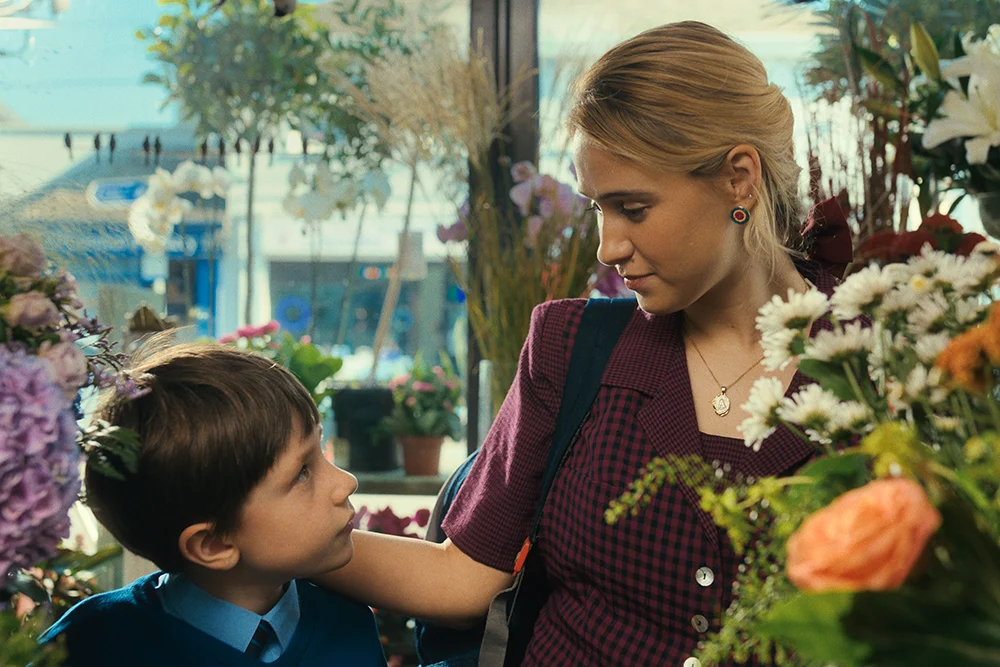
In the quiet, nondescript corners of suburban Oxford, England, there exists a sight so incongruous it defies logic: a 25-foot fiberglass shark, frozen in a permanent dive, its tail protruding violently through the roof of a modest terraced house. For decades, the “Headington Shark” has served as a beacon for the curious, a bizarre architectural anomaly that begs for a narrative. While the sculpture began its life in 1986 as a sharp-edged protest against nuclear warfare and military intervention—conceived by sculptor John Buckley and homeowner Bill Heine—it has now found a second life as the emotional anchor of a poignant new film.
Learning to Breathe Under Water, directed by Rebekah Fortune, takes this eccentric piece of public art and transplants it into a fictional Irish town. Here, the shark is no longer a political statement but a vessel for grief, a structural manifestation of a family’s inability to process loss. Following its warm reception at the Karlovy Vary International Film Festival, the film is poised to become a significant player in the indie circuit, lauded for its tender, heart-on-sleeve approach to the complexities of mourning and the arduous process of healing.
A Chronology of Artistic Evolution
To understand the weight of the film, one must first look at the history of the Headington Shark. Commissioned in 1986 by Bill Heine, a local radio host and journalist, the sculpture was designed by John Buckley to coincide with the 41st anniversary of the atomic bombing of Nagasaki. At the time, it was met with fierce opposition from local planning authorities, who viewed the installation as a visual nuisance that had been erected without proper permits.
For the artist, however, the shark was a deliberate disruption of the mundane. "The shark was in many ways a protest against the sense of helplessness felt by the average citizen in the face of global superpowers," Buckley later reflected. The sculpture remained a point of community contention for years, a permanent reminder that art does not always need to be comfortable to be significant.
Fast forward nearly 40 years, and the sculpture has been reimagined by screenwriter Richard Brabin and director Rebekah Fortune. In Learning to Breathe Under Water, the shark is no longer a protest against the state, but a private, domestic monument. The film tracks the lives of Peter (played by BAFTA nominee Rory Kinnear), a middle-aged artist, and his 11-year-old son, Leo (breakout star Ezra Carlisle). Following the death of their wife and mother, Peter installs the massive sculpture in the roof of their home. It is a desperate, quiet act of grief—an installation that turns their home into a shrine to an absence.
The Cast: A Study in Human Connection
The strength of Learning to Breathe Under Water lies in its ability to balance whimsical visual flair with grounded, visceral performances. The film is anchored by three central pillars:
- Ezra Carlisle (Leo): At only 11 years old, the Irish actor delivers a performance that defies his age. As the film’s narrator, Leo is gravely earnest and unintentionally funny. He speaks his deepest secrets into the synthetic belly of the shark, treating the sculpture as an inanimate therapist. Carlisle manages to navigate the character’s vulnerability without ever slipping into the cloying tropes often associated with child actors.
- Rory Kinnear (Peter): Kinnear, a veteran of stage and screen, brings a weary, restrained energy to Peter. His portrayal of a man paralyzed by his own depression is masterful; he is a character who wants to recede from the world, yet is forced into engagement by the demands of fatherhood.
- Maria Bakalova (Anya): The Oscar-nominated actress plays the catalyst of the film—a Bulgarian au pair who enters the household like a gust of fresh air. While she is not a "magical nanny" in the vein of Mary Poppins, her presence forces a realignment of the family dynamic, gently pulling both father and son back toward the world of the living.
Supporting Data and Production Design
The film’s aesthetic choices provide a map of its psychological terrain. Production designer May Davies utilized a deliberate color palette to underscore the characters’ internal states. The family home is swathed in melancholic, ocean-blue tones, a reflection of Peter’s persistent state of sorrow. In contrast, the attic—where the mother’s personal effects are stored—is filled with sunshine-yellow hues. These visual cues act as a subtle language, allowing the audience to track the emotional distance between the characters and their past.
The integration of animation is perhaps the film’s most innovative stylistic flourish. To illustrate Leo’s internal world, Fortune employs “naive” animated intrusions—doodles and sketches that appear on screen to represent the boy’s lateral trains of thought. This technique provides a window into his active, curious mind, grounding the narrative in a childhood perspective that feels authentic and untethered from adult cynicism.
Critical and Official Reception
Following its premiere in the Special Screenings sidebar at the Karlovy Vary International Film Festival, the film has been met with critical acclaim. Critics have noted that while the film occasionally relies on "shorthand" to explain its characters’ psychological states, its overall emotional impact is undeniable.
The film has been praised for its ability to navigate the "tricky task" of dramatizing trauma for a multi-generational audience. It does not patronize its young viewers; instead, it acknowledges that there are aspects of life—the mystery of death, the necessity of secrets—that are difficult to grasp at any age. As one critic noted, "Fortune’s thoughtful little charmer accomplishes the task of making the heavy, light."
While some reviewers have pointed out that the third act moves toward recovery with a slightly rushed pace, and that certain symbolic speeches land with an overly literal weight, these critiques are largely eclipsed by the film’s genuine warmth. It is a rare film that balances the "kooky" humor of a giant shark with the genuine, hard-won growth of two people learning how to exist in a world that has shifted beneath their feet.
Broader Implications: The Evolution of Storytelling
Rebekah Fortune, who previously garnered attention for her sensitive handling of gender dysphoria and adolescent identity in 2017’s Just Charlie, proves once again that she is a master of the "small" story. Her work consistently prioritizes the interiority of her protagonists, particularly those whose voices are often sidelined.
The transformation of the Headington Shark from a symbol of anti-war protest into a metaphor for familial healing is a testament to the fluidity of art. By moving the sculpture from the roof of a real-life Oxford home to a fictional Irish one, the film asks us to consider what happens to our monuments when the original cause is forgotten, or when the pain that birthed them becomes the defining feature of our daily lives.
Ultimately, Learning to Breathe Under Water is a film about the "incremental, hard-won changes of heart and mind." It suggests that while we cannot always remove the "sharks" that pierce our roofs and disrupt our lives, we can eventually learn to live with them—and perhaps, eventually, find a way to breathe even when we are underwater.
As the film moves through the festival circuit, it is expected to find a home with indie distributors who value character-driven, family-friendly narratives that refuse to shy away from the darker hues of the human experience. It stands as a reminder that the most compelling stories are often those that take the most bizarre elements of our reality and find the common, aching humanity buried deep within them.
 Nila Kartika Wati
  Siti Muinah
  Ammar Sabilarrohman