
 By Ali Ikhwan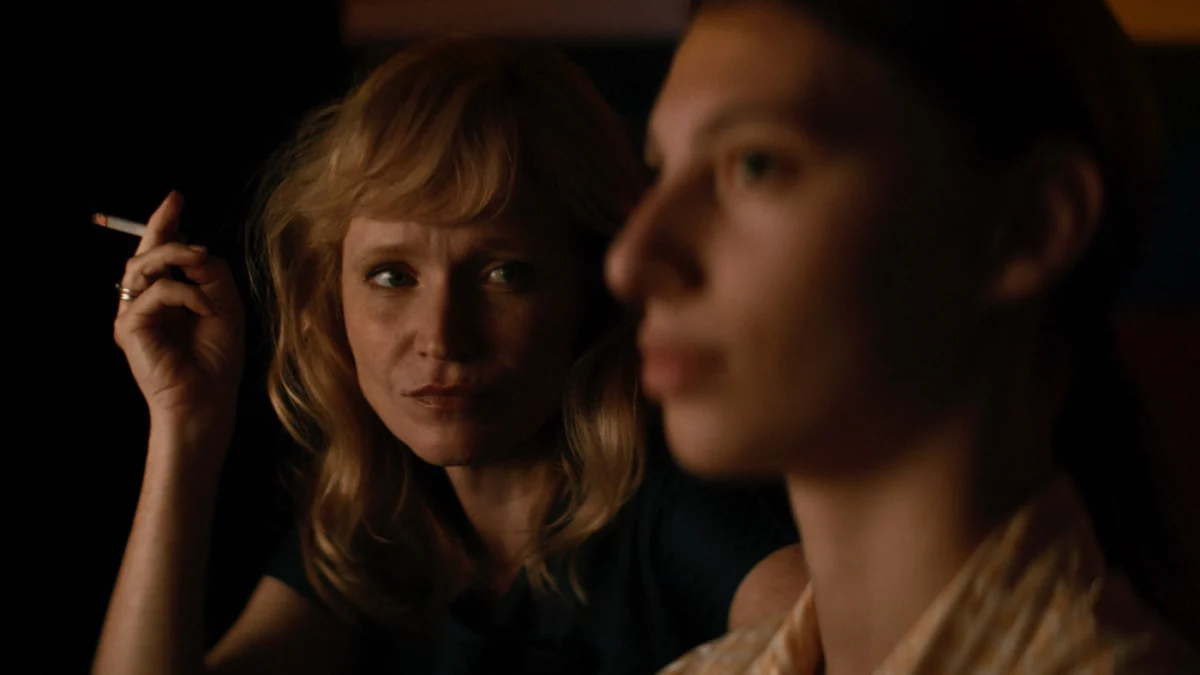
In the annals of 20th-century human rights abuses, few chapters are as hauntingly quiet—or as persistently denied—as the systematic, state-sponsored sterilization of Romani women in Czechoslovakia. It is a history defined by bureaucratic coldness, institutional racism, and the physical marking of bodies without consent. Slovakian filmmaker Ivan Ostrochovský attempts to engage with this dark legacy in his latest feature, Only Beautiful Things to Look At. However, the film serves as a complex case study in the tension between cinematic artifice and historical accountability, raising critical questions about who gets to tell the stories of the marginalized and whether an "aesthetic of beauty" can ever truly coexist with the documentation of systemic cruelty.
The Chronology of a Coerced Policy
The practice of involuntary sterilization in Czechoslovakia was not an accidental byproduct of a flawed system, but a deliberate tool of state policy that gained momentum in the 1970s and 80s. Under the guise of "family planning" and social welfare, the communist government implemented programs aimed at curbing the birth rate of the Romani population.
The mechanism was as chilling as it was calculated. Doctors and social workers would approach women, often in moments of extreme vulnerability—such as during labor or immediately following a delivery—and coerce them into signing consent forms for sterilization. Many of these women were told the procedure was temporary, or that it was a necessary medical intervention for their own health, or for the health of their future children. In many instances, the forms were provided in languages the women did not understand, or they were pressured through the threat of losing their existing children to state care.
The impact was a generation of women left with a small, permanent scar beneath their navels—a mark they colloquially dubbed "the bow." This history did not conclude with the fall of the Iron Curtain. Disturbingly, the practice persisted well into the 21st century, with cases documented in both the Czech and Slovak Republics long after the dissolution of the communist regime, illustrating that the bureaucratic machinery of prejudice often outlives the ideology that birthed it.
The Cinematic Paradox: A Conflict of Perspective
Ostrochovský’s film, co-written with Marek Leščák, frames this period with a deliberate, painterly visual language. The film’s cinematography, helmed by Juraj Chlpík, is undeniably striking. It evokes the 1980s through a lens of soft-focus nostalgia, utilizing warm lighting and curated set designs that feel more like a museum exhibition of a bygone era than a lived-in reality of oppression.
The narrative choice that has sparked the most debate is the decision to center the film on Ingrid (played by Anna Geislerová), a white female doctor at the hospital where these sterilizations occur. Through Ingrid’s eyes, the audience is introduced to the moral weight of the hospital’s quotas. While the film avoids the "white savior" trope in its most simplistic form, it nevertheless anchors the audience’s emotional journey to the awakening of a privileged protagonist.
As Ingrid navigates her own professional frustrations—battling a patriarchal medical establishment that overlooks her for promotions—the film asks us to sympathize with her gradual realization that her own labor contributes to a broader, violent injustice. Yet, the persistent focus on her domestic tranquility—her idyllic countryside home, her classical music, her wine-soaked evenings with her husband—creates a jarring juxtaposition. While Roma women are depicted in silent, stoic montages, Ingrid is given the screen time to ponder, to suffer, and eventually to act.
The Roma Experience: Marginalized in Their Own Story
The most compelling narrative threads within Only Beautiful Things to Look At are not, in fact, those centered on the doctor, but those surrounding the lives of two sisters: Agata and Jula.
Agata, an orderly at the hospital, serves as a bridge between two worlds. She is a woman attempting to negotiate her Romani identity in a society that demands she either assimilate or face erasure. Her sister, Jula, embodies the reality of the community that the state sought to "manage." Jula’s life in a cramped, crumbling apartment, raising children in an environment of systemic neglect, stands in stark contrast to the sterile, bourgeois comfort of Ingrid’s life.
When the film allows these women to interact, the screen crackles with a tension that the rest of the movie lacks. The silent reconciliation between the sisters during a bath-time scene is perhaps the film’s most moving moment, grounding the politics of the body in the intimacy of blood and care. However, these moments feel like fragments of a more profound story that remains largely untold, suppressed by the filmmaker’s insistence on returning to the perspective of the white protagonist.
Implications: The Ethics of Representation
The central critique leveled against Only Beautiful Things to Look At is one of perspective. By wrapping a brutal, ongoing historical atrocity in such a "beautiful" aesthetic package, the film risks insulating the viewer from the raw reality of the crime.
When cinema transforms trauma into art, there is a responsibility to ensure that the beauty does not serve as a veil. By presenting the sterilization policy through a soft-focus lens, the film inadvertently encourages the audience to view the events as a "period piece"—a tragedy confined to the past. This effectively disconnects the viewer from the fact that these women are not merely historical artifacts, but survivors whose trauma remains a contemporary issue.
The film’s insistence on the "beauty" of its framing—macro shots of blonde hair, blue eyes, and rumpled white sheets—stands in uncomfortable silence against the reality of the "bow" scar. If the goal of the film is to put a face to the statistics of the sterilization program, it succeeds in dignity but fails in urgency. By the time the film reaches its final, somewhat glib resolution, the viewer is left wondering if the aestheticization of such a specific, racist violence is, in itself, a form of erasure.
Official Responses and Historical Memory
The history of coerced sterilization in Czechoslovakia has been the subject of several human rights reports and legal challenges over the last two decades. Organizations such as the European Roma Rights Centre (ERRC) have spent years documenting these abuses, seeking justice for victims who were often denied access to legal recourse due to the statute of limitations or the deliberate destruction of medical records.
Official responses from the Czech and Slovak governments have been slow and often fraught with political hesitation. While there have been formal apologies and discussions regarding compensation funds in recent years, many victims feel that the state’s response has been performative, failing to adequately address the depth of the trauma or the institutional structures that allowed the practices to continue for so long.
Artistic works like Ostrochovský’s contribute to the public conversation, yet they also highlight the limitations of storytelling when it defaults to traditional, "prestige" modes of filmmaking. The film is undeniably well-intentioned, but it underscores a vital lesson for contemporary cinema: the most difficult stories require more than just a beautiful lens; they require the courage to look at the ugly, the unvarnished, and the uncomfortable without seeking refuge in the safety of historical distance.
As the film concludes, it leaves us with a lingering question: why do we demand "only beautiful things to look at," even when the subject matter demands we look at the things that tear our conscience apart? Until we are willing to center the voices of the victims—not as symbols, but as protagonists—the full weight of this history will remain obscured by the very art that claims to illuminate it.
 Siti Muinah
  Ammar Sabilarrohman
  Layla Zulfa