
 By Asro
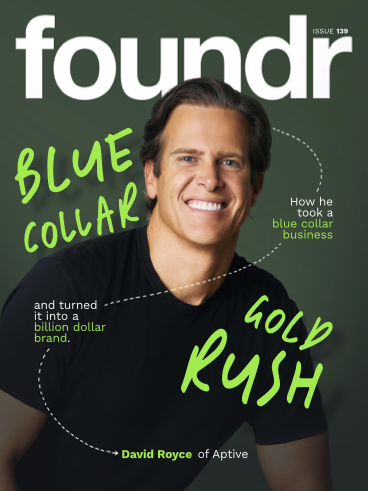
In the glitzy world of Silicon Valley venture capital, success is often measured by disruptive tech, unicorn valuations, and sleek, minimalist headquarters. Yet, David Royce, the founder and chairman of Aptive Environmental, has quietly built a massive, multi-generational wealth machine in an industry his peers wouldn’t touch with a ten-foot pole: residential pest control.
Royce’s journey is a masterclass in contrarian thinking. While others chased the prestige of investment banking or the volatility of tech startups, Royce leaned into the "unsexy"—the bugs, the basements, and the door-to-door grind. Today, he stands as one of the most successful, albeit stealthy, entrepreneurs in American business. His story is not just about the metrics of success, but about the profound power of persistence and the realization that the greatest opportunities are often hidden in plain sight, tucked away in the industries everyone else overlooks.
The Formative Years: From "Not Smart" to Top-Tier Salesman
Royce’s rise to prominence began with a struggle. As a child, he felt intellectually inferior to his peers, largely because he could not focus in traditional academic settings. It wasn’t until his adult years that he would be diagnosed with ADHD. Reflecting on his youth, Royce describes this as a "double-edged sword." In rigid, unengaging environments, his brain was a liability. In the high-stakes, high-energy world of sales and entrepreneurship, it became his greatest asset.

His trajectory shifted in the sixth grade thanks to a teacher named Mrs. Luft, who recognized his potential before he did. Her belief in him became the catalyst for his work ethic. "I struggled in school because I couldn’t focus unless I cared deeply," Royce recalls. "Sales and entrepreneurship were the first place my brain felt like an asset instead of a liability."
After high school, he stumbled into the pest control industry—a move he initially considered an "accident." A friend bragged about making $25,000 in a single summer selling pest control door-to-door. Seeking the same financial independence, Royce headed to Sacramento. The reality, however, was brutal. He spent his first week in the field producing nothing. While his teammates were closing deals, Royce was doing "free cardio," walking neighborhood after neighborhood with zero results.
Rather than returning home in defeat, Royce retreated to a bookstore. He bought six books on sales techniques and committed 90 minutes every day to deliberate study. By the end of that summer, he was the top sales rookie out of 200 reps. He had learned the fundamental lesson that would define his career: "Persistence is genius in disguise."

Chronology of a Billion-Dollar Growth Engine
Royce’s career can be segmented into a series of calculated pivots, each building upon the lessons of the last.
- The Early Grind (College Summers): Royce earned $300,000 over four college summers, funds he initially intended to use for an MBA. Instead, his mentor—who had just sold his own pest control startup for $10 million—convinced him to strike out on his own.
- The First Venture: With a finance degree in hand, Royce ignored the pressure to pursue "impressive" careers like investment banking. He opted to apply sophisticated financial rigor to the blue-collar pest control market.
- The Growth Crisis (Year One): Rapid expansion nearly bankrupted his first firm. By signing up 7,500 customers when he only planned for 5,000, he hit a cash flow bottleneck. He had to pay sales commissions upfront before receiving recurring revenue. He solved this by negotiating with his sales leaders, offering them interest to delay payment—a hard-learned lesson in the difference between revenue and actual cash flow.
- The Serial Entrepreneurship Model: Royce developed a unique "asset deal" structure. He would sell the recurring revenue streams (the customers) to strategic buyers, but keep his leadership team and core personnel. He then used that capital to launch a new, better-capitalized venture with the same "family" of employees, avoiding equity dilution and investor interference.
- Aptive Environmental: His fourth company, Aptive, grew to over $500 million in annual revenue, cementing his status as a titan of home services.
Supporting Data: Why "Boring" Wins
The numbers support Royce’s contrarian bet. Data suggests that the most consistent wealth-building opportunities exist in industries that are essential and recession-proof.
According to The Wall Street Journal, among the top 0.1% of income earners in the U.S.—those making over $2.3 million annually—roughly 43% are involved in traditional, blue-collar industries. These businesses often boast high margins, recurring revenue models, and low technological disruption risk. As Royce points out, "Recessions come and go, but bugs don’t read The Wall Street Journal."

Furthermore, the aging demographic of small business owners in the U.S. presents a massive consolidation opportunity. Millions of baby boomers are preparing to retire, many without clear succession plans. For an entrepreneur like Royce, who has mastered the art of operational efficiency and culture-building, this represents a golden era for acquisition and scale.
The Philosophy of Culture: Beyond Ping-Pong Tables
When asked about the legendary culture at Aptive—which includes everything from NCAA-style basketball courts at HQ to retreats in Thailand—Royce is quick to temper the excitement. He emphasizes that perks are "sugar, not protein."
True culture, in his view, is design, not "vibes." It is built on the foundation of training and the opportunity for employees to win. The most significant move he made was granting 25% of the company to his employees. When the business hit its peak, this resulted in nine-digit payouts for team members. "Ownership is a far better retention tool than ping-pong tables," Royce notes. By aligning the financial incentives of his team with the success of the company, he created an environment where employees were as invested in the exit as he was.
Official Lessons and Strategic Implications
Royce’s transition from CEO to architect is perhaps his most critical lesson for budding entrepreneurs. He spent a decade training his successor, realizing that the ultimate test of a founder is not whether they can build a company, but whether they can build a company that doesn’t rely on them.
Key Takeaways for Future Leaders:
- Stop Being the Hero: A leader’s job is to stop being the one who saves the day and start being the architect who designs systems that allow others to win.
- Trust but Verify: Never delegate critical financial oversight blindly. A bad executive hire, even one with a prestigious resume, can derail a company’s valuation during a sale process.
- The "Number" is a Moving Target: Success is not about a specific financial goal. If you focus only on the exit, the summit will disappoint you. The value of the journey lies in the expertise, discipline, and character developed along the way.
- Cash Flow is Reality: Revenue is vanity, and profit is sanity, but cash flow is the only thing that keeps the lights on. Managing the timing of capital in a high-growth environment is often the difference between a legacy and a bankruptcy filing.
Conclusion: The Quiet Revolution
David Royce’s legacy is not found in the billion-dollar valuation of his companies, but in the leaders he has developed. By applying the discipline of a finance expert to the grit of a door-to-door salesman, he transformed an "unsexy" industry into a vehicle for life-changing wealth.
His story serves as a reminder that the most profound business opportunities rarely arrive wearing a suit and tie. Sometimes, they are found in the work nobody else wants to do, performed with a level of persistence that, over time, becomes indistinguishable from genius. For those looking to build their own empire, Royce’s advice remains simple: "Swallow your ego, choose the opportunity over the image, and enjoy the climb."
 Suro Senen
  Evan Lee Salim
  Ammar Sabilarrohman