
 By Neng Nana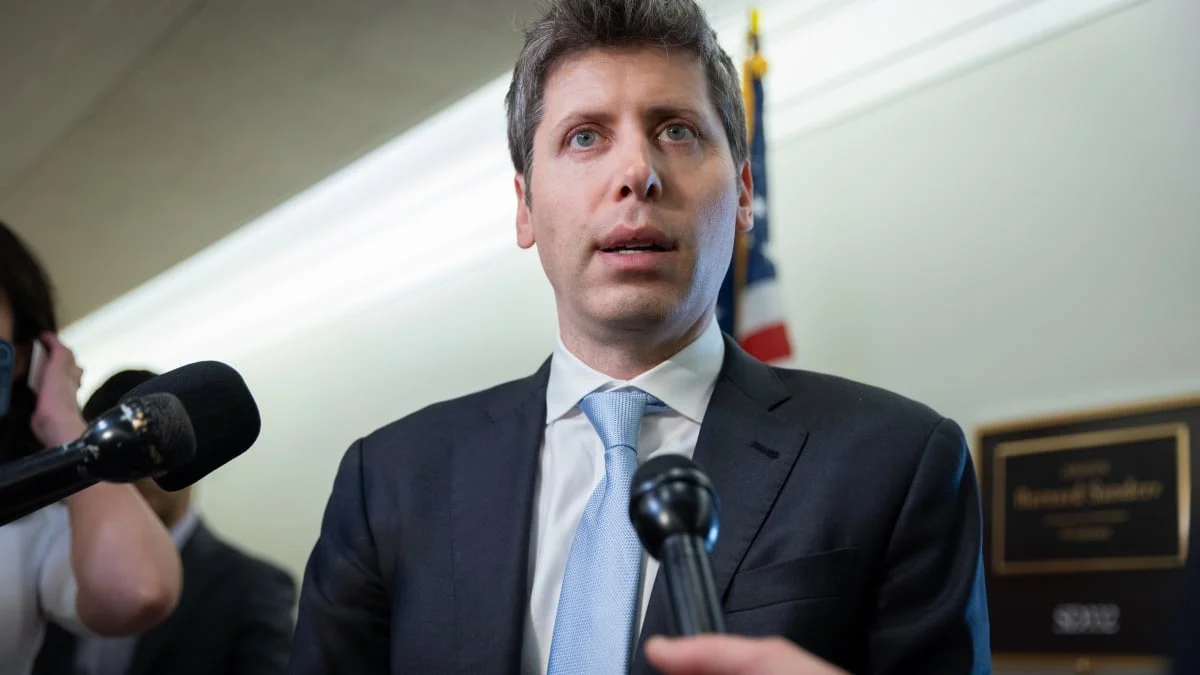
In a dramatic escalation of the battle for dominance in consumer artificial intelligence, Apple Inc. has filed a sweeping lawsuit against OpenAI, accusing the ChatGPT creator of orchestrating a coordinated campaign to steal highly sensitive hardware trade secrets.
The lawsuit, filed on Friday, July 10, 2026, in the U.S. District Court for the Northern District of California, alleges that OpenAI, led by CEO Sam Altman, systematically recruited key Apple engineers and executives to acquire proprietary designs, supply chain details, and physical components. According to Apple, this stolen information was directly used to accelerate OpenAI’s efforts to build its own physical consumer hardware.
The legal battle marks a stunning breakdown in relations between two tech giants that only two years ago announced a high-profile partnership to integrate ChatGPT into Apple’s operating systems. It also shines a harsh spotlight on the aggressive talent wars shaping the future of AI-powered consumer devices.
Main Facts of the Case
At the center of Apple’s legal complaint is the allegation that OpenAI did not merely recruit Apple’s workforce but actively used the hiring process as an information-gathering operation. The lawsuit names OpenAI’s commercial and nonprofit entities, its hardware subsidiary io Products, OpenAI Chief Hardware Officer Tang Yew Tan, and former Apple engineer Chang Liu.
                               ┌──────────────────────┐
                               │      Apple Inc.      │
                               └──────────┬───────────┘
                                          │
                                    Files Lawsuit
                                (Northern Dist. of CA)
                                          │
                                          ▼
  ┌────────────────────────────────────────────────────────────────────────┐
  │                           Named Defendants                             │
  ├────────────────────────────────────────────────────────────────────────┤
  │ • OpenAI (Commercial & Nonprofit Entities)                             │
  │ • io Products (OpenAI's hardware subsidiary)                           │
  │ • Tang Yew Tan (OpenAI Chief Hardware Officer / Former Apple VP)       │
  │ • Chang Liu (Former Apple Senior System Electrical Engineer)           │
  └────────────────────────────────────────────────────────────────────────┘
While tech companies routinely hire talent from competitors—a practice that is generally legal—Apple argues that OpenAI crossed the line from recruitment to systematic trade secret misappropriation. Under intellectual property law, trade secrets consist of valuable, non-public information that a company takes reasonable steps to protect. Apple contends that the stolen assets include:
- Unreleased product designs and internal architectures.
- Proprietary battery systems and circuit board schematics.
- Confidential supplier lists and pricing agreements.
- Specialized manufacturing processes, such as proprietary metal-finishing techniques.
Notably, the lawsuit does not target OpenAI’s software or the large language models that power ChatGPT. Instead, it focuses entirely on physical hardware. The complaint paints a picture of an ambitious software company attempting to bypass years of costly hardware research and development by taking a shortcut through Apple’s intellectual property.
Chronology of the Dispute
The transition of Apple and OpenAI from collaborative partners to courtroom adversaries unfolded over several key phases:
1. The Partnership Phase (2024)
At its Worldwide Developers Conference (WWDC) in 2024, Apple announced that OpenAI’s ChatGPT would be integrated into Siri and Apple Intelligence. The deal was viewed as a win-win: Apple secured cutting-edge conversational AI for its users, while OpenAI gained access to hundreds of millions of Apple devices.
2. The Hardware Pivot and "io Products" Acquisition (2025)
The relationship grew complicated when OpenAI began quietly moving into the hardware space. In 2025, OpenAI acquired io Products, a hardware startup co-founded by legendary former Apple design chief Jony Ive and former Apple hardware executive Tang Yew Tan, in a deal valued at approximately $6.5 billion. While Ive is collaborating with OpenAI on its upcoming consumer device, he is not personally named as a defendant in Apple’s lawsuit.
2024                  2025                  Jan 2026         Feb 2026          Jul 2026          Late 2026 (Est.)
 ┌─────────────────────┼─────────────────────┼────────────────┼─────────────────┼─────────────────┐
 │                     │                     │                │                 │                 │
Apple & OpenAI        OpenAI acquires       Chang Liu        Apple contacts    Apple files       OpenAI's projected
announce ChatGPT      io Products for       leaves Apple     OpenAI privately  formal lawsuit    consumer hardware
integration.          $6.5 billion.         for OpenAI.      over concerns.    in federal court. launch window.
3. The Staffing and Alleged Breaches (Late 2025 – Early 2026)
During this period, key Apple engineers began transitioning to OpenAI’s hardware division. Chang Liu, a senior system electrical engineer working on the iPhone, left Apple to join OpenAI in January 2026. According to Apple’s security logs, this period coincided with a spike in unauthorized file downloads and data access.
4. Private Escalation (February 2026)
Before taking the matter to court, Apple says it formally contacted OpenAI in February 2026, presenting evidence of data theft and requesting an internal investigation. Apple claims OpenAI ignored the warning, prompting the filing of the lawsuit five months later, on July 10, 2026.
Supporting Data and Specific Allegations
The legal complaint filed by Apple contains granular, highly specific allegations regarding how OpenAI and its executives allegedly extracted proprietary information.
1. Job Interviews as "Information-Gathering Sessions"
Apple alleges that Tang Yew Tan, who spent more than 24 years at Apple and served as vice president of product design for the iPhone and Apple Watch, used his intimate knowledge of Apple’s internal operations to interrogate job candidates.
According to the filing, Tan referred to unreleased Apple projects by their highly confidential internal codenames during interviews to signal to candidates what specific information he wanted. Furthermore, OpenAI allegedly required candidates to prepare "Technical Deep Dive" presentations. These presentations reportedly forced candidates to disclose:
- How specific Apple hardware components were selected.
- Which proprietary vendors were used.
- How engineers communicated with suppliers.
- The software systems supporting Apple’s hardware integration.
The most striking allegation involves physical "show and tell" sessions. Apple claims Tan instructed candidates to bring actual physical components—including unreleased logic boards, batteries, and system-in-package shields—directly from Apple’s offices to their interviews.
2. The Chang Liu Laptop and Server Exploit
The lawsuit singles out Chang Liu, accusing him of utilizing a security vulnerability to access Apple files long after his employment had ended.
Apple alleges that Liu failed to return his company-issued laptop when he left in January 2026. He then allegedly discovered an authentication flaw that allowed him to bypass security and access Apple’s cloud-based file storage. Rather than reporting the vulnerability, Apple claims Liu used it to download over 1,000 pages of technical specifications, circuit board layouts, and product schematics.
To support its claims, Apple cited internal chat logs. In one instance, Liu allegedly messaged a current Apple employee, writing:
"LOL, I found out I can access the [server], so funny."
Apple also claims Liu coached another Apple employee preparing for an OpenAI interview, guiding her to specific confidential folders, instructing her on how to copy files without triggering security alarms, and advising her to move their communications to the encrypted messaging app LINE.
                              ┌────────────────────────┐
                              │  Chang Liu (Ex-Apple)  │
                              └───────────┬────────────┘
                                          │
                    ┌─────────────────────┴─────────────────────┐
                    ▼                                           ▼
       [Exploited Security Flaw]                  [Coached Current Employee]
  • Accessed Apple cloud servers.             • Directed to secret folders.
  • Downloaded 1,000+ pages of specs.         • Instructed on bypassing alarms.
  • Retained company-issued laptop.           • Moved chats to LINE app.
3. Evading Exit-Security Procedures
Apple’s complaint asserts that OpenAI systematically coached departing Apple employees on how to bypass the company’s strict exit-security procedures.
Tan allegedly obtained and circulated an internal Apple document marked "Need to Know," which detailed the exact security checks performed when an employee resigns. By sharing this with recruits, OpenAI allegedly helped them know when their access would be cut off and what files they could download beforehand.
Recruits were reportedly instructed:
- Not to disclose that they were leaving to join OpenAI.
- To refuse to sign any paperwork during Apple exit interviews.
- To contact OpenAI’s legal team immediately if Apple’s security team pressed them for information.
4. Supply Chain Manipulation
Apple’s hardware dominance relies heavily on custom, proprietary manufacturing processes developed with external partners. The lawsuit alleges that OpenAI used stolen information to approach these partners directly.
In one instance, Apple claims OpenAI approached a trusted manufacturing partner and requested a demonstration of a highly specialized, proprietary metal-finishing technique. The technique had been developed jointly with Apple, and the supplier was contractually barred from sharing it. OpenAI allegedly misled the supplier into believing that Apple had authorized the demonstration.
Official Responses
The public reaction from the accused parties has been swift, with OpenAI denying any systemic wrongdoing.
Drew Pusateri, OpenAI’s Director of Strategic Communications, issued a statement on X (formerly Twitter) refuting Apple’s claims. Pusateri stated that OpenAI respects intellectual property rights and has no desire to integrate proprietary technology from competitors into its products.
"We respect intellectual property and design our products independently. The claims that OpenAI sought or utilized Apple’s confidential trade secrets are unfounded. We look forward to defending our integrity and our development processes in court."
— Drew Pusateri, Director of Strategic Communications, OpenAI
Chang Liu and Tang Yew Tan have not yet released public statements regarding the individual allegations against them. Representatives for io Products have similarly declined to comment on the pending litigation.
Implications for the Tech Industry
The legal battle between Apple and OpenAI has profound implications for the broader technology sector, particularly as the industry transitions from a mobile-first era to an AI-first era.
The Fight for the Next Computing Platform
For over a decade, the smartphone has been the center of the consumer tech ecosystem. However, Silicon Valley is racing to define the next major paradigm, with many betting on ambient, screenless AI devices.
OpenAI’s upcoming hardware project—highly anticipated for late 2026—is rumored to be a wearable or home-based device designed to act as an omnipresent AI companion. By targeting OpenAI’s hardware division, Apple is attempting to protect its hardware moat. If OpenAI is found to have used Apple’s supply chain secrets to build its device, the court could issue an injunction, potentially delaying or completely blocking the release of OpenAI’s debut hardware.
                         ┌─────────────────────────────┐
                         │   Potential Legal Outcomes  │
                         └──────────────┬──────────────┘
                                        │
             ┌──────────────────────────┼──────────────────────────┐
             ▼                          ▼                          ▼
     [Court Injunction]         [Forced Discovery]         [Financial Damages]
  Could halt or delay the     Would expose OpenAI's     Could result in massive
  launch of OpenAI's 2026    internal hardware designs    payouts to Apple based
     consumer hardware.         to Apple's lawyers.       on trade secret value.
The Threat of Legal Discovery
One of Apple’s primary objectives in filing the suit is to enter the "discovery" phase of litigation. This would grant Apple’s legal team the power to demand internal OpenAI emails, Slack messages, recruitment records, and hardware blueprints. Even if the case eventually ends in a settlement, the discovery process could expose the inner workings of OpenAI’s hardware strategy, giving Apple a massive competitive advantage.
OpenAI’s Expanding Legal Troubles
This lawsuit adds to an increasingly complex web of legal challenges for OpenAI. The company is currently defending itself across multiple high-stakes legal fronts:
- The xAI Lawsuit: In September 2025, Elon Musk’s xAI sued OpenAI under similar allegations of trade secret theft during recruitment. Though a federal judge dismissed the case with prejudice on June 15, 2026, finding that xAI failed to prove OpenAI explicitly encouraged the theft, Apple’s lawsuit features much more robust forensic evidence, including server logs and unreturned hardware.
- Musk’s Nonprofit Charter Suit: Musk separately sued OpenAI, Sam Altman, and Greg Brockman for allegedly abandoning the company’s original humanitarian, open-source mission. A jury ruled against Musk in May 2026 on statute-of-limitations grounds, though Musk is currently appealing.
- The Florida Child Safety Lawsuit: Filed on June 1, 2026, this state-level suit accuses OpenAI of aggressively marketing ChatGPT to minors while ignoring severe safety risks associated with self-harm, violence, and data collection.
- The British Columbia Investigation: On July 7, 2026, the government of British Columbia retained counsel to explore legal action against OpenAI. The province alleges that OpenAI’s safety teams flagged violent prompts from a user months before they committed a mass school shooting in February 2026 but failed to alert law enforcement.
- Copyright Class Actions: OpenAI continues to fight massive copyright infringement lawsuits from The New York Times, The New York Daily News, and various author guilds over the unauthorized use of written works to train its generative models.
As OpenAI attempts to build the physical and digital infrastructure of the future, it is increasingly being forced to defend the methods it used to construct it. The battle with Apple represents the most direct threat yet to OpenAI’s ambitions of becoming a hardware powerhouse, setting up a historic courtroom showdown that will reverberate across Silicon Valley for years to come.
 Raul Delapena Setiawan
  Ali Ikhwan