
 By Iffa Jayyana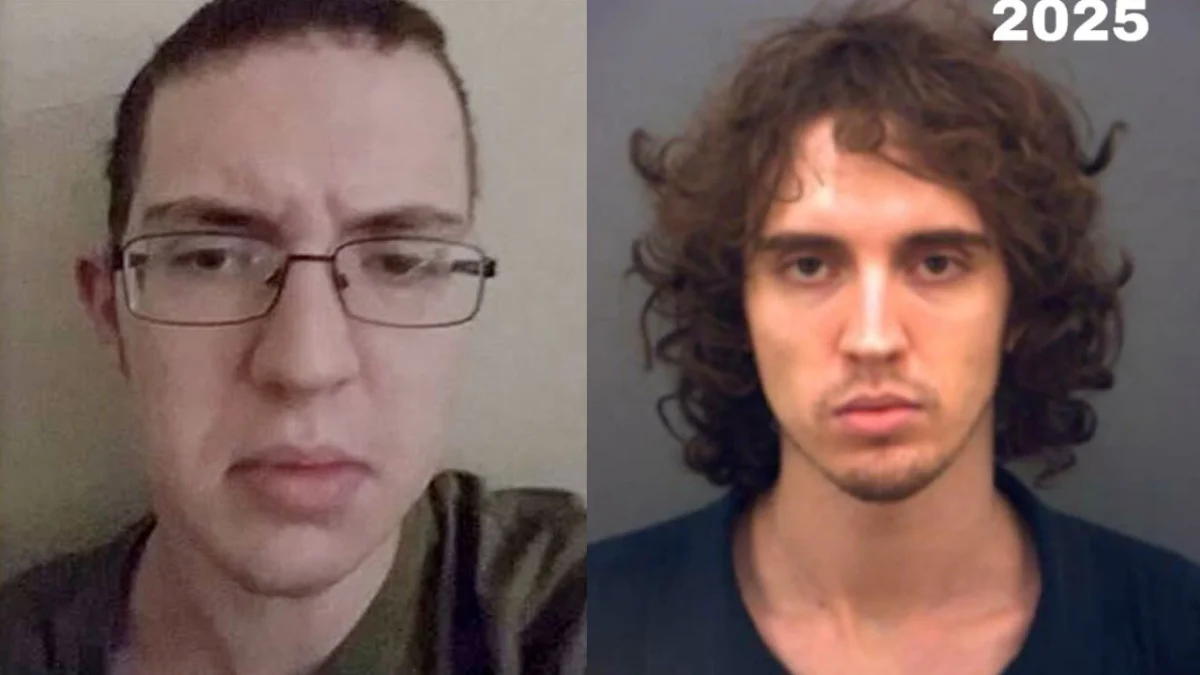
A recent surge of photographs depicting Patrick Crusius, the convicted perpetrator of the 2019 El Paso Walmart mass shooting, has ignited a firestorm across social media platforms. These images, particularly one circulated widely online, have led to unsettling commentary and the creation of new memes, with some users perceiving a "glow-up" in Crusius’s appearance. The phenomenon highlights the complex and often disturbing intersection of internet culture, true crime, and the desensitization that can occur in digital spaces, especially when a figure responsible for one of the deadliest acts of domestic terrorism in recent American history becomes the subject of dark humor.
The online discourse surrounding Crusius’s updated appearance is inextricably linked to the "Chudjak" meme, an internet caricature directly inspired by his earlier mugshot. While the images have sparked a flurry of jokes and comparisons, they simultaneously serve as a stark reminder of the horrific violence Crusius inflicted, claiming 23 lives and injuring many more in an act motivated by white supremacist ideology. The rapid virality of these photos and the subsequent reactions underscore a troubling trend where real-world tragedy is recontextualized and often trivialized through the lens of internet meme culture.
Main Facts: A Disturbing Resurgence in Online Discourse
The controversy began to brew this week as new images, purportedly federal mugshots or prison photographs of Patrick Crusius, started circulating online. One particular photograph, depicting Crusius without his signature glasses, sporting longer, curly hair and some facial scruff, quickly became a focal point. This image led a segment of internet users to facetiously comment on a perceived "glow-up" – a slang term for a positive physical transformation – drawing a disquieting parallel to the man behind the "Chudjak" meme.
Patrick Crusius is currently serving a lifetime sentence in federal prison, having pleaded guilty to numerous federal charges, including hate crimes resulting in death, for the August 3, 2019, attack at a Walmart in El Paso, Texas. His rampage targeted Hispanic shoppers, driven by a racist and anti-immigrant manifesto published online shortly before the massacre. The shooting, which resulted in 23 fatalities and dozens of injuries, remains one of the most devastating acts of domestic terrorism in modern U.S. history.
However, in certain online circles, Crusius is primarily recognized through the crude line drawing known as "Chudjak," a derivative of the popular Wojak meme. This character, often associated with the extremist slogan "The West has fallen. Billions must die," has become a symbol within niche, often radicalized, online communities. The recent emergence of Crusius’s "new" photos, juxtaposed with the familiar Chudjak caricature, has propelled the perpetrator back into the online consciousness, prompting a wave of reactions that range from genuine shock to deeply unsettling humor. The rapid spread of these images across platforms like X (formerly Twitter) and Reddit underscores the internet’s capacity to instantaneously disseminate and re-interpret information, regardless of its sensitive and tragic origins.
Chronology of a Digital Dissemination
The journey of these controversial images from official records to viral internet content illustrates the unpredictable and often uncontrolled nature of information flow in the digital age.
The FOIA Request and Initial Leak
The initial spark for this online phenomenon occurred on April 25th, 2025, when a Redditor identified as /u/uncanealguinzaglio posted what they claimed was a new federal mugshot of Crusius. The image was shared within the /r/masskillers subreddit, a community known for discussing such topics, and was purportedly acquired through a Freedom of Information Act (FOIA) request.
Crucially, the Redditor clarified that while the image was obtained in connection with Crusius’s federal charges, it was reportedly taken around July 2023, not 2025, and was captured by El Paso authorities holding him for federal processing. This detail, though initially clarified, was largely lost as the image began its rapid spread across other platforms, leading to widespread misdating. The original Reddit post was swiftly deleted, likely due to violations of Reddit’s Terms of Service (TOS), which typically prohibit content that glorifies or promotes violence. However, by then, the image had already escaped containment, copied and shared across countless other channels.
The Viral Spark on X (Twitter)
Two days after its initial appearance on Reddit, the image found its true viral ignition point on Sunday, April 27th. X user @TruueDiscipline posted the photograph with the caption, "This is what chudjak looks like now… feel old yet?" The accompanying image showed a solemn-looking Crusius, notably without his characteristic glasses from earlier mugshots, featuring longer, curly hair and a noticeable amount of facial scruff.
The post resonated profoundly with a segment of the internet audience, exploding in popularity. Within just two days, it amassed over 1.2 million views and garnered more than 17,000 likes, indicating a significant level of engagement and reach. The phrase "feel old yet?" – a common meme format used to highlight surprising transformations over time – lent itself to the "glow-up" narrative, albeit in a context that many found deeply disturbing. The image and its accompanying narrative rapidly became a trending topic, pulling Crusius back into the digital spotlight under the guise of an ironic, dark joke.
Clarification and the True Recent Image
Amidst the viral spread and the ensuing wave of comments about Crusius’s supposed transformation, there was a necessary correction. The same X user, @TruueDiscipline, who initially propelled the July 2023 image to virality, later clarified its date. Recognizing the widespread misattribution, they posted a more recent photograph of Crusius. This image, taken during a court hearing on April 21st, 2025, where he pleaded guilty to capital murder, showed him with glasses and a beard, presenting a different and arguably more accurate "current" appearance than the viral July 2023 photo. This correction, however, did little to stem the tide of reactions to the earlier, more "transformed" image, which had already cemented its place in the internet’s collective memory.
Supporting Data: The Anatomy of a Malicious Meme
To fully grasp the disturbing nature of the recent online reactions, it is essential to understand the origins and context of the "Chudjak" meme and its associated rhetoric.
Unpacking the "Chudjak" Phenomenon
The "Chudjak" meme emerged from the darker corners of the internet, specifically 4chan’s /pol/ (politically incorrect) board, in late 2019. This board is notorious for being a breeding ground for extremist ideologies, hate speech, and the dissemination of radical content. The meme itself is a derivative of the "Wojak" meme, a widely recognized internet archetype characterized by a simplistic, melancholic, or contemplative line-drawing of a bald man. Wojaks are often adapted to represent various emotional states, social archetypes, or political leanings.
Chudjak, however, stands apart due to its direct association with a real-world mass murderer. It is a crude drawing depicted with glasses, deep nasolabial folds, and a pronounced frown, clearly designed to caricature Patrick Crusius’s initial mugshot following the El Paso shooting. The term "Chud" itself is a pejorative often used in online spaces, sometimes by right-wing extremists to refer to those they deem "liberal" or "degenerate," or conversely, by those on the left to refer to right-wing extremists. In the context of "Chudjak," it specifically serves as a derogatory and dehumanizing identifier for figures perceived to embody a certain extremist archetype.
"The West Has Fallen. Billions Must Die."
The Chudjak meme is almost invariably paired with cartoonishly evil mantras of doom, the most prominent and infamous being "The West has fallen. Billions must die." This slogan is not merely an edgy phrase; it is a direct reference to white supremacist "great replacement" theories and accelerationist ideologies that advocate for societal collapse to usher in a new, racially pure order. Crusius’s own manifesto prior to the El Paso shooting echoed many of these sentiments, specifically targeting Hispanic immigrants and warning of a "Hispanic invasion."

Over time, "The West has fallen. Billions Must Die" has evolved into a chilling shorthand for online extremist hysteria. It encapsulates a nihilistic worldview often found in radicalized corners of the internet, where societal decay is celebrated, and mass violence is either explicitly or implicitly condoned as a means to an end. The use of such a slogan in conjunction with a caricatured image of a mass murderer normalizes and desensitizes users to truly horrific ideologies, blurring the lines between ironic humor and genuine radicalization. The meme functions as a dog whistle, signaling adherence to a specific, dangerous ideology while ostensibly operating under the guise of internet irony.
The Broader Wojak Universe
The Wojak ecosystem on the internet is vast, encompassing myriad variations that capture different facets of the human condition or online archetypes. From "Feels Guy" to "Doomer," "Zoomer," and "Soyjak," these simple drawings serve as versatile canvases for expressing complex ideas, emotions, and subcultural identities. However, Chudjak represents a particularly dark and ethically fraught branch of this tree. Unlike other Wojaks that might embody relatable anxieties or humorous stereotypes, Chudjak is directly tied to a specific act of terrorism and the hateful ideology that fueled it. Its continued use and transformation into a subject of "glow-up" jokes signify a profound disconnect between the internet’s playful, ironic veneer and the severe, real-world consequences of the figures it chooses to meme.
Online Reactions and the Morality Maze
The immediate aftermath of the viral "glow-up" photo saw a deluge of online reactions, many of which underscored a disturbing trend of desensitization and dark humor surrounding figures responsible for unimaginable atrocities.
Disturbing Humor and "Deranged Fashion"
Internet users, seemingly unfazed by the perpetrator’s heinous crimes, responded to the "hotter" perception of Chudjak in what the original source aptly termed "deranged fashion." Examples from X (formerly Twitter) highlight the nature of this unsettling humor:
- X user @Halsted_19 posted a meme depicting women fawning over the "Chud" serving prison time. This meme, though ironic, plays into a dark fantasy of romanticizing or fetishizing incarcerated individuals, particularly those who commit violent acts, a phenomenon sometimes observed with notorious criminals.
- X user @hayasaka_aryan took the comparison a step further, posting a side-by-side image of Crusius with the caption, "From chud to indie rock singer." This particular comment attempts to reframe Crusius’s appearance, moving him from a caricature of an extremist to a figure associated with a subculture often linked to sensitivity and artistic expression, creating a jarring and inappropriate juxtaposition.
- Another X user, @Marcus_cel, posted a panel from the popular "Cereal Guy" meme, showing the character spitting out his breakfast in shock over Crusius’s new look. This meme format typically expresses extreme disbelief or surprise, here applied to a physical transformation that, in any other context, might be mundane but becomes deeply problematic when associated with a mass murderer.
These examples are not isolated incidents but reflect a broader pattern of online behavior where the gravity of real-world events is often overshadowed by the pursuit of viral content, edgy humor, or ironic commentary. The "humor" in these instances often stems from the sheer audacity of the comparison or the deliberate violation of social norms, pushing boundaries in ways that can be deeply offensive and harmful.
The Ethical Quandary of Viral Content
The virality of Crusius’s images and the subsequent memeification present a significant ethical quandary for both internet users and content platforms. For victims’ families and the broader El Paso community, seeing the perpetrator of such a traumatic event become the subject of online jokes can be deeply re-traumatizing and disrespectful. It trivializes the immense suffering caused by his actions and shifts the focus from the victims to the perpetrator’s appearance.
For platforms like Reddit and X, the challenge lies in balancing freedom of expression with the need to moderate harmful content. While Reddit quickly deleted the initial post, the decentralized nature of the internet means that once an image is shared, it is virtually impossible to fully contain or erase. The sheer volume of user-generated content makes comprehensive moderation an ongoing battle, often leading to a reactive rather than proactive approach. The dilemma is how to prevent the glorification or normalization of individuals associated with extremist violence without stifling legitimate discussion or news reporting. This incident underscores the urgent need for platforms to refine their content policies and enforcement mechanisms to address the complex nuances of internet culture intersecting with real-world atrocities.
Broader Implications: Meme Culture, Extremism, and Digital Responsibility
The "Chudjak glow-up" saga is more than just a fleeting internet trend; it is symptomatic of deeper issues within contemporary digital culture, highlighting the dangerous potential for desensitization, the normalization of extremist symbols, and the ongoing challenge of digital responsibility.
The Desensitization Effect
One of the most concerning implications of incidents like this is the gradual desensitization it fosters. When figures linked to horrific acts of violence become subjects of ironic memes and lighthearted "glow-up" discussions, the emotional impact of their crimes can become blunted. Constant exposure to tragedy, filtered through the often detached and ironic lens of meme culture, can erode societal empathy. The human cost—the lives lost, the families shattered, the communities scarred—becomes abstracted into a digital spectacle, where the pursuit of an "edgy" joke or a viral moment takes precedence over the solemnity deserved by such events. This desensitization makes it harder for individuals, particularly younger users, to distinguish between fictional horror and real-world suffering, blurring the lines of moral judgment.
The Normalization of Extremist Imagery
The "Chudjak" meme, born out of extremist online boards and directly linked to a white supremacist terrorist, inherently carries a dangerous ideological payload. When such an image, or the real person behind it, becomes widely circulated and even humorously discussed, it risks normalizing not just the individual but also the hateful ideology they represent. The journey of Crusius’s image from initial mugshot to "Chudjak" meme, and now to a subject of a "glow-up" narrative, demonstrates a pipeline through which niche, radicalized content can seep into more mainstream online discourse. This process can inadvertently expose wider audiences to extremist symbols and rhetoric, potentially lowering the barrier for entry into radicalized thought processes by making them seem less threatening or even "cool." The very act of engaging with the meme, even ironically, contributes to its visibility and cultural footprint.
The Challenge of Digital Archiving and Forgetting
The incident also underscores the enduring challenge of digital archiving and the near impossibility of truly "forgetting" in the internet age. Once an image, especially one acquired through official channels like a FOIA request, enters the digital realm, it becomes a permanent part of the internet’s collective memory. It can be endlessly copied, re-shared, and re-contextualized, often losing its original meaning or gaining new, unintended ones. For individuals like Crusius, even while incarcerated, their image can continue to circulate and evolve online, far beyond the control of authorities or even the individual themselves. This poses a unique challenge for victims and society, as the constant re-emergence of such content can prevent closure and perpetuate trauma. It highlights the need for a more thoughtful approach to how we handle and interpret digital traces of tragedy and infamy.
The Human Cost Beyond the Pixels
Ultimately, behind the viral images, the "glow-up" jokes, and the "Chudjak" memes, lies a profound human tragedy. Patrick Crusius is not merely an internet archetype or the subject of an ironic transformation; he is a convicted mass murderer whose actions caused unimaginable pain and suffering. The 23 victims of the El Paso shooting — ranging in age from 15 to 90 — were real people with families, friends, and futures tragically cut short. Their stories, and the stories of countless others affected by hate-fueled violence, stand in stark contrast to the casual, often callous, online commentary.
The phenomenon surrounding Crusius’s recent photos serves as a critical reminder of the responsibilities inherent in digital citizenship. It compels us to critically engage with the content we consume and share, to recognize the profound human cost that often underpins viral internet trends, and to resist the urge to trivialize acts of domestic terrorism for the sake of an "edgy" joke. The internet’s power to connect and inform must be wielded with an acute awareness of its potential to desensitize, distort, and ultimately, diminish the memory of those who suffered.
In conclusion, the viral spread of Patrick Crusius’s recent photographs and the subsequent "Chudjak glow-up" memes represent a disturbing convergence of internet culture and real-world horror. While such phenomena may be dismissed as mere online antics, their implications for desensitization, the normalization of extremist symbols, and the ethical responsibilities of digital platforms and users are profound and demand serious consideration. The gravity of the El Paso tragedy must never be overshadowed by the fleeting and often tasteless currents of online discourse.
 rifanmuazin
  Nana
Nana 