
 By Azzam Bilal Chamdy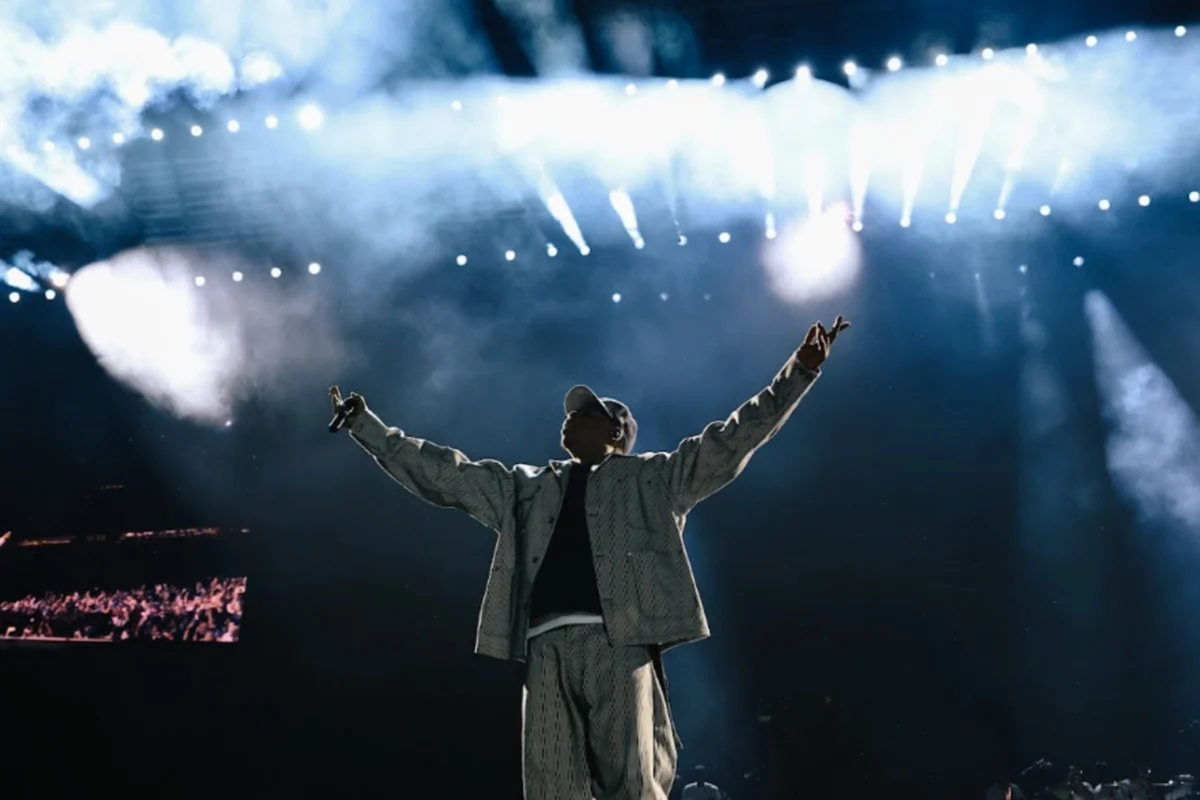
Main Facts: A Quarter-Century of Dominance
On the second night of his historic three-day residency at Yankee Stadium, Shawn “Jay-Z” Carter reminded the world exactly why he wears the crown. Marking the 25th anniversary of his seminal 2001 masterpiece, The Blueprint, the Brooklyn-born icon transformed the Bronx into a shrine to hip-hop history. The performance was not merely a concert; it was a cultural coronation that reinforced his status as both the “King of New York” and arguably the greatest lyricist to ever grace a microphone.
The setlist was a masterclass in curation, blending the aggressive, hard-hitting street anthems that defined his early career with the polished, triumphant production that The Blueprint brought to the mainstream. From the opening bars of “The Ruler’s Back” to the final chords of his encore, Jay-Z commanded the massive stadium stage with the effortless poise of a billionaire mogul who still remembers the concrete of the Marcy Projects.
Chronology: A Night of Legends
The evening followed a carefully orchestrated arc, beginning with the nostalgic grit of his early 2000s catalog and expanding into a collaborative celebration of his collaborative reach.
The Opening Salvos
Jay-Z wasted no time establishing the tone. As the house lights dimmed, the opening piano chords of “The Ruler’s Back” echoed through the stadium, signaling a night that would prioritize lyrical complexity and classic production. The energy remained high as he transitioned into the defiant, braggadocios territory of “Hola Hovito” and “All I Need.” The audience, a diverse sea of fans spanning multiple generations, responded in kind, with thousands of voices reciting every syllable of his intricate rhyme schemes.
The Arrival of the Architect: Slick Rick
The first major surprise of the night arrived early. In a nod to the foundations of rap music, Jay-Z welcomed the legendary Slick Rick to the stage. The hip-hop icon performed “La Di Da Di” and “Children’s Story,” tracks that essentially served as the building blocks for the storytelling tradition Jay-Z would later refine. Seeing the “Ruler” perform alongside the man who inspired his own self-styled moniker created a profound bridge between the golden era of the 1980s and the modern stadium era.
The Renegades Converge
Mid-show, the atmosphere shifted toward the visceral. Jay-Z invited Eminem to join him for a performance of their collaborative powerhouse track, “Renegade.” The chemistry between the two rappers, who are often cited in the same breath when discussing the greatest lyricists of their generation, was palpable. Following their joint effort, Eminem took a moment to command the stage solo, delivering a blistering rendition of his diamond-selling hit, “Lose Yourself.” The deafening roar of the crowd served as a reminder of the enduring power of mid-2000s hip-hop dominance.
The Pharrell Finale
As the night drew to a close, Jay-Z brought out his long-time collaborator and production visionary, Pharrell Williams. The duo embarked on a nostalgic run of their most iconic hits, including “Frontin’,” “Excuse Me Miss,” “Give It to Me,” and “Allure.” Pharrell’s infectious energy paired with Jay-Z’s steady, rhythmic delivery created a celebratory climax that left the audience in a state of euphoric exhaustion.
Supporting Data: The Blueprint’s Legacy
The choice to dedicate the second night of this residency to The Blueprint is not arbitrary. When the album was released in September 2001, it fundamentally altered the sound of hip-hop. By leaning into soulful, sample-heavy production—largely courtesy of Kanye West and Just Blaze—Jay-Z moved away from the darker, synth-heavy sounds of the late 90s and ushered in a "soul-rap" revolution.
Statistically, the album remains one of the most significant commercial and critical successes in rap history. It debuted at No. 1 on the Billboard 200, selling over 427,000 copies in its first week. Beyond the numbers, its cultural impact is measured by the sheer volume of artists who have cited it as a primary influence. The 30-song setlist performed at Yankee Stadium highlighted the album’s versatility:
- The Street Anthems: Tracks like “U Don’t Know” and “Never Change” served as the backbone of the night’s energy.
- The Melodic Hits: Records like “Song Cry” and “Girls, Girls, Girls” showcased the artist’s ability to pivot from aggressive bravado to introspection and mass-appeal pop-rap.
Official Responses and Industry Reception
Representatives from Roc Nation, who managed the production of the three-night residency, emphasized that this was intended to be more than just a musical performance. “This is about documenting a life’s work,” a spokesperson noted. “When you look at the evolution of Jay-Z, from the independent hustler of Reasonable Doubt to the global statesman of The Blueprint, you are looking at the evolution of hip-hop as a global industry.”
Critics in attendance noted the meticulous attention to detail. From the stage design—which mimicked the aesthetic of his early 2000s music videos—to the inclusion of the original producers’ drum patterns, every element was designed to honor the legacy of the record. Social media sentiment echoed this, with fans noting that despite the 25-year gap, Jay-Z’s breath control and stage presence have remained untouched by time.
Implications: The Cultural Weight of the Residency
The significance of Jay-Z playing three nights at Yankee Stadium—the house that Ruth built—cannot be overstated. Historically, hip-hop artists were often relegated to smaller venues or shared festival bills. For a rapper to command a stadium residency on the scale of a legacy rock act like The Rolling Stones or U2 signals a final, definitive maturation of the genre.
A Masterclass in Longevity
Jay-Z’s ability to sustain a three-night, sell-out run at one of the world’s most famous venues serves as a blueprint (pun intended) for the next generation of hip-hop stars. It proves that the genre can support long-form storytelling and retrospective performances that draw massive crowds.
What Comes Next?
With two nights now in the rearview mirror, the focus shifts to the third and final night of the residency. Rumors are circulating regarding potential appearances from other members of the Roc-A-Fella family or perhaps even newer collaborators from the current generation. However, the most important implication of this weekend is the solidification of Jay-Z’s status as a living ancestor of the art form. He is no longer just a rapper; he is an institution.
As the echoes of “The Blueprint” fade from the Bronx, the industry is left to consider what the next 25 years will look like. If this weekend is any indication, the bar has been set to an unreachable height. Fans leaving the stadium on July 11th were not just walking away from a concert; they were walking away from a piece of American history. Whether one views this as a victory lap for a legendary career or a continuation of an ongoing narrative, one thing is certain: the Jigga Man is still in control, and the world is still listening.
 Nana Wu
  Lina Irawan
  Lina Hope