
 By rifanmuazin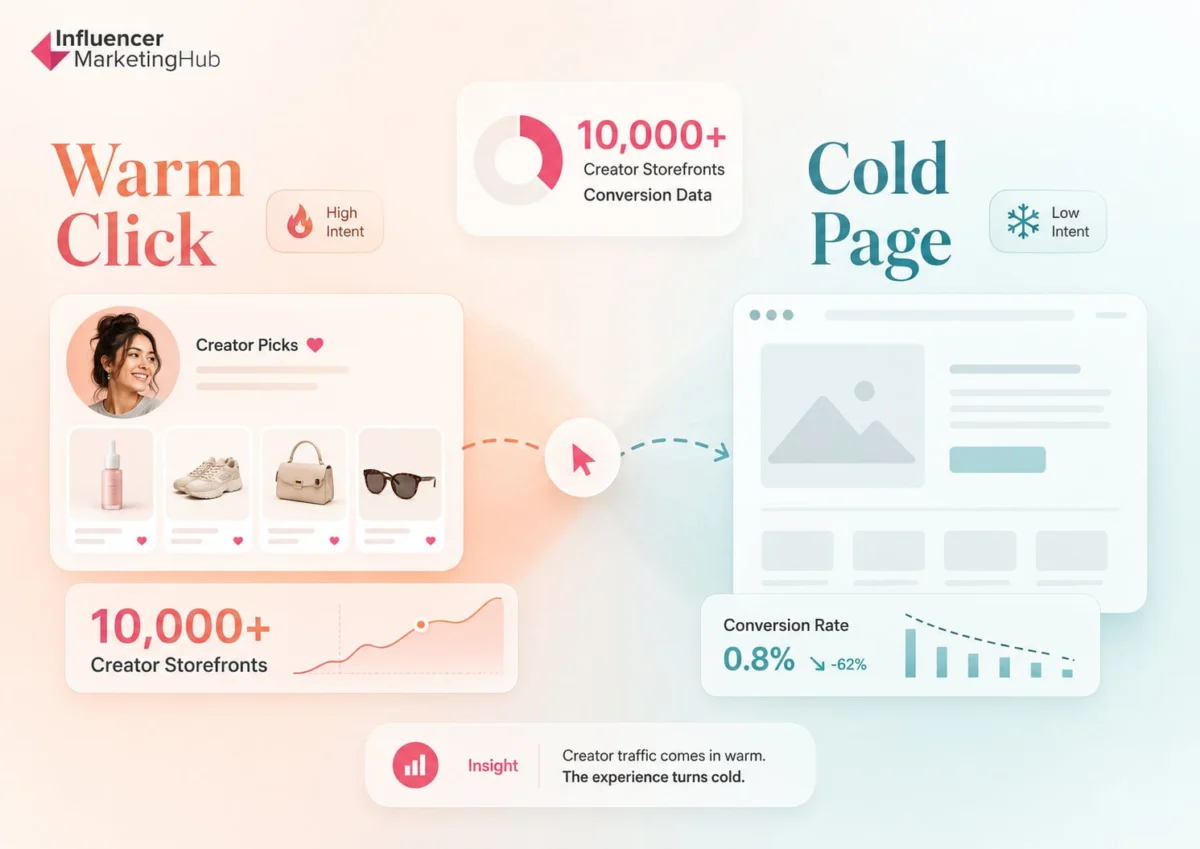
In the high-stakes world of influencer marketing, brand managers are obsessed with the top of the funnel. They spend countless hours auditing creator portfolios, negotiating intricate commission tiers, and obsessing over the perfect creative brief to ensure a campaign hits the right aesthetic. Yet, after 18 months of analyzing thousands of creator-led programs, a startling reality has emerged: the greatest bottleneck in influencer marketing isn’t the creator’s content—it’s where the traffic goes after the click.
Brands are reporting conversion rate lifts ranging from 30% to over 200% by changing one fundamental variable: the destination page. Despite this, many marketing teams continue to direct high-intent, "warm" traffic to generic homepages or static product pages, effectively killing the momentum built by the creator. This phenomenon, dubbed the "Warm Click, Cold Page" problem, represents one of the most significant, yet overlooked, inefficiencies in modern e-commerce.
The Anatomy of a Cold Handoff
To understand why this is a crisis, one must first understand the psychology of the "warm click." When a creator—be it a skincare expert, a fitness guru, or a culinary influencer—recommends a product, they are leveraging months or years of earned trust. Their audience doesn’t click out of random curiosity; they click because they have been primed by a trusted voice within a specific context.
When that follower clicks a link, they expect that context to persist. Instead, they are often dumped onto a brand’s generic homepage or a standard product page that treats them like a cold visitor who just arrived from a Google search. The page doesn’t recognize the creator, it doesn’t acknowledge the specific recommendation, and it certainly doesn’t extend the narrative that convinced the customer to click in the first place.
This is a "cold handoff." The affiliate mechanics function perfectly—the click is tracked, the attribution is recorded—but the user experience is severed. The customer’s enthusiasm, once high, meets the friction of a generic, impersonal website. In an era where personalization is the gold standard, this disconnect is driving away potential revenue at an alarming scale.
Chronology of the Shift: From Affiliate Links to Creator Storefronts
The evolution of influencer marketing has moved through three distinct phases, leading us to the current demand for specialized landing experiences.
Phase 1: The Wild West (2015–2018)
In the early days of influencer marketing, the objective was sheer volume. Brands were satisfied with simple vanity URLs or basic discount codes. The goal was to see if creators could drive any traffic at all. The landing experience was an afterthought, and the success of a campaign was measured almost entirely by total clicks and coupon redemptions.
![What Conversion Data From 10,000+ Creator Storefronts Reveals [Warm Click, Cold Page Problem]](https://influencermarketinghub.com/wp-content/uploads/2026/07/5a619d4d-chatgpt-image-jul-3-2026-12_33_04-pm.jpg)
Phase 2: The Optimization Era (2019–2022)
As programs matured, brands began to focus on conversion rates. They refined their creative briefs, implemented stricter brand guidelines, and utilized more sophisticated tracking software. However, they remained tethered to the belief that the brand’s main website was the "source of truth." The idea of diverting traffic to custom, creator-specific pages was viewed as an unnecessary technical burden on engineering teams.
Phase 3: The Contextual Commerce Era (2023–Present)
We are currently in the midst of a sea change. Leading direct-to-consumer (DTC) brands have realized that the landing page is not just a destination; it is an extension of the creator’s content. The rise of "creator storefronts" and co-branded landing pages has proven that when the creator’s identity, curated product picks, and unique voice follow the user through the checkout process, the conversion barrier collapses.
Supporting Data: The Case for Transformation
The evidence supporting this shift is not anecdotal; it is structural. Across several high-growth sectors, the data consistently shows that dedicated creator pages outperform generic destinations by a wide margin.
The Cozy Earth Case Study
Cozy Earth, a premium bedding and apparel brand, conducted an A/B test that became a blueprint for the industry. By moving their creator-referred traffic from standard affiliate links to dedicated, co-branded creator pages on their own domain, they witnessed an average conversion rate increase of 214%. Even more impressive was the 67% lift in Average Order Value (AOV), proving that curation leads to higher basket sizes.
The Healf Benchmark
UK-based health and wellness marketplace Healf, which manages over 1,700 creator partnerships, has reached a staggering 40.8% conversion rate on creator-referred traffic. Their leadership attributes this success directly to the creator-page model. By allowing creators to build storefronts they are proud to share, the brand has effectively gamified the experience for the creator, resulting in more authentic, high-converting promotions.
Beauty and Wellness Insights
Buttah Skin reported similar results, with a 30% jump in conversion and a 78% increase in AOV when switching from product pages to creator-curated landing experiences. Similarly, electrolyte brand Electro revealed that creator storefronts now account for 81% of their total e-commerce revenue—a milestone achieved not by spending more on influencers, but by simply optimizing where that existing traffic lands.
Implications for Modern Brand Strategy
The shift toward creator-specific landing pages forces a fundamental rethink of internal operations. It requires marketing teams to stop thinking of influencers as "top-of-funnel" traffic sources and start thinking of them as partners in the customer’s journey.
![What Conversion Data From 10,000+ Creator Storefronts Reveals [Warm Click, Cold Page Problem]](https://s.influencermarketinghub.com/imaginary/convert?type=webp&url=https://influencermarketinghub.com/wp-content/uploads/2026/07/d15fc009-image3-1024x490.jpg)
Curation Depth Beats Catalog Size
One of the most common mistakes brands make is thinking that giving a creator access to their entire catalog is a benefit. In reality, it causes decision paralysis. Data shows that pages featuring a tight curation of 6 to 15 products perform significantly better than those showing the full catalog. The shopper has already been sold on the creator’s taste; the landing page’s job is to confirm that taste, not to restart the consideration process with 200 options.
Trust Continuity
The creator must remain visible through the moment of purchase. This is the "trust continuity" principle. When a user lands on a page that features the creator’s photo, their specific language describing the products, and a personalized message, the psychological bridge from "content" to "commerce" remains intact. If the creator disappears once the user hits the landing page, the warm, human-to-human connection is replaced by a cold, transactional environment.
Implementing the 30-Day Test
For brands struggling with low conversion rates, the path forward is a simple, 30-day pilot program. Rather than overhauling the entire marketing stack, teams should follow this diagnostic approach:
- Select 5–10 active creators. Use a low-code landing page builder to create personalized hubs for each.
- Define the Experience. Ensure each page features the creator’s branding, their curated picks, and a seamless checkout experience.
- Track Key Metrics.
- Conversion Rate: A successful test should see a 20–30% lift in the first month.
- Average Order Value (AOV): If conversion rises but AOV stays flat, the page is missing the "editorial layer" (the creator’s personal narrative).
- 30-Day Repeat Rate: This is the ultimate health metric. High repeat rates indicate that the audience found genuine value in the recommendation, confirming that the traffic was not just curious, but aligned with the brand.
If your brand’s product pages convert at 3–4% but your creator traffic is hovering below 2%, the "warm click, cold page" problem is almost certainly your primary obstacle. Do not renegotiate commission rates or pivot your content strategy until you have fixed the destination.
Scaling the Solution: The Future of Creator Commerce
As brands scale to hundreds or thousands of creator relationships, the operational challenge becomes how to maintain this level of personalization without an engineering ticket for every single partner. The solution lies in the emerging "creator commerce" infrastructure—tools that allow brands to spin up thousands of unique, branded landing pages in minutes.
The brands that will win in the coming years are those that treat the landing experience as a core component of the creator relationship. The goal is to build a system where the creator feels like a curator and the customer feels like they are being guided, not sold to. By solving the "warm click, cold page" problem, brands can unlock the true, latent potential of their influencer programs, turning one-time transactions into loyal, long-term customers.
In the end, influencer marketing is about the transfer of trust. If that trust is lost at the moment of arrival, all the effort spent in the earlier stages of the funnel is wasted. It is time for brands to stop ignoring the destination and start valuing the customer’s journey from the first click to the final checkout.
 Iffa Jayyana
  Siti Muinah
  Asro
Asro 