
 By Nana Wu
Why do we crave specific products with such intensity? Why are certain brands—a Dairy Boy sweatshirt, a Dyson Airwrap, a Loewe tank—transformed from mere consumer goods into irresistible status symbols? And why do we justify the purchase of an overpriced wellness smoothie as a "rational" investment in our own lifestyle?
The answer lies in a fundamental shift in the commercial landscape. We have moved past the era of utility-based consumption. Today, the most successful brands are no longer selling items; they are selling entry into a curated, aspirational world. They are providing a shortcut to the person the consumer wants to become.
The Evolution of Consumer Psychology
Historically, market competition was driven by function: "This hammer is more durable than that one." Today, competition is driven by identity. As psychologist Russell Belk famously proposed through his theory of the "extended self," our possessions are no longer separate from our personalities; they are literal components of our identity.
When a consumer purchases a product, they are often buying a signal. M. Joseph Sirgy’s self-congruity theory explains this gravitational pull: we gravitate toward brands that mirror our current self-image or our idealized future self. Whether someone buys Nike gear to reinforce their identity as an athlete or to signal their aspiration to become one, the psychological outcome is identical.
This phenomenon is compounded by Pierre Bourdieu’s concept of "cultural capital." Consumption serves as a non-verbal language of taste and social belonging. By choosing the "right" brand—the one currently holding high cultural currency—the consumer signals to their peers: I understand this world. I belong here.
Chronology of a Paradigm Shift: From Utility to Lifestyle
To understand how we arrived at this "world-building" economy, one must look at the trajectory of marketing over the last three decades:
- The Utility Era (1990s–Early 2000s): Marketing was dominated by unique selling propositions (USPs). Advertising focused on features, benefits, and price points. The consumer was a rational actor looking for the best performance-to-cost ratio.
- The Digital Transition (2005–2012): The rise of social media began to democratize influence. Brands started realizing that digital presence was necessary, but they still treated social platforms as digital billboards for traditional campaigns.
- The Community & Creator Era (2015–2022): Trust shifted from corporate entities to individuals. Consumers began seeking "social proof" from peers and creators rather than polished television advertisements.
- The Immersive World Era (2023–Present): We have entered a phase where the "brand world" is the product. Brands like Dyson or Loewe curate an entire ecosystem—an aesthetic, a specific lexicon, a community of users, and a distinct "vibe"—that consumers pay a premium to inhabit.
Supporting Data: Why Creator Partnerships Are the New Infrastructure
The rise of the "creator-led" strategy is not a fad; it is a direct response to the fragmentation of traditional media. According to recent industry analytics, audiences now display a 70% higher trust rate in creator-led content compared to standard brand-produced advertising.
The reason is simple: creators provide "cultural fluency." While enterprise brands often possess the budget, logistics, and product quality, they frequently lack the ability to speak the language of the modern consumer. They are often perceived as outsiders trying to sell a product, whereas creators are perceived as architects of the world the audience already inhabits.
The Six Pillars of an Immersive Brand World
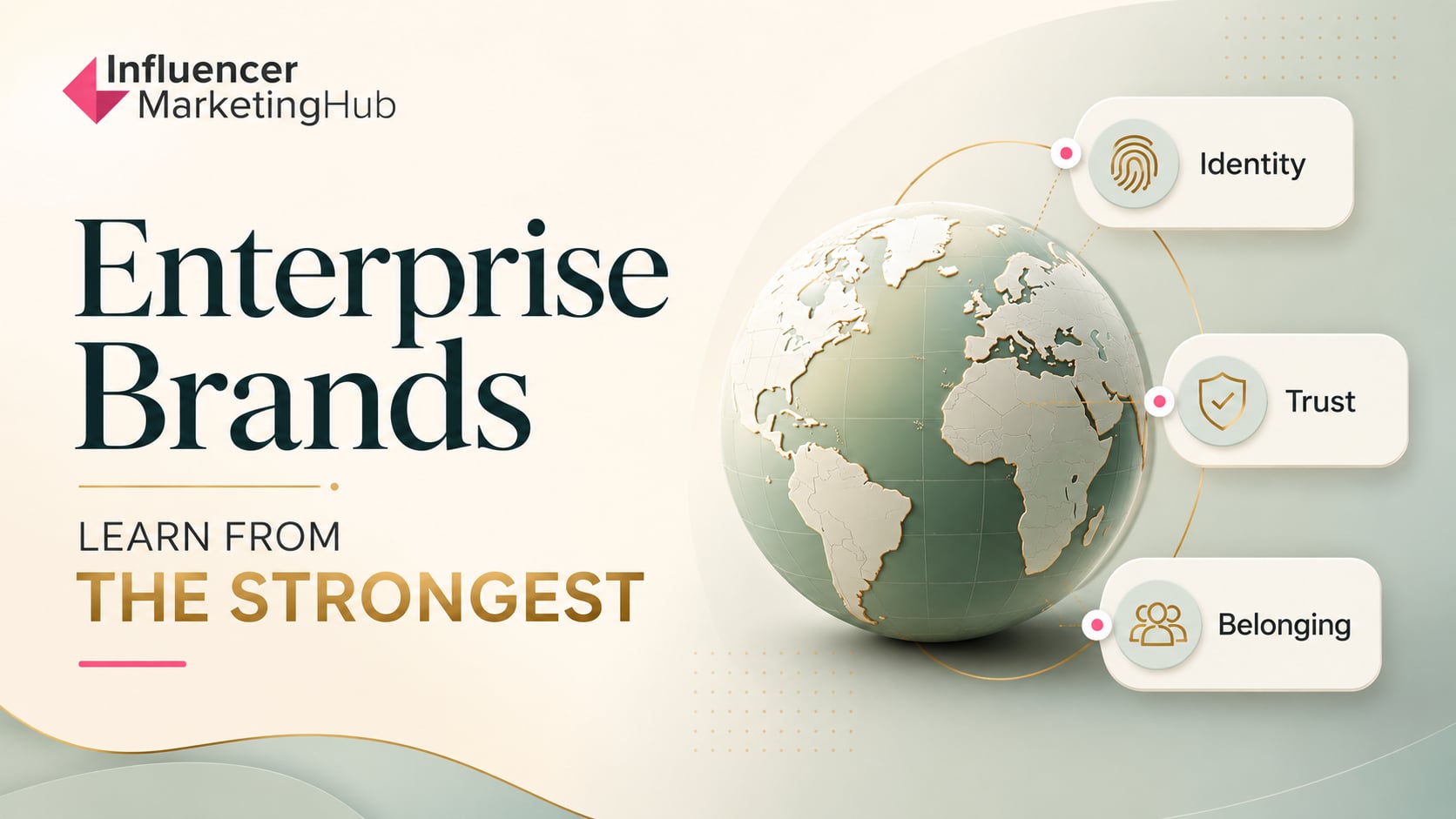
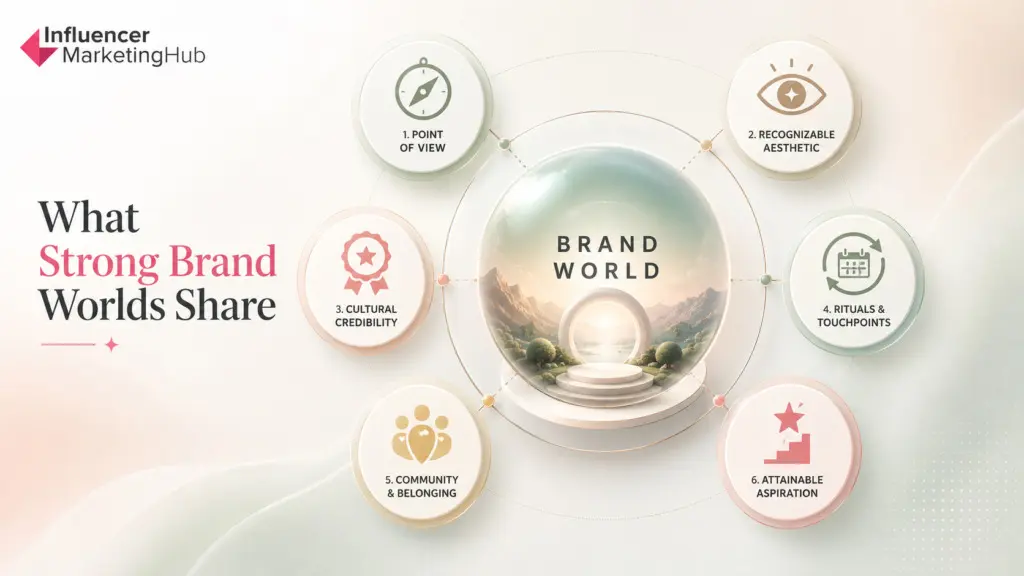
To transition from a commodity to an aspirational world, the most effective brands consistently hit these six benchmarks:
- Cultural Resonance: The brand aligns with the current zeitgeist, not just through trends, but through genuine participation in cultural conversations.
- Shared Aesthetics: The visual language of the brand is so distinct that it is instantly recognizable even without a logo.
- Community Rituals: The brand creates rituals—the way you prepare the product, the way you photograph it, the way you talk about it—that turn usage into a communal experience.
- Aspirational Alignment: The product acts as a "key" that unlocks a specific version of the consumer’s identity.
- Creator Co-Creation: The brand treats creators as strategic partners rather than distribution channels.
- Narrative Continuity: The brand tells a story that evolves over time, rewarding loyal followers with "insider" knowledge.
Official Perspectives: The View from the C-Suite
"The enterprise brands getting this right aren’t treating creators as a distribution channel," says Paula Bruno, founder and CEO of Intuition Media Group. "They are treating them as world-builders—co-architects of the brand’s cultural identity."
Bruno, who has spearheaded campaigns for global giants like Unilever, P&G, and Hyundai, notes that the failure of many large corporations stems from a lack of surrender. "When a brand insists on total control, they kill the magic," Bruno explains. "The most powerful partnerships feel like invitations, not advertisements. The creator isn’t just pushing a message; they are expanding the universe around the brand. If you treat creator strategy as just another line item on a media plan, you are effectively paying to be ignored."
Implications for the Future of Enterprise
The implications for large-scale enterprise brands are stark. The traditional "top-down" approach to marketing—where a boardroom dictates a message and media buyers push it out—is increasingly ineffective.
The "Death" of the Traditional Funnel
The traditional marketing funnel (Awareness → Interest → Desire → Action) is becoming obsolete. In the world-building economy, the goal is not to move someone through a funnel, but to provide a "portal" into a world. Once a consumer enters that world, the purchase becomes an inevitable byproduct of their belonging.
The Rise of the Co-Architect
Brands must now pivot toward a model of "co-architecture." This means:
- Moving beyond transactional deals: Instead of one-off sponsored posts, brands should build long-term relationships with creators who essentially act as cultural consultants.
- Prioritizing cultural relevance over reach: A million impressions mean nothing if they lack the context of the brand’s "world." It is better to have ten thousand highly engaged fans who "get it" than a million passive viewers who are indifferent.
- Investing in the "Wild": The strongest brand identities are being built in the chaos of the internet—through memes, community subreddits, TikTok trends, and genuine fan-driven rituals. Brands must learn to observe, support, and integrate these organic movements rather than attempting to manufacture them in a vacuum.
Conclusion: The Invitation Economy
Ultimately, the battle for consumer attention has become a battle for cultural space. As we navigate an increasingly crowded marketplace, products that lack a "world" will be forced to compete solely on price, leading to a race to the bottom.
Conversely, brands that successfully build a world—a place where the consumer feels seen, understood, and aspirational—will find that their products become secondary to the experience of belonging. As we look toward the future, the most successful enterprise brands will be those that have the humility to realize they cannot build these worlds alone. They will be the ones who open the doors, invite creators in, and allow their brand to evolve into something much larger than the sum of its parts.
The question for every brand leader remains: Is your product just a tool, or is it a ticket to a world your customers are dying to join?
 Iffa Jayyana
  Siti Muinah
  Asro
Asro 