
 By Pevita Pearce
In the hyper-competitive landscape of modern e-commerce, the standard playbook for email marketing is remarkably uniform: drive traffic, capture an email address, and push for a conversion. Most brands treat their subscriber lists as a collection of leads to be processed through a series of automated funnels—welcome sequences, browse abandonment reminders, and aggressive promotional blasts.
While these tactics are essential for maintaining steady revenue, they represent only the surface level of email’s true potential. The most resilient, recession-proof businesses are not merely converting subscribers into customers; they are converting customers into advocates. They are fostering a sense of belonging that turns a transactional relationship into a community.
As the digital marketing ecosystem becomes increasingly cluttered, the inbox remains one of the few channels where a brand can enjoy a direct, algorithm-free connection with its audience. When utilized with intention, email becomes a tool not just for sales, but for loyalty.
The Paradigm Shift: Defining the "Community" Mindset
To understand the evolution from a "list" to a "community," one must first recognize the distinction between the two. A list is a database of contact information. A community, by contrast, is a group of individuals who feel they belong to a shared identity or purpose.
Most e-commerce programs are fundamentally designed to optimize the "funnel." Every interaction is measured by its ability to move a user from awareness to purchase. While this infrastructure is necessary for business operations, focusing exclusively on it is a tactical error. Brands that treat the inbox as a relationship channel first and a revenue channel second often find that the revenue follows as a natural byproduct of increased trust.
When a subscriber feels part of a community, they stick around even when competitors offer lower prices. They recommend products without being incentivized by affiliate programs. They provide honest feedback, and they engage with the brand’s narrative. This is the difference between a business that survives a market downturn and one that thrives despite it.
Chronology of Connection: Building Trust Through Iteration
Building a community does not happen overnight; it is a cumulative process of proving value, consistency, and vulnerability. The journey usually follows a specific progression:
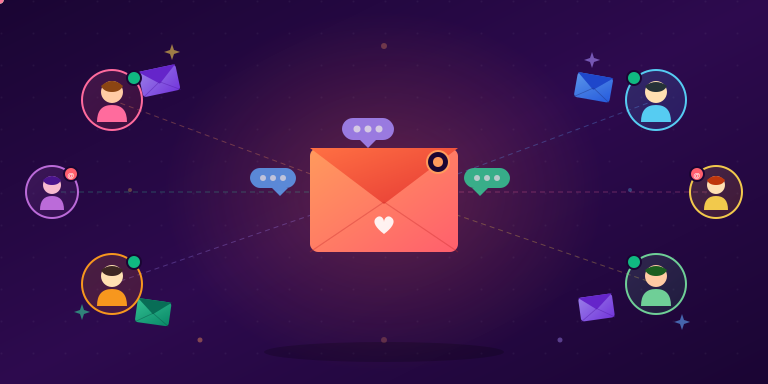
- The Introduction (Establishing Voice): The first few interactions after a sign-up set the tone. Does the brand sound like a corporate entity or a human being? Consistency in voice across every email—from the welcome note to the product announcement—is the foundation of brand identity.
- The Insider Phase (Granting Access): Once a subscriber is familiar with the brand, they must be transitioned from a spectator to an insider. This is achieved by sharing the "why" behind the "what." Instead of simply announcing a product launch, brands invite subscribers into the development process.
- The Dialogue Phase (Active Listening): The shift from one-directional broadcasting to two-directional communication occurs when a brand starts asking questions. This invites the subscriber to have a stake in the company’s future.
- The Advocacy Phase (Scaling the Loop): The final stage occurs when customers start speaking for the brand, sharing its content with their own networks and engaging in deeper, community-wide discourse.
Insider Access: The Currency of Community
The most effective way to foster a sense of belonging is to grant your subscribers "insider" status. This does not necessarily require expensive loyalty programs or exclusive gated content. It requires a shift in perspective regarding what you share.
Consider the "behind-the-scenes" approach. When launching a new product, provide a glimpse into the R&D process. Share the versions that failed before the current iteration was perfected. Detail the struggles of sourcing materials or the rationale behind specific packaging choices. By humanizing the process, you transform the subscriber from a mere purchaser into a stakeholder who feels invested in your success.
Furthermore, consider the power of the "founder-led" email. In an era of polished, high-gloss marketing assets, a plain-text email written in a conversational, personal tone can be startlingly effective. When a founder speaks directly to their audience about what they are building and why they care, it strips away the corporate veneer and builds a genuine, human-to-human connection.
The Power of Two-Way Communication: Listening at Scale
A common pitfall in digital marketing is the belief that email is a broadcast medium. However, the most successful brands treat it as a conversation.
The strategy is simple: ask questions, and then actually listen to the answers. This does not mean creating complex, twelve-question surveys that feel like administrative labor. It means asking one, thoughtful question at the end of a regular email—"What is the one thing you’re still trying to figure out regarding [Industry Topic]?" or "What should we build next?"
When a subscriber replies, the response must be genuine. While it is impossible to scale a personal response to 50,000 subscribers, even a handful of high-quality, authentic interactions per month can yield outsized results. These individuals often become your most vocal advocates. They are the ones who write detailed reviews, share your emails on social media, and provide the critical insights that can help steer your business in the right direction.
Defining Your Brand Voice: Identity as a Differentiator
Identity is the glue that holds a community together. If your brand’s voice is indistinguishable from every other player in your industry, you have failed to create a community.
Building a recognizable voice requires answering difficult questions:
- What does your brand believe about the industry it occupies?
- What is it willing to push back against?
- What does it refuse to do, even if competitors are doing it?
When these convictions are consistently woven into your communication, your subscribers begin to feel as though they know the brand. This familiarity creates trust. And trust is the ultimate hedge against market volatility.
Data-Driven Community Metrics
How do you measure the success of an effort as qualitative as "community building"? While revenue remains the ultimate KPI, community-focused brands monitor several nuanced metrics that indicate the health of their audience relationships:
- Reply Rate: This is the most direct indicator of two-way engagement. A low reply rate may suggest that your audience feels the "door" is closed.
- Forward Rate: When a subscriber forwards your email to a friend, they are effectively putting their own social capital behind your brand. It is one of the highest forms of validation.
- Referral Growth: Track how many new subscribers identify "a friend" as their source of discovery. A high percentage here indicates that your existing community is doing the heavy lifting of acquisition for you.
- Unsubscribe Patterns: Pay attention to why people leave. If you see a consistent unsubscribe rate across all emails, it’s a list issue. If you see spikes only on promotional emails while content-driven emails remain stable, you have a clear signal about what your community truly values.
Implications for Future Growth
The shift toward community-led email marketing is not merely a trend; it is a necessary evolution in an era of rising customer acquisition costs (CAC). As privacy regulations limit the effectiveness of traditional paid media, the importance of owned channels—specifically email—will only increase.
By treating subscribers as participants rather than recipients, businesses can build a moat around their brand. This approach requires patience and a long-term mindset. It requires moving beyond the "set it and forget it" automation mindset and embracing the messy, unpredictable, but ultimately rewarding work of building relationships.
For those looking to build this infrastructure, tools like Omnisend provide the necessary backbone. By offering sophisticated segmentation, robust automation for transactional tasks, and deep analytics, these platforms free up the founder’s time to focus on the human element—crafting the voice, asking the questions, and building the community that will sustain their business for years to come.
Ultimately, the most successful e-commerce brands are not those with the highest send frequency or the most complex funnels. They are the ones that make their subscribers feel like they are part of something larger than a transaction. That is a competitive advantage that no algorithm can replicate.
 Suro Senen
  Evan Lee Salim
  Ammar Sabilarrohman