
 By Jia Lissa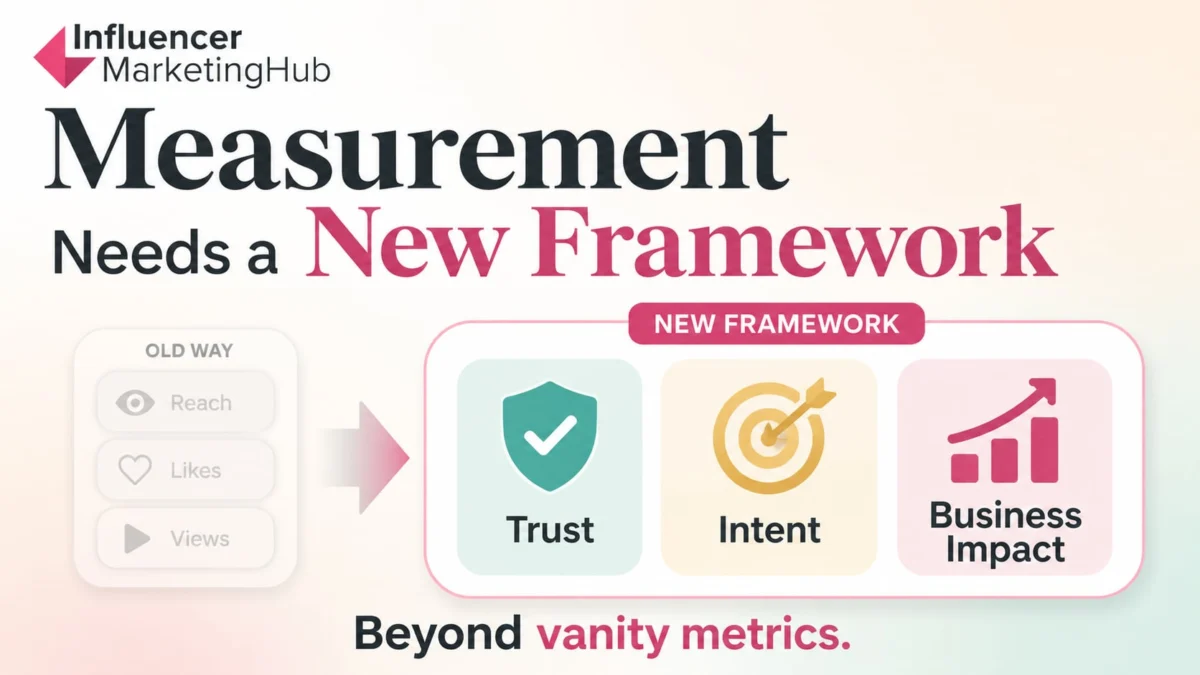
As we navigate the landscape of 2026, the creator economy has undergone a seismic shift. For years, the industry relied on a "common language" of platform-native metrics: views, likes, and completion rates. However, as creator programs transition from experimental side-projects to core pillars of global marketing operations, these standard metrics are increasingly being viewed as artifacts of a simpler time.
The consensus among industry leaders is clear: platform metrics no longer tell the full story. While they remain useful for gauging distribution efficiency, they fail to capture the complex, multi-touchpoint reality of modern consumer behavior. For brands, the challenge is no longer just about "reach"—it is about navigating a fragmented digital ecosystem where the most significant conversions often happen in the shadows of AI-driven discovery.
The Mirage of Platform Metrics: Where Measurement Breaks Down
Standard platform metrics—views, completion rate, and engagement rate—are not inherently meaningless. They serve as essential indicators of top-of-funnel health, providing a pulse on whether content has successfully captured attention in a crowded feed. However, the crisis in measurement arises when brands apply a "one-size-fits-all" scorecard to diverse content strategies.
"What we see repeatedly is creator content being evaluated through a single scorecard, regardless of what that content was designed to do," says Paula Bruno, founder and CEO of Intuition Media Group. "When you judge a top-of-funnel awareness video by the same conversion metrics as a shoppable post, you aren’t just getting incomplete data; you are getting a distorted view of reality."
This misalignment leads to the premature termination of high-potential campaigns. A narrative-driven endorsement, for instance, might not drive immediate clicks, but it builds the brand equity necessary for a consumer to search for that product three weeks later. By ignoring the context of the content’s intent, teams are essentially comparing apples to oranges and declaring the apples "failures" because they aren’t oranges.
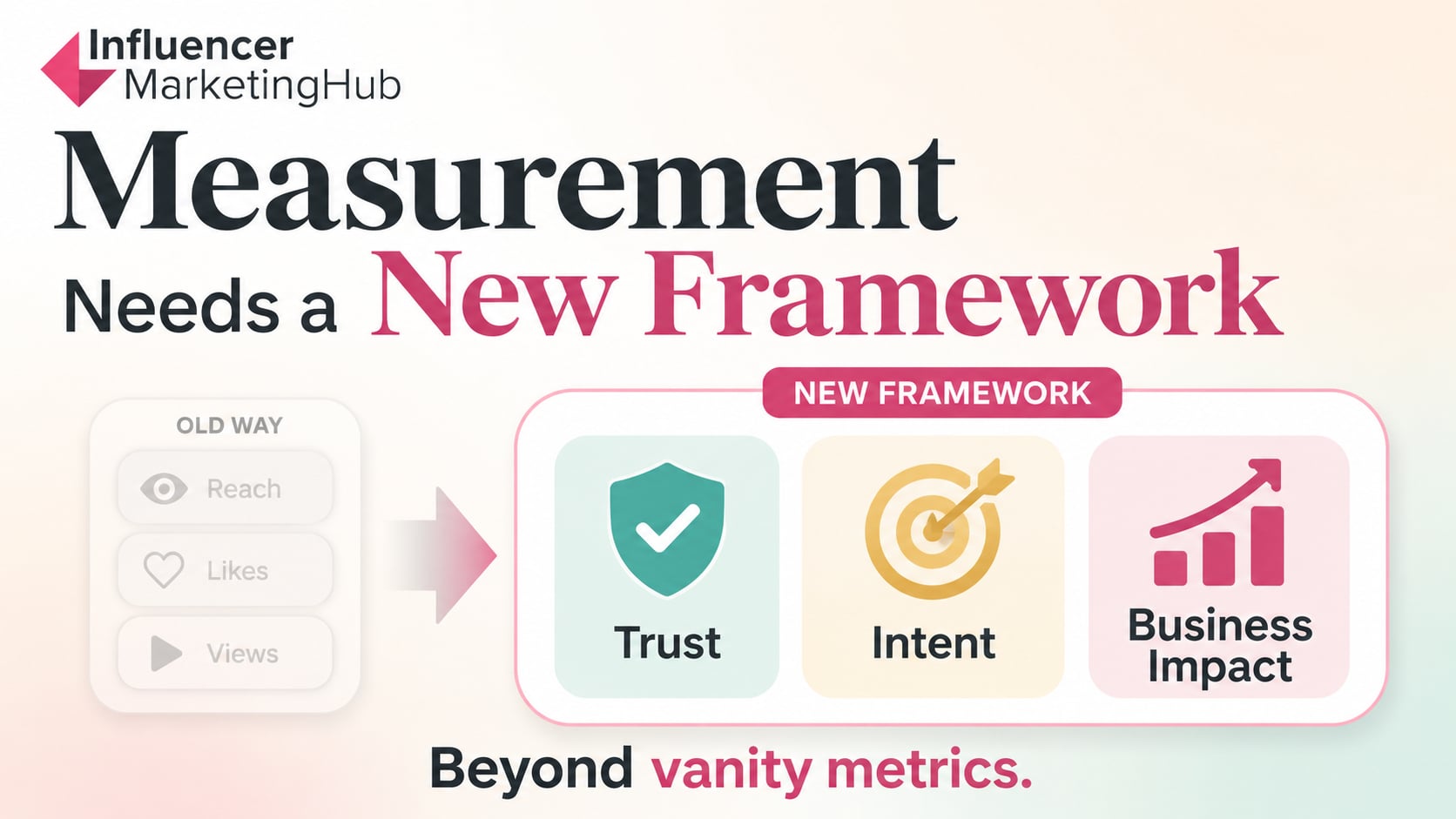
The Layered Measurement Stack: A New Framework
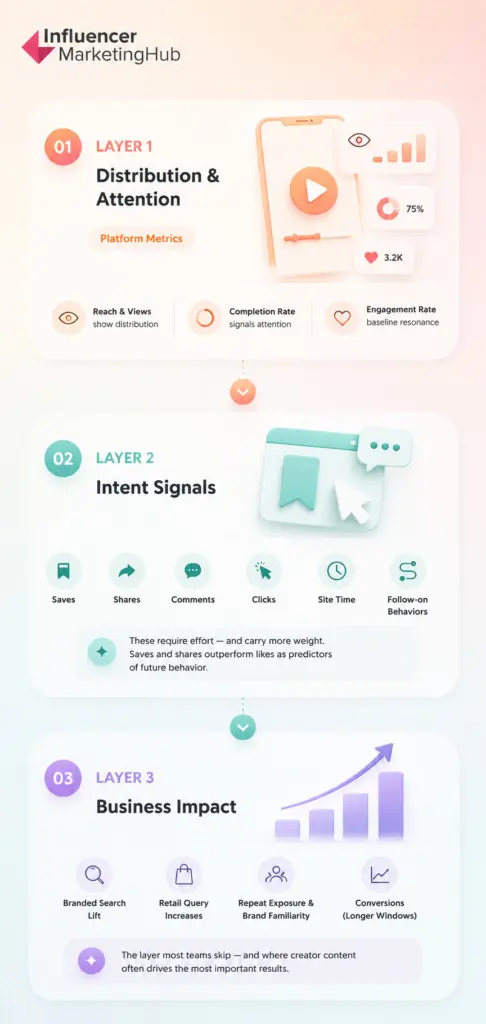
To survive the 2026 marketing environment, agencies and brands must adopt a "Layered Measurement Stack." This approach does not discard platform metrics; rather, it categorizes them into a hierarchy of intent and business impact.
Layer 1: Distribution & Attention (The Baseline)
This layer captures the fundamental reach of the content. It answers the binary question: Did the content successfully penetrate the noise? By tracking impressions, reach, and average watch time, brands can determine the efficiency of their distribution. This is the foundation, but it is merely the starting point.
Layer 2: Intent Signals (The Behavioral Filter)
This is where the measurement becomes more sophisticated. Intent signals require audience effort—actions like saving a post, sharing it with a peer, or leaving a thoughtful, long-form comment. Data indicates that these signals are far more predictive of future purchase behavior than a "like." When a user saves a product demo, they are signaling a high-intent, lower-funnel consideration.
Layer 3: Business Impact (The True North)
This final layer is where most teams falter. It connects creator content to tangible business outcomes: branded search volume, coupon code redemption, affiliate-driven traffic, and, crucially, offline retail movement. By integrating these metrics, brands can finally bridge the gap between "influence" and "revenue."
The Catalyst: AI-Driven Discovery and the Shift in Consumer Behavior
The urgency to overhaul measurement practices is being accelerated by the rise of AI-driven discovery. As of 2026, more than half of U.S. consumers are utilizing Large Language Models (LLMs) to conduct their shopping research. They are asking AI, "What is the best running shoe for high arches?" or "Which skincare brand is most sustainable?"
In this new paradigm, AI is not "inventing" opinions; it is synthesizing the vast ocean of high-quality, creator-led content that already exists. This changes the game in two specific ways:
- Content as "Training Data": Creator content now acts as the primary source material for AI models. High-quality, authentic reviews and editorial-style content are more likely to be surfaced by AI agents when a consumer asks for a recommendation.
- Decoupled Attribution: Because the conversion often happens after an AI interaction—which may lead the user to a search engine or a retail site—the original "influence" event is often disconnected from the final transaction in standard analytics dashboards.
This creates a scenario where the most impactful creator content might appear to have "low engagement" on the platform where it was posted, yet it is simultaneously driving significant business lift through external channels.
Strategic Segmentation: Matching Content to Intent
The most successful brands in 2026 are those that segment their creator programs by purpose. The "New Framework" requires a clear distinction between three primary content archetypes:
- Endorsement Content: Designed to build trust and authority. Success here is measured by community sentiment, shares, and long-term brand recall.
- Discovery Content: Designed to reach new audiences. Success is measured by reach, share of voice, and platform-specific attention metrics.
- Performance Content: Designed to drive immediate action. Success is measured by click-through rates (CTR), conversion rates, and ROAS (Return on Ad Spend).
By assigning specific KPIs to these roles, brands avoid the trap of "penalizing" awareness content for lacking conversion signals. The framework finally matches the intent.
The Road Ahead: An Honest Approach to Measurement
What does the "New Framework" look like in practice for a modern enterprise?
First, it involves moving away from platform-siloed reporting. Forward-thinking teams are now integrating their creator data into their broader Marketing Mix Modeling (MMM) and Multi-Touch Attribution (MTA) tools. They are asking, "How did this campaign affect our branded search queries?" and "Did we see a lift in retail velocity during the campaign period?"
Second, it requires a shift in how agencies and creators collaborate. Instead of focusing solely on the "delivery" of a post, agencies like Intuition Media Group are working with brands to build "creator ecosystems"—long-term, compounding relationships that build cultural relevance over time.
"The new measurement framework isn’t necessarily more complicated," notes Bruno. "It’s just more honest. It asks us to look at the data not as a series of disparate numbers, but as a map of the customer’s journey. If we are honest about what we are trying to measure—awareness, consideration, or conversion—we can finally stop chasing vanity metrics and start building real, measurable business value."
Implications for the Industry
As we look further into 2026 and beyond, the implications for the creator economy are profound:
- For Creators: The premium will shift toward those who can produce content that stands the test of time and provides genuine value, making it "AI-ready" for future discovery.
- For Brands: The mandate is to invest in infrastructure. You cannot measure cross-platform, long-term impact with a spreadsheet. Brands will need to invest in data integration and sophisticated analytics suites.
- For Agencies: The role of the agency is evolving from "talent management" to "strategic data partners." The winners will be those who can demonstrate how a specific piece of creator content contributed to the bottom line, even when the data trail is fragmented.
In summary, the era of the "vanity metric" is effectively over. The future of influencer marketing belongs to those who view the creator economy not as a social media channel, but as a fundamental engine of consumer discovery and business growth. By adopting a layered, intent-based measurement strategy, brands can ensure they aren’t just making noise—they are making an impact.
 Iffa Jayyana
  Siti Muinah
  Asro
Asro 