
 By Nana Muazin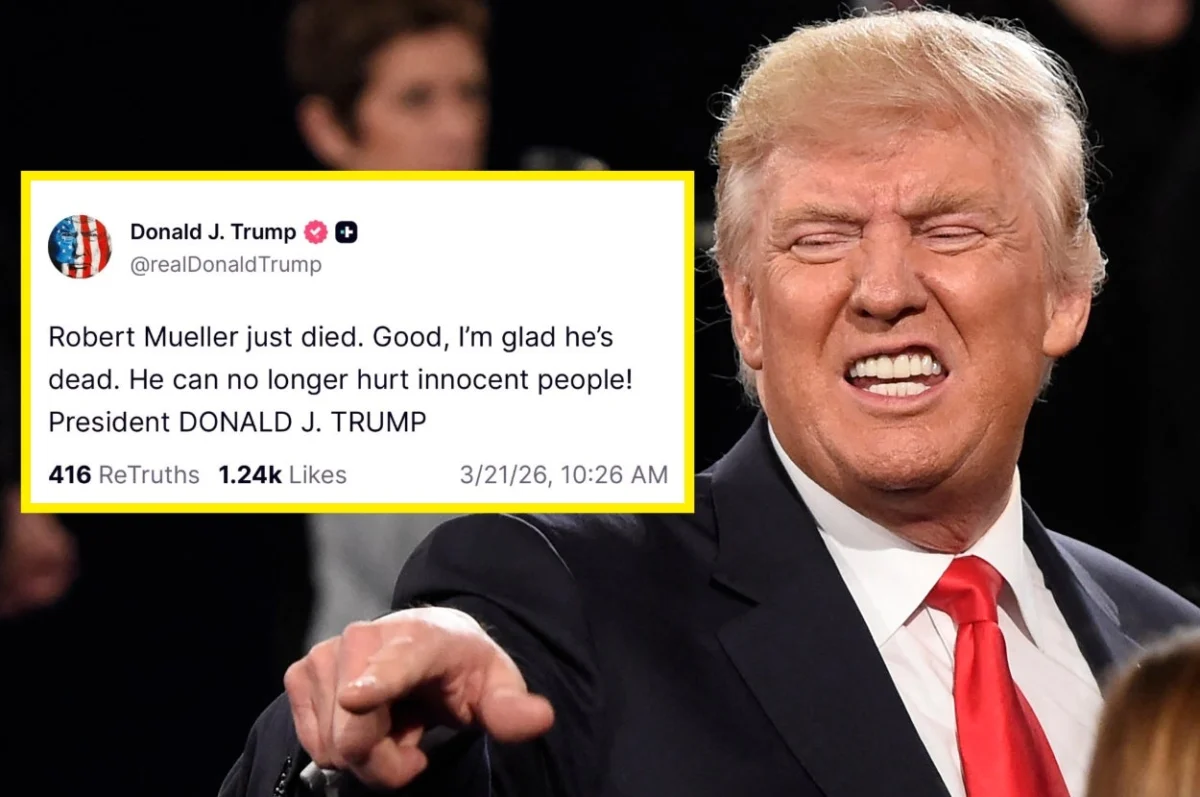
In the traditional theater of American politics, the presidency is often viewed as the ultimate arbiter of national mourning. When public figures pass away or face life-altering health crises, the office of the President is expected to serve as a beacon of unity, transcending partisan divides to offer grace, dignity, and reflection. However, the tenure and public persona of Donald Trump have frequently subverted these norms. Throughout his political career, Trump has repeatedly utilized moments of national tragedy, political bereavement, and personal medical struggles to settle scores, stoke grievances, or reinforce his own political brand.
This behavior, which critics characterize as a profound breach of executive decorum, has sparked consistent controversy. From long-standing rivals to political allies, few have been spared from comments that many observers describe as deeply insensitive. This article examines the pattern of these interactions, the implications for presidential discourse, and the broader impact on a polarized American public.
The Expectation of Executive Decorum
The office of the Presidency demands a degree of "tactical empathy." Whether navigating international conflicts, managing trade agreements, or addressing a nation in grief, the leader of the free world is expected to maintain a steady hand. Historically, even the most bitter political adversaries have observed a "truce" in the face of death or severe illness.
For Donald Trump, however, such truces have been rare. His communication style, characterized by a direct, often unfiltered reliance on social media and rally rhetoric, prioritizes his own narrative over the sensitivities of the moment. This has created a recurring cycle: a public figure faces a crisis, an initial moment of political obligation—often a brief, formal expression of well-wishes—is followed by a pivot to aggressive, personal, or political criticism.
A Chronology of Controversy: Case Studies in Tactlessness
The following instances illustrate the consistent nature of this behavior over the last several years.
1. Joe Biden: A Pivot from Sympathy to Viciousness
In May 2025, former President Joe Biden announced he had been diagnosed with an aggressive form of prostate cancer. Initially, the response from the Trump camp and the former president himself was framed in the language of standard political courtesy, with Trump posting "best wishes" on his Truth Social platform.
However, the veneer of civility was short-lived. Within weeks, Trump engaged in a lengthy, televised rant during which he actively discouraged his base from expressing sympathy for his successor. "If you feel sorry for him, don’t feel sorry, because he’s vicious," Trump stated. The timing of the comments, coming shortly after the initial diagnosis, led to a wave of criticism from across the political spectrum, with observers noting the jarring contrast between the gravity of a cancer diagnosis and the political hostility maintained by the former president.
2. Robert Mueller: The Celebration of a Rival’s Passing
The relationship between Donald Trump and former FBI Director Robert Mueller was defined by the high-stakes investigation into Russian interference in the 2016 election. Following Mueller’s diagnosis with Parkinson’s disease in 2021 and his subsequent death in 2026, Trump’s reaction was notably devoid of the customary respect shown to public officials.
In a post on Truth Social, Trump wrote, "Robert Mueller just died. Good, I’m glad he’s dead. He can no longer hurt innocent people!" This statement drew intense condemnation from legal scholars and political historians, marking a significant departure from the norm of "de mortuis nil nisi bonum"—speak nothing but good of the dead.
3. John Dingell: The Question of Afterlives
During a rally, Trump recounted a phone call with Representative Debbie Dingell, in which she thanked him for his support following the death of her husband, the long-serving Rep. John Dingell. Trump’s retelling of the event was intended to emphasize his own generosity, but it quickly devolved into a jab at the deceased. After noting that Debbie Dingell believed her husband was "looking down" on them, Trump remarked, "Maybe he’s looking up, I don’t know," implying the late congressman was in hell.
4. The Assassination of Melissa and Mark Hortman
The murder of Minnesota House Speaker Emerita Melissa Hortman and her husband, Mark, in June 2025, was a national tragedy that shocked the political establishment. Yet, even in the wake of such violence, Trump utilized the event to perpetuate conspiracy theories. He shared a video on social media suggesting that Governor Tim Walz had been involved in the assassination. The baseless nature of the claim, combined with the context of a brutal double-homicide, led to fierce rebukes from leaders who argued that the former president was using a tragedy to endanger political opponents.
5. Rob Reiner: TDS and the Politics of Grief
When filmmaker and activist Rob Reiner passed away in December 2025, the response from public figures was largely one of tribute, focusing on his contributions to cinema and social justice. Trump, however, used the announcement of Reiner’s death to rail against "Trump Derangement Syndrome" (TDS). In a lengthy post, he lamented the "affliction" that he claimed had driven Reiner to obsess over him, effectively using a death notice as a platform to reiterate his own perceived greatness.
6. John McCain: The "Loser" Narrative
Perhaps the most enduring example of this behavior occurred following the 2018 death of Senator John McCain. Reporting from The Atlantic suggested that Trump had expressed frustration over the national mourning process, allegedly questioning why flags were being flown at half-staff for a man he labeled a "loser." Despite a formal proclamation, Trump’s public and private comments regarding McCain—often centered on policy disagreements regarding healthcare—continued for months after the senator’s passing.
7. Lindsey Graham: A Memorial Muddled by Golf
Most recently, following the death of Senator Lindsey Graham in July 2026, Trump’s tribute shifted rapidly from praise to triviality. After acknowledging Graham as a "patriot," Trump pivoted to discussing legislation and, eventually, the senator’s golf game. By emphasizing that Graham was "not Tiger Woods" during a discussion about his passing, the former president once again highlighted his tendency to center his own observations, regardless of the solemnity of the occasion.
Implications for the American Political Landscape
The pattern of these responses raises significant questions about the nature of modern political discourse. When the highest levels of government normalize the weaponization of personal tragedy, the "norms" of public service begin to erode.
The Normalization of Grievance
For supporters, Trump’s behavior is often interpreted as "authenticity." They view his refusal to adhere to traditional scripts as a rejection of the "political establishment" and a demonstration of strength. However, for critics, this behavior represents a decline in the moral authority of the presidency. By focusing on personal grievances during moments of national mourning, the former president arguably narrows the space for collective healing.
The Impact on Institutional Trust
When a president uses the death of a public servant to settle a score, it complicates the public’s ability to view that institution as a neutral or stabilizing force. Each instance of tactlessness serves to reinforce a binary: you are either with the president or you are an object of his derision, even in death. This has contributed to a climate where empathy is increasingly viewed through a partisan lens, making it difficult for the nation to find common ground.
Conclusion
The history of Donald Trump’s responses to the deaths and illnesses of his peers is a clear reflection of his approach to power. It is an approach that rejects the traditional "statesman" model in favor of a combative, individualized style of communication. Whether this strategy will have long-term consequences for the presidency remains a subject of intense debate. What is clear, however, is that as long as these patterns persist, they will continue to define the boundaries of what is considered acceptable—and unacceptable—in the highest office of the land.
The legacy of these moments is not merely in the words spoken, but in the precedent they set for future generations of leaders who must decide whether the presidency should be a bully pulpit for grievances, or a platform for the empathy that a divided nation often desperately requires.
 Ammar Sabilarrohman
  rifanmuazin
  Suro Senen