
 By Lina Hope
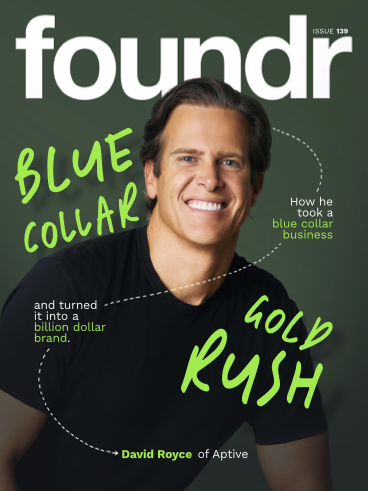
In the high-stakes world of modern entrepreneurship, the common narrative follows a predictable script: a tech-savvy visionary codes a revolutionary app in a garage, secures venture capital, and aims for a Silicon Valley IPO. David Royce, the founder and chairman of Aptive Environmental, tore up that script. Instead of pursuing the prestige of investment banking or the flash of the tech sector, he dove headfirst into the "unsexy" trenches of residential pest control—an industry his finance-degree peers wouldn’t have touched with a ten-foot pole.
Today, Royce stands as one of the most successful, yet stealthy, wealth builders in American business. He has orchestrated multiple eight- and nine-figure exits and scaled Aptive to over $500 million in annual revenue. His philosophy is refreshingly contrarian: success isn’t about picking the "right" industry or having the perfect pedigree. It is about a relentless willingness to perform the work others shun, for long enough to become the undisputed master of it.
The Early Years: From "Not Smart" to Top-Tier Salesman
Royce’s trajectory was not pre-ordained. As a child, he struggled academically, a byproduct of undiagnosed ADHD that made traditional schooling feel like a prison. He spent years believing he simply wasn’t intelligent. That changed in the sixth grade when a teacher named Mrs. Luft saw his potential, instilling a belief in him that he eventually learned to cultivate for himself.
"In boring environments, ADHD is brutal," Royce reflects. "But in environments I care about, it’s a superpower. Sales and entrepreneurship were the first places my brain felt like an asset instead of a liability."
His entry into the pest control industry was entirely accidental. While in college, a friend bragged about earning $25,000 in a single summer selling pest control door-to-door. Intrigued, Royce headed to Sacramento. The reality, however, was a baptism by fire. For his first five days, he sold nothing. While his peers were closing deals, Royce was effectively performing free cardio.

Rather than calling home in defeat, Royce spent his weekend in a bookstore, devouring six books on sales technique and committing to 90 minutes of daily study. By the end of the summer, he was the top sales rookie in a company of 200. He had learned a lesson that would define his career: "Persistence is genius in disguise."
Chronology of a Scaling Machine
Royce’s rise from a summer salesperson to a serial entrepreneur followed a calculated, disciplined path.
The Foundation (College Years)
During four college summers, Royce earned roughly $225,000—a staggering sum for a student—which he initially earmarked for an MBA. However, his mentor, who had just sold his own pest control startup for $10 million, posed a life-changing question: "Why go work 100-hour weeks for someone else when you can start your own company?"
The First Leap
Royce invested his $300,000 in savings into his first venture. He utilized his finance degree to optimize the operations that his mentor identified as pain points. He chose the "unsexy" opportunity over the "impressive" image, launching into a industry ripe for disruption.
The Cash Flow Crisis
In his first year, Royce nearly went bankrupt in Los Angeles—not because the business was failing, but because it was succeeding too quickly. The model required paying sales commissions before the recurring revenue had fully materialized. He had projected 5,000 customers but hit 7,500. He navigated this by negotiating with his sales leaders, offering 10% interest on deferred bonuses. This "near-death" experience cemented his mantra: "Revenues are vanity, profits are sanity, but cash flow is reality."
The "Golden Goose" Strategy
Before Aptive, Royce sold three companies to the same strategic buyer. Crucially, he retained his core leadership team and salesforce in every deal. By selling only the customers and the technicians—the "streams of recurring revenue"—he kept his "golden goose" intact. He would then take the capital and launch the next venture with the same high-performing team, avoiding equity dilution and investor interference.
Supporting Data: Why Blue-Collar is the New Gold
Royce’s success highlights a massive, often ignored segment of the economy. According to data, roughly 43% of the top 0.1% of U.S. income earners—those making $2.3 million or more annually—are in "boring" blue-collar industries.
These sectors possess several structural advantages:
- Essential Demand: Bugs, plumbing issues, and electrical failures do not adhere to economic cycles. As Royce puts it, "Bugs don’t read The Wall Street Journal."
- AI Resilience: While AI can automate legal analysis or coding, it cannot physically service a home. This creates a moat around labor-intensive, essential services.
- The "Silver Tsunami": A massive demographic shift is occurring as Baby Boomer owners of these service-based businesses retire, creating a vacuum of opportunity for younger, tech-enabled entrepreneurs to acquire or disrupt these companies.
Corporate Culture as a Competitive Moat
Royce’s approach to culture is highly intentional. Inspired by Tony Hsieh’s Delivering Happiness, Royce realized that culture is not about "vibes" or ping-pong tables—it is about design.
Aptive’s culture is defined by two primary pillars:

- The Training Machine: Royce built a sales program that made representatives 70% more productive than their counterparts at competing firms.
- Equity Alignment: Royce gave away 25% of the company to his employees. At the point of scale, this resulted in many staff members receiving six- and seven-figure payouts, allowing them to pay off mortgages and support their families.
"Ownership is a far better retention tool than ping-pong tables," Royce notes.
The Lessons of Leadership and Letting Go
The most difficult transition for any founder is moving from "hero" to "architect." For a decade, Royce groomed a protégé to take over as CEO of Aptive. When he finally stepped aside, he faced the ultimate test: staying out of the way.
He also learned the hard way about the dangers of hiring "on paper." After hiring a CFO from a billion-dollar tech company, Royce gave him autonomy, only to watch as the company missed forecasts. This botched the company’s attempt to sell a portion of the business, as potential buyers withdrew their offers.
"Resumes don’t run companies. People do," Royce admits. The lesson was threefold: trust but verify, never miss forecasts during a sale process, and understand that failing to find a buyer on the first attempt is not a defeat, but a learning opportunity.
Implications for Future Founders
The legacy David Royce hopes to leave behind is not the billion-dollar valuation, but the leaders he developed along the way. His journey serves as a blueprint for the modern entrepreneur:
- Solve the Boring Problems: The most lucrative opportunities are often found in industries that others find beneath them.
- Master the Unit Economics: Understand that cash flow is the lifeblood of growth. Without it, the fastest-growing company can collapse.
- Build Leaders, Not Followers: A true measure of success is how many leaders you empower. When you can step away from your company and it thrives without you, you have moved from being a business owner to an architect of wealth.
As Royce reflects on his career, he emphasizes that the summit is merely a waypoint. "Entrepreneurship isn’t really about a big exit or financial freedom. It’s the expertise, discipline, and character you develop along the way. If you don’t enjoy the climb, the summit is going to disappoint you."
 Asep Darmawan
  Suro Senen
  Evan Lee Salim