By Tech & Digital Media Correspondent Published: Digital Media Review
Main Facts
In the modern digital economy, the demand for high-volume, high-quality written content has outpaced the capacity of traditional human-led creative teams. From small business owners and independent bloggers to large-scale enterprise marketing departments, the pressure to maintain an active digital footprint—spanning search engine optimization (SEO) blogs, social media campaigns, email newsletters, and e-commerce product descriptions—has driven an unprecedented reliance on ArtificialIntelligence (AI).
AI content generators leverage advanced Large Language Models (LLMs) and natural language processing (NLP) architectures to analyze vast datasets, identify stylistic patterns, and generate coherent, contextually relevant text in a fraction of the time required by a human writer.
As the market matures, choosing the appropriate software has become increasingly complex. To navigate this expanding ecosystem, industry analysts have evaluated the top 10 AI content generator platforms available to marketers, bloggers, and enterprise organizations. This review analyzes their features, pricing tiers, and ideal use cases, providing a definitive guide for digital content strategy.
The journey of AI content generation has evolved rapidly over the past half-decade:
2018–2019 (The Inception Phase): Early NLP models, such as OpenAI’s GPT-2, demonstrated the potential of machine-generated text, though outputs were often repetitive, prone to factual inaccuracies, and limited in contextual awareness.
2020–2021 (Commercialization and Specialization): Platforms began building proprietary layers and user interfaces on top of advanced LLMs. Tools like Jasper (initially known as Jarvis) and Copy.ai emerged, targeting specific marketing workflows such as ad copy and short-form social media posts.
2022 (Mainstream Integration and SEO Specialization): AI writing software transitioned from experimental novelties to essential business tools. Platforms introduced long-form "Boss Modes," integrated plagiarism checkers (such as Copyscape integrations), and deep SEO optimization features (exemplified by Frase and Article Forge).
Present Day (Multimodal and Enterprise Scale): Today’s AI generators offer multi-language support, direct publishing integrations, e-commerce catalog automation, and highly customized workflows tailored to enterprise compliance and brand voices.
Supporting Data & Platform Evaluations: The Top 10 AI Writing Tools
1. Jasper AI (Formerly Jarvis)
Overview: Widely recognized as a market leader, Jasper utilizes advanced AI to adapt to specific writing styles and formats across various mediums efficiently.
Special Offer: Available promotions often include 10,000 free credits upon sign-up through authorized partner links.
Verdict: Ideal for professional content teams and agencies requiring high-volume, brand-consistent long-form output.
2. Copy.ai
Overview: Designed primarily for marketing professionals, Copy.ai offers over 90 specialized templates to accelerate the production of marketing copy, social media posts, and sales emails.
Key Features: Bullet-point-to-blog conversion, hook text generation, general advertising templates, and product descriptions.
Pricing:
Free Trial: 7 days with 100 runs per day and 24/7 email support.
Pro Plan: $49/month, or billed annually at $35/month ($420 total).
Special Offer: Sign-up programs offer 7,000 free words plus a 40% discount on paid plan upgrades within four days.
Verdict: Best for digital marketers and social media managers focused on short-form conversion copy.
3. Frase AI
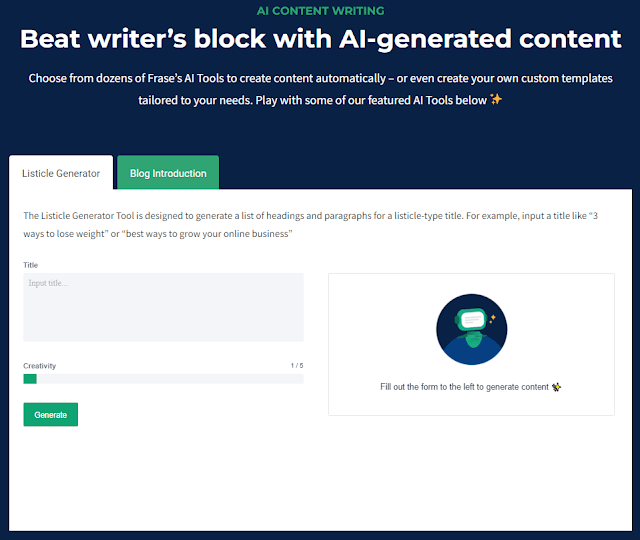
Overview: Frase merges AI content generation with sophisticated SEO research and optimization tools, enabling users to create search-engine-friendly content rapidly.
Guarantee: Backed by a 30-day money-back guarantee.
Verdict: Highly efficient for automated blog networks and publishers seeking hands-off, budget-friendly bulk content creation.
5. Rytr
Overview: A versatile and accessible AI assistant suited for budget-conscious users, students, and small business owners.
Key Features: Built-in plagiarism checking, tone-of-voice customization, and support for over 30 languages.
Pricing:
Free Plan: Limited features, up to 5,000 characters per month.
Saver Plan: $9/month or $90/year.
Verdict: An affordable entry point for solopreneurs and beginners needing basic writing assistance.
6. Writesonic
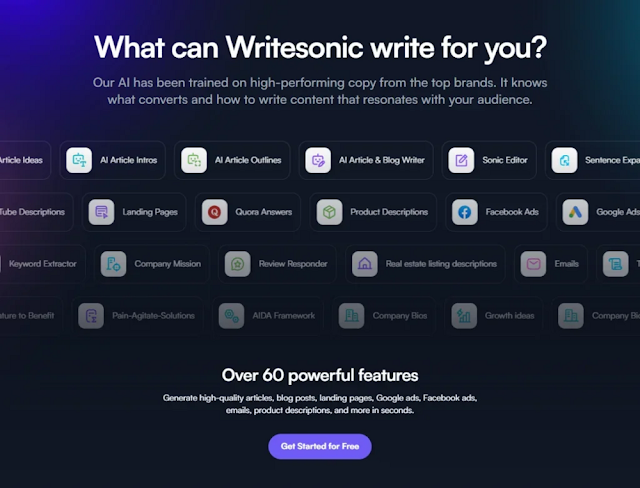
Overview: Writesonic positions itself as a comprehensive copywriting and article-writing platform equipped with native grammar and plagiarism checking tools.
Key Features: Landing page copy, long-form blog writing, paraphrase tools, and article summarizers.
Pricing:
Free Trial: 10 introductory credits.
Short-form Plan: $15/month.
Long-form Plan: $19/month.
Verdict: Excellent value for solo creators looking for long-form capabilities at a lower price point.
7. CopySmith
Overview: CopySmith is engineered for enterprise workflows, e-commerce teams, and agencies needing rapid content generation at scale.
Key Features: Bulk product description generation, content re-writing, team collaboration workflows, and campaign management.
Pricing:
Free trial available with no credit card required.
Starter Plan: $19/month.
Enterprise Plan: Custom-tailored pricing.
Verdict: Suited for large e-commerce catalogs and agency environments requiring collaborative content operations.
8. Hypotenuse.ai
Overview: A specialized platform tailored specifically for e-commerce brands, retailers, and digital storefront managers.
Key Features: Automated product description generation from technical specs, bulk spreadsheet processing, and AI image generation.
Pricing:
Free trial available.
Starter Plan: $29/month.
Growth Plan: $59/month.
Enterprise Plan: Custom pricing.
Verdict: The go-to solution for online retailers managing thousands of SKU descriptions.
9. Kafkai
Overview: Kafkai is an SEO-focused writing tool designed to produce niche-specific articles automatically, catering to affiliate marketers and niche site builders.
Verdict: Built specifically for programmatic SEO campaigns and niche affiliate sites.
10. Peppertype.ai
Overview: Peppertype functions as a virtual content assistant designed to help marketing teams scale their blogging and copy output effortlessly.
Key Features: Intuitive dashboard, diverse content formats, and high-speed generation for blog outlines and introductions.
Pricing:
Free trial available.
Personal Plan: $35/month.
Team Plan: $199/month.
Enterprise Plan: Custom pricing.
Verdict: Best suited for blogging teams seeking a clean, user-friendly interface.
Official Responses & Industry Perspectives
Industry experts and software developers maintain a nuanced stance on the rapid adoption of AI writing tools. According to software architects and digital marketing leaders, AI generators are not intended to replace human creativity entirely, but rather to serve as force multipliers.
"The objective of AI in content creation is the elimination of administrative and structural friction," notes one leading industry technologist. "Writers spend an inordinate amount of time on outlines, first drafts, and foundational research. AI absorbs that initial burden, allowing human creators to focus on nuance, brand voice, editorial oversight, and original insights."
Conversely, search engine representatives (such as Google’s search quality guidelines team) have consistently emphasized that quality remains paramount, regardless of whether content is produced by a human or assisted by an algorithm. High-ranking content must demonstrate Expertise, Authoritativeness, and Trustworthiness (E-E-A-T). Consequently, unedited, low-quality programmatic bulk text often faces algorithmic demotion, reinforcing the necessity of human editing in the AI content workflow.
Implications for the Future of Digital Content
The widespread availability of accessible AI writing software carries profound implications for the digital landscape:
Democratization of Content Production: Small businesses and individual creators who previously lacked the capital to hire dedicated copywriting teams can now produce professional-grade marketing materials, leveling the competitive playing field.
Shift in Human Roles: The role of the writer is transitioning from a "creator of blank-page drafts" to an "editorial curator and strategist." Fact-checking, ethical oversight, and brand alignment are becoming the primary skills demanded of modern content professionals.
Content Saturation and SEO Evolution: As barrier-to-entry costs plummet, the volume of published internet content is expanding exponentially. Search engines are continuously refining their algorithms to filter out superficial AI-generated spam, placing a higher premium on genuine originality, primary data, and human experience.
Economic Efficiency: Businesses are experiencing significant cost reductions in content operations, reallocating budgets from routine copywriting toward strategic distribution, performance marketing, and multimedia production.
Conclusion
The evolution of AI content generation has transformed from an experimental technological novelty into a foundational pillar of modern digital marketing. Whether an organization requires the advanced SEO metrics of Frase, the automated e-commerce capabilities of Hypotenuse.ai, or the comprehensive long-form versatility of Jasper AI, options exist for every operational scale and budget. Selecting the correct tool requires balancing volume requirements, technical integration, and human editorial oversight to ensure that efficiency never compromises authenticity.

 By Nila Kartika Wati






 Ammar Sabilarrohman
  Ali Ikhwan
  Pevita Pearce