
 By Ammar Sabilarrohman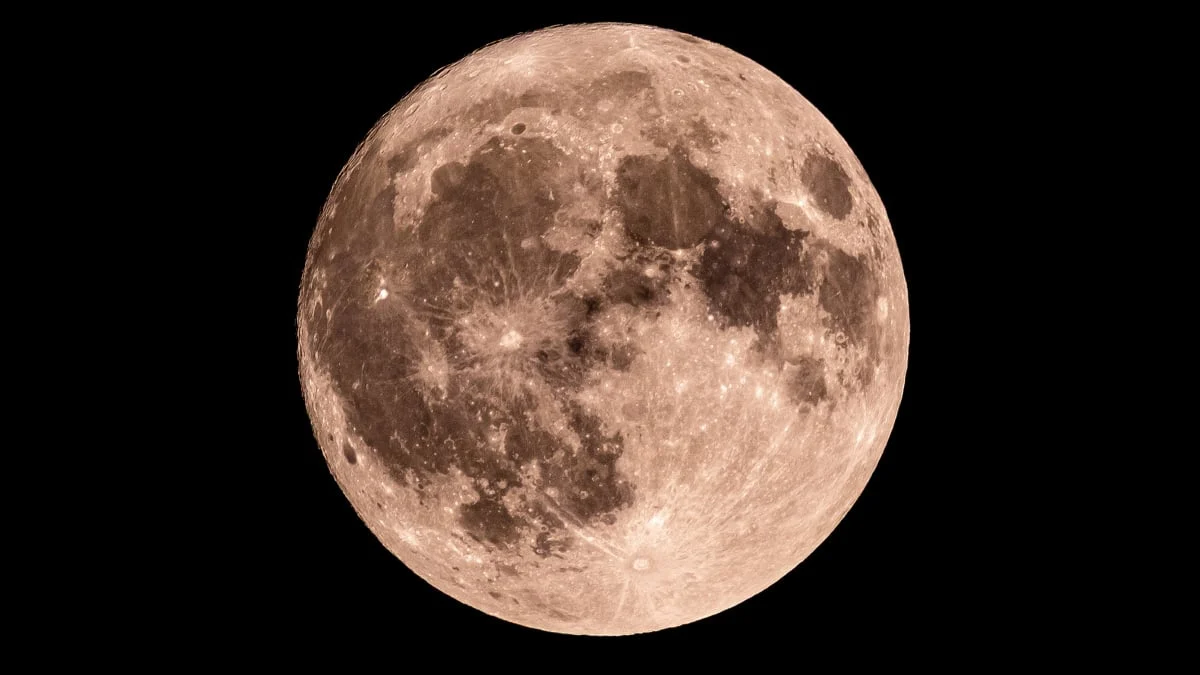
As the sun dips below the horizon and the evening sky transitions into the deep hues of twilight, stargazers across the globe are turning their eyes toward the heavens. For those who find comfort in the rhythmic predictability of the cosmos, the current state of our celestial neighbor offers a moment of quiet anticipation. While the Moon may currently appear as a shy, slender sliver against the darkening canvas of space, this period of subtlety is merely the opening act of a grand, month-long performance.
As of Sunday, September 13, NASA’s Daily Moon Guide confirms that we are currently in the Waxing Crescent phase. With a mere 5% of its surface illuminated from our vantage point on Earth, the Moon is beginning its steady climb toward brilliance. Over the coming nights, the lunar disc will grow, shedding its veil of darkness in a gradual, mesmerizing progression that reminds us of the clockwork precision governing our solar system.
The Mechanics of the Lunar Cycle
The phenomenon we observe from our backyards is not a change in the Moon itself, but rather a shift in perspective. According to data provided by NASA, the Moon orbits the Earth over a period of approximately 29.5 days. This duration, known as the synodic month, is the time it takes for the Moon to return to the same position relative to the Sun as seen from Earth.
The phases we experience are a direct result of the Moon’s position in its orbit and the angle at which sunlight strikes its surface. Because the Moon does not produce its own light—acting instead as a cosmic mirror reflecting solar radiation—our perception of its shape depends entirely on how much of that sunlit hemisphere is oriented toward our home planet.
The Eight Stages of Lunar Evolution
To understand the beauty of the current 5% illumination, one must look at the full eight-stage cycle that defines the lunar experience:
- New Moon: At the start of the cycle, the Moon is positioned directly between the Earth and the Sun. Its sunlit side is facing away from us, leaving the side facing Earth in total shadow. During this phase, the Moon is effectively invisible to the naked eye.
- Waxing Crescent: This is our current phase. As the Moon moves along its orbital path, a small, thin sliver of reflected light begins to appear on the right side of the lunar disc (for those in the Northern Hemisphere).
- First Quarter: Approximately one week into the cycle, the Moon reaches a position where we see exactly half of its illuminated hemisphere. It appears as a perfect "half-moon" to casual observers.
- Waxing Gibbous: The light continues to expand, covering more than half of the disc, though the Moon has not yet reached its full, circular splendor.
- Full Moon: Occurring roughly halfway through the cycle, the Earth, Moon, and Sun align such that the entire face of the Moon visible from Earth is fully illuminated by the Sun.
- Waning Gibbous: The cycle begins to reverse. The light begins to recede from the right side, slowly shrinking the visible portion of the disc.
- Third (Last) Quarter: Similar to the First Quarter, the Moon again appears as a half-circle, but this time, the illuminated portion is on the left side.
- Waning Crescent: The cycle concludes as the Moon returns to a thin, fading sliver of light on the left side, eventually retreating into the shadows of the New Moon once more.
Chronology: The Road to the Full Moon
The progression from the current Waxing Crescent to the next Full Moon is a process of steady, nightly accumulation. For those tracking the lunar calendar, the milestone to mark on the horizon is September 26. On this date, the Moon will reach its full illumination, dominating the night sky with a brightness that has captivated human civilizations for millennia.
In the days leading up to September 26, the visible portion of the Moon will increase significantly. By the middle of the week, the crescent will broaden into a more substantial shape, eventually reaching the First Quarter phase. This transition is not merely an aesthetic event; it is a vital part of the gravitational and tidal synchronization that affects Earth’s oceans and biological rhythms.
Supporting Data and Scientific Context
The study of the Moon’s phases is more than a hobby for amateur astronomers; it is a foundational element of orbital mechanics. NASA’s persistent monitoring of these cycles provides essential data for global climate modeling, oceanography, and the planning of future lunar missions.
The 29.5-day cycle is slightly longer than the Moon’s orbital period around the Earth (which is about 27.3 days, known as the sidereal month). The discrepancy exists because, while the Moon is orbiting the Earth, the Earth is simultaneously orbiting the Sun. By the time the Moon completes one full orbit, the Earth has moved along its path around the Sun, requiring the Moon to travel a bit further to reach the same relative alignment with the Sun. This extra time is what creates the 29.5-day synodic cycle.
Official Responses and Perspectives
NASA’s ongoing commitment to lunar observation—highlighted by their Daily Moon Guide—serves to demystify these events for the general public. By providing real-time data, the agency fosters a deeper public understanding of our closest celestial neighbor.
In recent discourse regarding lunar exploration, such as the mission efforts by companies like ispace, the Moon has regained its status as a primary frontier for human technology. Images captured from the lunar south pole and various landing missions remind us that while we see the Moon as a shifting phase in our sky, it is also a complex, cratered world with a geography as diverse as our own. The phases we see from Earth are a constant reminder of our place in a vast, interconnected system.
Implications for Earth and Humanity
The lunar cycle has profound implications for life on Earth. The most visible of these is the tidal effect. The gravitational pull of the Moon, combined with its position relative to the Sun, drives the ebb and flow of our tides. During the Full Moon—and the New Moon—the gravitational forces of the Sun and Moon combine, leading to "spring tides," where the difference between high and low tide is at its most extreme.
Beyond the physical tides, the lunar cycle has historically governed agriculture, maritime navigation, and even cultural celebrations across various societies. The transition from the dark, quiet nights of the New Moon to the brilliant illumination of the Full Moon has provided a natural calendar for humanity since the dawn of time.
Observing the Cycle
For those interested in observing the current Waxing Crescent, professionals recommend finding a location with minimal light pollution and a clear view of the western horizon shortly after sunset. Because the Moon is currently near the Sun in the sky, it will set relatively early in the evening. As the week progresses and the Moon moves further away from the Sun in its orbit, it will rise later and remain visible for longer periods throughout the night.
As we look up at the 5% illumination tonight, we are witnessing the start of a journey toward the Full Moon on September 26. It is a slow, methodical increase in light that serves as a quiet reminder of the persistence of natural cycles. Whether one views the Moon through the lens of scientific inquiry or simply as a source of nighttime beauty, the upcoming weeks promise a spectacular display of celestial geometry.
In an era of rapid technological change, the lunar cycle remains a constant—a reliable, predictable rhythm that anchors our understanding of time and space. As the crescent grows into the gibbous and finally the full orb, we are invited once again to participate in the ancient, universal act of looking up and wondering.
 Ali Ikhwan
  Dwi Wanna
  Lina Irawan