
 By Dwi Wanna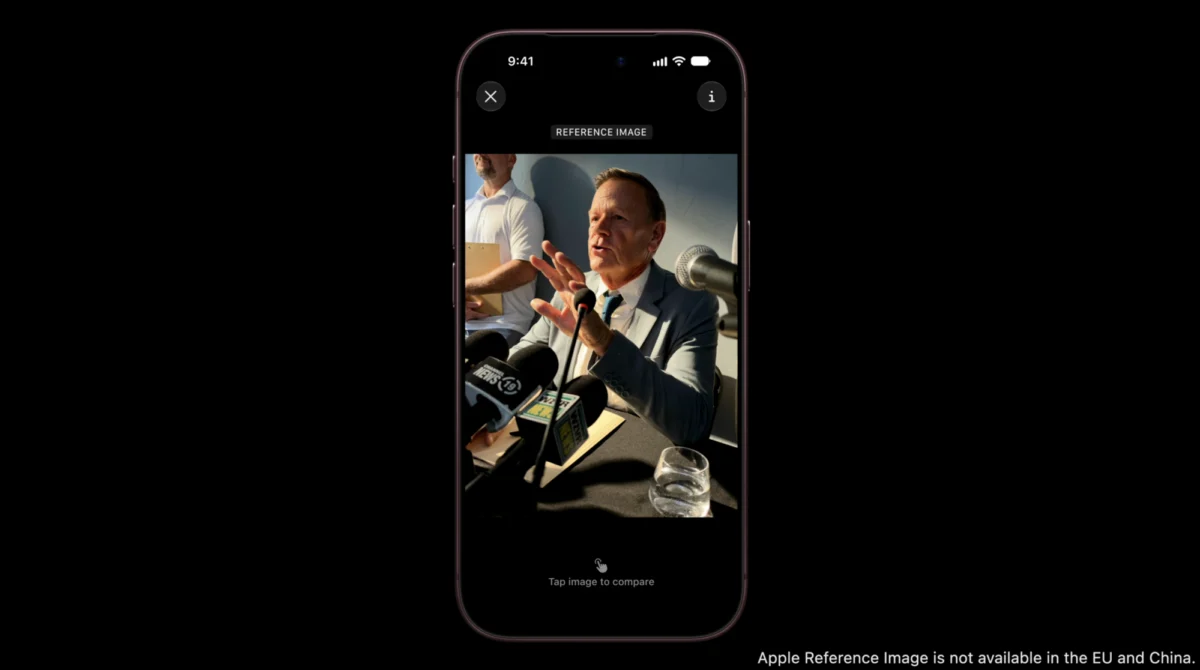
While the announcement of the foldable "iPhone Duo" dominated the headlines of Apple’s September 2026 event, a quieter, more tectonic shift occurred within the hardware specifications of the flagship iPhone 18 Pro and Pro Max. Apple has effectively declared war on the boundary between mobile photography and professional-grade cinematography. By integrating a genuine, physically adjustable variable aperture and a suite of high-end manual controls, Apple is not just iterating on a camera—it is fundamentally redefining the purpose of the smartphone lens.
The Main Facts: A Hardware Paradigm Shift
For the first time in its history, the iPhone 18 Pro lineup features a 48MP main camera housing a mechanical, variable aperture system. Unlike previous iterations that relied solely on software-based computational bokeh or fixed lenses, this system utilizes six precision-engineered, laser-cut blades. These blades can physically retract or expand to alter the lens opening, providing four distinct aperture stops.
This mechanical innovation is supported by a comprehensive "Pro Controls" interface. For enthusiasts who have long clamored for more agency over their captures, Apple has finally provided granular, real-time access to:
- Shutter Speed: Allowing users to freeze high-speed action or create motion blur.
- White Balance: Providing precise color temperature control to eliminate unwanted tints in varied lighting environments.
- Live Histogram: A professional-grade tool that offers a real-time graphical representation of exposure, ensuring that users can balance highlights and shadows before the shutter is pressed.
By pairing this physical hardware with an overhauled computational imaging pipeline, Apple is positioning the iPhone 18 Pro as an "entry-level DSLR that happens to have a cellular radio."
Chronology: From Fixed Focal Lengths to Mechanical Precision
The journey to the iPhone 18 Pro’s camera system has been a gradual climb, but the 2026 update represents the steepest ascent.
2018–2019: The industry briefly flirted with variable aperture technology via the Samsung Galaxy S9 and S10. However, the experiment was short-lived; Samsung quietly abandoned the feature, citing concerns regarding physical durability and the perceived lack of consumer demand for what were then considered marginal image-quality gains.
2020–2025: Apple spent this half-decade perfecting "Computational Photography." Through advancements in Deep Fusion, Smart HDR, and Photonic Engine, Apple proved that small sensors could produce professional-looking results by using algorithms to "guess" and reconstruct the best version of an image.

September 2026: Apple pivots. Recognizing that software-only solutions have hit a ceiling, the company introduced the mechanical variable aperture. This move signifies that Apple believes hardware physics—specifically light manipulation—is once again the most important variable in high-end photography.
Supporting Data: Why Aperture Matters
In the world of optics, the aperture is the gateway through which light enters the sensor. Its diameter is measured in f-stops.
- Wide Aperture (e.g., f/1.4 – f/2.0): This creates a shallow depth of field, rendering the subject sharp while blurring the background. It is ideal for portraiture and low-light photography, as it allows more light to hit the sensor.
- Narrow Aperture (e.g., f/4.0 – f/8.0): This keeps the entire scene in focus, which is essential for group shots, landscapes, or architectural photography where deep focus is required.
Previous iPhones were locked into a single, static aperture (the iPhone 17 Pro, for instance, sat at a fixed f/1.78). By granting the 18 Pro the ability to change this opening, Apple is allowing the camera to adapt its physical characteristics to the scene, rather than relying on software to "fake" a blurry background or "brighten" a dark, noisy image. This reduces the reliance on aggressive digital noise reduction, which has long been a criticism of mobile photography.
Official Responses and Engineering Challenges
The engineering challenge of fitting a moving, mechanical part into a phone that is subjected to the daily rigors of pockets, bags, and accidental drops is significant. Apple’s decision to move forward with this design suggests a major leap in their micro-mechanical manufacturing capabilities.
However, industry analysts remain cautious. When Samsung abandoned the feature years ago, they noted that the mechanical components were prone to failure and added unnecessary bulk. While Apple has not yet addressed the long-term failure rate of these six hair-thin blades, the company’s marketing focus has been on the "reliability of the computational pipeline" to back up the hardware.
The competition is watching closely. Recent reports indicate that while Samsung considered implementing a similar system for the Galaxy S27, they ultimately opted against it, citing cost-to-benefit ratios. Apple’s willingness to absorb these manufacturing costs highlights a strategic divergence: while competitors are focusing on folding screens and battery density, Apple is doubling down on the "Pro" in their Pro-series branding, aiming to capture the market of professional creators who carry a smartphone as their primary tool.
Implications: The Quest for Authenticity
Perhaps the most culturally significant addition is "Apple Reference Image." In an era dominated by generative AI, the distinction between a "captured" reality and an "authored" digital fabrication is blurring.

Apple’s solution is a cryptographic signature. When a photo is taken in "Reference" mode, the camera sensor records the data and secures it via Apple’s Private Cloud Compute. This creates a "digital negative" that is cryptographically unalterable.
This has profound implications for:
- Photojournalism: News organizations can now verify the provenance of a photo, ensuring that the image has not been hallucinated or deceptively altered by AI models.
- Legal and Insurance Documentation: The ability to verify that a photo was taken at a specific time and place without modification provides a new layer of objective truth.
- The Creator Economy: By integrating with the SynthID watermarking standard, Apple is creating a clear, trackable distinction between a real-world photograph and AI-generated content.
The Future of the Smartphone Camera
As we look toward the next two years, the inclusion of the variable aperture and cryptographic verification signals that Apple is no longer satisfied with the smartphone being a "good enough" camera. They are attempting to bridge the gap to full-frame mirrorless cameras, not by size, but by capability.
The risk, of course, is the "feature creep" that often plagues consumer electronics. If the variable aperture proves to be a point of failure—if the blades stick, or if the motor fails after a dozen drops—it could become a liability for the brand. Similarly, if the "Pro Controls" become too complex for the average user, the UI may suffer from the very bloat Apple has historically avoided.
However, for now, the iPhone 18 Pro stands as a bold, hardware-first statement. It is a acknowledgement that while software is powerful, there is no substitute for the physics of light. Whether this mechanical revolution becomes the new industry standard or joins the graveyard of discarded smartphone features will depend on the real-world durability of the device in the hands of the public.
For the moment, Apple has successfully moved the goalposts, leaving the rest of the industry to scramble toward a new standard of mobile imaging—one where the phone is no longer just a digital assistant, but a genuine optical instrument.
 Evan Lee Salim
  Asro
Asro  Neng Nana