
 By Nana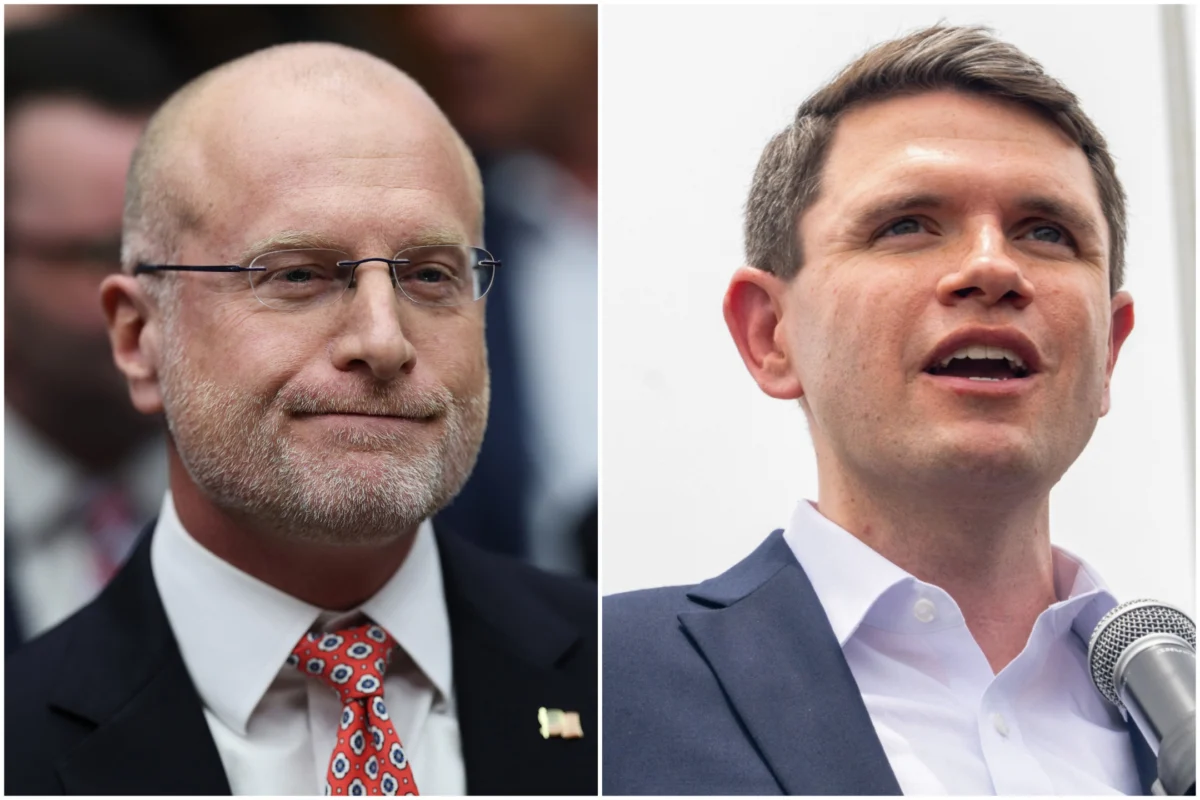
A simmering conflict between federal regulators and the nation’s broadcast networks has reached a boiling point, centered on a high-profile interview between late-night host Jimmy Kimmel and Texas Democratic Senate candidate James Talarico. The incident, which saw ABC pull the segment from traditional airwaves in favor of a YouTube-only release, has reignited a fierce national debate regarding the reach of the FCC’s “equal-time” rule, the boundaries of government oversight, and the evolving role of late-night comedy in political discourse.
At the heart of the controversy is FCC Chairman Brendan Carr, who has accused Talarico of orchestrating a “hoax” to manufacture outrage and generate campaign donations. The dispute underscores a fundamental tension: does the FCC’s mandate to ensure public interest on licensed spectrum constitute a necessary safeguard for democracy, or does it represent an archaic form of censorship in the digital age?
Chronology of a Broadcast Blackout
The friction between the FCC and the television industry has been building throughout the year, but the Talarico-Kimmel interview serves as the most recent flashpoint.
In early 2026, the FCC, under Carr’s leadership, initiated a formal inquiry into whether daytime talk shows—most notably ABC’s The View—should continue to qualify for exemptions under the agency’s equal-time rule. This regulation, dating back decades, requires broadcast stations to provide equal airtime to political candidates, provided those appearances are not part of a "bona fide" news program.
In February 2026, the issue moved from theory to practice when CBS reportedly provided legal guidance to producers of The Late Show with Stephen Colbert that airing an interview with James Talarico could trigger equal-time obligations, effectively forcing the network to pull the segment.
The pattern repeated itself this week with Jimmy Kimmel. On Wednesday, Kimmel announced that his interview with Talarico would be stripped from the broadcast schedule. "We are being targeted by the FCC for the crime of interviewing political candidates," Kimmel told his audience. "Tonight, we are bypassing the public airwaves and hosting this interview on YouTube, even though our government would clearly prefer that we not do it at all."
The YouTube video of the interview immediately went viral, accumulating over 7.3 million views in less than 48 hours, highlighting the growing disparity between traditional broadcast reach and the unfettered nature of internet distribution.
The "Hoax" Allegations: Carr’s Stance
FCC Chairman Brendan Carr has remained defiant, characterizing the narrative surrounding these broadcast cancellations as a calculated political stunt. In a comprehensive post on X (formerly Twitter) this past Saturday, Carr dismissed Talarico’s claims of censorship as a “hoax” designed to court “partisan lemmings.”
Carr’s critique went beyond the specific incident, offering a robust defense of the FCC’s regulatory framework. He argued that the equal-time statute is not intended to limit speech, but rather to ensure that media gatekeepers do not unfairly influence elections by providing lopsided airtime to favored candidates.
"Congress wanted to ensure that voters would decide elections, not media gatekeepers picking winners and losers," Carr wrote. He emphasized that broadcast stations hold a unique position in American law because they are granted exclusive, government-sanctioned monopolies over public spectrum—a resource that is finite and highly valuable. According to Carr, the Supreme Court has consistently affirmed that holding broadcasters to these "public interest obligations" is well within the government’s constitutional purview and does not constitute a First Amendment violation.
Supporting Data and the "GameDay" Contrast
The controversy took a sharp turn when the University Democrats at UT Austin questioned the apparent hypocrisy of the regulations, asking why Talarico is barred from broadcast talk shows while Senator Ted Cruz (R-Texas) was permitted a ten-minute segment on ESPN’s College GameDay this past Saturday.
Carr addressed this point directly, noting the distinction between broadcast television and cable networks. ESPN, as a cable entity, does not fall under the same FCC jurisdiction as broadcast stations like ABC or CBS. Furthermore, the equal-time rule specifically applies to "legally qualified candidates."
The optics of the Cruz appearance, however, were complicated by the fact that the Senator was loudly heckled and booed by fans while lobbying for the "Protect College Sports Act." For critics of the FCC’s current enforcement, the contrast between the treatment of Talarico and Cruz serves as evidence of a double standard, even if legally defensible under the letter of the law.
Official Responses and Political Implications
James Talarico has framed the FCC’s recent actions as a direct threat to the democratic process. In an interview on MS NOW, the Senate candidate labeled the FCC’s pressure on broadcasters as the "most dangerous form of cancel culture."
"Government censorship should be a concern to all of us, regardless of our political party," Talarico stated. He argued that when the government creates a climate of fear—where networks preemptively pull content to avoid potential regulatory retaliation—the resulting "chilling effect" is indistinguishable from overt censorship.
The networks themselves remain in a precarious position. While ABC and CBS have largely refrained from public battles with the FCC, their actions suggest an industry-wide anxiety. By moving content to YouTube, these networks are effectively conceding that the traditional broadcast regulatory environment is no longer compatible with modern political campaigning.
The Regulatory Horizon: Is the Rule Obsolete?
The fundamental question raised by this ongoing saga is whether the FCC’s equal-time rules have outlived their utility in a media landscape defined by digital proliferation.
Carr’s argument hinges on the historical precedent of the public spectrum. He maintains that because broadcasters are given exclusive rights to a public resource, they must be held to a higher standard of impartiality. However, as most Americans now consume television through cable, satellite, or internet-based streaming services—platforms that are not subject to these same mandates—the "public spectrum" argument is facing increasing scrutiny.
Legal scholars point out that the definition of a "bona fide" news program is becoming increasingly blurry. As late-night shows lean into political commentary and investigative segments, the line between "entertainment" and "news" has effectively evaporated. The FCC’s attempt to categorize shows like The View or late-night talk segments as purely "entertainment" subjects them to rules that were written for a different era of television.
Looking Forward: A Collision Course
The battle between the FCC and the networks is unlikely to conclude with the Talarico-Kimmel interview. As the 2026 election cycle intensifies, the pressure on broadcasters to balance compliance with editorial independence will only grow.
If the FCC proceeds with its formal review of talk show exemptions, the consequences could be transformative. A ruling that classifies these programs as subject to equal-time requirements would fundamentally alter the late-night landscape, likely leading to fewer political guest appearances or, conversely, a massive influx of fringe candidates demanding equal airtime.
Ultimately, the dispute serves as a microcosm of a broader national struggle: how to regulate the "public square" when that square is no longer a physical or even a singular broadcast space. For Brendan Carr, the mission is clear: enforcing the rules as written to preserve the integrity of the airwaves. For Talarico and his supporters, the mission is equally clear: resisting what they see as the weaponization of bureaucracy to stifle dissenting voices. As the digital view counts continue to climb, it is increasingly apparent that the audience is finding ways to circumvent the gatekeepers, regardless of what the FCC decides.
 Muslim
  Jia Lissa
  Nana Wu