
 By Muslim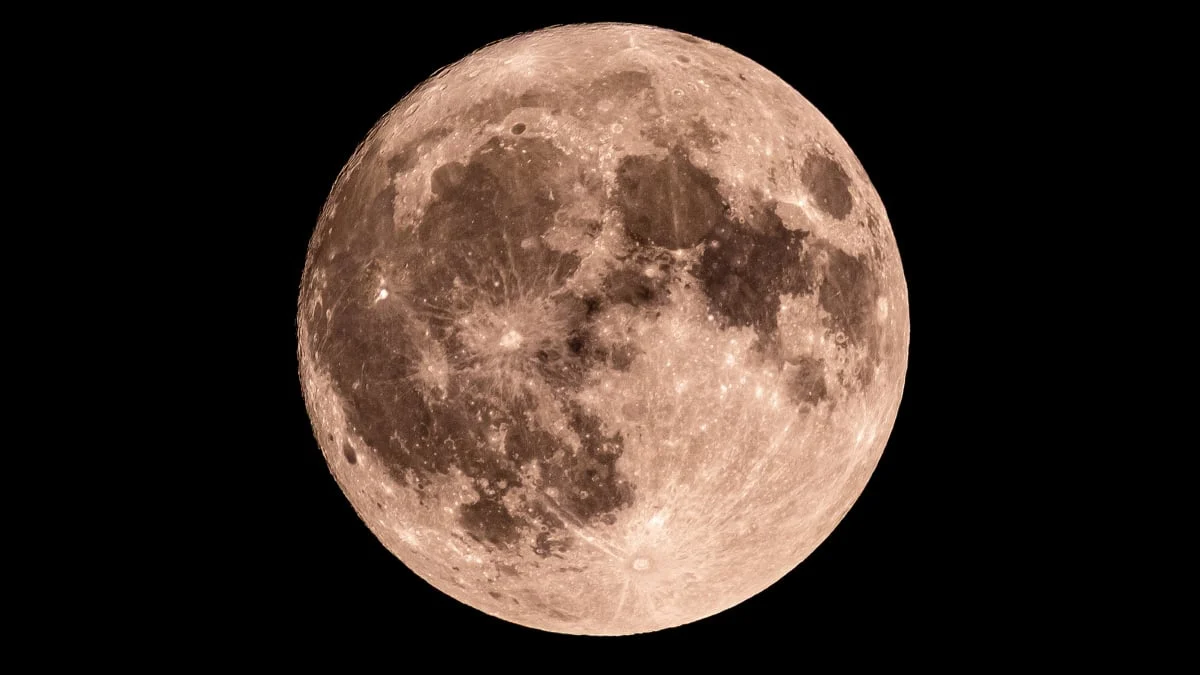
As we progress through the current lunar month, the night sky is once again undergoing its rhythmic metamorphosis. For observers across the globe, the Moon is slowly reclaiming its prominence, its slender crescent expanding incrementally each evening. This celestial dance, while familiar, serves as a poignant reminder of the intricate gravitational and orbital mechanics that govern our immediate solar neighborhood.
Main Facts: The Current Lunar State
As of Monday, September 14, NASA’s Daily Moon Guide confirms that our satellite is currently in the Waxing Crescent phase. At this stage, approximately 11% of the lunar surface is illuminated from our perspective on Earth.
This phase represents the early stages of the "waxing" period, during which the visible portion of the Moon increases as it moves away from its conjunction with the Sun. For amateur astronomers and casual observers alike, the Waxing Crescent offers a distinct aesthetic appeal; the "earthshine"—a faint, ghostly illumination on the shadowed portion of the Moon caused by sunlight reflecting off the Earth—is often visible during this window, providing a striking contrast to the bright sliver of the sunlit crescent.
Chronology: The Road to the Full Moon
The lunar cycle is a constant, predictable progression. Following the current Waxing Crescent, the Moon will continue to gain illumination as it moves through its orbital path.
- September 14: Waxing Crescent (11% illumination).
- Approaching Days: The illumination will increase steadily, transitioning toward the First Quarter phase.
- September 26: The next Full Moon.
The transition from a 11% sliver to a 100% illuminated disk is not merely a visual shift; it marks a significant movement in the Moon’s position relative to the Earth and the Sun. By the time the calendar reaches September 26, the Moon will have reached the "opposition" point in its orbit, placing the Earth directly between the Sun and the Moon, allowing the entire face of our natural satellite to be bathed in direct sunlight.
Supporting Data: The Mechanics of the Lunar Cycle
According to data provided by NASA, the lunar cycle—or the synodic month—spans approximately 29.5 days. This duration is slightly longer than the time it takes for the Moon to complete a single orbit around the Earth (the sidereal month, which is about 27.3 days) because the Earth is simultaneously moving in its own orbit around the Sun.
The Eight Phases Defined
The appearance of the Moon is entirely dependent on geometry. As the Moon orbits our planet, the portion of its sunlit side visible to us changes. Astronomers categorize this progression into eight distinct phases:
- New Moon: The Moon is positioned between the Earth and the Sun. The side facing us is shrouded in shadow, rendering it virtually invisible against the backdrop of the night sky.
- Waxing Crescent: A sliver of light begins to appear on the right side (for Northern Hemisphere observers). This is the current phase.
- First Quarter: Half of the Moon is illuminated on the right side. Despite the name, this does not mean the Moon is one-quarter of the way through its cycle; rather, it refers to the Moon having completed one-quarter of its orbit around Earth.
- Waxing Gibbous: The illumination exceeds 50%, moving toward a full disk, but not yet reaching the point of total brilliance.
- Full Moon: The entire face is illuminated, occurring when the Moon is on the opposite side of Earth from the Sun.
- Waning Gibbous: The Moon begins its retreat, with the right side of the illumination starting to diminish.
- Third (or Last) Quarter: The Moon appears as a half-disk again, but this time the left side is illuminated.
- Waning Crescent: A final, thin sliver remains on the left side before the cycle resets to the New Moon.
Official Perspectives: NASA and Lunar Science
NASA maintains that the study of lunar phases is more than just a matter of observation; it is a fundamental component of understanding Earth’s environmental systems. The gravitational interaction between the Earth and the Moon is the primary driver of our ocean tides. As the Moon transitions through its phases—particularly toward the Full Moon and New Moon—the combined gravitational pull of the Sun and Moon creates "spring tides," which are more extreme than at other points in the cycle.
NASA’s ongoing lunar missions, such as the Artemis program, are utilizing this deep understanding of the lunar cycle to plan future human exploration. By monitoring the lunar surface through the various phases, scientists can better analyze the thermal properties of the lunar regolith and the behavior of shadows in the Moon’s polar regions, where ice deposits are believed to exist.
Implications: The Cultural and Scientific Impact
The rhythmic nature of the Moon has dictated human activity for millennia. From agricultural planting cycles in ancient civilizations to the modern scheduling of space launches, the lunar cycle remains a critical variable.
Navigation and Timekeeping
Historically, the lunar cycle provided the basis for the first calendars. While the Gregorian calendar is solar-based, many cultures continue to track time through lunar-solar hybrids. In the maritime world, the phases remain crucial. High and low tides are synchronized with the Moon’s position; knowing the current phase is a prerequisite for safe harbor navigation and offshore energy production.
Biological Rhythms
The "lunar effect" on terrestrial life remains a subject of intense biological study. Many nocturnal animals rely on the intensity of moonlight to hunt, navigate, or mate. As the Moon progresses from the current 11% Waxing Crescent toward the Full Moon on September 26, the increase in ambient nighttime light will inevitably influence the behavior of various species, from sea turtles navigating to the ocean to predators adjusting their hunting patterns.
The Psychological Connection
Beyond the scientific, the Moon holds a unique place in the human psyche. The "Waxing" period is often associated with growth and renewal, while the "Full Moon" has been historically linked to folklore and shifts in behavior. Modern psychology often notes the impact of sky conditions on human well-being, with clear nights and a bright moon often cited in anecdotal reports as factors that improve mood and encourage outdoor recreation.
Conclusion: Looking Upward
As we watch the Waxing Crescent grow over the next few days, we are witnessing a phenomenon that has remained consistent for billions of years. Whether one views the Moon through the lens of a professional telescope, a pair of binoculars, or simply the naked eye, the current progression serves as a reminder of our planet’s place in the vast, orderly clockwork of the cosmos.
As we count down the days until the Full Moon on September 26, the 11% sliver visible tonight will continue its slow, steady expansion—a testament to the enduring, predictable beauty of our celestial neighbor. For those interested in tracking this progression, NASA’s Daily Moon Guide remains the primary resource for real-time data, ensuring that both experts and enthusiasts can stay synchronized with the lunar dance unfolding above.
 Ali Ikhwan
  Ammar Sabilarrohman
  Sagoh
Sagoh 