
 By Nana Wu
TORONTO — For generations, the trajectory of adult life for women was viewed through a remarkably uniform lens: education, marriage, and, inevitably, children. Parenthood was framed not merely as a choice, but as an implicit milestone of adulthood and female fulfillment. However, contemporary social landscapes are experiencing a profound shift. A growing movement of women are openly questioning, challenging, and ultimately rejecting the traditional script of motherhood.
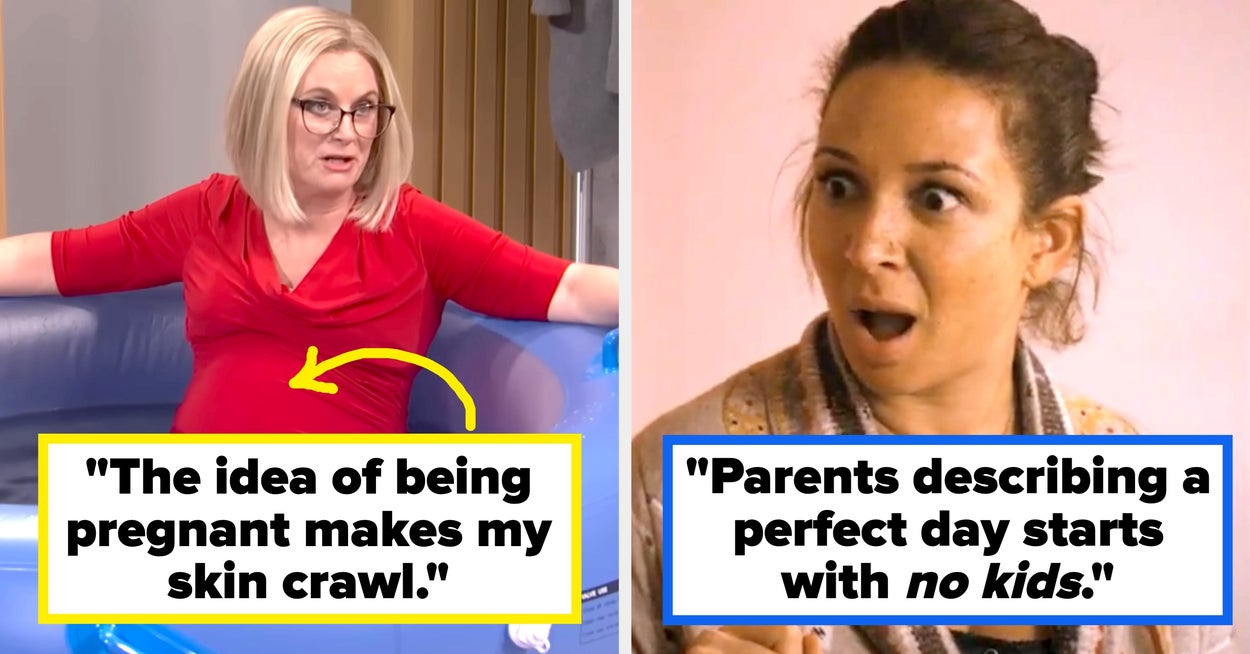
Recently, this conversation took center stage on social media when TikTok creator @dara.diary posed a deceptively simple yet deeply provocative question to her followers: What is the real reason you don’t want to have kids?

The response was overwhelming. Thousands of women flooded the comments section, offering raw, unfiltered, and deeply personal insights into their decisions to remain childfree. While the reasons varied wildly—spanning economic anxiety, psychological self-awareness, environmental dread, and a simple lack of maternal desire—the collective message was clear: simply not wanting children is reason enough, and the modern woman is embracing her right to choose her own path.

Main Facts: The Anatomy of a Cultural Shift
The discourse sparked by @dara.diary highlights a broader demographic and cultural trend. According to recent data from statistical agencies across North America, birth rates have been steadily declining, reaching historic lows in several developed nations. More women are delaying childbearing, and an increasing percentage are choosing not to have children at all.

This shift is not happening in a vacuum. Sociologists point to a convergence of factors:

- Economic Pressures: The soaring cost of living, housing affordability crises, and astronomical childcare expenses make raising a child financially daunting.
- Shifting Social Norms: The stigma surrounding voluntary childlessness is slowly dissipating, replaced by a greater cultural acceptance of diverse life paths.
- Empowerment and Autonomy: Access to education, career opportunities, and comprehensive reproductive healthcare have allowed women to prioritize personal fulfillment, travel, and self-actualization over traditional family structures.
As the TikTok viral thread demonstrated, the decision to remain childfree is rarely monolithic. It is informed by a complex interplay of personal psychology, lifestyle preferences, and socioeconomic realities.

Chronology: From Stigma to Open Dialogue
To understand where the childfree movement stands today, it is helpful to examine how public discourse on the topic has evolved over recent decades:

- The Mid-to-Late 20th Century: The advent of the birth control pill in the 1960s gave women unprecedented control over their reproductive futures. For the first time, sex could be decoupled from procreation on a mass scale. However, choosing not to have children remained largely taboo, often met with pity, suspicion, or accusations of selfishness.
- The Turn of the Millennium: The term "childfree"—deliberately chosen over "childless" to emphasize that the state is a positive, intentional choice rather than a deficit—began gaining traction in academic circles and early online forums. Books and essays started exploring the validity of a life without children.
- The 2010s: Social media platforms like Twitter, Tumblr, and early Instagram created digital safe spaces where non-parents could find community, share humorous anecdotes about dodging intrusive questions from relatives, and validate each other’s lifestyle choices.
- The Present Era (2020s–2026): Platforms like TikTok have revolutionized how personal narratives are shared. Viral prompts, such as the one initiated by @dara.diary, allow for massive, decentralized archiving of women’s inner thoughts. Millions of users can now instantly access a global library of shared experiences, neutralizing isolation and normalizing the childfree stance on an unprecedented scale.
Supporting Data: What the Responses Reveal
An analysis of the responses featured in the viral thread reveals several distinct categories of motivations behind the choice to remain childfree. Far from being flippant, these answers reflect deep introspection.

1. The Pursuit of Peace, Quiet, and Autonomy
A significant portion of respondents cited the value of personal space and predictable routines. Comments such as "Not having a quiet and clean home would end me" and expressions of deep love for solitude highlighted a fear of chronic overstimulation. Many women noted that their ideal version of a restful day involves absolute control over their environment—a luxury rarely afforded to parents.

2. Financial Realities and Economic Pragmatism
The economic barrier to entry for parenthood cannot be overstated. Numerous contributors pointed out the financial impossibility of raising a child without generational wealth or robust familial support systems. As one user bluntly put it: "The only happy parents I know have generational wealth and/or help from their parents, and I have neither." For many, acknowledging financial limits is an act of profound responsibility.
3. Psychological Self-Awareness and Mental Health
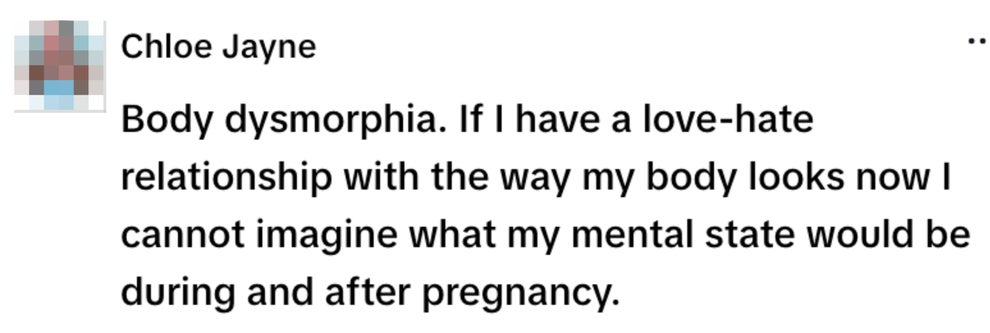
Mental health considerations featured prominently in the discussion. Several women expressed acute self-awareness regarding their capacity for stress and anxiety. Comments touching on severe overstimulation, the fear of developing postpartum depression, or the desire to break generational cycles of trauma illustrated a conscientious approach to mental well-being. As one contributor noted: "When I’m overstimulated, I’m mean. They don’t deserve that ever… I didn’t."

4. Climate Anxiety and Ethical Considerations
For a subset of respondents, the decision is outward-looking, rooted in concern for the state of the world. Global challenges—ranging from climate change and political instability to systemic inequality—lead some women to question the ethics of bringing a new life into an uncertain future.

5. The Reality of Domestic Labor Imbalance
Many women expressed deep skepticism regarding traditional gender roles within domestic partnerships. Remarks about refusing to co-parent with a partner who might not pull their weight, or avoiding the risk of being tied to a man they might eventually resent, underscore ongoing anxieties about the unequal distribution of domestic and emotional labor in heterosexual relationships.

Official Responses and Expert Perspectives
Sociologists, psychologists, and cultural commentators have weighed heavily on the cultural normalization of the childfree lifestyle.

Dr. Elena Vance, a sociologist specializing in family structures, notes that the shift represents a healthy evolution in how society defines success. "For generations, womanhood was inextricably linked to motherhood," Dr. Vance explains. "What we are witnessing now is the decoupling of gender identity from reproductive output. Women are asking themselves a fundamental question that men have rarely been pressured to answer: Do I actually want this, or am I just following a script?"

Psychologists also emphasize that recognizing one’s lack of maternal desire is a marker of maturity, not selfishness. Too often, women who choose not to have children face the pejorative label of being "selfish." However, mental health professionals argue that bringing a child into the world out of societal obligation or fear of regret—rather than genuine desire—carries far greater psychological risks for both parent and child.

Implications: What a Childfree Future Means for Society
The rising prevalence of childfree adults carries profound societal implications across multiple sectors:

- Economic and Workforce Dynamics: As birth rates decline, labor markets and government tax bases must adapt to an aging population. Traditional models of elder care, pension systems, and healthcare will need restructuring to accommodate shifting demographics.
- Real Estate and Consumer Markets: The housing market is already feeling the ripple effects. The demand for multi-bedroom suburban homes is shifting as more adults prioritize urban condos, smaller living spaces, or properties tailored to pet ownership rather than school districts. Consumer goods, travel industries, and leisure markets are increasingly catering to affluent, childfree demographics with disposable income.
- Redefining Family and Community: The nuclear family is no longer the sole blueprint for community support. Childfree individuals are investing deeply in friendships, mentorships, niblings (nieces and nephews), and community building, proving that care and connection do not require biological offspring.
Conclusion: A Valid Choice for a Diverse World
As the viral discussion initiated by @dara.diary proves, there is no single "correct" answer when it comes to family planning. Whether a woman knows from the age of four that she wants to be a mother, or realizes in adulthood that her peace, freedom, and financial independence are her highest priorities, every journey is valid.

By creating safe digital spaces where women can share their truths without judgment, society moves one step closer to a world where reproductive choices—whatever they may be—are met with respect, understanding, and unconditional support.
 Sagoh
Sagoh  Jia Lissa
  Azzam Bilal Chamdy