
 By Lina Irawan
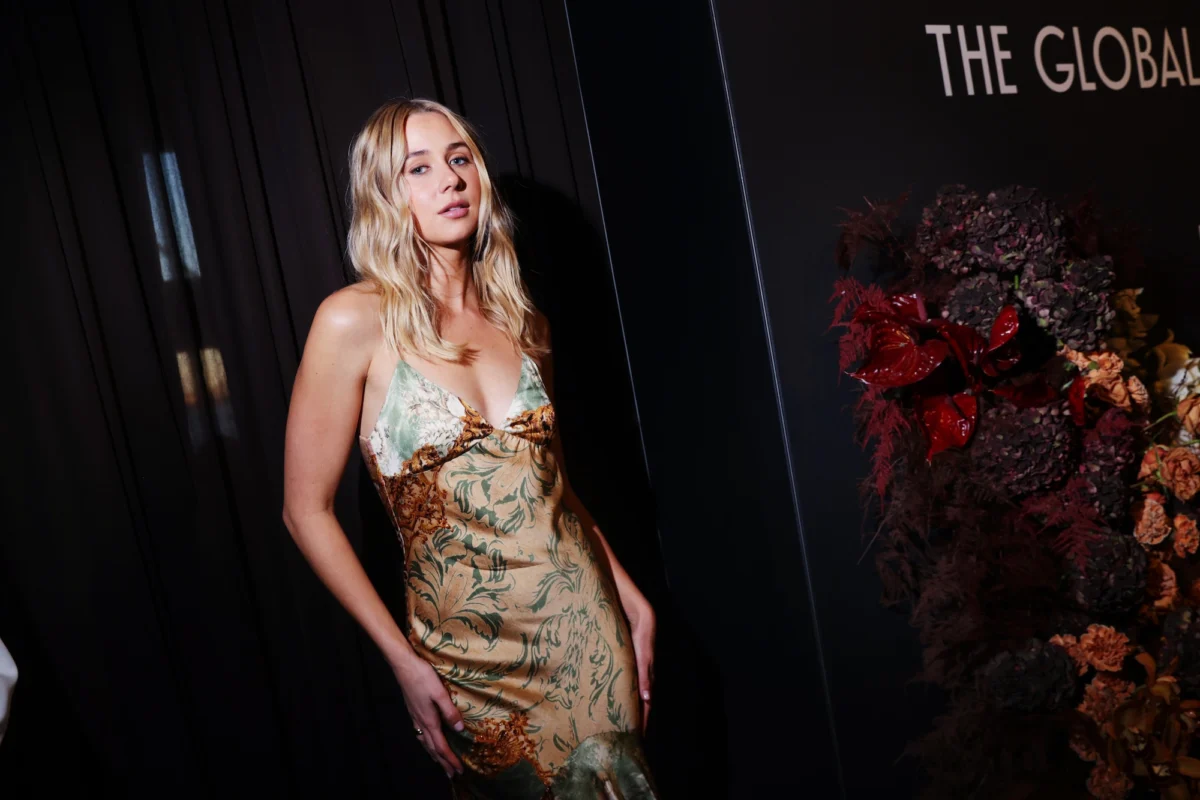
The intersection of history and high fashion has never been more vibrant than it is today. As the 2026 WWD Honors took center stage at the historic Cipriani South Street in New York, the industry’s elite gathered to celebrate visionaries, business titans, and the enduring power of design. Yet, amidst the accolades for industry giants like Bernard Arnault and Haider Ackermann, it was the sartorial choices of the attendees—specifically a resurgence of early-2000s Roberto Cavalli—that signaled a broader cultural shift.
Actress Lucy Freyer, turning heads in a masterfully preserved Roberto Cavalli creation from 2004, became the latest standard-bearer for the "vintage revival" movement. Her appearance on Tuesday night served as a tangible reminder that in the world of fashion, the past is not merely a reference point; it is the most coveted currency of the present.
Main Facts: The Return of the Cavalli Aesthetic
The garment worn by Freyer was a masterclass in Y2K-era maximalism. The spaghetti-strap piece featured a plunging V-neckline that cascaded into a fitted bodice, eventually giving way to an asymmetrical, draped skirt. The fabric—a rich, beige-gold canvas—was adorned with intricate, swirling green paisley-like floral motifs, punctuated by bold, rusty orange and deep green patches. The skirt’s complex architecture, defined by a mix of pleated and flowing panels with an uneven, below-the-knee hem, encapsulated the daring, bohemian-glam spirit that defined Roberto Cavalli’s work during his most influential decade.
"This is 2004 Cavalli. I love a vintage moment, especially a vintage Cavalli," Freyer remarked to WWD, highlighting an appreciation for the Italian designer’s early-2000s archives that is currently sweeping through Hollywood and beyond.

Freyer’s styling—strappy black sandals and a simple, center-parted wavy hairstyle—allowed the dress to dominate the narrative, proving that the maximalist patterns of the mid-2000s remain remarkably wearable in a modern context.
Chronology: A Wave of Archival Acquisitions
Freyer’s appearance is not an isolated incident but rather the latest peak in a season defined by the exploration of Cavalli’s archives. The timeline of this resurgence suggests a concerted effort by stylists and celebrities to move away from modern, logo-heavy minimalism toward the evocative, print-driven nostalgia of the early aughts.
- Early October 2026: La La Anthony made a notable fashion statement during her appearance on "Today With Jenna & Sheinelle." Opting for a bold, mixed-print ensemble, Anthony showcased a floral and animal-print look paired with collectible boots from Cavalli’s Spring 2002 collection. The choice immediately trended on social media, drawing comparisons to the grit and glamour of early-2000s pop culture.
- October 21, 2026: Just days before the WWD Honors, Katy Perry commanded attention in Nashville at the "CMA Presents I Will Always Love You: A Celebration of Dolly Parton" event. Perry pulled a stunning piece from the designer’s Spring 2004 collection. The dress, a quintessential Cavalli animal-print creation in warm shades of brown, beige, and orange, featured a structured bustier bra and a voluminous, flowing skirt, cementing the designer’s status as the season’s go-to for high-profile tributes.
- October 27, 2026: The cycle culminated at the WWD Honors, where Lucy Freyer’s choice of a 2004 archive piece bridged the gap between cinematic industry recognition and the red-carpet appetite for sustainable, vintage luxury.
Supporting Data: Why Early-2000s Cavalli?
The market for vintage Roberto Cavalli has seen an unprecedented spike in interest over the last 24 months. According to fashion resale experts and archival collectors, pieces from 2000 to 2006 are currently the most sought-after items in the luxury secondhand market.
The appeal is multifaceted. First, there is the "sustainability narrative." As Gen Z and Millennial consumers become increasingly conscious of the environmental impact of "fast fashion," sourcing high-quality, pre-owned designer garments from a decade where construction quality was paramount has become a badge of honor.

Second, the technical prowess of Cavalli’s work in the early 2000s—specifically his mastery of digital prints on silk and his ability to construct garments that were both revealing and structurally sound—provides a distinct "wow factor" that modern designs often struggle to replicate. The "paisley-meets-animal" aesthetic of 2004 is particularly relevant today as the fashion cycle leans back into maximalism after years of "quiet luxury."
Official Context: The 2026 WWD Honors
While the vintage fashion on the red carpet sparked conversations among attendees, the WWD Honors served as the backdrop for significant industry shifts. The event, held at the iconic Cipriani South Street, coincided with the WWD Apparel & Retail CEO Summit, creating a powerful nexus of commerce and creativity.
The evening was marked by several landmark recognitions:
- The John B. Fairchild Honor: Bernard Arnault, the chairman and CEO of LVMH, was bestowed with this prestigious award, highlighting his profound influence on the globalization of luxury.
- Design Excellence: Haider Ackermann (Tom Ford) was honored for his contributions to womenswear, while Michael Rider (Celine) was recognized for his transformative impact on menswear.
- Creative Leadership: Morris Goldfarb of G-III Apparel Group received the Creative Leadership Honor, acknowledging his ability to navigate the shifting currents of the retail landscape.
- The Future: Henry Zankov was named "One to Watch," signaling a generational shift that balances technical skill with modern sensibilities.
The juxtaposition of these industry titans being honored for their future-facing strategies while stars like Freyer looked back to the 2004 archives created a compelling dialogue about the cyclical nature of the industry.

Implications: The Future of the Archive
The trend of celebrities digging into the archives of designers like Roberto Cavalli has deep implications for the fashion industry.
1. The Rise of the Professional Archivist
Fashion houses are increasingly realizing the value of their own history. In response to the high demand for vintage pieces, many luxury brands are beginning to "re-archive"—hiring dedicated specialists to manage their historical collections not just for brand identity, but for potential re-release or rental models.
2. The Death of the "New" Requirement
There is a growing shift in the public perception of red-carpet etiquette. For years, wearing a dress that had already been worn was a social faux pas in Hollywood. Today, the "vintage moment" is elevated above the "runway sample." The ability to source, authenticate, and style an archive piece is now seen as a sign of superior taste and fashion intelligence.
3. Economic Impact on Resale
The increased visibility of vintage Cavalli on platforms and at events like the WWD Honors is driving prices for these items to record highs. Small, independent vintage boutiques are becoming key partners for celebrity stylists, shifting the power dynamic from major fashion houses—which usually lend samples—to secondary market dealers who possess the "real" history.

Conclusion: A Legacy Reimagined
As we look toward the remainder of 2026, the influence of the early 2000s shows no signs of waning. Roberto Cavalli, who built a career on the premise that fashion should be a celebration of life, color, and unapologetic sensuality, has inadvertently become the architect of the current decade’s red-carpet aesthetic.
Whether it is Katy Perry honoring a country music legend in Nashville or Lucy Freyer celebrating the pinnacle of fashion business in New York, the message is clear: the most modern way to dress is to look back. By blending the structured sophistication of 2004 with the contemporary cultural context of 2026, the industry is proving that great design is not just timeless—it is perpetually recyclable, endlessly relevant, and always in style.
The WWD Honors served as a powerful testament to this reality. In a room filled with the people who dictate what we will wear in 2027 and beyond, the most exciting look in the room was a twenty-two-year-old dress, proving that in the hands of the right wearer, history never goes out of style.
 Asep Darmawan
 Reynand Wu
 Lina Hope
