
 By Pevita Pearce
Main Facts
The global fitness community has been rocked by a bizarre, unsanitary, and deeply polarizing controversy dubbed "Poopgate" following the HYROX Beijing competition held on September 12. Joanna Wietrzyk, an elite Australian athlete and women’s HYROX world record holder, suffered a severe episode of acute bowel incontinence mid-race. Rather than stepping off the course to seek medical attention or handle the situation privately, Wietrzyk continued to compete, ultimately crossing the finish line to take first place in her division while visibly soiled.
Photographs and video footage of the incident spread rapidly across social media platforms including X (formerly Twitter), Instagram, and Reddit, sparking furious debates over race etiquette, public health hazards, sportsmanship, and the glaring loopholes in extreme fitness event regulations. While exercise-induced gastrointestinal distress is a medically documented phenomenon among ultra-endurance athletes, the decision to press onward through a crowded convention center—leaving biological waste across shared workout stations, running tracks, and equipment—drew widespread condemnation. In response to the public outcry, HYROX organizers have formally apologized, updated their official rulebooks, and promised stricter enforcement of health and safety protocols at future events.
Chronology of the Event
To understand how a standard international fitness race devolved into a viral public health disaster, it is necessary to examine the timeline of events that unfolded in Beijing on September 12.
Pre-Race Preparation and Conditions
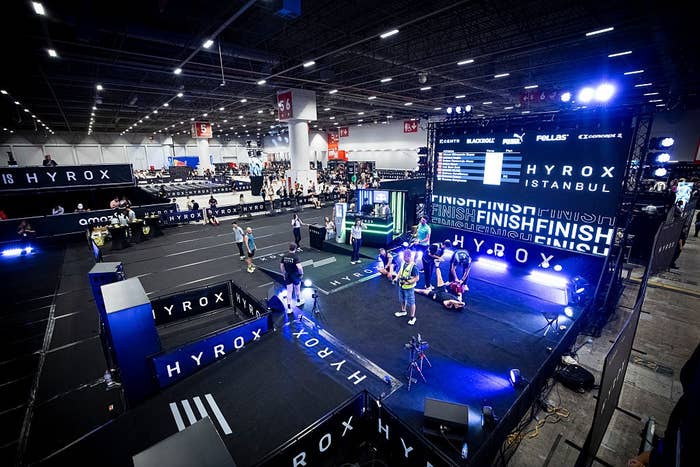
HYROX competitions are massive indoor endurance events typically hosted in expansive convention centers. The Beijing event brought together thousands of competitors—ranging from elite professional athletes to dedicated amateurs—alongside thousands of spectators cheering from the sidelines. Competitors face a grueling physical test: they must alternate between running one-kilometer segments and completing functional strength-training stations, repeating this cycle eight times. The sheer physical stress placed on the human body during such an event is immense, requiring elite conditioning, precise pacing, and, as it turns out, robust digestive resilience.

The Incident On-Course
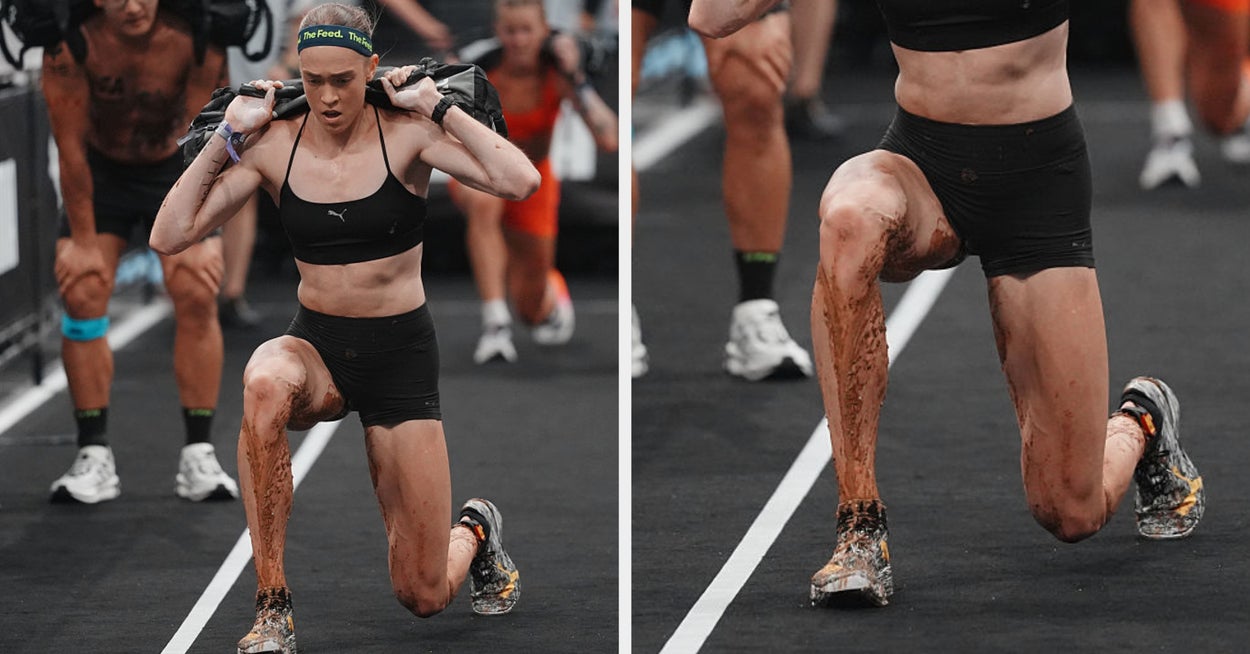
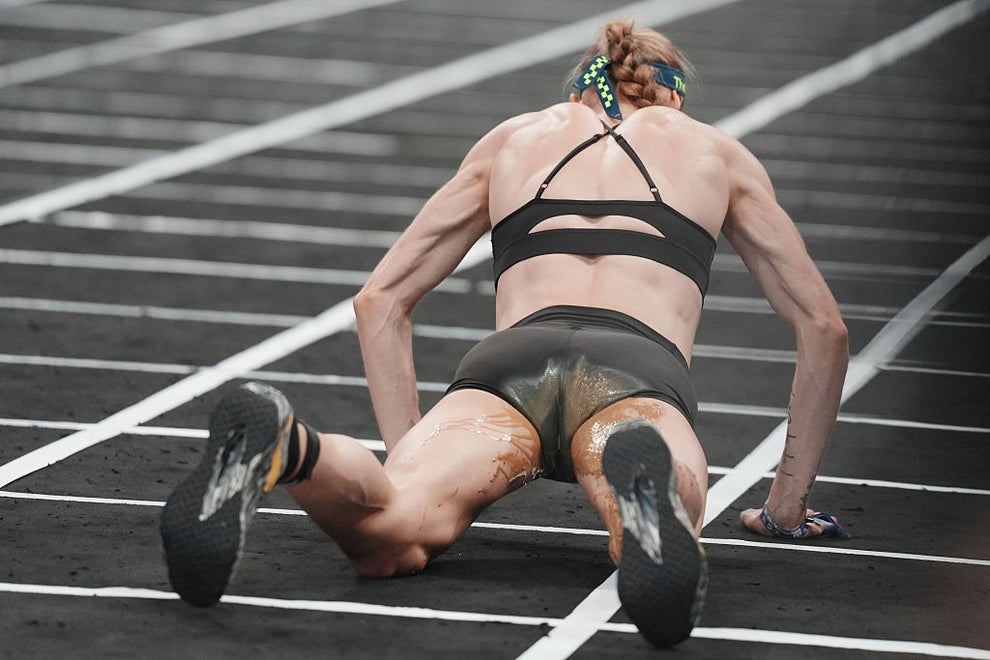
As the competition progressed into its later stages, Joanna Wietrzyk encountered catastrophic gastrointestinal distress. Experiencing severe, uncontrollable bowel incontinence, Wietrzyk leaked fecal matter across the course and onto her own body. Despite the obvious physical and biological implications of the situation, she elected to push forward. Witnesses and photographic evidence confirm that she did not pause to clean up, use a restroom facility, or withdraw from the race. Instead, she powered through the remaining functional workout stations—including rowing and sandbag lunges—and completed all eight circuits to secure a first-place finish.
The Immediate Social Media Explosion
Shortly after crossing the finish line, images and firsthand accounts of the incident began circulating online. What started as whispered murmurs among attendees quickly exploded into a global internet phenomenon. By September 14, hashtags related to the incident were trending across multiple platforms. Wietrzyk initially added fuel to the fire by posting a now-deleted image to her Instagram story accompanied by the defiant caption, "a win is a win," alongside a hospital selfie thanking supporters. As public backlash intensified, the post was scrubbed, but the digital footprint remained indelible.

Institutional Rebound
Recognizing the potential damage to the brand’s reputation and the severity of the health concerns raised by the community, HYROX co-founder Moritz Fürste and the central organization issued formal statements on September 15. The statements addressed the handling of the incident, offered apologies to participants and spectators, and outlined immediate revisions to the official rulebook to ensure such a scenario is never repeated.
Supporting Data and Context: The Rise of HYROX and Exercise-Induced Incontinence
To fully grasp the shock value of the Beijing incident, one must look at the meteoric rise of HYROX and the lesser-known physiological realities of high-intensity endurance sports.
What is HYROX?
Founded in Germany, HYROX has quickly established itself as the preeminent global fitness race, bridging the gap between traditional running events and functional CrossFit-style workouts. Designed to be accessible to a wide demographic yet challenging enough to test the world’s best athletes, a standard race consists of:
- 1 km run
- 1 SkiErg session
- 1 km run
- 1 Sled Push
- 1 km run
- 1 Sled Pull
- 1 km run
- 1 Burpee Broad Jump
- 1 km run
- 1 Rowing session
- 1 km run
- 1 Farmers Carry
- 1 km run
- 1 Sandbag Lunges
- 1 km run
- 1 Wall Balls
With fields ranging from 3,000 to 5,000 participants per event packed tightly into indoor convention centers, the density of athletes interacting with shared equipment is exceptionally high.
The Medical Reality: Runner’s Diarrhea and Incontinence
While the internet reacted with a mixture of horror and dark humor, medical professionals were quick to point out that exercise-induced gastrointestinal distress is a "very real thing." According to studies published in medical literature, such as data found in the National Institutes of Health (NIH) databases, up to 50% of endurance athletes experience gastrointestinal symptoms during heavy exertion.
The mechanisms behind this are well-documented:

- Blood Flow Redistribution: During intense aerobic exercise, the body shunts blood away from the gastrointestinal tract and toward the working skeletal muscles and heart. This ischemia (reduced blood flow) to the gut impairs digestive function.
- Mechanical Bouncing: The repetitive vertical jarring and impact of running cause mechanical trauma to the intestines, effectively agitating the digestive tract.
- Hormonal Shifts: Strenuous workouts alter the release of gastrointestinal hormones that regulate gut motility, often speeding up transit times drastically.
However, while medical experts validate that bowel incontinence can happen involuntarily to elite athletes pushing their absolute limits, the ethical and hygienic consensus draws a sharp line at continuing to race once containment has failed.
Official Responses and Rulebook Overhauls
The fallout from HYROX Beijing forced executive leadership to confront administrative and regulatory gaps in real-time. Prior to the incident, the HYROX rulebook was notoriously specific about minor infractions while leaving massive gray areas for biological and medical anomalies.

What the Rules Stated Before Beijing
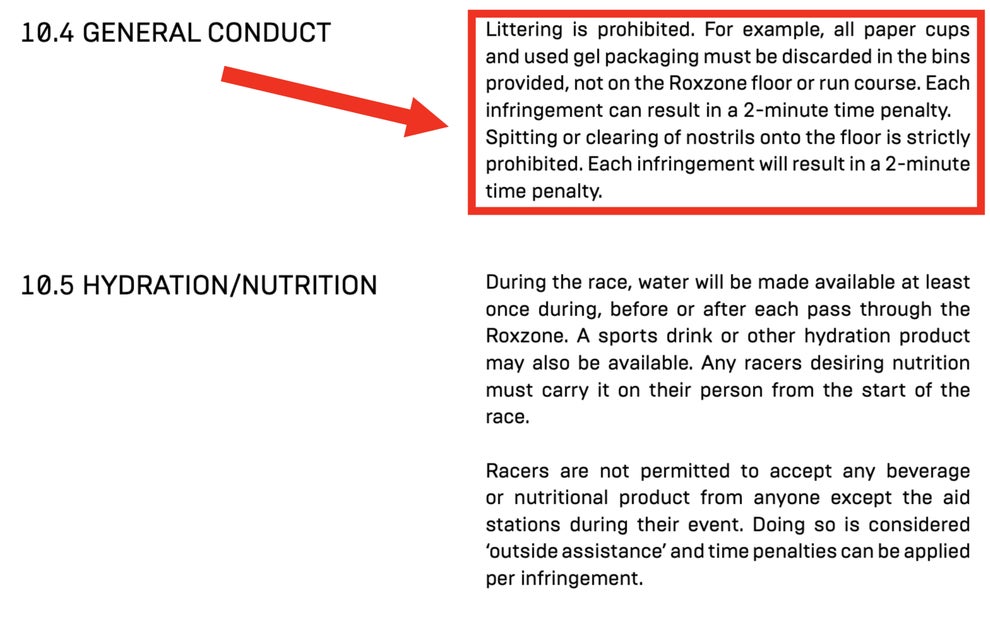
The pre-existing rulebook focused heavily on sportsmanship, equipment handling, and spectator interference. For instance, a famous rule explicitly stated that "spitting or clearing of nostrils onto the floor is strictly prohibited," carrying an automatic two-minute penalty. The irony was not lost on social media commentators, who quickly pointed out the absurdity of penalizing a minor expectoration while allowing an athlete leaking biological waste to complete the course unchecked.
Co-Founder and Corporate Apologies
In an official statement released via Instagram, HYROX co-founder Moritz Fürste addressed the community directly. He acknowledged that race officials on the ground failed to properly assess the biohazard situation and permitted a compromised athlete to continue past multiple public stations.
"We understand the frustration, disgust, and legitimate health concerns expressed by our community following the events in Beijing," Fürste stated. "HYROX prides itself on delivering a world-class, safe, and professional environment for every single competitor and spectator. In this instance, our on-site protocols fell short, and we take full responsibility for failing to intervene."
The Revised Rulebook
Prompted by the backlash, HYROX management fast-tracked updates to sections 12.3 and 12.4 of the official rulebook. The newly minted regulations introduce explicit guidelines for medical emergencies and bodily fluid incidents:

- Section 12.3 ("Did Not Finish" – Medical): Mandates that any competitor experiencing acute medical episodes, including severe bodily fluid leakage or loss of containment, must be immediately directed to the medical tent by race marshals. Continuing the race under such conditions is explicitly banned.
- Section 12.4 (Disqualification): Empowers referees and course judges to immediately disqualify and remove any participant whose continued presence on the course poses a direct biohazard to fellow competitors, volunteers, or equipment.
Implications for the Future of Extreme Fitness
The HYROX Beijing "Poopgate" scandal transcends a single gross-out viral moment; it signals a cultural and operational turning point for the booming extreme fitness industry.
Biohazards and Public Health in Mass-Participation Sports
As endurance racing continues to grow exponentially—drawing millions of dollars in corporate sponsorships and packing convention centers to maximum capacity—organizers can no longer rely on the "honor system" or an athlete’s sheer grit to govern race integrity. Shared equipment like rowing handles, sled ropes, sandbags, and push-pull tracks are touched by thousands of hands over the course of a single weekend. Allowing a biohazard to move freely through these stations introduces risks of pathogen transmission, including norovirus, E. coli, and other gastrointestinal pathogens.

Event organizers across obstacle course racing (OCR), marathons, and functional fitness events are now auditing their cleaning protocols, medical staff positioning, and referee training to ensure that immediate quarantine measures are standard operating procedure.
The Psychological Pressure of "Hustle Culture" in Elite Sports
The incident has also reignited discussions around the toxic elements of modern athletic culture, where "pushing through the pain" is glorified to pathological degrees. Social media reactions heavily criticized Wietrzyk’s refusal to stop, viewing it not as an inspiring display of perseverance, but as a symptom of a win-at-all-costs mentality that disregards the safety, dignity, and health of everyone else in the vicinity.
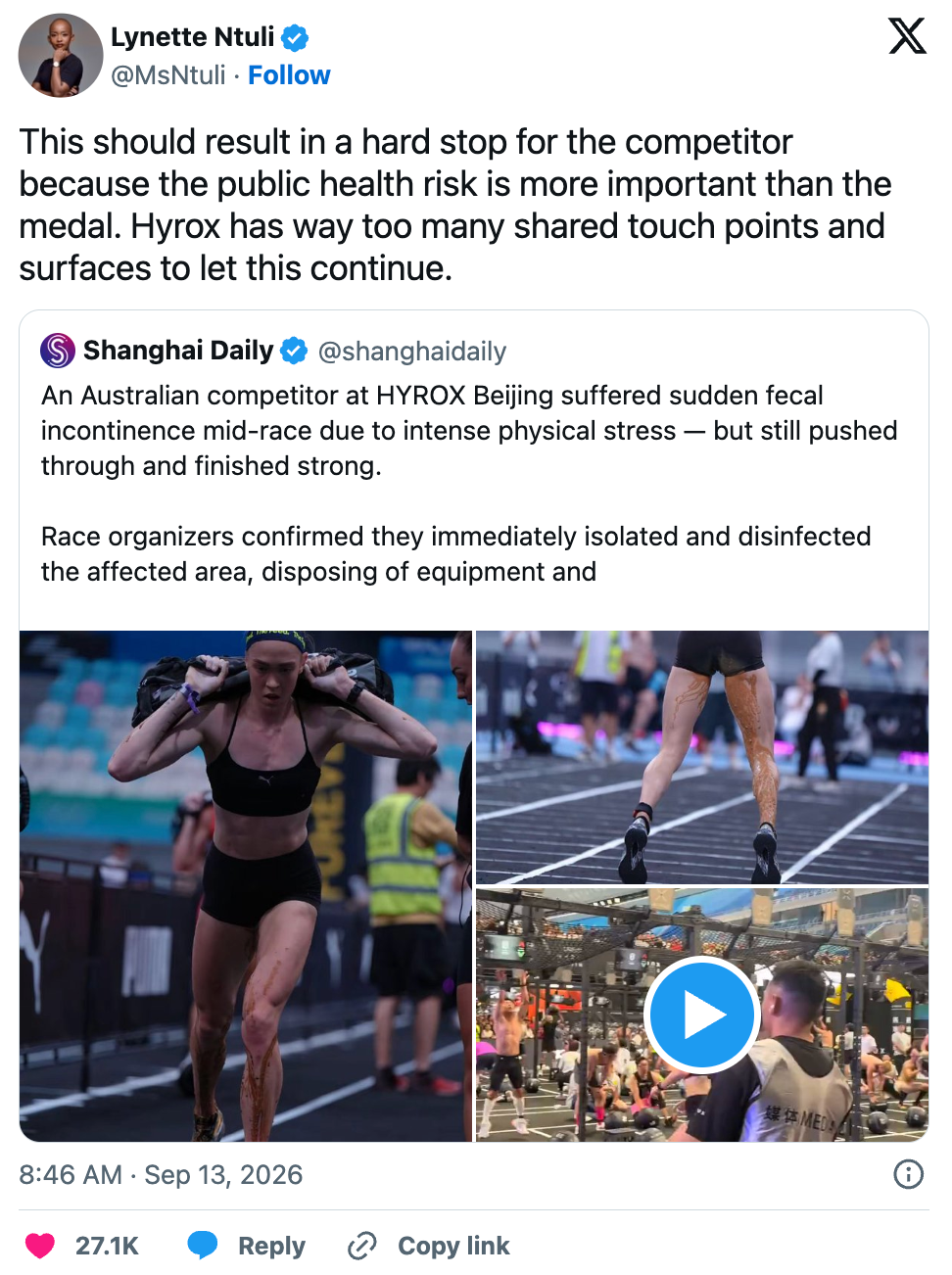
When athletes internalize the mantra that quitting—even in the face of biological catastrophe—is an unacceptable failure, common sense and basic human courtesy are often the first casualties. Commentators noted that while elite athletes dedicate years of their lives to training for world records, there is a fundamental social contract in public sports: your personal glory should never come at the expense of public health.
Unresolved Questions and Community Fallout
As of press time, HYROX has not clarified whether Joanna Wietrzyk will face a formal suspension or a permanent ban from future competitions, leaving many competitors demanding further disciplinary action. Meanwhile, online forums and gym locker rooms continue to buzz with dark humor, memes, and intensified debates over gym hygiene.

Whether "Poopgate" fades into the archives of bizarre sports history or permanently reshapes how multi-sport endurance events manage health and safety, one thing is certain: future HYROX competitors will be looking very closely at the ground beneath their feet—and wiping down their equipment with unprecedented vigilance.
 Ali Ikhwan
  Sagoh
Sagoh 