
 By Azzam Bilal Chamdy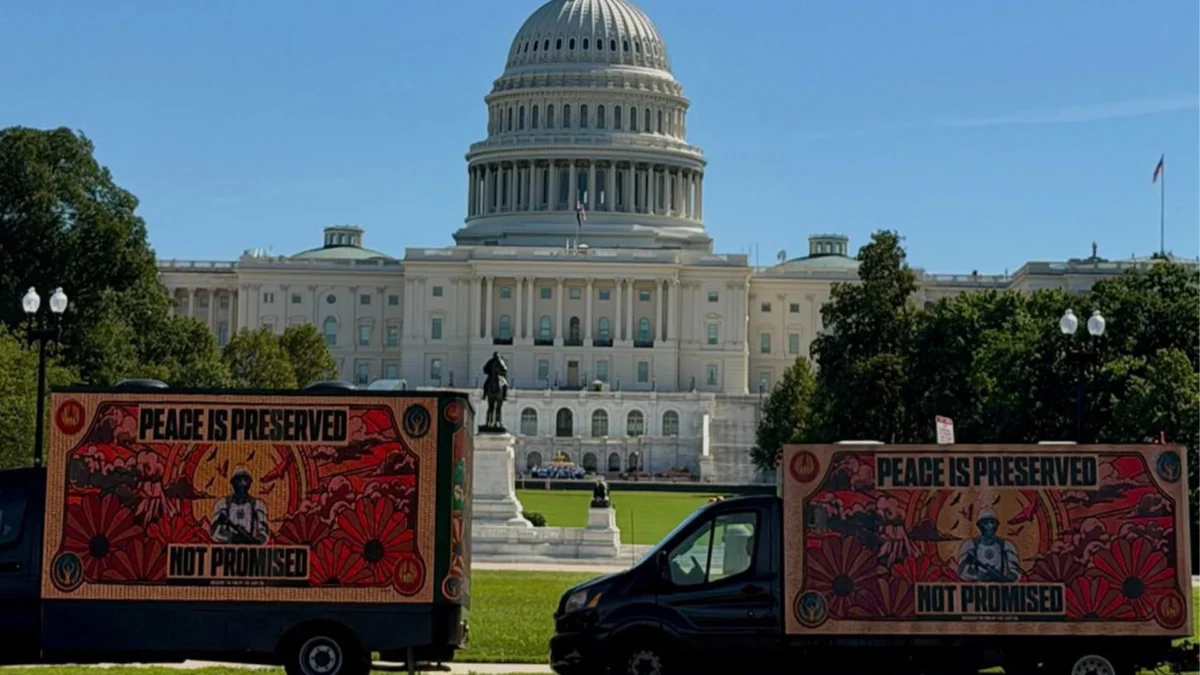
The marketing landscape is constantly evolving, shifting from passive consumption to active, sometimes unsettling, immersion. In the latest example of high-stakes promotional strategy, Lionsgate has launched an ambitious—and undeniably provocative—campaign for The Hunger Games: Sunrise on the Reaping. By deploying "Capitol-sanctioned" propaganda posters outside the world’s most significant bastions of democracy and international governance, the studio has ignited a global conversation about the power of environmental storytelling and the thin, permeable membrane that separates dystopian fiction from our current political reality.
The Campaign: A Masterclass in Guerilla Marketing
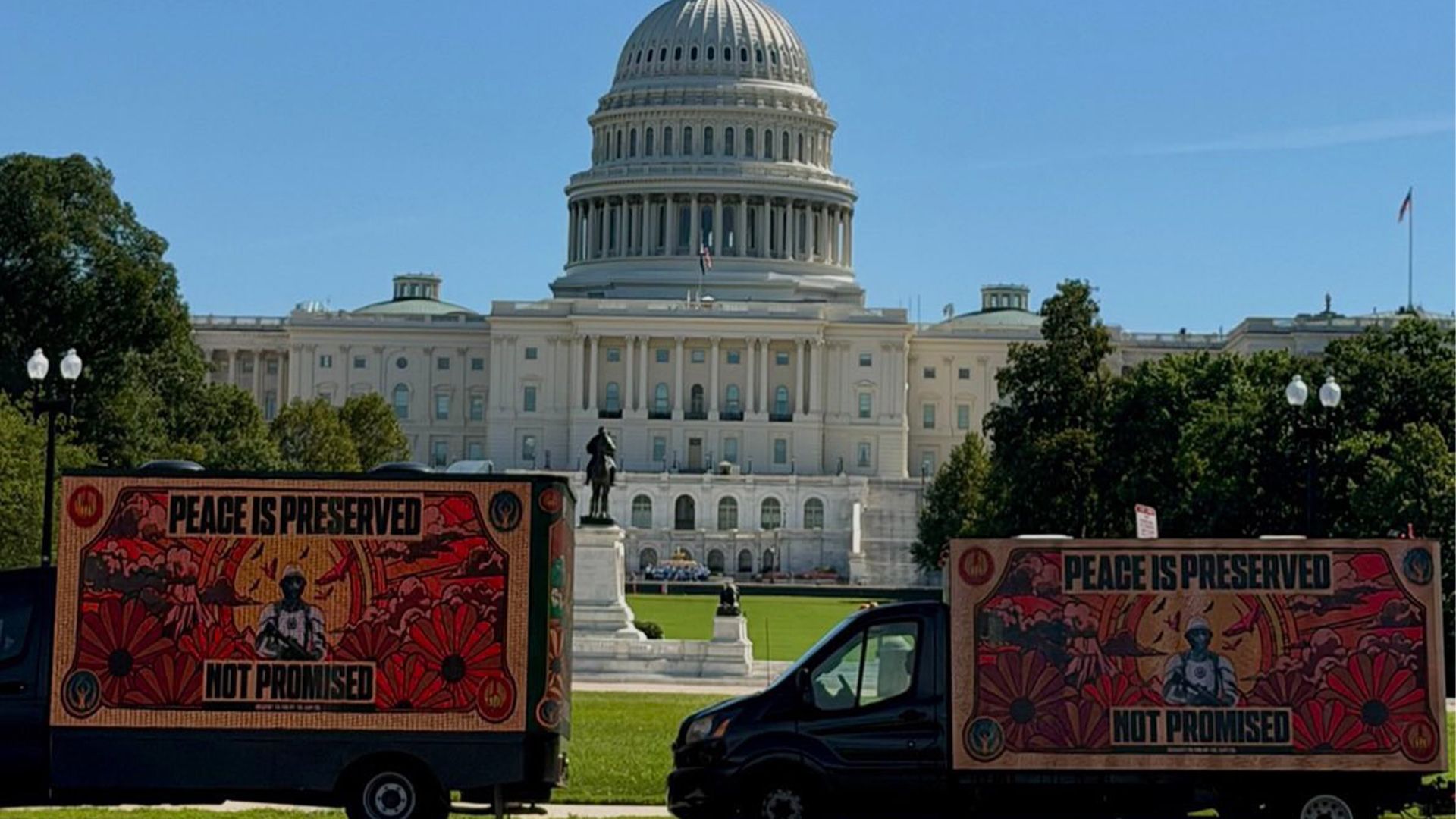
The campaign features striking, Soviet-inspired graphic design: a stoic soldier set against a deceptively soft, floral backdrop. The messaging is chillingly authoritarian: "Peace is preserved, not promised." These words, while clearly belonging to the fictional, oppressive regime of Panem, carry an eerie weight when placed in front of real-world institutions.
The mobile billboards were strategically positioned at locations synonymous with global power and human rights:
- The U.S. Capitol Building, Washington D.C.
- NATO Headquarters, Brussels, Belgium
- Independence Hall, Philadelphia
- The Democracy Monument, Bangkok, Thailand
While the posters include subtle signifiers—District badges in the corners and fine print crediting "The Capitol"—the visual impact at a distance is indistinguishable from genuine political messaging. This is not merely an advertisement; it is an exercise in psychological immersion.
Chronology: From Concept to Global Controversy
The rollout of the Sunrise on the Reaping campaign was executed with surgical precision, designed to maximize both physical disruption and digital virality.
Phase 1: The Initial Sightings (September 14-15, 2026)
The first reports began surfacing on social media platforms as residents and passersby in Washington D.C. and Philadelphia captured images of the displays. Initial reactions ranged from confusion to genuine alarm, as the aesthetic of the posters mirrored real-world political campaign materials.
Phase 2: Global Expansion (September 16, 2026)
Within 48 hours, the campaign reached its international footprint. The appearance of the banners at the NATO Headquarters in Belgium and the Democracy Monument in Thailand signaled that this was a coordinated, global effort rather than a localized stunt.
Phase 3: The Digital Feedback Loop
As photos of the billboards spread, the "meme-ification" of the campaign began. Social media users began debating the ethics of placing dystopian propaganda at the doorstep of real-world democratic symbols. By the end of the first week, the campaign had achieved what every studio dreams of: organic, widespread discourse that transcended the film itself.
Supporting Data: Why Environment Defines Perception
The success of this campaign rests on a principle of design known as "contextual resonance." In advertising theory, the environment in which a message is placed is just as important as the message itself. By placing these specific ads at centers of power, Lionsgate leveraged the architecture of the real world to validate the fiction of the film.
- Psychological Impact: Studies in semiotics suggest that viewers subconsciously assign the traits of their surroundings to the information presented within them. By placing "Capitol" propaganda at the seat of the U.S. government, the campaign forces a cognitive association between the two entities.
- The "Uncanny Valley" of Marketing: When advertising mimics reality too closely, it creates a phenomenon of cognitive dissonance. The viewer knows it is a movie promotion, yet the visual cues trigger a genuine feeling of unease. This tension is precisely what makes the campaign effective; it forces the audience to engage with the thematic core of The Hunger Games—the fragility of freedom—without them having to step into a cinema.
Official Responses and Public Reaction
As of late September 2026, reactions remain polarized. While film critics have lauded the campaign as a "triumph of experiential marketing," political commentators have raised questions regarding the lack of permits or public consultation regarding the placement of such provocative imagery near government sites.
Lionsgate has maintained a relatively low profile regarding the specific logistics of the placement, issuing a standard statement noting that the campaign is "designed to reflect the themes of the upcoming film" and "does not intend to make any commentary on current geopolitical situations."
However, the silence from the institutional side is equally telling. Representatives for the sites in question have remained largely tight-lipped, likely fearing that acknowledging the stunt would only serve to amplify its reach. In the absence of an official outcry, the silence has been interpreted by many as a tacit acknowledgment of the campaign’s clever, if provocative, nature.
Implications: The Future of Experiential Advertising
The Sunrise on the Reaping campaign marks a turning point in how studios will approach franchise marketing in the coming years. We are moving away from the era of the "static billboard" and into an era of "situational narrative."
1. The Weaponization of Public Space
This campaign proves that public spaces are no longer neutral. Brands are increasingly willing to treat major cities as open-world canvases, testing the boundaries of public tolerance. While this creates unparalleled engagement, it also risks "ad-fatigue" or, more dangerously, a public backlash if the branding is perceived as tone-deaf or disrespectful to the specific history of the location.
2. The Blurring of Fact and Fiction
In a post-truth digital environment, the lines between reality and simulation are already frayed. By intentionally mimicking propaganda, The Hunger Games campaign highlights a broader cultural trend where entertainment properties adopt the aesthetics of political movements. This creates a fascinating feedback loop where audiences become accustomed to consuming political imagery as a form of entertainment, which may have long-term consequences for how we perceive real-world political communication.
3. The Need for Ethical Boundaries
As technology evolves, the ability to create "real" looking propaganda will only become more sophisticated. The industry must grapple with where the line should be drawn. Is it acceptable to use the imagery of authoritarian regimes to sell cinema? At what point does a marketing stunt become an act of civic disruption?
Conclusion: A Mirror to Our Own World
The Hunger Games has always been a mirror, reflecting our own anxieties about inequality, state surveillance, and the erosion of democratic norms. By taking the symbols of that fictional world and placing them in the center of our own, the Sunrise on the Reaping campaign has forced us to acknowledge that the distance between Panem and the present day is shorter than we might like to admit.
Whether or not one agrees with the ethics of the placement, the campaign is an undeniable success from a creative standpoint. It has successfully moved the discussion out of the theater and into the streets, proving that the most effective way to sell a story about a changing world is to change the world—if only for a few days—around the audience.
As we look toward the release of the film, we are left with a lingering question: if a fictional government can command our attention so effectively through simple graphic design, how are we being influenced by the real ones? The Sunrise on the Reaping marketing team may have set out to promote a movie, but they ended up producing a profound, and slightly terrifying, piece of modern performance art.
 Laily UPN
  Lina Irawan
  Nila Kartika Wati