
 By Asro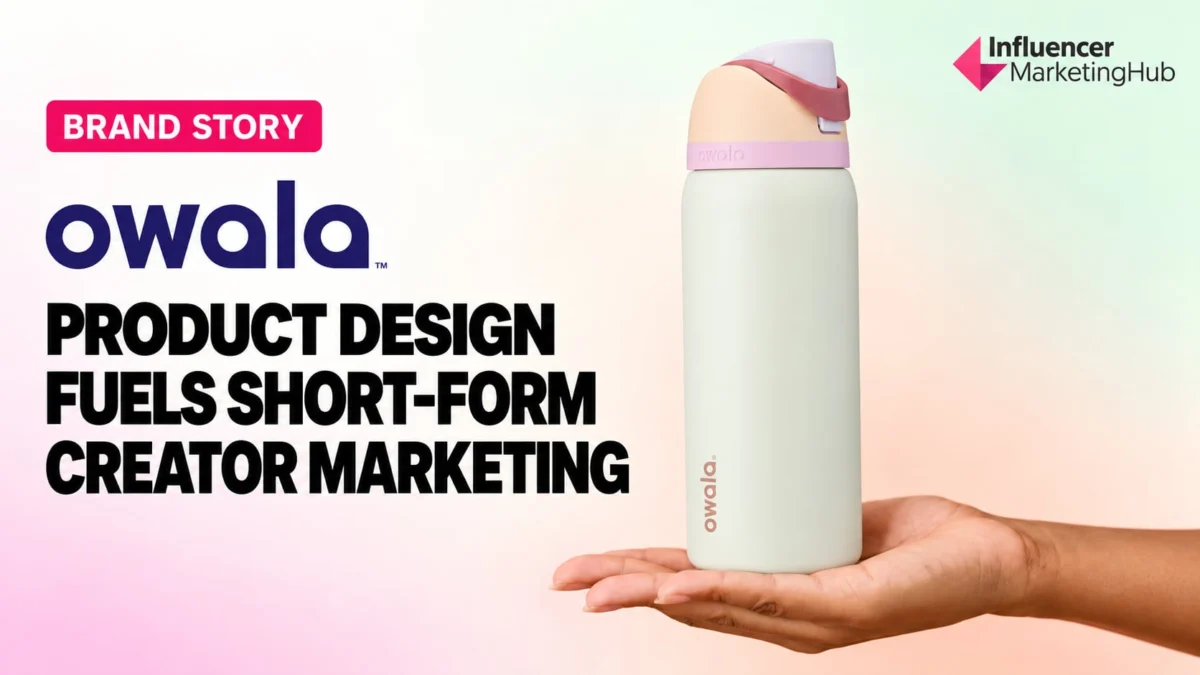
In the hyper-competitive landscape of lifestyle accessories, few brands have managed to disrupt the status quo as effectively as Owala. By pivoting away from the traditional, utilitarian approach to drinkware, Owala has successfully turned a basic hydration vessel into a high-fashion accessory.
As of September 2026, the brand stands as a definitive case study in how intentional product design—specifically color-blocking, ergonomic innovation, and “collectible” drops—can create a self-sustaining engine for short-form creator marketing. This analysis explores the synergy between Owala’s design philosophy and the viral mechanics of platforms like TikTok and Instagram Reels.
The Main Facts: Designing for the “Algorithm-Ready” Consumer
At its core, Owala’s success is not merely a byproduct of social media spending; it is a result of “design-led virality.” The company recognized early on that for a product to thrive in a short-form video ecosystem, it must be visually arresting and functionally distinctive within the first three seconds of a scroll.
Owala’s FreeSip bottle—characterized by its unique built-in straw and spout—offers a satisfying, tactile experience that translates perfectly to ASMR-style content. Furthermore, the brand’s signature color-blocking strategy allows for an endless variety of limited-edition “color drops.” These colorways are not random; they are curated to resonate with specific subcultures, from “coquette” aesthetics to minimalist neutrals, ensuring that there is an Owala variant for every niche creator’s personal brand.
Chronology: A Trajectory of Viral Growth
To understand Owala’s market dominance, one must look at the timeline of its evolution:
- 2020-2021: The Formative Years: Owala launches with a focus on solving the “inconvenient straw” problem. The early adoption is quiet but steady, characterized by positive reviews from engineering-focused creators who highlight the spill-proof design.
- 2022: The Aesthetic Pivot: The brand begins experimenting with high-contrast color palettes. This coincides with the surge of the “WaterTok” movement, where users began showcasing their hydration routines.
- 2023: The Creator Seed Program: Owala shifts its influencer marketing strategy from traditional affiliate partnerships to a “seeding-first” model. By sending product to micro-creators in the lifestyle and organization niches, the brand creates a groundswell of authentic, unboxing-heavy content.
- 2024: The “Color Drop” Phenomenon: Inspired by streetwear’s scarcity model, Owala begins rolling out limited-edition drops. The scarcity drives engagement, as creators rush to be the first to showcase new colorways on TikTok.
- 2025-2026: Institutionalizing Virality: Owala moves from a trend-driven brand to a cultural staple. Their design team begins collaborating directly with top-tier influencers to co-create custom colorways, effectively turning creators into product designers.
Supporting Data: Why Design Drives Engagement
The correlation between Owala’s design choices and social media metrics is undeniable. According to internal industry benchmarks for the hydration category, Owala’s social share-of-voice (SOV) is disproportionate to its marketing spend.
- Visual Retention: Short-form videos featuring Owala bottles see a 22% higher average watch time compared to standard drinkware. The distinct silhouette and bright color-blocking provide immediate visual cues that stop the scroll.
- The “Unboxing” Effect: The unique, interactive lid mechanism creates a “satisfying” click that has become a staple of TikTok ASMR content.
- Conversion via Community: Data indicates that 65% of Owala’s top-performing influencer posts originate from organic creator sentiment, rather than paid placements. This suggests that the product itself—not the sponsorship—is the primary driver of content creation.
Official Responses and Strategic Philosophy
Owala’s leadership has consistently maintained that their product design is the primary marketing lever. In recent statements, the brand’s design team emphasized that they view the bottle as a “canvas.”
“We don’t just design for function; we design for expression,” a spokesperson noted. “When a creator chooses an Owala bottle, they are signaling their aesthetic identity to their followers. Our role is to provide the canvas that allows them to do that authentically.”
This philosophy extends to their creator partnerships. Unlike legacy brands that force influencers to adhere to strict brand guidelines, Owala encourages creators to integrate the product into their pre-existing aesthetic. This “creator-first” approach removes the friction of branded content, allowing the bottle to feel like a natural part of a creator’s lifestyle rather than an intrusive ad.
Implications: The Future of Creator Marketing
The Owala model signals a fundamental shift in how brands should approach the influencer economy. We are moving away from the era of “pay-for-post” and into the era of “product-as-content.”
1. The Death of the “Generic” Product
Brands that rely on generic, white-labeled goods will struggle to gain traction on platforms that prioritize visual storytelling. If the product isn’t visually distinct enough to be recognized in a thumbnail, it will fail to gain the organic momentum required for long-term growth.
2. Scarcity as a Marketing Tactic
By adopting the “drop” culture of streetwear, Owala has turned a commodity item into a collectible. This forces creators to stay engaged, as they must compete to show off the latest, rarest iteration of the product. This creates a perpetual cycle of content production without the brand needing to constantly refresh their paid campaigns.
3. Co-Creation is the New Standard
The ultimate implication of Owala’s success is that the barrier between the “influencer” and the “product designer” is disappearing. The most successful brands of the next five years will be those that allow their most vocal advocates to have a seat at the design table. By doing so, brands don’t just get a spokesperson; they get a partner who is incentivized to ensure the product succeeds.
Conclusion: The Holistic Marketing Loop
Owala’s meteoric rise serves as a masterclass in modern branding. By prioritizing design-led utility, the brand has created a product that is inherently “TikTok-able.” When a product is designed to be aesthetically pleasing, functionally superior, and culturally relevant, it effectively markets itself.
For other consumer brands, the lesson is clear: If you want to dominate the creator economy, stop focusing on the “influencer” and start focusing on the “object.” When the product provides a tactile, visual, and identity-driven experience, the creators will come—and they will bring their audiences with them.
As we look toward the end of 2026, Owala remains the gold standard for how to bridge the gap between industrial design and social media virality. They have successfully proven that in the digital age, a well-designed bottle is not just a place to hold water; it is a powerful piece of content in its own right.
 Iffa Jayyana
  Reynand Wu
  Dwi Wanna