
 By Sagoh
In the rapidly evolving landscape of digital entertainment, few artists successfully bridge the gap between historical aesthetic traditions and modern, high-tech workflows. Marc Magliari, a freelance illustrator primarily working within the realms of animation and video game development, stands as a notable exception. His work—defined by a mastery of color scripting and atmospheric rendering—serves as a masterclass in how classical influences can be synthesized with contemporary software to create evocative, narrative-driven art.
By drawing inspiration from the rigid, symbolic structures of medieval art, the bold graphic language of 1970s posters, and the haunting, high-contrast chiaroscuro of German Expressionist cinema, Magliari has carved out a unique visual signature. His portfolio does not merely aim for technical polish; it seeks to evoke specific, visceral emotional responses from the viewer.
The Foundation of Visual Storytelling: Main Facts
At the core of Magliari’s professional practice is the concept of "color scripting." Unlike traditional illustration, where a single frame may hold all the narrative weight, color scripting is an essential process in animation and game design that maps out the emotional arc of a story through shifts in light, hue, and saturation.
Magliari treats every project—whether it is a sprawling environment design or an intimate character portrait—as a theatrical stage. By utilizing a deliberate palette, he guides the viewer’s eye, dictates the pacing of a scene, and establishes the "temperature" of the narrative before a single line of character animation is finalized. His methodology relies on a "research-first" approach, where historical inquiry into art movements acts as the scaffolding for his digital creations.
A Chronological Evolution of Technique
Magliari’s journey as an artist reflects a deliberate, iterative process of growth. His career, marked by a transition from static illustration to the dynamic, multi-dimensional world of interactive media, can be understood through the development of his key projects:
1. The Sicilian Court Portrait Research
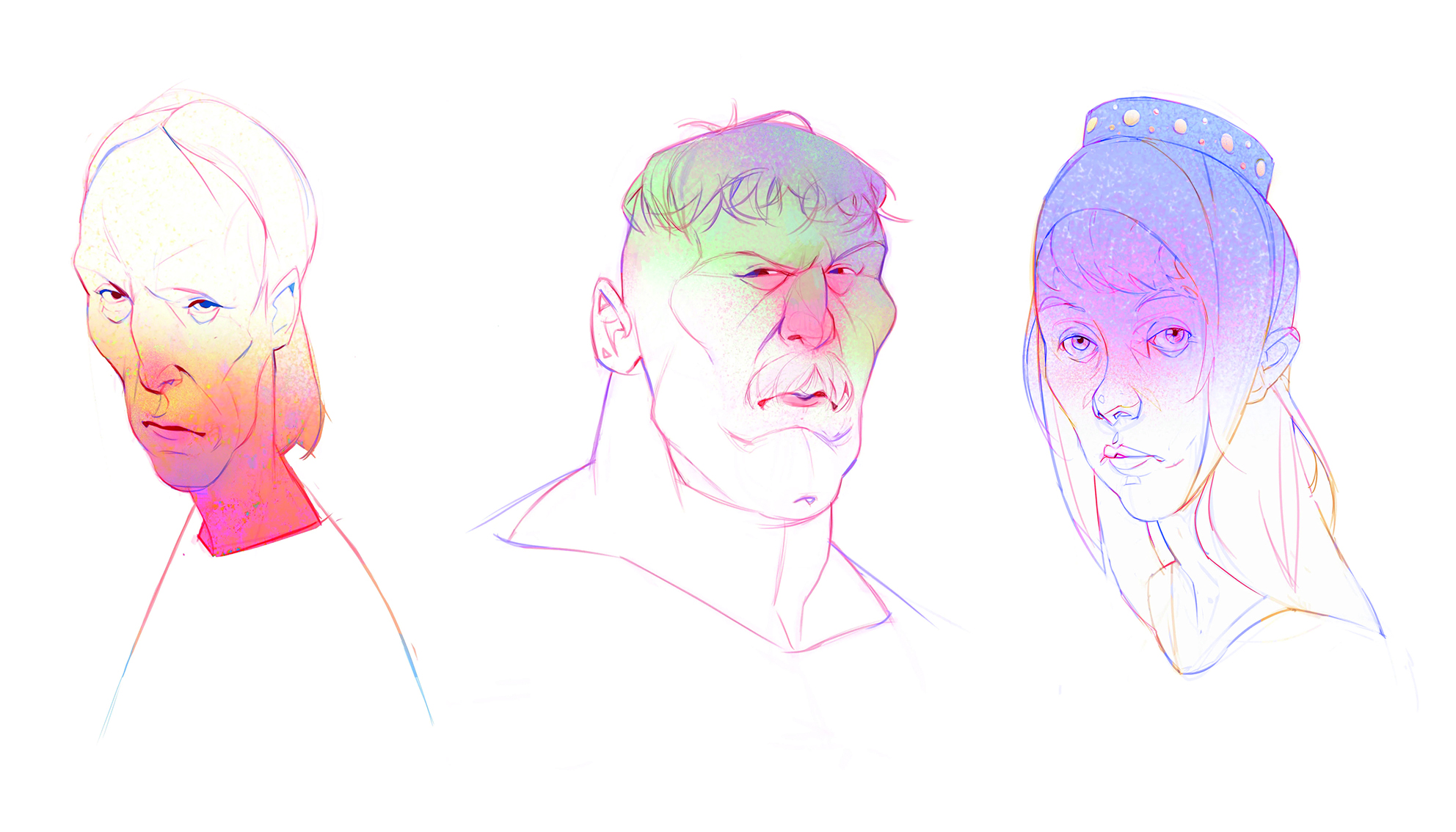
Magliari identifies portraiture as the essential starting point for his broader world-building projects. In his "Sicilian Court" series, he focuses on defining the internal psychology of characters before placing them within a larger context. By grounding his character design in historical research, he ensures that the "core emotion" of the figure is legible. He argues that once a character’s emotional truth is established, the subsequent design decisions—costuming, lighting, and composition—become self-evident extensions of that personality.
2. The Lord of Balux: Balancing Abstract and Figurative
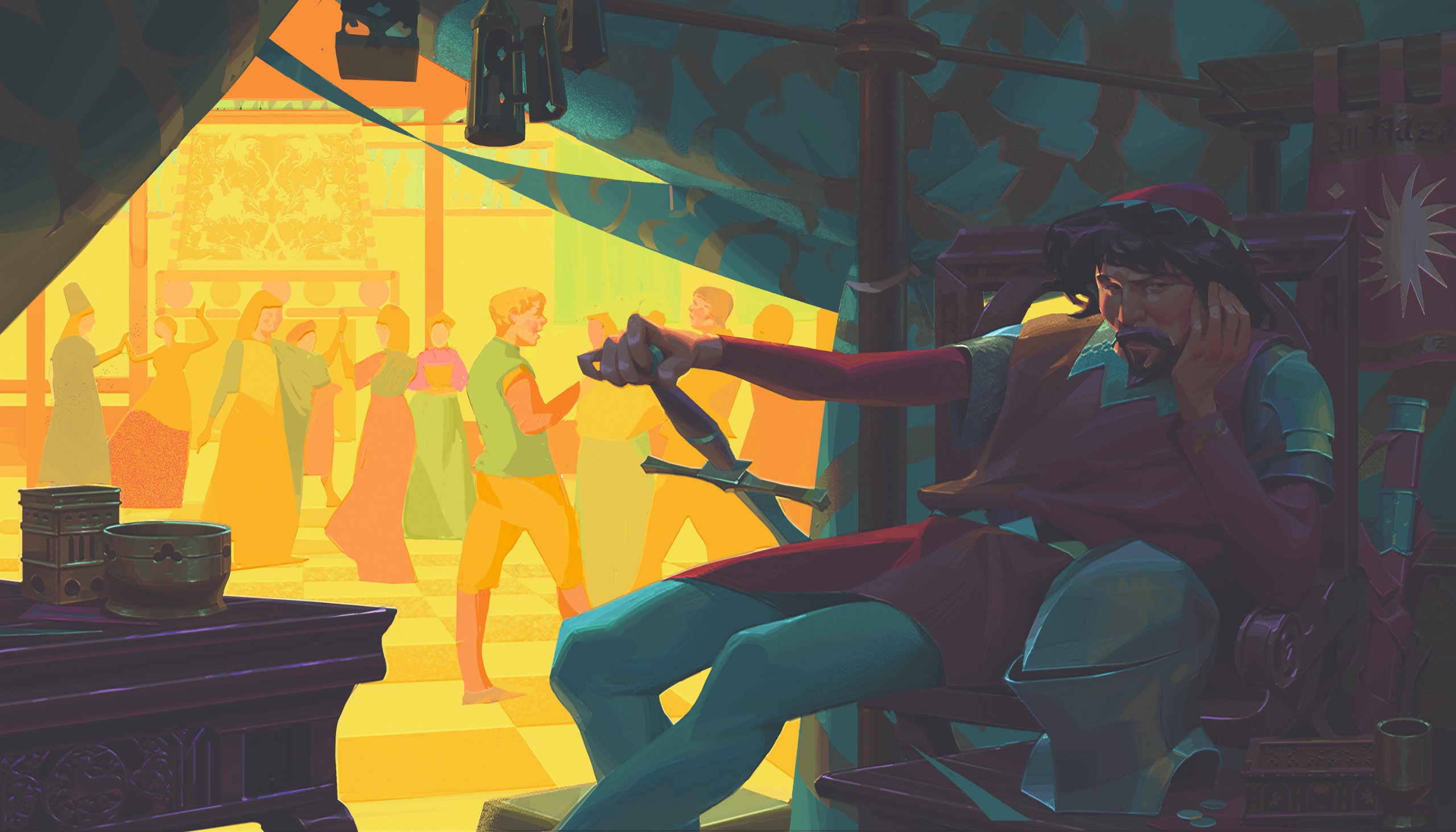
Moving from the intimate scale of portraiture to the complex interplay of environment design, Magliari’s work on The Lord of Balux demonstrates his mastery of contrast. He describes the piece as having its roots in "abstract, complementary blue, orange, and yellow shapes." By using this aggressive color opposition, he creates a narrative tension between the subject—a brooding, isolated baron—and the chaotic, indulgent feast occurring in the background. This technique forces the viewer to navigate the visual space in a way that mirrors the character’s internal conflict.
3. The Tower of Atlan: The Marriage of 3D and 2D
Perhaps the most technically rigorous of his recent works, The Tower of Atlan highlights the integration of modern software into the traditional artistic pipeline. The process began with "three-value sketches"—a foundational technique used to establish the lighting structure of a scene—followed by a color pass. Magliari then utilized Blender to architect the complex spatial geometry of the tower, providing a stable foundation for perspective. The final rendering was executed in Photoshop, where he overlaid the digital architecture with his pre-established color keys to achieve a cohesive, painterly finish.
4. Marceline: The Utility of Fan Art
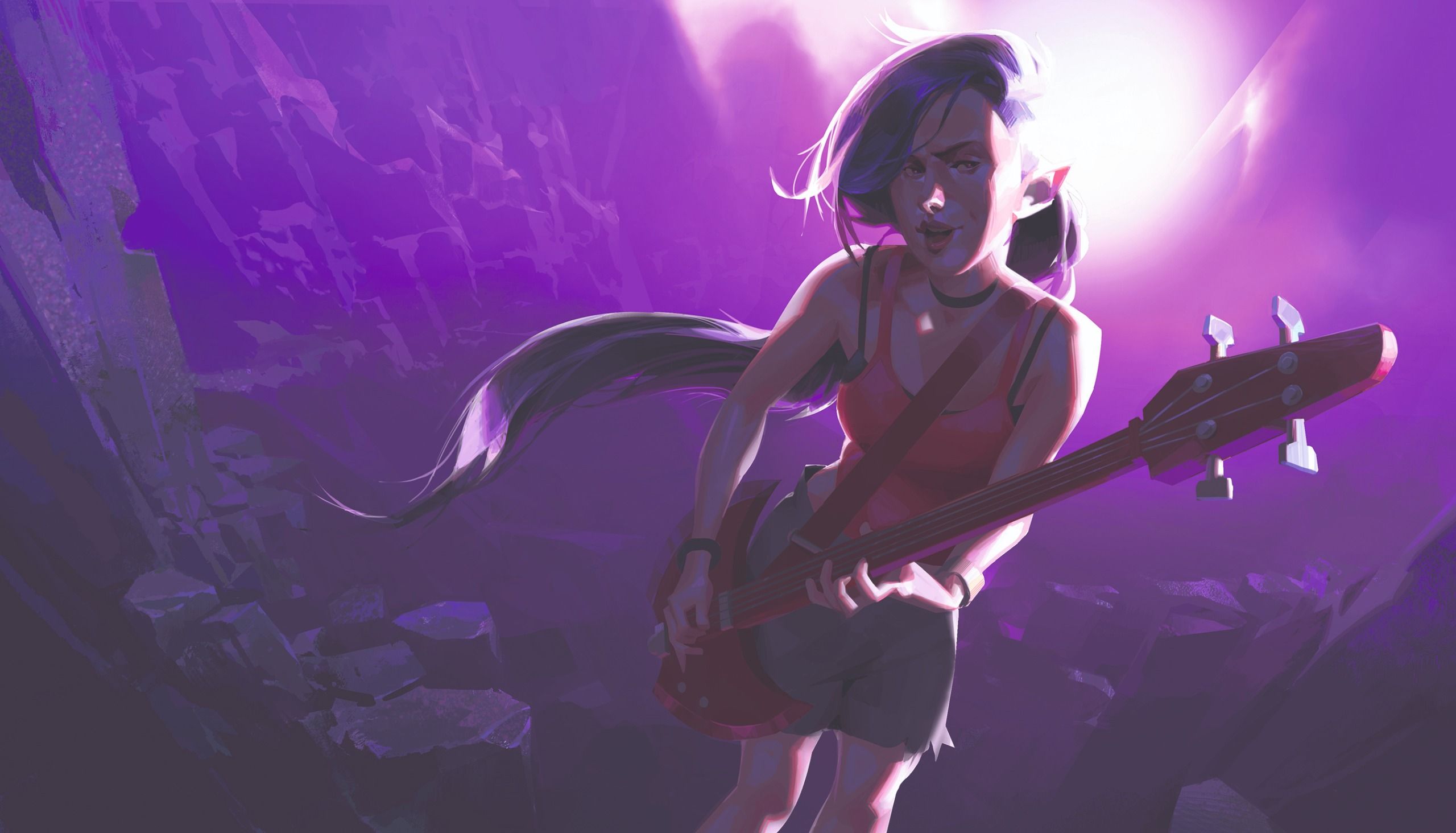
Magliari notes that fan art is not merely a hobby, but a vital "creative pressure valve." His exploration of the Distant Lands: Obsidian universe allowed him to pivot away from his usual subjects—typically armored knights and historical figures—and experiment with high-saturation purples and artificial lighting schemes. This exercise highlights his belief that artists must constantly challenge their own habits to avoid stagnation.
Supporting Data: The Tools of the Trade
Magliari’s work underscores a shifting paradigm in the digital art industry. The divide between "traditional" painting and "digital" production has effectively dissolved. His workflow suggests that for modern illustrators, the following toolsets are essential:
- 3D Modeling (Blender): Used for structural integrity, perspective, and lighting reference, allowing the artist to "paint" over a mathematically accurate base.
- Adobe Photoshop: The primary environment for the "rendering" stage, where color theory is applied to the structural base.
- Color Keying: A pre-production technique that acts as the blueprint for an entire project’s visual language.
- Historical Reference Libraries: A crucial, non-software component. Magliari’s consistent reference to German Expressionism and medieval art serves as a reminder that artistic quality is derived from historical literacy, not just software proficiency.
Official Perspectives and Philosophy
When asked about his process, Magliari consistently emphasizes that the software is secondary to the intent. His "official" stance on digital art, as shared across his various professional profiles and industry interviews, is that digital tools should be used to mimic the limitations and characteristics of traditional media. By imposing these "limitations" upon himself—such as limiting his palette or adhering to the harsh lighting shadows of the 1920s expressionist movement—he avoids the common digital art pitfall of over-rendering and "slickness."
He advocates for a "strong foundation" where the emotional intent of the scene is solidified in the earliest stages of the sketch. According to Magliari, if the emotion is not present in the initial three-value sketch, no amount of post-processing or high-fidelity rendering will salvage the piece.
Implications for the Future of Digital Illustration
Marc Magliari’s practice serves as a case study for the next generation of digital artists. As AI-generated imagery and automated rendering tools become more prevalent, the value of the "human-led" narrative increases. Magliari’s work suggests three major implications for the field:
- The Return of Art History: The most successful digital artists are those who possess a deep, working knowledge of historical art movements. Understanding why a German Expressionist film looks the way it does provides a deeper well of inspiration than simply browsing modern trending feeds on social media.
- Hybrid Workflows: The "purist" debate—whether art should be purely 2D or purely 3D—is increasingly irrelevant. The future of the industry belongs to artists who can move fluidly between 3D modeling for structure and 2D painting for atmosphere.
- The Importance of Personal Research: Magliari’s insistence on "researching" his characters—even in fantastical settings—highlights the need for intellectual rigor in illustration. Art that is built on a foundation of historical, psychological, or emotional study inherently carries more weight than art that is purely aesthetic.
Conclusion
The work of Marc Magliari is a compelling reminder that technology is merely a medium, not the message. By leveraging the lessons of the past—from the dramatic shadows of Fritz Lang’s cinema to the symbolic composition of the Middle Ages—he has created a body of work that feels both timeless and cutting-edge.
For those looking to follow in his footsteps, the path is clear: embrace the tools of the modern age, but never let them overshadow the fundamental principles of light, color, and storytelling. Whether one is designing for a AAA video game or a personal passion project, the ability to define a "core emotion" remains the most valuable skill in the artist’s arsenal.
For those seeking to explore their own digital potential, the industry continues to offer advanced hardware, such as professional-grade drawing tablets and high-performance mobile workstations, which have become increasingly accessible. As the digital art landscape grows, practitioners like Magliari remind us that the most sophisticated piece of technology in the studio will always be the artist’s own eye.
 Iffa Jayyana
  Muslim
  Nana Muazin