
 By Nana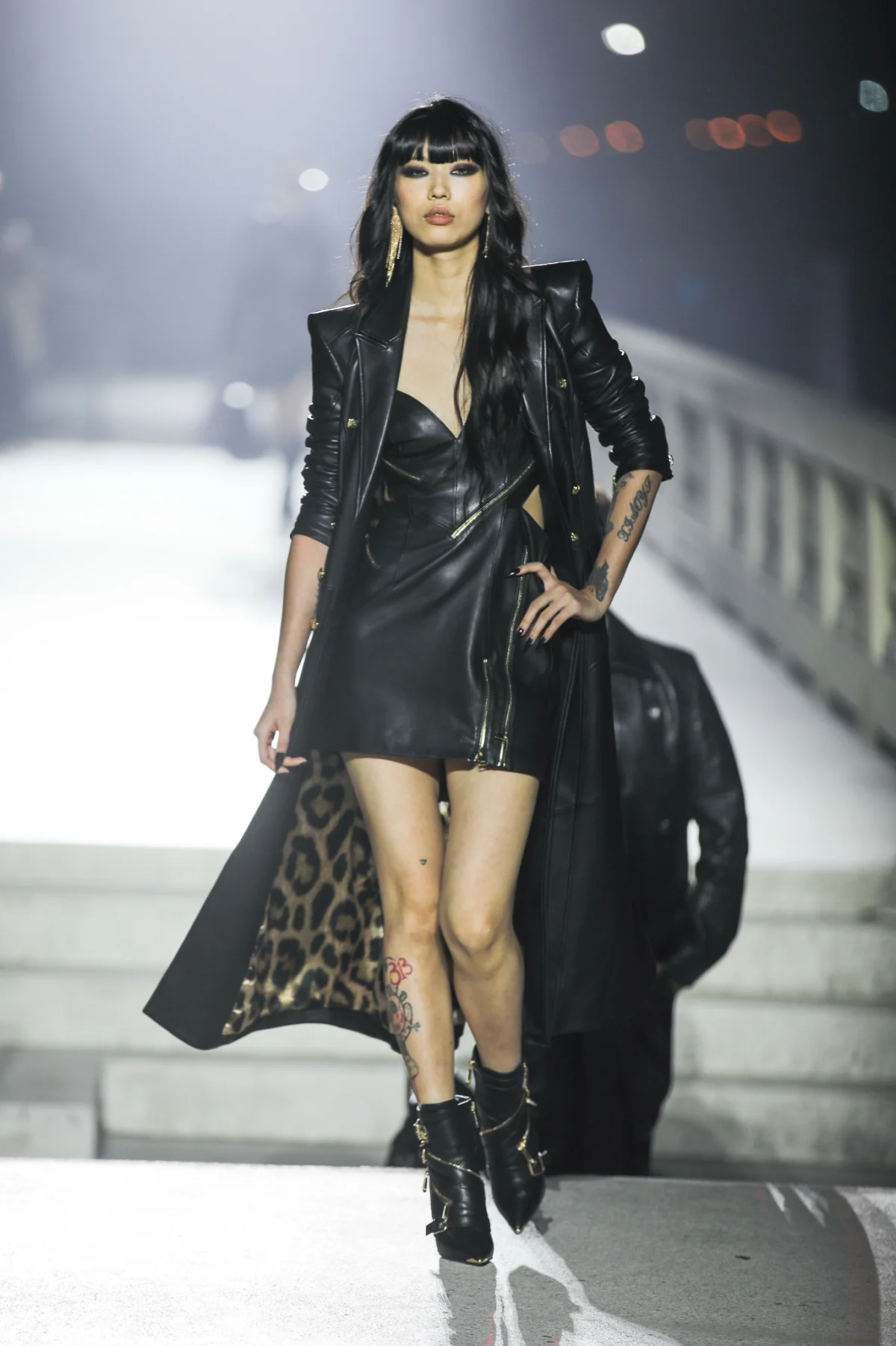
In an industry often criticized for its insularity and elitism, Philipp Plein has once again positioned himself as the ultimate disruptor. On a Saturday night at Milan’s historic hippodrome, the German-born designer didn’t just present a collection; he staged a sensory overload that blurred the lines between high-fashion runway and adrenaline-fueled stunt show.
Drawing inevitable comparisons to the legendary showmanship of Muhammad Ali, Plein commanded the spotlight with a brand of swagger that has become his professional trademark. As the founder, owner, and chief executive officer of his independent fashion house, Plein utilized the Milan stage to prove that his influence remains undiminished, even as he pivots toward a more “democratic” vision of luxury.
The Main Event: A Study in Controlled Chaos
The venue, a sprawling outdoor hippodrome, provided the perfect backdrop for Plein’s vision. While the fashion industry has recently trended toward subdued, intimate presentations in the wake of global economic shifts, Plein opted for a colossal, two-pronged spectacle.
As an audience of 2,000 guests looked on, the night unfolded in two simultaneous acts. While models—including Plein’s partner, Andrea—strutted down the runway in the designer’s signature high-octane aesthetic, the background was alive with the roar of internal combustion. Souped-up cars teetered precariously on two wheels, and motorcyclists performed high-stakes tricks, creating a cacophony of screeching tires and cheering fans.
The choreography was as precise as it was chaotic. The finale served as the ultimate statement of the night: Plein himself rode into the center of the arena in the cab of a gargantuan, slow-moving blue monster truck, waving to the crowd as a procession of models trailed behind him like a glamorous, neon-lit army. The event was not merely a runway show; it was a festival, with plans already in motion for an after-party hosting an additional 5,000 guests, signaling a return to the “more is more” philosophy that defined the pre-pandemic fashion era.
Chronology of a Vision: From Inspiration to Execution
The inception of this gargantuan show was, according to Plein, rooted in the simplest of motivations: fatherhood. “Plein is back—this show is for Italy and for Milano,” the designer declared. When asked about the choice of theme, he admitted that his young son’s obsession with monster trucks was the primary catalyst.
“I couldn’t resist,” Plein laughed. “It’s about bringing that sense of wonder back into the conversation.”
The planning process for such an event, however, was anything but childlike. In the weeks leading up to the Saturday show, the team had to coordinate logistics that would satisfy both the rigorous standards of a high-fashion runway and the safety requirements of a stunt performance. The choice to hold the show in the open air was a deliberate move to accommodate the scale of the trucks and the crowd. By the time the sun set over Milan, the transformation of the hippodrome was complete, effectively turning a horse racing venue into a gladiator arena for the 21st century.
Supporting Data: The Power of Independence
One of the most compelling aspects of the Philipp Plein brand is its structural autonomy. In an era where fashion houses are increasingly absorbed by massive luxury conglomerates—such as LVMH or Kering—Plein remains fiercely independent.
“I can do whatever the f*** I want,” Plein stated, emphasizing the strategic advantage of his business model. “This is our power. We are independent. We don’t have an investor, or a bank to answer to. We can do things without asking anybody for permission.”
This independence is reflected in his financial and creative agility. While other brands are tethered to the cautious expectations of shareholders, Plein’s company operates as a private entity, allowing him to dump capital into extravagant, large-scale events that prioritize brand identity and fan engagement over quarterly growth reports. The data points to a sustained, loyal customer base—the very people who have been “begging” him to return to the big-show format. By focusing on the “people” rather than the gatekeepers of the fashion elite, Plein has cultivated a direct-to-consumer relationship that transcends traditional luxury retail.
The Collection: Tailoring Meets Street-Smart Rebellion
The fashion itself remained true to the Plein DNA: an unapologetic cocktail of tailoring, sparkle, and street-level grit. The menswear segment oscillated between the polished and the provocative. City-slicker aesthetics were represented by pastel-toned, double-breasted suits that suggested a sophisticated edge, while the streetwear contingent was represented by oversized varsity jackets adorned with patches, paired with loose-fitting double denim and statement sneakers.
For the women’s collection, the dichotomy was even more pronounced. The designs catered to the “glam C-suite” executive—sharp, shoulder-padded silhouettes and camel topcoats—while simultaneously embracing the aesthetic of the Vegas showgirl.
Key pieces included:
- The Texture Play: Ombre fur coats, complete with dangling tails, served as the collection’s opulent centerpiece.
- The Craftsmanship: Minidresses, laboriously encrusted with intricate colored crystal flowers, captured the light with every movement.
- The Signature Motif: Jeans and denim jackets were treated as canvases for gold palm tree designs and heart-shaped embellishments—a direct, sentimental gesture of gratitude toward his legion of fans.
Official Responses and Industry Implications
The designer’s stance on the current state of the fashion industry is one of measured defiance. When questioned if a “monster truck spectacle” is appropriate in the current climate, Plein remained steadfast.
“Everyone kept asking me when I was going to do a big show again. They wouldn’t let up,” he noted. “Fashion has to be democratic. It has to be for the people and not only for the rich, or the beautiful, or the best. So here we are; we want this show to be spectacular, and we want to have fun.”
This statement carries significant implications for the future of the Milan fashion scene. By prioritizing entertainment and accessibility, Plein is effectively challenging the industry’s trend toward "quiet luxury." While minimalists argue that fashion should be understated, Plein’s success suggests a significant portion of the global market is starving for a return to the theatrical.
His ability to draw 2,000 people to a stadium show and 5,000 to an after-party proves that, for the Philipp Plein brand, the “spectacle” is not a relic of the past—it is a core component of the business strategy. By ignoring the pressures of the industry to downsize, Plein is carving out a unique space where the customer is not just an observer, but a participant in a larger-than-life narrative.
Conclusion: The King’s Future
As the dust settles at the Milan hippodrome, the industry is left to grapple with the reality of Plein’s continued relevance. He is a polarizing figure, certainly—the “King of Bling” title is one he wears with pride—but his ability to mobilize his audience is undeniable.
In a world where digital fatigue is high and the physical experience of fashion is becoming increasingly rare, Philipp Plein has doubled down on the visceral, the loud, and the unexpected. Whether he is viewed as the Muhammad Ali of fashion or its most controversial provocateur, one thing is clear: as long as he remains independent and in control, the circus will continue to travel, and the crowds will keep following. For Plein, the show is not just about the clothes; it is about the right to be spectacular in an increasingly monotonous world.
 Neng Nana
  Sagoh
Sagoh 