
 By Evan Lee Salim
In the hyper-competitive landscape of modern digital commerce, the standard metrics of email marketing—open rates, click-through rates, and immediate conversion percentages—have long reigned supreme. For over two decades, direct-to-consumer (DTC) brands and e-commerce enterprises have viewed the digital inbox primarily as a high-yield conversion funnel. Welcome sequences, browse abandonment triggers, and urgent flash-sale blasts have been optimized, split-tested, and automated to extract maximum transactional value from every subscriber.
However, a profound shift is quietly redefining digital strategy. Forward-thinking founders and brand architects are discovering that treating the inbox exclusively as a revenue-generation machine is an incomplete, short-sighted approach. The brands achieving enduring resilience—those that weather algorithm updates, rising ad costs, and market saturation without flinching—are operating under a different playbook. They are utilizing the most intimate, direct channel in digital marketing to build something far more durable: a community.
Main Facts: The Paradigm Shift in Email Marketing
At its core, the evolution from email list management to community building represents a fundamental change in how businesses view their audiences.
A traditional email list is merely a collection of email addresses stored in a CRM—a passive database awaiting the next promotional push. A community, conversely, is an active ecosystem of individuals who share a psychological connection to a brand’s identity, values, and mission.
The primary advantage of email in this context is its structural uniqueness. Unlike social media channels governed by fickle algorithms, pay-to-play visibility limits, and distracting sidebars, email offers an unmediated, one-to-one line of communication. When a subscriber opens an email, they grant the sender their undivided attention.
Yet, capitalizing on this unique advantage requires abandoning pure transactional monotony. Industry data increasingly shows that consumers are suffering from promotional fatigue. Brands that break through this fatigue do so not by shouting louder with discount codes, but by shifting their primary objective: treating the inbox as a relationship channel first, and a revenue channel second.
Chronology: The Evolution of the Digital Inbox
To understand where email marketing stands today, it is helpful to trace its trajectory over the past twenty years:
- The Wild West Era (Early 2000s): Email marketing was largely characterized by "blast and pray" tactics. Volume was king, personalization was rudimentary (often limited to inserting a first name), and spam filters were relatively unsophisticated.
- The Funnel & Automation Boom (2010s): Driven by advances in marketing automation platforms, e-commerce brands mastered the behavioral funnel. Sophisticated workflows—triggered by cart abandonments, specific browse histories, and post-purchase milestones—became the gold standard of digital efficiency.
- The Saturation Crisis (Late 2010s to Early 2020s): As customer acquisition costs (CAC) across Meta, Google, and emerging social platforms skyrocketed, brands flooded the inbox to offset losses. Inboxes became overcrowded with identical promotional templates, leading to plummeting engagement and rising unsubscribe rates.
- The Community-Centric Renaissance (Present Day): Recognizing that automated funnels alone cannot buy brand loyalty, modern founders are stripping away corporate jargon and complex design templates. They are returning to plain-text, founder-led, dialogue-driven emails designed to foster genuine human connection, advocacy, and long-term retention.
Supporting Data: Why Connection Drives Retention
While community-building can feel abstract compared to immediate return-on-ad-spend (ROAS) calculations, its impact is anchored in measurable behavioral shifts. Brands that successfully transition their lists into communities track metrics that extend far beyond traditional e-commerce dashboards:
- The Power of the Reply Rate: In a traditional marketing paradigm, a zero-reply email is entirely normal. In a community-led model, the reply rate serves as a vital health metric. It gauges whether the conversation is genuinely bidirectional. Brands that actively encourage and respond to replies witness significantly higher customer lifetime value (LTV).
- Forward and Referral Rates: When a subscriber willingly forwards an email to a peer, they are staking their own social capital on the brand’s credibility. Rising forward rates and organic referral growth indicate that the content has transcended marketing and entered the realm of cultural utility.
- Unsubscribe Resilience: Purely promotional campaigns often trigger sharp spikes in unsubscribes. Conversely, content-led, relationship-driven emails maintain steady, low attrition rates because subscribers view the emails as valuable updates rather than intrusive sales pitches.
Actionable Frameworks: How to Build an Inbox Community
Transitioning an email program from transactional to relational does not require a massive enterprise budget or complex infrastructure. Industry leaders emphasize three core pillars:
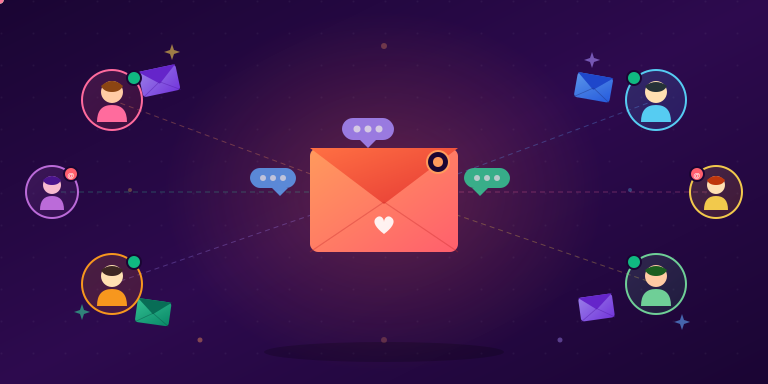
1. Make Subscribers Feel Like Insiders
Exclusive access is a powerful psychological driver. However, true insider access does not necessarily require gated membership portals or complex loyalty tiers; it requires radical transparency in storytelling.
Instead of simply announcing a new product launch, brands are pulling back the curtain on the messy realities of creation. They share the problem they set out to solve, the three failed iterations that preceded the final product, and the rationale behind packaging decisions. By sharing the developmental journey—including failures and pivots—brands invite subscribers to feel a sense of shared investment in the company’s trajectory.
Furthermore, founder-led emails written in an unformatted, plain-text, conversational voice often outperform hyper-designed marketing templates. A personal note from a founder who genuinely cares about their craft creates an immediate sense of human presence.
2. Ask Questions and Actively Listen
One-way broadcasting breeds detachment. Cultivating community requires creating genuine feedback loops.
This can be as simple as concluding a weekly newsletter with an authentic, low-friction question: "What is the single biggest challenge you are facing with [topic] right now?" or "What product would you like to see us develop next?"
While scaling individual responses to tens of thousands of subscribers is impractical, responding to even a small, dedicated cohort of replies transforms casual buyers into vocal brand advocates. These are the customers who leave glowing reviews, defend the brand in public forums, and proactively recommend products to their networks.
3. Cultivate a Recognizable Brand Voice
Identity is the bedrock of community. If an e-commerce brand’s emails could be seamlessly swapped out with a competitor’s logo without changing the tone or perspective, the brand lacks a distinct voice.
Community members rally around shared worldviews. Brands must proactively define what they believe in, what industry norms they push back against, and what values they uphold beyond profitability. When these core beliefs consistently anchor every email—whether it is a heavy promotional push or a purely educational dispatch—subscribers develop a deep-seated trust.
Official Perspectives and Industry Insights
As digital marketing experts and brand strategists analyze the future of retention, the consensus is clear: customer acquisition is getting harder, making retention non-negotiable.
Industry analysts point out that consumers no longer distinguish between the brand and the individuals behind it. In an era dominated by automation and artificial intelligence, authentic human voice and community-centric communication serve as ultimate differentiators.
Platforms supporting the e-commerce ecosystem have adapted to this reality. Modern email service providers—such as Omnisend—have evolved to bridge the gap between heavy automation and personal connection. By providing robust segmentation tools that ensure the right messages reach the right audiences, alongside automated transactional handling, these platforms free up vital bandwidth for founders to focus on creative storytelling and relationship building.
(For e-commerce entrepreneurs looking to scale both revenue and community simultaneously, platforms like Omnisend offer specialized tools, with select industry partnerships—such as Foundr’s exclusive reader incentives using code FOUNDR50—providing accessible entry points for growing brands.)
Implications for the Future of E-Commerce
The implications of this strategic shift are profound for businesses of all sizes.
First, it democratizes marketing success. While well-funded enterprises can afford massive top-of-funnel ad spends, smaller brands often lack the capital to compete purely on customer acquisition. By focusing intensely on community-led email programs, emerging brands can build hyper-loyal customer bases that drive organic growth through word-of-mouth and high repeat-purchase rates.
Second, it provides a crucial buffer against economic volatility and privacy shifts. As third-party data tracking becomes increasingly restricted and advertising costs fluctuate unpredictably, owned media channels like the email inbox represent a secure, protected asset.
Ultimately, the most successful brands of tomorrow will not be those with the most sophisticated automated workflows or the highest send frequencies. They will be the ones that recognize a fundamental truth about human psychology: people do not want to be treated as segments in a database. They want to belong to something meaningful. And when executed thoughtfully, the humble digital inbox remains the most powerful vehicle to make that belonging a reality.
 Basiran
  Sagoh
Sagoh  Suro Senen