
 By Raul Delapena Setiawan
In the modern entrepreneurial landscape, aspiring founders are inundated with advice about artificial intelligence, decentralized finance, and venture-backed SaaS startups. The cultural imagination equates success with glass-walled Silicon Valley offices, venture capital rounds, and sleek tech dashboards.
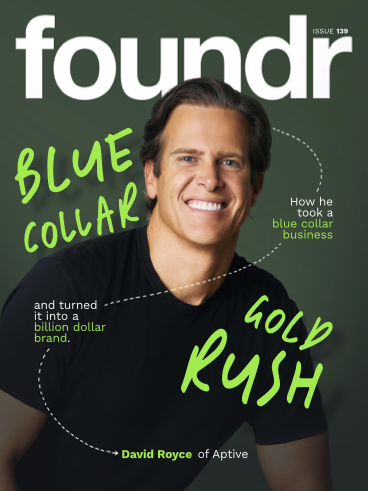
David Royce never got the memo—or perhaps, he simply chose to look where others refused to tread.
As the founder and chairman of Aptive Environmental, now the third-largest residential pest control service in North America, Royce has built a quiet, formidable business empire. His journey spans multiple eight- and nine-figure exits to the same strategic buyer, alongside a flagship enterprise scaling past $500 million in annual revenue. Yet, his story is rooted not in elite pedigree or venture-backed funding, but in door-to-door sales, minimum-wage gigs, and an industry his finance-degree peers wouldn’t touch with a ten-foot pole.
In an extensive interview with Foundr CEO Nathan Chan, Royce pulled back the curtain on how a self-described struggling student with undiagnosed ADHD became one of America’s stealthiest wealth builders. His playbook offers a masterclass in cash flow management, ruthless persistence, and the untapped fortune hiding inside unsexy, blue-collar industries.
Chronology: The Making of an Unlikely Tycoon
The Early Years and the Undiagnosed Turning Point
Growing up, Royce struggled academically. Unable to focus unless a subject deeply engaged him, he assumed he simply wasn’t smart—a common narrative for children with undiagnosed neurological hurdles.
That trajectory shifted in the sixth grade when a teacher named Mrs. Luft looked past his academic friction and believed in him. Spurred by that early validation, Royce developed a fierce work ethic to secure good grades. It wasn’t until adulthood that he discovered he had ADHD. Rather than viewing it as a permanent liability, Royce reframed it: in boring environments, it is brutal; in high-stakes environments he cares about, it functions as a superpower. Sales and entrepreneurship became the first arenas where his brain felt like an asset rather than a liability.

The Crucible of Door-to-Door Sales
Royce entered the pest control industry the way many top operators do—by accident, lured by a friend’s claim of making $25,000 selling door-to-door over a single summer.
Driven by curiosity, Royce drove out to Sacramento, California. The reality check was brutal. He sold nothing during his entire first week. Operating on a commission-only structure, he made zero dollars while watching his peers effortlessly close one to four deals a day. He spent five straight days performing what he calls "free cardio."
Instead of calling home to quit, Royce spent the weekend at a local bookstore, purchasing half a dozen books on sales psychology. He instituted a rigid rule: 90 minutes of daily study. By the end of the summer, out of a cohort of 200 representatives, Royce emerged as the top sales rookie in the entire company.
It was his first tangible lesson in a core personal philosophy: Persistence is genius in disguise. Over four college summers, those sales stints netted him $225,000 per season—roughly half a million dollars in today’s currency—providing the foundational capital for his future empire.
Skipping Wall Street for Main Street
As a finance major nearing college graduation, Royce was on a well-trodden path toward investment banking, anticipating a career working 80-to-100-hour weeks in M&A. When he asked his summer sales boss for a letter of recommendation, the mentor challenged him: "Why would you go work 80 hours a week for someone else when you could start your own pest control company?"
Initially hesitant because "pest control didn’t sound impressive"—having internalized the notion that success had to wear a suit and a skyline—Royce swallowed his ego. His former boss had just sold a four-year-old pest control startup to Terminix for $10 million and offered Royce the exact operational template. Armed with $300,000 in college savings originally earmarked for an MBA, Royce launched his first venture.
Near-Bankruptcy in Los Angeles
Year one nearly ended in disaster. Scaling faster than anticipated in Los Angeles, Royce’s business model faced a devastating cash flow crunch: he was required to pay his salespeople’s commissions in advance of incoming customer revenues.
Having budgeted for 4,000 to 5,000 new customers, his team blew past projections to hit 7,500—a record for a single branch in the industry. The rapid growth created a severe liquidity crisis. Royce had to approach his sales leaders, asking for an extra month or two to clear their bonus checks, incentivizing their patience with an additional 10% interest rate on their capital. They agreed, saving the company.
The near-collapse seared a foundational maxim into Royce’s operational philosophy: "Revenues are vanity. Profits are sanity. But cash flow is reality."
Supporting Data: The Power of "Boring" Businesses
Royce’s thesis challenges conventional startup wisdom. While tech startups capture media headlines, data suggests that the "stealthy wealthy" often reside in unglamorous, blue-collar sectors.
- The Blue-Collar Wealth Concentration: According to The Wall Street Journal, roughly 43% of the top 0.1% of U.S. income earners—those pulling in $2.3 million annually or more—make their fortunes in boring, blue-collar industries.
- Recession Resilience: Essential home services feature recurring revenue models. As Royce aptly notes: "Recessions come and go, but bugs don’t read The Wall Street Journal."
- The Great Wealth Transfer: Millions of baby boomer business owners are currently facing retirement age without succession plans, presenting an unprecedented opportunity for acquisition and modern scaling.
- AI-Proof Operations: While artificial intelligence disrupts knowledge work, writing code, and automating entry-level administrative tasks, it cannot physically service a home, unclog a pipe, or treat termites inside structural walls.
Official Responses and Strategic Blueprints
During his conversation with Nathan Chan, Royce detailed the exact frameworks that allowed his enterprises to scale seven to ten times faster than the typical 20,000-plus North American pest-control competitors.
1. The Sales Machine and Codified Training
Royce codified his street-level sales insights into three non-negotiable pillars taught to thousands of representatives:

- Option Closes: Abandoning yes-or-no questions in favor of binary choices that favor the business ("We’ll be in your area tomorrow at three or five—which works better?").
- RAC Framework: Resolve the doubt, lay down an ace (a novel selling point the customer hasn’t heard yet), and close again using a different angle.
- Psychological Presence: Training reps to understand that body language precedes verbal pitches. Reps lose not because of poor scripts, but because their non-verbal cues project insecurity.
2. The Asset-Deal Exit Structure
Across three separate companies, Royce executed a brilliant M&A strategy: he sold only the customer lists and service technicians to a single strategic buyer.
Instead of dissolving his infrastructure, Royce carved out his core leadership team, operations managers, and elite sales force from the transaction. He then took the acquisition capital and rolled it directly into founding the next enterprise with the same trusted team—fully capitalized, equity-diluted by zero outside investors, and operating on a vastly larger stage.
3. Culture by Design, Not by Accident
Drawing inspiration from Tony Hsieh’s Delivering Happiness, Royce recognized that company culture is an engineered product, not a collection of arbitrary perks. While Aptive headquarters boasts high-end amenities—including an NCAA-sized basketball court, golf simulators, and international team retreats to Thailand and Egypt—Royce maintains that perks are merely "sugar, not protein."
The true driver of retention and performance was twofold: an elite training program and an ownership mindset. Royce notably distributed 25% of his company’s equity to employees. Upon exits yielding hundreds of millions of dollars, team members walked away with life-changing six- and seven-figure payouts, allowing them to clear mortgages, eliminate student debt, and fund generational milestones.
Implications: Lessons for the Next Generation of Founders
Royce’s journey yields profound implications for modern entrepreneurs navigating an increasingly saturated digital economy.
First, image is the enemy of opportunity. Founders who limit their ambitions to high-status industries often miss out on inefficient, cash-flowing sectors ripe for operational modernization. By applying tech-forward software, gamified sales apps, and data-driven logistics to a blue-collar trade, Royce achieved hyper-growth where incumbents remained stagnant.
Second, true leadership requires stepping back. One of Royce’s most critical leadership hurdles was learning to let go of the CEO seat. After training a successor over a decade, he had to unlearn the instinct to "play the hero" whenever minor issues arose. Building a sustainable company means constructing an engine that runs independently of its creator.
Finally, execution trumps credentials. Whether surviving a devastating cash flow crunch in Los Angeles, recovering from a misaligned executive hire during an aborted corporate sale process, or turning minimum-wage lessons at McDonald’s into a masterclass in operational standards, Royce’s career proves that long-term success is built in the trenches.
As David Royce reflects on a twenty-year career spanning four massive enterprises, his definition of success has evolved beyond valuations and exit multiples. Summarizing the ultimate takeaway for founders, he notes:
"Entrepreneurship isn’t really about a big exit or financial freedom. It’s the expertise, discipline, and character you develop along the way. If you don’t enjoy the climb, the summit is going to disappoint you."
 Evan Lee Salim
  Azzam Bilal Chamdy
  rifanmuazin