
 By Ammar Sabilarrohman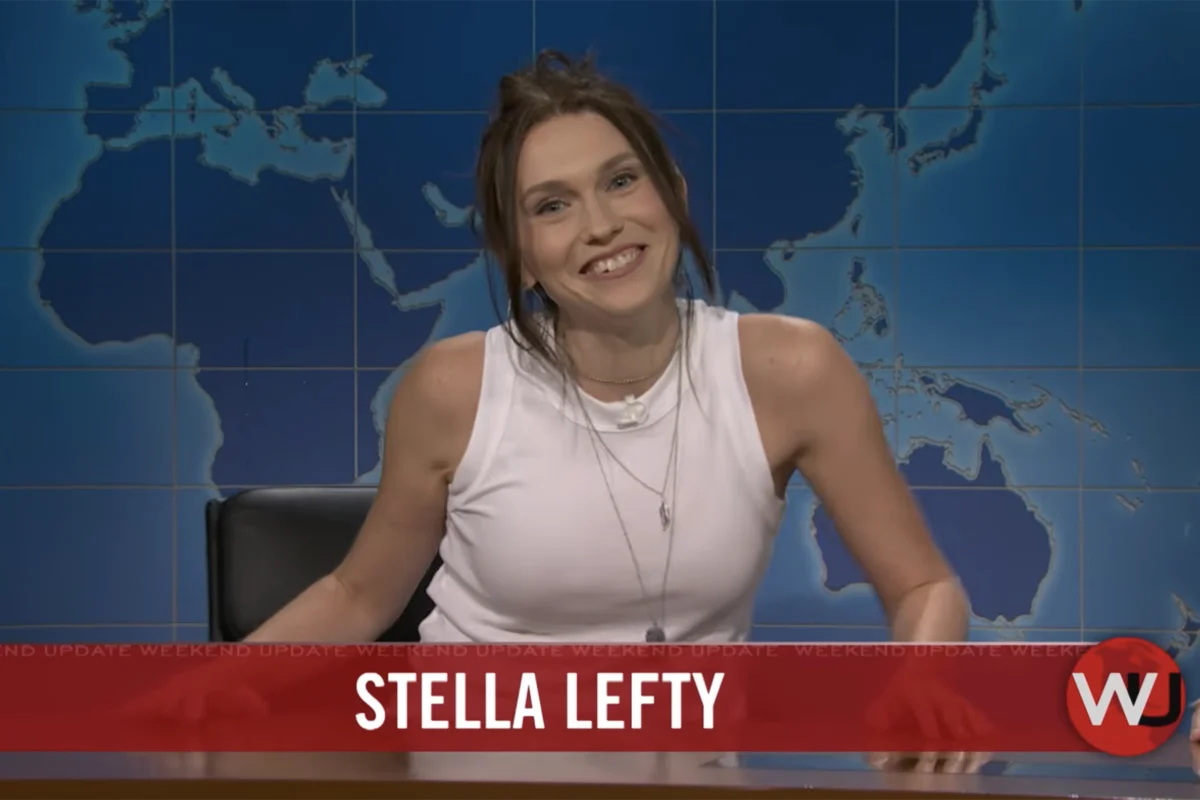
In the high-stakes world of modern music, where accusations of artistic imitation can derail a burgeoning career, singer-songwriter Stella Lefty is taking a refreshingly different approach. Instead of issuing defensive statements or legal threats, the breakout star is leaning into the humor of her situation. After a recent Saturday Night Live (SNL) sketch parodied her songwriting process, Lefty didn’t just shrug it off—she amplified it, turning a potential PR liability into a masterclass in modern celebrity branding.
The Viral Moment: An SNL Skit That Struck a Nerve
On Thursday, October 1, Saturday Night Live released a "cut-for-time" Weekend Update segment that quickly set social media ablaze. The sketch featured SNL cast member Veronika Slowikowska stepping into the shoes of Stella Lefty. Sitting at the iconic Weekend Update desk across from host Colin Jost, Slowikowska delivered a pitch-perfect impersonation of the singer, targeting the specific internet discourse surrounding Lefty’s 2026 breakout anthem, "Boston."
The sketch focused on the online "detective work" that has dogged Lefty for months: the persistent comparisons between her hit song and Noah Kahan’s 2022 smash, "Stick Season." While Kahan is officially credited as a songwriter on "Boston"—which features an interpolation of his melody—the SNL writers decided to escalate the joke to absurd heights. In the bit, Slowikowska’s version of Lefty aggressively defends the originality of her work before launching into a medley of tracks that sound suspiciously like other famous songs, repurposed with new, Boston-centric lyrics.
The musical punchlines were sharp and layered, referencing pop-culture heavyweights including Chappell Roan’s "Pink Pony Club," Dolly Parton’s "I Will Always Love You," the Barenaked Ladies’ "One Week," and Taylor Swift’s "We Are Never Ever Getting Back Together." The segment culminated in a comedic confrontation where Jost pointedly asks if one of her "original" tracks is actually the theme from Harry Potter, prompting a blunt, "Stella, you’re stealing again!" from the comedian.
Chronology of a Viral Reaction
The trajectory of this interaction highlights the speed at which modern music discourse travels.
- The Lead-Up: Throughout 2026, Stella Lefty’s "Boston" became a lightning rod for debate. While the song achieved immense commercial success, music forums and social media platforms were saturated with fans dissecting the similarities between Lefty’s work and established hits, particularly those within the indie-folk and country-pop genres.
- The Broadcast: On the October 1 episode of Saturday Night Live, the sketch was filmed but ultimately cut from the final broadcast for time.
- The Digital Release: Recognizing the strength of the segment, NBC uploaded the clip to its digital platforms. It went viral within hours, garnering millions of views across TikTok, X (formerly Twitter), and Instagram.
- The Response: Rather than ignoring the mockery, Lefty engaged immediately. She reposted the clip to her Instagram Story, writing, "Funny asf @nbcsnl (@veronika_iscool ur voice is amazing)." She further cemented her "good sport" status by commenting on the official SNL Instagram post: "I’m so dead @veronika_iscool ur voice is fire."
Supporting Data: A Breakout Year for Stella Lefty
While the comedy sketch highlights the critical discourse surrounding her music, the commercial data proves that the public is, by and large, embracing her sound. Stella Lefty has arguably had the most successful breakout year of 2026, proving that controversy can often coexist with massive mainstream appeal.
"Boston" has been a juggernaut on the charts. The song peaked at No. 2 on the Billboard Hot 100, a significant achievement for an artist in the current climate. Perhaps even more telling is its performance on genre-specific charts, where it reached the No. 1 spot on Billboard’s Country Airplay chart, signaling her crossover potential between the folk-pop and country spheres.
The success of the single has translated to her debut album, Long Way Home. The record has shown remarkable staying power, peaking at No. 11 on the Billboard 200. This indicates that Lefty is not merely a "one-hit wonder" sustained by a viral moment, but an artist building a cohesive audience that is willing to invest in a full-length project. Her ability to synthesize popular trends—even those that draw comparisons to established icons like Kahan or Swift—has resonated with a younger demographic that values familiar sonic textures wrapped in new, relatable narratives.
Official Responses and Creative Integrity
The core of the SNL joke lies in the fine line between "interpolation" and "imitation." In the music industry, interpolation—the act of taking a melody or musical phrase from a previously recorded song and re-recording it—has become increasingly common, particularly in the streaming era.
When a song like "Boston" is released, it typically undergoes a rigorous legal clearance process. The fact that Noah Kahan is officially credited on the track means that Lefty’s team navigated the necessary legal frameworks, a nuance that the SNL sketch purposefully ignored for comedic effect. By focusing on the perception of theft rather than the reality of the songwriting credit, the sketch satirized the internet’s tendency to simplify complex music business dealings into "gotcha" moments.
Lefty’s response serves as an official acknowledgment of the critique. By praising Veronika Slowikowska’s vocal performance, Lefty effectively de-escalated the tension. She signaled to her fanbase that she is in on the joke, which serves to insulate her against future criticism. In the world of PR, this is known as "preemptive ownership"—if you own the joke first, your detractors have very little left to say.
Implications for Modern Music Marketing
The Stella Lefty-SNL incident offers a fascinating case study for the music industry. Historically, artists have been advised to maintain a "serious" image to be taken seriously as songwriters. However, the 2026 media landscape favors authenticity and, crucially, a sense of humor.
1. The Death of the "Stiff" PR Response
If Lefty had issued a formal statement through her legal team or a publicist detailing the songwriting credits for "Boston," it likely would have fueled the fire of her critics. By choosing to laugh, she humanized herself and made her detractors look like they were taking the situation far more seriously than the artist herself.
2. Viral Satire as Free Promotion
The SNL sketch, while intended to poke fun at the artist, effectively served as an endorsement of her relevance. To be parodied on Saturday Night Live is, in many ways, a cultural milestone. It signals that an artist has reached a level of fame where they are instantly recognizable to a broad, general audience. The exposure provided by the sketch likely drove thousands of new listeners to stream "Boston" and Long Way Home, potentially expanding her reach beyond her established core fanbase.
3. The Future of Songwriting Discourse
This incident also highlights a shift in how audiences consume music. Listeners are more aware than ever of songwriting credits, melodies, and production styles. They act as "citizen critics," constantly comparing new releases to past hits. While this can be exhausting for artists, Lefty’s response suggests that the best way to handle this scrutiny is to embrace the transparency. If you are going to use an interpolation, acknowledge it, own it, and don’t take yourself too seriously when the internet decides to turn your creative process into a punchline.
Conclusion
As Stella Lefty continues to ride the momentum of her debut album and her chart-topping success, the SNL incident will likely be remembered as a turning point in her public persona. She has successfully navigated the thin line between being an artist who draws heavy inspiration from her peers and being an artist who is comfortable in her own skin.
By weaponizing her own sense of humor, Lefty has transformed a moment of potential embarrassment into a display of confidence. Whether she continues to lean into the pop-folk tropes that made "Boston" a success or shifts her sound for her next project, one thing is clear: she has the internet’s attention. And, as this week has proven, she knows exactly how to keep it.
 Asep Darmawan
  Ali Ikhwan
  Suro Senen