
 By Reynand Wu
As your business transitions from a lean startup to a growing enterprise, the complexity of your operations inevitably expands. What began as a solo venture—where you wore every hat and managed every detail—must eventually evolve into a structured organization. This transition is not merely about increasing revenue; it is about scaling your responsibility toward your most valuable asset: your employees.
Managing human resources (HR) manually is a recipe for burnout and compliance risk. To protect your company’s foundation and foster a thriving culture, you need an HR software solution that serves as the backbone of your operations. However, the market is saturated with options, and for a busy founder, the time required to research and vet these platforms is a luxury you likely don’t have.
We have performed the heavy lifting for you. Below is an in-depth analysis of the six best HR software solutions for small businesses in 2025, evaluated against critical performance benchmarks.
What is HR Software? Defining the Digital Ecosystem
Before selecting a provider, it is essential to define the scope of HR software. At its core, HR software is a digital suite designed to automate, organize, and optimize the employee lifecycle.
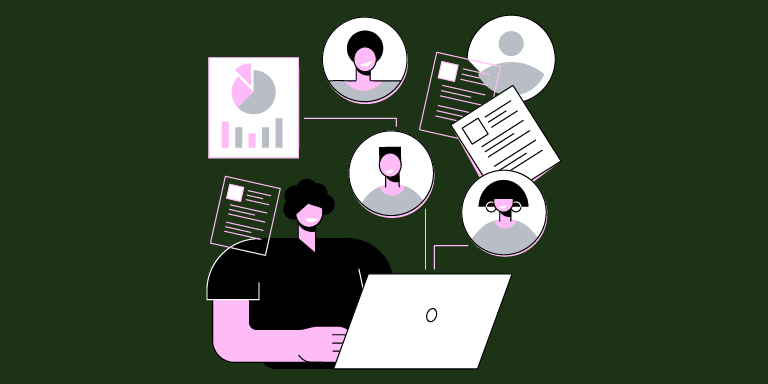
It covers a vast array of critical functions, including:
- Recruitment and Onboarding: Managing job postings, applicant tracking, and digital paperwork.
- Payroll and Benefits: Automating tax filings, salary distribution, and health insurance administration.
- Performance Management: Tracking KPIs, conducting reviews, and setting professional development goals.
- Compliance and Record Keeping: Maintaining a secure repository for legal documentation to ensure adherence to labor laws.
Crucially, HR software is not a replacement for human leadership. It does not replace the necessity of empathetic management, conflict resolution, or the cultivation of company culture. Rather, it acts as a force multiplier, removing the friction of administrative overhead so you can focus on high-level strategy.
Evaluation Criteria: The "Non-Negotiable" Framework
When compiling this list, we applied a strict set of criteria to ensure each recommendation serves the specific needs of a scaling small business.
1. Ease of Use
The user interface must be intuitive. If a system requires weeks of training, it will hinder your productivity rather than assist it. We prioritized platforms that allow both admins and employees to navigate tasks—such as requesting leave or accessing pay stubs—with minimal friction.
2. Core Functional Breadth
An HR platform should be a "single source of truth." We looked for platforms that integrate payroll, onboarding, and basic employee management under one dashboard, reducing the need for disjointed third-party plugins.
3. Scalability
Small businesses are dynamic. The software you choose today must still be relevant as you scale from ten employees to one hundred. We focused on solutions that offer modular growth, allowing you to add features as your complexity increases.
4. Integration and Compatibility
Your HR system must "speak" to your existing tech stack. Whether it’s accounting software (like QuickBooks or Xero), project management tools, or communication apps, the ability to sync data is vital for reducing human error and manual entry.
5. Security and Compliance
Data privacy is paramount. We selected providers that offer robust encryption, multi-factor authentication, and built-in legal safeguards to keep you compliant with regional and federal labor regulations.
The 6 Best HR Software Solutions for 2025
1. Gusto: The All-in-One Gold Standard
Gusto has become the default choice for U.S.-based small businesses, and for good reason. Its platform is remarkably clean, offering full-service payroll, health benefits, and onboarding in one place.
- Pros: Exceptional user experience; automated tax filings; transparent, no-surprises pricing.
- Drawback: Primarily restricted to the U.S. market, making it unsuitable for teams with significant international footprints.
- Verdict: Best for domestic small businesses seeking a "set it and forget it" payroll and HR experience.
2. Zoho People: The Customizable Powerhouse
Zoho People is part of the extensive Zoho ecosystem. It excels in businesses that require highly specific workflows, such as unique performance review cycles or complex time-off tracking.
- Pros: Highly modular; integrates seamlessly with the broader Zoho suite; excellent value for the price.
- Drawback: The interface can feel dated, and the learning curve is steeper than its competitors.
- Verdict: Ideal for tech-forward companies that want deep customization without paying enterprise-level premiums.
3. Homebase: The Hourly Worker Specialist
If your business operates in the retail, food service, or hospitality sectors, Homebase is an industry leader. It focuses heavily on the needs of hourly staff, such as shift scheduling and team communication.
- Pros: Exceptional mobile app for employees; real-time labor cost tracking; easy shift swapping.
- Drawback: Lacks the deep configurability required for white-collar, salary-heavy corporate structures.
- Verdict: The go-to choice for businesses with large hourly workforces.
4. Deel: The Global Compliance Expert
As remote work becomes the norm, many small businesses are hiring globally. Deel simplifies the nightmare of international employment law by acting as an Employer of Record (EOR) in over 150 countries.
- Pros: Streamlined international payroll; automated compliance with local labor laws; intuitive document management.
- Drawback: Pricing is on the higher end of the spectrum, and support responsiveness can occasionally lag during high-volume periods.
- Verdict: Essential for startups looking to hire top talent across borders without opening local subsidiaries.
5. Connecteam: The Mobile-First Workforce Solution
Connecteam is designed for "deskless" teams—those working on construction sites, in the field, or on the retail floor. Its mobile-first architecture ensures that every employee, regardless of their location, stays connected to the office.
- Pros: Excellent task management and training modules; mobile app is highly responsive; strong internal communication tools.
- Drawback: Not built for traditional, desktop-heavy corporate environments; lacks advanced payroll depth.
- Verdict: The premier choice for teams that are rarely in front of a computer.
6. Rippling: The Unified Operating System
Rippling is the most ambitious platform on our list. It doesn’t just manage HR; it manages your IT and finance as well. By unifying your employee data, it allows you to automate everything from provisioning a laptop to setting up an email account.
- Pros: Unmatched automation; manages HR, IT, and Finance in one place; highly scalable.
- Drawback: The pricing can become complex as you add modules; customer support is primarily chat-based for smaller accounts.
- Verdict: The best choice for fast-growth startups that want to centralize their entire digital infrastructure.
Implications for Small Business Strategy
Selecting the right software is not merely an IT decision; it is a strategic business pivot. By moving away from manual spreadsheets, you reduce the risk of non-compliance—a common pitfall that has shuttered many promising startups. Furthermore, providing employees with an intuitive portal to manage their benefits and performance reviews directly correlates with higher retention rates.
When you automate the "how" of HR, you gain the bandwidth to focus on the "why"—building a culture where your team feels supported, valued, and empowered to do their best work.
Frequently Asked Questions (FAQ)
Q: What are the main HR functions a small business must prioritize?
A: Focus on payroll, onboarding, benefits administration, and compliance. These are the "foundational four" that protect both the business and the employee.
Q: Why is managing employee data critical for growth?
A: Beyond legal requirements, data allows you to track performance trends, identify training gaps, and make informed decisions regarding compensation and workforce planning.
Q: How do I create effective HR processes if I don’t have an HR department?
A: Start by standardizing your workflows. Use your software to document the onboarding process, set recurring reminders for performance check-ins, and ensure all offboarding procedures are checklist-driven to protect company IP.
Q: What types of data should I track?
A: You should maintain digital records for personal info, employment history, time-off balances, performance evaluations, and all compensation and benefits details.
Master Your Growth with Foundr+
Choosing the right software is just the first step in building a resilient, scalable company. If you are ready to move beyond the basics, Foundr+ offers an elite library of 30+ expert-led courses designed to help you hire smarter, manage complex teams, and build a lasting culture.
For just $1, you can unlock access to over 1,000 lessons curated for the modern entrepreneur. Stop guessing at your growth strategy—start learning from those who have built and scaled world-class businesses.
Sign up for Foundr+ today and begin your journey to smarter scaling.
 Neng Nana
  Basiran
  Azzam Bilal Chamdy