
 By Ali Ikhwan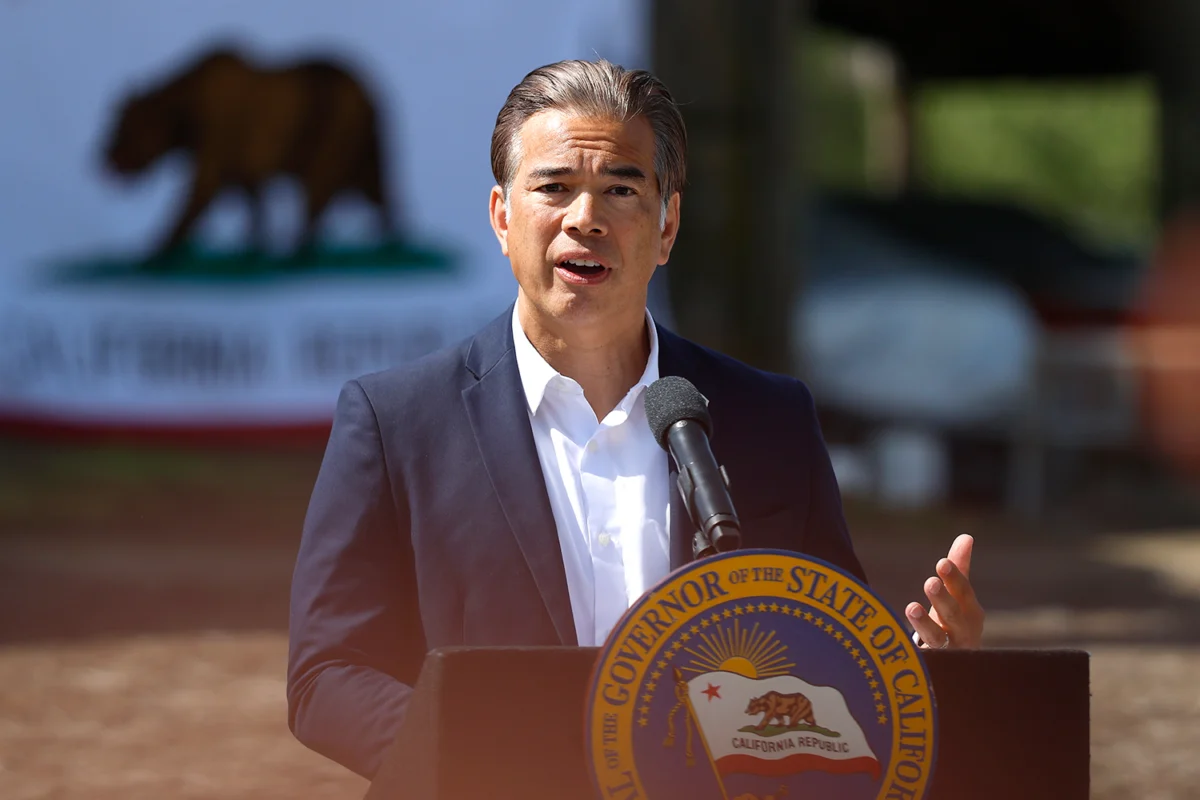
In a move that promises to redefine the landscape of American media, a coalition of 12 state Attorneys General, led by California’s Rob Bonta, has officially launched a legal offensive to block the proposed $110 billion merger between Paramount Skydance and Warner Bros. Discovery. This high-stakes litigation represents a fundamental clash between corporate consolidation and the preservation of competition, pitting the ambitions of media moguls against the regulatory power of the state.
At the heart of the dispute is a fundamental question: Should the cultural engines of American storytelling—the studios that produced The Godfather, The Matrix, and Barbie—be allowed to coalesce into a single, monolithic entity? For the plaintiffs, the answer is a resounding no.
The Main Facts: A Massive Concentration of Power
The proposed $110 billion merger is not merely a business transaction; it is a structural transformation of the media industry. If allowed to proceed, the new entity would effectively command a dominant share of the American media market, controlling nearly one-third of all theatrical movie distribution and roughly one-third of the nation’s basic cable channel landscape.
The numbers alone are staggering. The merger would place 50 of the most popular cable networks under a single corporate umbrella. This portfolio would span an unrivaled breadth of genres, including news, live sports, children’s programming, factual documentaries, and lifestyle content. By consolidating these assets, the new behemoth would hold significant leverage over both movie theater exhibitors and cable service providers, potentially enabling it to set prices, dictate terms of distribution, and stifle independent film and television production.
Chronology: The Road to the Courtroom
The path to this legal showdown began when Paramount Skydance and Warner Bros. Discovery initiated discussions to address the ongoing pressures of the streaming era.
- Initial Speculation: As the streaming wars intensified, rumors of a mega-merger between legacy giants began circulating, fueled by the industry-wide need to achieve scale to compete with Silicon Valley tech giants.
- The Announcement: Following months of back-channel negotiations, the companies publicly unveiled their intent to merge, touting the deal as a necessary response to the fragmented entertainment market.
- Regulatory Scrutiny: Antitrust watchdogs immediately signaled concern, noting that the merger would exceed the concentration thresholds typically scrutinized under the Clayton Act.
- The Coalition Forms: Recognizing the national impact, California Attorney General Rob Bonta spearheaded a 12-state coalition, arguing that the merger poses an existential threat to market competition and the quality of the content available to American consumers.
- The Filing: The coalition officially filed suit, seeking an injunction to block the merger, alleging that the deal is inherently anti-competitive and violates long-standing antitrust statutes designed to prevent the formation of monopolies.
Supporting Data: Why Competition Matters
The core argument of the Attorneys General rests on the economic principle that competition is the "heartbeat" of a healthy industry. Without it, companies lose the incentive to innovate.
The Market Share Impact
The consolidation would create a "media behemoth" that controls over 30% of blockbuster theatrical releases. Historically, when a company commands such a high percentage of a primary market, it gains the ability to "gatekeep" the industry. This creates a barrier to entry for smaller studios and independent filmmakers who rely on theater chains for exposure.
Price and Quality Deterioration
Economic history, from the Gilded Age robber barons to modern tech monopolies, suggests that extreme market concentration leads to three outcomes: increased consumer costs, a reduction in service quality, and the suppression of the labor market. In the entertainment sector, this could manifest as fewer creative risks—studios opting for "safe" franchise reboots rather than original storytelling—and rising subscription prices for consumers who find their options dwindling.
The Cultural Stakes: Beyond the Balance Sheet
The plaintiffs argue that the entertainment industry cannot be treated like the steel or oil industries. Media companies function as the curators of our national dialogue.
Movies and television shows are central to the fabric of American life. They spark debates, provide comfort, and inform the electorate. When two of the largest news-producing cable networks merge, the diversity of voices in the public square is diminished. Fewer independent journalists, fewer investigative filmmakers, and a consolidated newsroom mean a narrower spectrum of opinions available to the public.
This, the coalition argues, is a "death knell" for the diversity of thought required for a functioning democracy. By centralizing the power to influence public perception, the merger threatens to homogenize the cultural narratives that define our society.
Official Responses and Perspectives
The Industry Position
Paramount Skydance and Warner Bros. Discovery have maintained that the merger is essential for survival in an era dominated by global tech conglomerates like Netflix, Amazon, and Apple. They argue that by combining resources, they can achieve the necessary economies of scale to produce high-quality content that can compete on a global stage. They view the lawsuit as an outdated intervention that ignores the realities of the modern, hyper-competitive digital marketplace.
The Attorney General’s Stance
Rob Bonta and his coalition characterize the merger as an attempt to "game the system." In a formal statement, Bonta emphasized, "Antitrust enforcement is democracy’s check on oligarchy. It’s a check on wealthy businesses seeking to bypass the law and the meritocracy that makes our economy thrive."
Bonta points to California’s own economic success—a state with robust antitrust protections that remains the world’s fourth-largest economy—as evidence that regulation does not kill innovation; rather, it provides the guardrails necessary for a meritocratic market to flourish.
Implications: The Future of Antitrust
The outcome of this case will set a significant legal precedent for future media consolidations. Should the courts rule in favor of the Attorneys General, it will signal a new, more aggressive era of antitrust enforcement that prioritizes competition and consumer choice over corporate "synergy."
Conversely, if the merger is allowed, it may open the floodgates for further consolidation, potentially leading to a market dominated by a handful of "super-companies."
Key Implications Include:
- Innovation and Creative Risk: If competition is extinguished, the incentive to greenlight "risky" or unconventional projects will likely disappear in favor of safe, algorithm-driven content.
- Labor Market Impact: Consolidation historically leads to a reduction in the number of employers. For filmmakers, writers, producers, and crew, this means fewer places to pitch ideas and less bargaining power, potentially leading to lower wages and fewer job opportunities.
- Consumer Choice: The "bundling" of content through mergers often forces consumers to pay for services they do not want, limiting their ability to pick and choose based on their individual interests.
Conclusion: Democracy’s Check on Monopoly
The lawsuit brought by the 12-state coalition is a reminder that in a free market, no corporation is above the law. By challenging the Paramount-Warner Bros. deal, the Attorneys General are asserting that the American public deserves a marketplace driven by merit rather than backdoor deals.
As the litigation unfolds, the nation will be watching. The preservation of a vibrant, competitive, and diverse media ecosystem is not just a business issue—it is a matter of preserving the stories, ideas, and perspectives that define who we are as a nation. In the words of Attorney General Bonta, "America has no kings in government or our economy," and this lawsuit stands as a testament to the belief that the American consumer should not be subject to the whims of an unchecked media oligarchy.
 Siti Muinah
  Ammar Sabilarrohman
  Layla Zulfa