
 By Laily UPN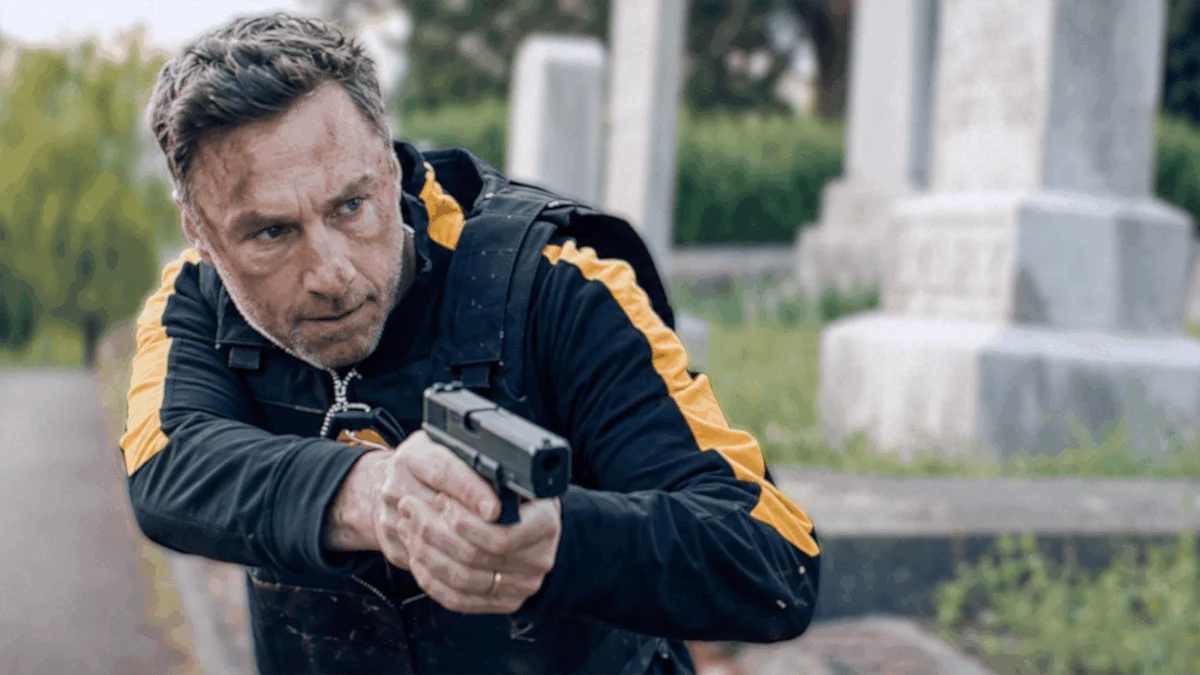
When filmmakers translate the visceral, often messy reality of personal trauma onto the silver screen, they walk a precarious tightrope. The objective is frequently to honor the heroism of the subject, but in doing so, they risk crossing into hagiography—the act of canonizing a flawed individual by smoothing over the very jagged edges that make their story human.
Jake Allyn’s latest feature, Clean Hands, stands as a polarizing case study in this cinematic phenomenon. A narrative drama based on the real-life experiences of Kevin Simmers, a Hagerstown, Maryland, narcotics officer, the film attempts to marry the gritty intensity of a police procedural with the heartbreaking intimacy of a family’s battle against the opioid epidemic. However, the film struggles with its own identity, leaving audiences to wonder whether the creative liberties taken by Allyn serve the emotional truth of the story or merely obscure the unflattering realities of its protagonist’s crusade.
Main Facts: A Father’s War on Two Fronts
At its core, Clean Hands chronicles the harrowing journey of Kevin Simmers (played with intense, perhaps unintended, rigidity by Zach Braff) as he attempts to rescue his 19-year-old daughter, Brooke (Esther McGregor), from the spiraling depths of heroin addiction.
Simmers is established early on as a "hero cop"—a man whose by-the-book professional reputation precedes him. Yet, his personal life is fractured by the very crisis he has spent his career fighting on the streets. The central conflict arises when Simmers discovers that his daughter, whom he shares a tight-knit, arguably codependent relationship with, has succumbed to Percocet and, eventually, heroin.
The film posits a difficult question: What happens when the law enforcement officer, trained to treat drug abuse as a criminal issue to be conquered, finds that his own child is the "suspect"? While the film serves as a vehicle for the eventual founding of "Brooke’s House," a real-life rehabilitation facility established by the Simmers family, the screenplay often feels at odds with itself. It attempts to argue against the criminalization of addiction while simultaneously portraying a protagonist who is only too happy to use the heavy hand of the law to "fix" his daughter.
Chronology: The Escalation of Intervention
The trajectory of the film follows a downward spiral that mirrors the mechanics of addiction. We first encounter Simmers in his element—a respected, albeit stern, narcotics officer. His world is upended when he realizes his daughter has been consorting with a local dealer, Brick (Kraig Dane).
- Initial Discovery: Simmers’ discovery of Brooke’s drug use is met with an immediate, tactical response. He attempts to leverage his professional connections to secure private rehabilitation, but when those efforts fail, he pivots to "tough love."
- The Failed Arrest: In a pivotal sequence, Simmers facilitates his own daughter’s arrest, hoping that a stint in the legal system will act as a "scare straight" tactic. It is a decision that backfires, leading to the deterioration of her condition.
- The Shift to Vigilantism: When the legal system fails to produce the desired result, Simmers shifts his methodology. He begins an extra-legal crusade, pursuing local addicts and dealers with a fervor that borders on abuse of power.
- The Realization: Through a series of professional and personal setbacks, the film suggests that Simmers eventually comes to a late-stage epiphany: that the war on drugs, as he has waged it, is ineffective compared to patient, compassionate support.
- The Legacy: The film concludes with the founding of Brooke’s House, framing the facility as the ultimate solution born from this transformative, albeit painful, experience.
Supporting Data and Performance Analysis
The strength of Clean Hands lies not in its script’s cohesion, but in its performances. Zach Braff, best known for his comedic timing, delivers a performance of startling intensity. He captures the tenacity of a man who views his life as a series of problems to be solved through force. Whether this is an act of deliberate character study or a misunderstanding of the character’s inherent flaws remains up for debate.
Esther McGregor provides a necessary, fragile counterbalance as Brooke. Her performance is subtle, capturing the helplessness of an addict whose autonomy has been stripped away not just by drugs, but by a father whose "love" manifests as suffocating control. Abigail Spencer, portraying the religious and stoic wife Dana, offers the film its few moments of genuine grace. As Simmers "bulldozes" through the lives of those around him, Spencer’s reactions serve as the moral compass of the narrative, highlighting the friction between his aggressive methods and the reality of their family’s suffering.
The film’s aesthetic choices, particularly the score by Those Who Ride With Giants, often work against the film’s message. By injecting high-octane, instrumental rock during police chases and interrogations, the film treats the "crime" elements as a high-stakes thriller, which frequently undercuts the profound sadness of the family’s predicament.
Official Responses and Creative Liberties
A notable aspect of Clean Hands is the placement of its disclaimer. Standard practice for biographical films is to place a note regarding the dramatization of real people at the very end of the credits. In Clean Hands, this disclaimer appears at the beginning, a subtle but significant hint that the narrative leaps taken by Allyn are substantial.
The inclusion of an infomercial-style segment for "Brooke’s House" during the closing credits strongly implies that the real-life Kevin Simmers fully endorsed the film’s portrayal. However, this endorsement raises a critical question: Should the audience accept the protagonist’s actions at face value? The film depicts Simmers as a man willing to lie to medical professionals, abuse his authority, and antagonize his own daughter’s environment, yet it simultaneously wants to position him as a hero.
The dissonance is palpable. The script’s attempt to frame Simmers as a man who "did the best he could" feels insufficient given the damage depicted on screen. By showing Simmers as someone who only applies compassion to strangers once he is no longer personally involved, the film inadvertently paints a portrait of a man who lacks the emotional range to address addiction until it is forced upon him by his own failure.
Implications: The Failure of the "One-Size-Fits-All" Solution
The central implication of Clean Hands is that the opioid epidemic requires a move away from punitive measures toward empathetic, long-term care. While this is a noble and necessary message, the film’s execution suggests that it has not fully internalized the lesson it seeks to preach.
The success of the film’s climax—the establishment of Brooke’s House—is presented as a quick fix, an "immediate, overwhelming success." This narrative shortcut ignores the messy, often non-linear reality of recovery. By suggesting that all Simmers needed to do was "change his tactics," the film reduces the complexities of addiction to a mechanical problem that can be solved with a change in strategy rather than a change in heart.
Ultimately, Clean Hands is a film that wants to be both a gritty police drama and a tender, restorative family drama. It fails to strike the balance between the two. The "hard work and struggle" that define the journey from an epiphany to actual, lived implementation of change is largely absent.
For viewers, the experience of watching Clean Hands is one of frustration. We see the potential for a profound, moving study of a man forced to confront his own biases, yet we are left with a polished, sometimes contradictory, and ultimately sanitized version of a story that demanded far more grit and honesty. While the film’s intentions are clearly rooted in a desire to help others through the legacy of Brooke’s House, the cinematic result lacks the depth required to truly honor the difficulty of the path it chronicles. It is a cautionary tale, though perhaps not in the way the filmmakers intended—a reminder that in the fight against addiction, the most difficult barrier to break down is often the certainty that we already know how to win.
 Reynand Wu
  Raul Delapena Setiawan