
 By Asro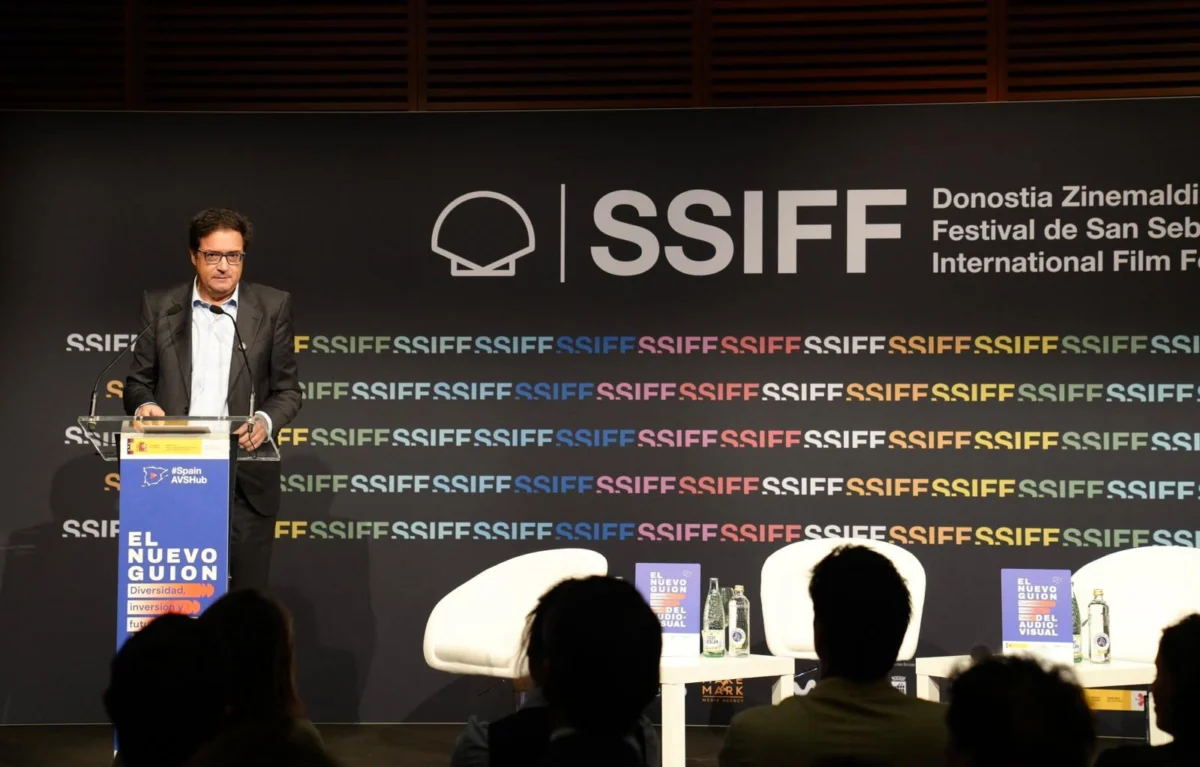
At the prestigious San Sebastian Festival, against a backdrop of historic accolades and record-breaking industrial growth, the Spanish government has reaffirmed its commitment to the nation’s burgeoning audiovisual sector. Óscar López, Minister for Digital Transformation and Public Administration, stood before industry leaders at the "New Script of the Audiovisual Industry" conference to declare that Spain is not merely participating in the global content race—it is setting the pace.
With a series of strategic investments, including the robust deployment of the Spain Crece Fund and the sovereign venture capital arm SETT (Spanish Society for Technological Transformation), Madrid is cementing its status as the European Union’s premier production hub. As the country celebrates a monumental win at the Toronto International Film Festival (TIFF) and dominates global streaming charts, the narrative is clear: Spain has successfully transitioned from a regional player to an international creative titan.
A Chronology of Success: From Policy to Prestige
The current "golden age" of Spanish content did not happen by accident. It is the result of a deliberate, multi-year institutional strategy.
The timeline of this transformation began in earnest with the inception of the Spain Audiovisual Hub Plan. Designed to bridge the gap between Spain’s world-class talent and the necessary financial muscle, the plan was built on the premise that, while Spain possessed the locations, the scripts, and the creative minds, it lacked the political will and the consistent capital injection required to scale.
By 2020, the government initiated a massive financial mobilization—totaling €1.6 billion—to modernize infrastructure and attract international investment. The results were nearly immediate. By 2025, the audiovisual sector in Spain witnessed a staggering 31% growth in production volume. This trajectory hit a fever pitch just this month, when the film La Bola Negra, directed by the visionary duo Javier Calvo and Javier Ambrossi, secured the TIFF People’s Choice Award. Historically viewed as a bellwether for Academy Award success, the win serves as a powerful validation of the government’s investment strategy on the global stage.
Supporting Data: The Quantitative Engine of Growth
The scale of Spain’s industrial expansion is evidenced by a robust set of statistics. According to upcoming data from the Olsberg-SPI study, the sector has been a primary engine of the Spanish economy between 2020 and 2025.
Key Economic Indicators (2020–2025):
- Total Direct Production Expenditure: Estimated at €20 billion.
- Gross Value Added (GVA): Nearly €18 billion generated.
- Employment Boom: The sector has seen its workforce double, expanding from 30,900 to over 64,000 workers in just five years.
- Sectoral Growth: Direct investment in the industry grew by 45%, while GVA increased by 38%.
Beyond the direct figures, the spillover effect is significant. More than half of the employment generated by the audiovisual sector is sustained through interconnected supply chains, including construction, hospitality, transport, and logistics. Spain’s dominance is also reflected in consumption patterns; nine of the 11 most-watched series in Europe are now Spanish productions. On a global scale, the country holds the record for the most titles in Netflix’s all-time Top 10 lists for non-English content, with four series seasons and three films currently holding spots.
Official Responses: The Government’s Long-Term Vision
Minister Óscar López emphasized that the government’s approach is defined by continuity. "When a public policy works, it should be maintained without a deadline," López stated during his keynote. He characterized the government’s intervention as an "unprecedented institutional commitment" designed to facilitate a structural economic transformation.
Central to this effort is the SETT (Spanish Society for Technological Transformation). By mobilizing an additional €450 million in investments, SETT is currently acting as a catalyst for major industry players like Lazona, Good Films, and Aurora Media.
"We had the talent, the ideas, and the locations," López reflected. "What was missing was political will and a significant injection of capital. And here we are, €1.6 billion later, reaping the benefits and expanding our horizons."
Industry Testimonials: The View from the Front Lines
The impact of these state-led initiatives is felt acutely by producers on the ground. Miriam Segal, founder of Good Film Studios, offered high praise for the Spanish infrastructure, noting that it had empowered her to make bold creative choices—such as "pay-or-play" deals for talent—that were previously out of reach. "I didn’t know about this incredible industry infrastructure," she remarked, citing the "extraordinary passion and commitment" of the Spanish government.
Similarly, José Carlos García of Ánima Kitchen highlighted how support from SETT has enabled his company to scale its operations. With plans to produce three high-end animated films over the next five years, García noted that the institutional backing was the deciding factor in his company’s ability to recruit top-tier international talent and maintain leadership in the animation market.
Implications: A Roadmap for the Future
The San Sebastian panels highlighted that the future of the Spanish industry lies in a balanced "ecosystem." The consensus among industry experts, including representatives from Greece and Denmark, is that there is no "one-size-fits-all" European model. Instead, the focus must be on administrative harmonization, flexible funding, and, above all, the quality of storytelling.
The Evolution of the Ecosystem
A critical discussion point was the persistence of linear television. Fernando Hernaiz of Mediaset challenged the notion that linear TV is dead, arguing that the industry has evolved into a sophisticated, multi-platform ecosystem. "Television is now technology, creation, scripts, and business," he asserted. The challenge moving forward remains audience fragmentation and the need for regulatory frameworks that can keep pace with the agility of streaming platforms and social media.
The Data-Driven Strategy
The collaboration between the Spain Film Commission and Olsberg-SPI underscores a shift toward data-driven policymaking. Leon Forde, representing Olsberg-SPI, noted that the complexity of the modern audiovisual sector requires precise data to ensure that policies remain effective. By treating the industry as an "ecosystem where all species are indispensable," the government is moving away from short-term subsidies and toward long-term structural support that benefits everyone from local construction firms to international film financiers.
Conclusion: The Horizon Ahead
As Spain looks toward the future, the integration of public policy and private sector ambition appears to be the bedrock of its success. With a formal, more detailed presentation of the Olsberg-SPI report scheduled for September 22, the industry expects further insights into how these investments will continue to generate wealth and cultural capital.
Spain has moved beyond the "emerging market" label. It is now a global anchor for production, a hub for technological innovation in media, and a creative powerhouse that is successfully exporting its cultural identity to every corner of the globe. If the current trajectory holds, the "golden age" of Spanish audiovisual production is not merely a passing phase, but the beginning of a sustained era of international dominance.
 Raul Delapena Setiawan
  Nila Kartika Wati
  Layla Zulfa