
 By Raul Delapena Setiawan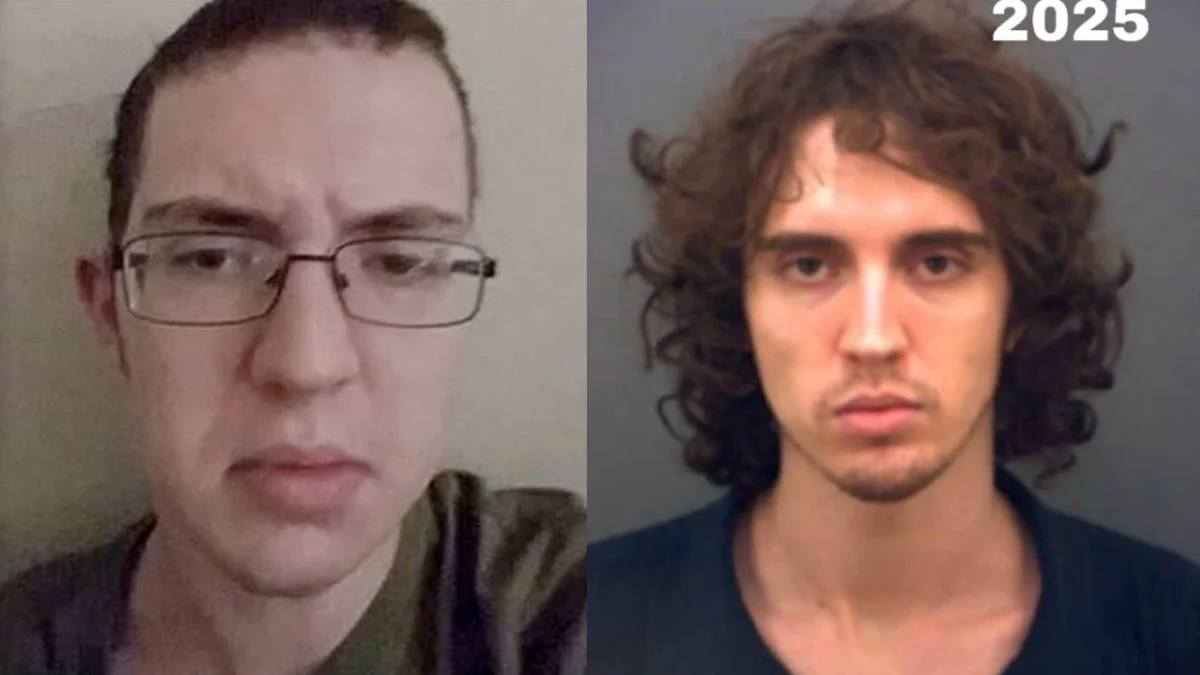
Main Facts
An ostensibly new photograph of Patrick Crusius—the perpetrator of the August 3, 2019, mass shooting at an El Paso, Walmart—has unexpectedly ignited a surreal wave of dark humor and viral commentary across mainstream social media platforms. Crusius, who is currently serving multiple consecutive life sentences without the possibility of parole for one of the deadliest targeted attacks against Latinos in modern American history, is recognized in certain online subcultures not merely as a convicted domestic terrorist, but as the literal human blueprint for "Chudjak."
The "Chudjak" is a prominent, grotesque Wojak-derivative line-drawing caricature spawned on 4thchan’s infamous /pol/ (Politically Incorrect) board in late 2019. It is characterized by deep nasolabial folds, wire-rimmed glasses, and a permanent, grimace-like scowl. Paired invariably with cataclysmic, nihilistic phrases such as "The West has fallen. Billions must die," the caricature became a ubiquitous internet shorthand for extremist hysteria, doomerism, and political radicalization.
The recent digital cycle began when a Redditor on the /r/masskillers community published what they claimed to be a federal mugshot of Crusius, allegedly secured via a Freedom of Information Act (FOIA) request. Although the original thread was swiftly scrubbed by moderators—likely due to Reddit’s strict terms of service regarding content that elevates or humanizes violent criminals—the image had already escaped its containment.
Depicting a noticeably altered Crusius—sans glasses, sporting longer, curly locks, and light facial scruff—the photograph rapidly migrated to X (formerly Twitter). Within days, it generated millions of impressions, sparking an absurd and deeply uncomfortable meta-narrative online: internet subcultures began joking that the mass murderer had undergone an unexpected "glow-up," drawing comparisons to indie rock musicians and triggering a flurry of ironic commentary that juxtaposed the grim reality of mass murder with the deeply detached nature of modern meme culture.
Chronology of a Viral Leak
To understand how a federal correctional document transformed into an ironic internet phenomenon, it is necessary to trace the precise digital footprint left across Reddit, X, and image-board archives over a turbulent 72-hour window in late April 2025.
April 25, 2025: The Reddit Leak
A Reddit user operating under the handle /u/uncanealguinzaglio uploaded an image to the /r/masskillers subreddit. The post asserted that the file was an authentic federal mugshot of Crusius obtained through legal public records requests. The uploader clarified that the photo was not captured in 2025, but rather dated back to approximately July 2023, coinciding with a phase of his federal legal proceedings where he was temporarily held by local authorities in El Paso while transitioning between federal jurisdictions.
Because the subreddit’s moderators quickly deleted the post for violating platform policies against glorifying or re-circulating media concerning mass casualty perpetrators, the image might have vanished into obscurity. Instead, the temporary availability was all it took for archival bots and curious onlookers to harvest the file.
April 27, 2025: The X Explosion
Two days after the initial leak, X user @TruueDiscipline posted the image alongside the viral caption: "This is what chudjak looks like now… feel old yet?"
The post struck a nerve in the algorithmic zeitgeist. Stripped of his trademark spectacles and sporting a softer, unkempt aesthetic that sharply contrasted with his stark 2019 booking photos, Crusius was viewed by hundreds of thousands of users who had only ever known his likeness through MS Paint-style internet drawings. The post accumulated upwards of 1.2 million views and crossed 17,000 likes in less than 48 hours, pulling the image out of niche true-crime and meme-archival circles and dropping it squarely into the broader social media consciousness.
The Meta-Humor Escalation
As the image cascaded across timelines, various meme creators began putting their own spins on the revelation. Account @Halsted_19 posted satirical commentary mocking the phenomenon of internet users—and specific online demographics—hyperfixating on the aesthetics of criminals. Another user, @hayasaka_aryan, published a side-by-side comparison labeling the transformation "From chud to indie rock singer," a formulation that rapidly caught on as a surreal descriptor for unexpected physical transformations in captivity.
April 28–29, 2025: Correction and Court Reality
As the "indie singer" jokes peaked, initial posters stepped in to clarify the timeline. @TruueDiscipline and others pointed out that the viral photograph did not reflect Crusius’s current appearance. They surfaced more recent photographs—including official documentation from a court appearance on April 21, 2025, where Crusius formally pleaded guilty to state capital murder charges—which showed him back in his traditional appearance, wearing standard prescription glasses and a fuller, graying beard.

Supporting Data and Demographic Analysis
The intersection between mass violence and online meme infrastructure is a thoroughly documented area of digital anthropology. The "Chudjak" meme is part of an expansive taxonomy of Wojak iterations that emerged in the late 2010s on anonymous image boards.
- The Genesis of Chud: The term "Chud"—originally a reference to the 1984 sci-fi horror film C.H.U.D. (Cannibalistic Humanoid Underground Dwellers)—was repurposed on 4chan to describe a stereotypical internet troll or far-right radical. When matched with a specific, heavily detailed sketch of Crusius’s face featuring deep-set eyes and wrinkled cheeks, the "Chudjak" was born.
- Linguistic Memoranda: The phrase "The West has fallen. Billions must die," associated with the character, evolved from a fringe internet political catchphrase into a generalized ironical punchline used by Zoomer and Millennial internet users to mock melodramatic internet commentary. According to digital culture trackers, variations of the phrase appear tens of thousands of times daily across X, Discord, and Telegram.
- Metrics of the Viral Event: The April 2025 X post by
@TruueDisciplineachieved a viral velocity index score placing it in the top 1% of meme-related content for that week, driven primarily by quote-tweets expressing disbelief, shock, and dark humor. Engagement data revealed that the demographic interacting most heavily with the post consisted predominantly of users aged 18 to 34—a cohort heavily fluent in post-ironic and absurd internet humor.
Official Responses and Legal Context
While internet users parsed the images for comedic value, the underlying legal reality of Patrick Crusius remains one of the darkest chapters in modern Texas history.
On August 3, 2019, Crusius drove nearly 10 hours from Allen, Texas, to El Paso, armed with a WASR-10 semi-automatic rifle and a manifest titled The Inconvenient Truth, which explicitly cited white supremacist ideologies and framed his attack as a "Hispanic invasion of Texas." He opened fire at a local Walmart, murdering 23 people and injuring nearly two dozen others before surrendering to law enforcement outside the store.
The dissemination of his prison photos via FOIA requests underscores ongoing legal tensions regarding public access to federal records versus the ethical containment of content related to mass shooters. While FOIA laws are designed to ensure government transparency—allowing citizens to request mugshots, court filings, and institutional records—the instantaneous nature of modern social media means that federal administrative records can be weaponized or trivialized within minutes of release.
Federal and state prosecutors have consistently emphasized the gravity of Crusius’s convictions. In July 2023, Crusius was sentenced to 90 consecutive life sentences in federal prison after pleading guilty to 90 federal hate crime and firearms charges. Just weeks before the April 2025 photo leak, he faced state capital murder proceedings in El Paso, where prosecutors secured additional guilty pleas to ensure that any potential shifts in federal clemency laws would never result in his freedom. Local officials and victim advocacy groups in El Paso have repeatedly urged the public and digital platforms to redirect focus away from the perpetrator’s persona, emphasizing that online memeification diminishes the ongoing trauma experienced by the families of the victims.
Implications for Digital Culture and Meme Evolution
The "Chudjak glow-up" phenomenon serves as an uncomfortable case study in the friction between real-world atrocities and digital abstraction. When a violent criminal is reduced entirely to a vector for internet humor, several broader implications emerge regarding how contemporary society processes trauma and notoriety:
1. Hyper-Abstraction of Evil
In digital spaces, real-world actors are routinely stripped of their humanity twice: first by the extremist ideologies that radicalize them, and second by the internet subcultures that turn their likenesses into recurring cartoon characters. To millions of internet users, the name "Patrick Crusius" holds virtually no cognitive weight; instead, they recognize only "Chudjak." This complete decoupling of the meme from the mass murder allows users to engage in jokes about his appearance without consciously registering the real-world carnage tied to his name.
2. The Gamification of True Crime
The incident highlights the growing overlap between true crime communities, meme economies, and information leaks. The fact that the photo originated from a specialized Reddit community dedicated to tracking mass killers demonstrates an insatiable digital appetite for archival ephemera related to violent offenders. When these niche archives bleed into mainstream networks like X, they carry with them an inherent shock value that algorithms reward with visibility.
3. Post-Irony as a Coping Mechanism
The absurd reaction to Crusius’s appearance—comparing a domestic terrorist to an indie rock musician or reacting with faux-attraction—is a textbook example of post-ironic nihilism. By treating a mass murderer with absurd, casual levity, internet users construct a psychological defense mechanism against the grim realities of modern violence. However, critics argue that this form of detachment normalizes dangerous figures, transforming murderers into anti-heroes of internet lore.
As social media platforms continue to grapple with the tension between open data access and the moderation of harmful content, the saga of the Chudjak photo demonstrates that once an image enters the digital ecosystem, its meaning is entirely up for grabs—regardless of how dark its origins may be.
 Basiran
  Layla Zulfa
  Asro
Asro 