
 By rifanmuazin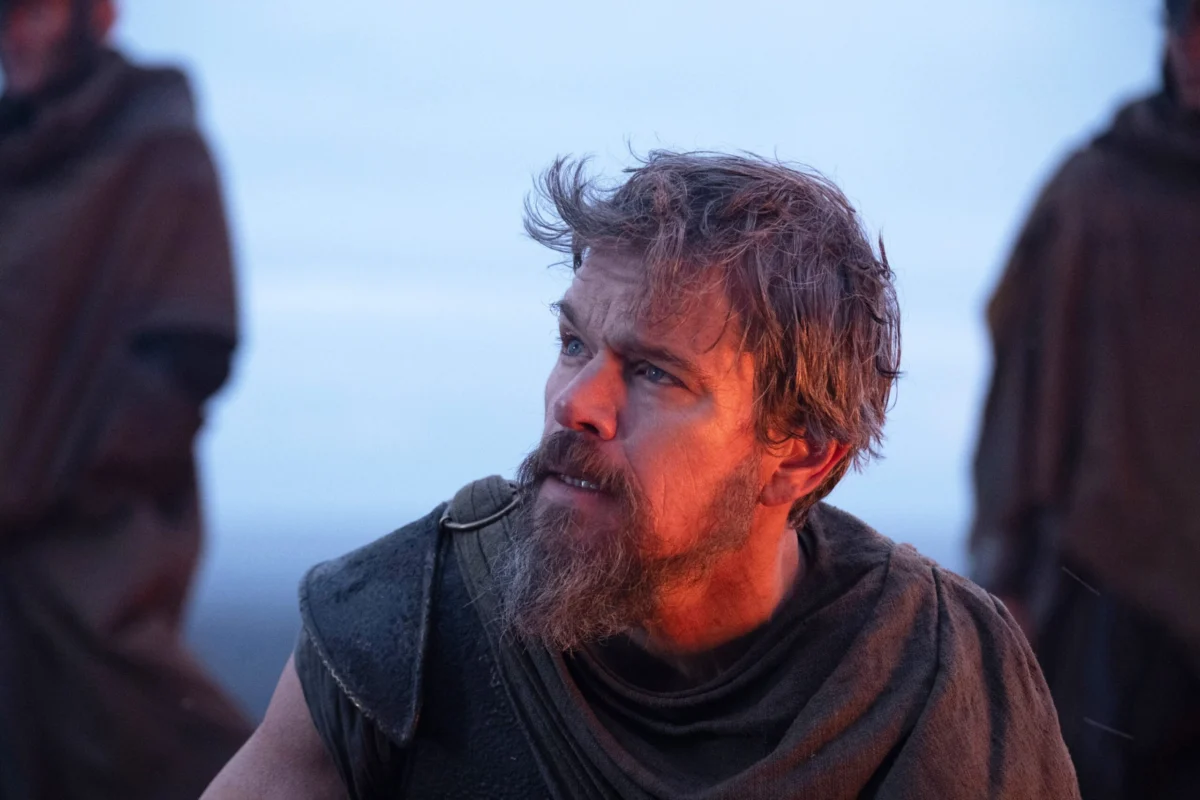
In the pantheon of cinematic visionaries, few directors possess the intellectual audacity of Christopher Nolan. Known for his obsession with non-linear storytelling and the fluid nature of time, Nolan has turned his gaze toward the foundational pillar of Western literature: Homer’s The Odyssey. The result is a sprawling, nearly three-hour magnum opus that serves as both a faithful adaptation of Greek mythology and a distinctively "Nolan-esque" puzzle box.
Featuring an ensemble cast led by Matt Damon as the weary, complex King Odysseus, the film does not merely recount the hero’s journey; it interrogates the cost of heroism. By weaving together multiple timelines—the carnage of the Trojan War, the harrowing decade-long voyage home, and the tense political atmosphere of Ithaca—Nolan offers a dense, challenging, and profoundly human exploration of one of history’s greatest myths.
The Structural Blueprint: A Multilayered Narrative
Nolan’s The Odyssey avoids the trap of a simple chronological retelling. Instead, he employs the ancient Greek tradition of oral storytelling. The narrative is framed through the accounts of a bard—portrayed with haunting gravitas by Travis Scott—who spins tales of the great warrior, intercut with the reflective, often unreliable memories of Odysseus himself.
This dual-perspective approach allows Nolan to juxtapose the legend of the hero with the reality of the man. The film functions on three distinct temporal planes: the tactical genius displayed during the siege of Troy, the visceral, god-haunted terror of the Mediterranean, and the domestic decay of Ithaca in Odysseus’s absence.
Chronology: From the Ashes of Troy to the Shores of Ithaca
The Seeds of Conflict
Before the journey began, Ithaca was a beacon of hospitality. Odysseus and his wife, Penelope (Anne Hathaway), maintained a palace governed by the laws of Zeus, where even the lowliest beggar was treated as a potential deity in disguise. It was a time of ritual—most notably, Odysseus’s mastery of his heavy bow, a symbol of his singular strength and authority.
However, the geopolitical landscape of the ancient world was fragile. The abduction of Helen of Sparta (Lupita Nyong’o) by Prince Paris of Troy ignited a firestorm. Her husband, King Menelaus (Jon Bernthal), enlisted his brother Agamemnon (Benny Safdie) to mobilize the Greek forces. In this version, the war is depicted not merely as a fight for love, but as a grueling, 10-year stalemate defined by tactical desperation.
The Trojan Deception
The film’s centerpiece, the Trojan Horse, is framed as a moral quagmire. Odysseus, seeking to end the suffering, recruits Sinon (Elliot Page) as a pawn in a deadly game. Sinon is kept in the dark about the plan, tasked with presenting the horse as a hollow peace offering to Athena (Zendaya). The subsequent slaughter, fueled by the hubris of the Greek victors, marks the beginning of Odysseus’s downfall. By desecrating the sanctity of Troy, the Greeks invite the wrath of the gods, setting the stage for a voyage that will last another decade.
The Divine Retribution
The journey home is presented as a descent into madness. Each trial—the blinding of the cyclops Polyphemus (Bill Irwin), the transformation of men into swine by the sorceress Circe (Samantha Morton), and the spectral warnings of the prophet Tiresias (James Remar) in the underworld—serves as a psychological crucible for Odysseus.
Nolan excels in depicting the "unreliable narrator" aspect of the voyage. When Odysseus encounters the sirens, the film shifts into an abstract, sensory-heavy sequence. The hero’s insistence on hearing the song—while tied to the mast—reveals his internal conflict: the desire for his home versus the addictive, destructive lure of the unknown. The tragedy of the loss of his men, specifically his failure to protect them from the consequences of killing Apollo’s cattle, underscores the central theme: no amount of strategic brilliance can outrun divine fate.
Supporting Data: Mythology and Modern Interpretation
The film leans heavily into the mythological underpinnings of the text, specifically the role of Zeus’s law regarding hospitality (Xenia). Nolan highlights how this law serves as a barometer for moral decay. In Ithaca, the suitors—led by the predatory Antinous (Robert Pattinson)—have inverted these customs, plundering the palace and disrespecting the queen.
The inclusion of Calypso (Charlize Theron) as a psychological anchor provides a necessary respite from the gore of the war. Her island, Ogygia, is portrayed as a purgatory of forced comfort. The lotus flowers she administers are a metaphor for the trauma that Odysseus tries to repress, illustrating that his long absence was not just a matter of navigation, but a struggle to confront his own guilt.
Official Responses and Creative Vision
Christopher Nolan has stated in recent interviews that his intent was not to provide a history lesson, but to capture the "emotional weight of the homecoming." By casting A-list talent like Damon, Hathaway, and Pattinson, Nolan ensures that the film remains grounded in character-driven drama despite its epic scale.
Critics have noted the specific choice of Travis Scott as the bard. Nolan argues that the rap artist’s rhythmic delivery and presence bring a visceral, modern energy to the ancient tradition of the Homeric bard. "The story of Odysseus is an oral history," Nolan noted. "We needed a voice that felt like it carried the weight of centuries while remaining immediate and dangerous."
Implications: The Legacy of the Hero
The film’s conclusion provides a sobering look at the concept of "victory." When Odysseus finally reunites with Penelope and sees his son Telemachus (Tom Holland) crowned king, there is no sense of unadulterated triumph. The violence required to reclaim his throne—the slaughter of the suitors—leaves a stain on his soul.
The final act of the film—Odysseus’s vow to sail west to honor his fallen men—carries a heavy symbolic meaning. In Greek mythology, the West represents the edge of the world and the threshold of the afterlife. By choosing this path, Odysseus is essentially accepting his role as a man out of time. He is a relic of a war that destroyed him, searching for redemption in the Elysian fields.
Thematic Resonance
Nolan’s The Odyssey is a meditation on the cyclical nature of violence. By linking the beginning of the film (the Trojan War) to the end (the slaughter of the suitors), the director argues that war is a self-perpetuating machine that consumes the humanity of those who wage it. Odysseus is not a flawless hero; he is a broken man attempting to reconcile his legacy with his sins.
Ultimately, this adaptation forces the audience to consider what "coming home" truly means. For Odysseus, home was not a destination found on a map, but a destination found after he finally laid his ghosts to rest. With its breathtaking cinematography, complex structure, and fearless performances, Nolan’s latest work is poised to become the definitive cinematic version of the Homeric epic for a new generation. It is a laborious, beautiful, and profoundly haunting journey—much like the odyssey itself.
 Siti Muinah
  Ammar Sabilarrohman
  Layla Zulfa