
 By Lina Irawan
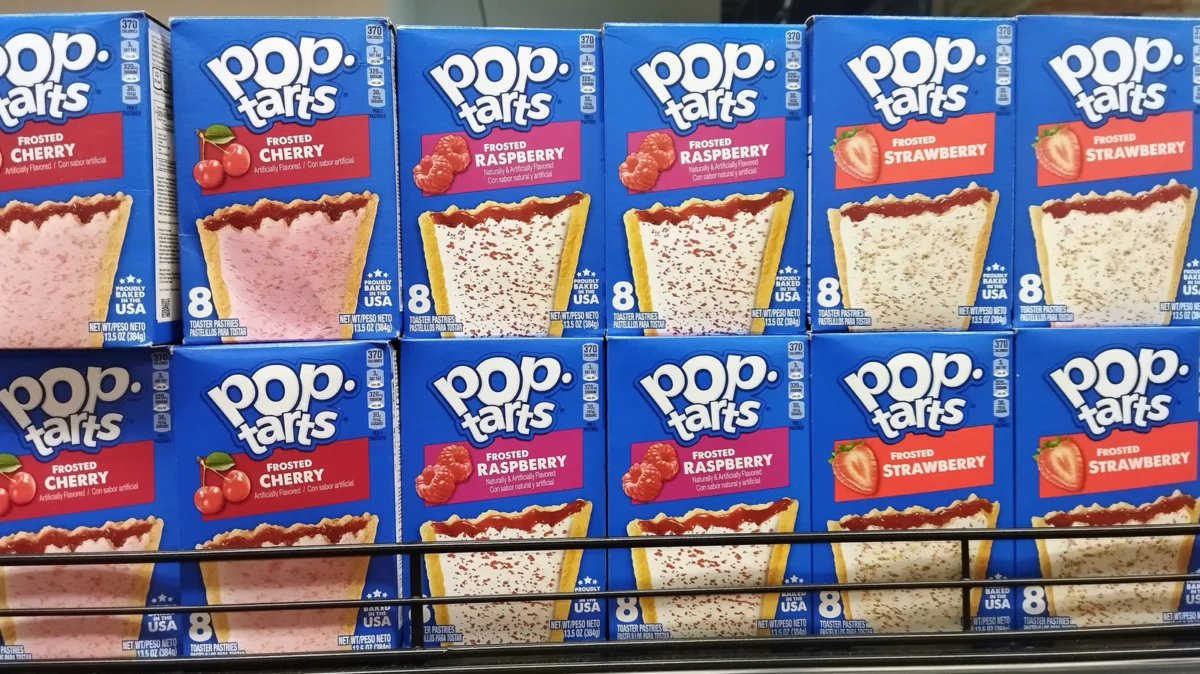
For more than half a century, Kellogg’s has provided generations of Americans with a socially acceptable excuse to eat dessert for breakfast. Since its commercial debut in 1964, the rectangular toaster pastry has become an indelible cornerstone of American convenience culture. Walk down the breakfast aisle of any grocery store today, and you will be greeted by dozens of decadent varieties ranging from classic fruit fillings to complex confections like S’mores, Cookies & Crème, and peanut butter-infused creations.
Yet, despite this massive modern expansion, the roots of the brand trace back to a humble launch featuring just four original flavors: Blueberry, Strawberry, Brown Sugar Cinnamon, and Apple-Currant. Today, three of these founding flavors remain pantry staples, while one—Apple-Currant—has vanished entirely into the annals of breakfast history. This is the story of how the Pop-Tart conquered America, why its most unique original flavor met its demise, and how the ghost of Apple-Currant continues to haunt the pastry aisle.
Main Facts: The Anatomy of a Breakfast Revolution
The story of the Pop-Tart cannot be told without examining its cultural footprint. Invented at the height of the mid-century convenience food boom, the toaster pastry was designed to capitalize on the rising popularity of home appliances and the fast-paced lifestyle of the American nuclear family.
- The Original Lineup: When Kellogg’s test-marketed the product in 1964, the four launch flavors were Blueberry, Strawberry, Brown Sugar Cinnamon, and Apple-Currant.
- The Survivors: Blueberry, Strawberry, and Brown Sugar Cinnamon have enjoyed an unbroken, uninterrupted run on supermarket shelves for over sixty years, retaining massive consumer loyalty.
- The Lone Casualty: Apple-Currant stands as the sole original flavor that cannot be purchased today, having been phased out decades ago.
- A Different Era of Baking: Unlike the vibrant, heavily frosted, and sprinkle-laden bricks of sugar we recognize today, the earliest Pop-Tarts were entirely unfrosted. Frosting was not engineered and introduced to the product line until 1967, meaning the original Apple-Currant pastry was a naked, flaky crust encasing a spiced fruit blend.
Chronology: From Cleveland Test Market to Modern Shelf Space
Understanding the trajectory of the Pop-Tart requires looking back at the precise sequence of events that transformed a corporate gamble into a global phenomenon.
1964: The Cleveland Test Run
According to historical archives and Smithsonian Magazine, Kellogg’s first introduced its revolutionary toaster pastries during a tightly monitored test market in Cleveland, Ohio. The reception exceeded all corporate expectations. An initial inventory of 45,000 cases sold out almost immediately, proving to executives that consumers were eager for a stable, portable, shelf-ready breakfast pastry that could be warmed up in seconds.
1965: National Expansion and Mass Appeal
Buoyed by the runaway success in Ohio, Kellogg’s rolled out Pop-Tarts nationwide in 1965. The product was an instant cultural touchstone. During this period, the pastries were sold in pairs inside foil packages designed to lock in freshness. The flavor profile of Apple-Currant—combining sweet, comforting stewed apples with the sharp, tart bite of dried currants—appealed directly to the mid-century palate, which favored traditional, pie-like fruit flavors.
1967: The Frosting Revolution
As competition heated up in the breakfast aisle, Kellogg’s realized that the plain, golden-brown crusts needed an upgrade to stand out visually and texturally. In 1967, the company successfully formulated a stable icing that wouldn’t melt or crack inside a toaster. This innovation changed the trajectory of the brand forever, shifting consumer preference decisively toward frosted varieties. Unfortunately for Apple-Currant, this transition marked the beginning of its slow obsolescence, as marketing budgets and consumer demands gravitated toward sweeter, flashier options.
The Late 20th Century: The Apple Experiment Era
Following the quiet discontinuation of the original Apple-Currant recipe, Kellogg’s did not entirely abandon the apple flavor category. Over the decades, the company experimented with several iterations, including:
- Frosted American Apple Pie
- Frosted Apple Cinnamon Muffin
- Frosted Apple Strudel
According to archival records from enthusiast organizations like the Museum of Mostly Pudding, Kellogg’s even attempted to revive the original concept under a slightly modified banner, releasing "Apple-Berry" for a limited time. However, official corporate nomenclature continues to list Apple-Currant and Apple-Berry as distinct, retired entities.
The 2020s: The Final Curtain for Apple Varieties
Even when Kellogg’s managed to strike gold with newer apple profiles—such as the fan-favorite Frosted Crisp Apple—they rarely survived structural corporate inventory overhauls. Food historians and online communities note that Frosted Crisp Apple quietly disappeared from mainstream retail shelves around 2022, cementing the reality that apple-flavored Pop-Tarts struggle for long-term survival in a market dominated by chocolate and berry variants.
Supporting Data: Sales, Ingredients, and Consumer Trends
To truly understand why Apple-Currant faded away, one must analyze the ingredients and the shifting culinary preferences of the American consumer over the last six decades.
| Feature | Original Apple-Currant (1964) | Modern Pop-Tarts (Present Day) |
|---|---|---|
| Frosting | None (Unfrosted pastry crust) | Heavy sugar icing with sprinkles (standard for most varieties) |
| Filling Profile | Stewed apples and tart dried currants | Synthetic fruit purees, high-fructose corn syrup, artificial dyes |
| Target Market | Mid-century families seeking quick convenience | Children, teens, and nostalgic adults seeking indulgence |
| Market Status | Discontinued | Multibillion-dollar global product line with dozens of active flavors |
What is a Currant, Anyway?
The primary culinary hurdle for the Apple-Currant flavor lay in its core ingredient: the currant. Unlike raisins or standard dried cranberries, true currants (derived from small-fruited seedless grapes grown historically in the Mediterranean) became increasingly unfamiliar to the average American consumer in the latter half of the 20th century.
As corporate flavoring trends shifted toward universally recognizable profiles like strawberry, blueberry, and chocolate, niche ingredients like currants were viewed by product developers as a liability.
Official Responses and Corporate Lore
Kellogg’s has occasionally leaned into the historical mystery surrounding its lost debut flavor. In corporate storytelling materials and official website retrospectives, representatives have offered both humorous and pragmatic explanations for the retirement of Apple-Currant.
Most famously, official Pop-Tarts lore attributes the discontinuation of the flavor to a blunt marketing reality: "Literally no one has ever seen a currant."
While tongue-in-cheek, this statement highlights the brutal mathematics of mass-market food manufacturing. If an ingredient alienates younger consumers or requires too much explanation on the packaging, it is swiftly replaced by safer, higher-performing alternatives.
Furthermore, consumer relations archives indicate that while a vocal minority of purists and food historians have periodically petitioned for a retro revival of the Apple-Currant pastry, corporate data consistently prioritizes shelf space for high-velocity sellers like Brown Sugar Cinnamon and Strawberry.
Implications: The Psychology of Food Nostalgia and Discontinued Products
The disappearance of Apple-Currant is more than a mere footnote in corporate snack history; it serves as a case study in the psychology of modern consumer nostalgia.
1. The Power of the Original Quartet
When brands anchor their origin stories to a specific foundational era, every item from that foundational lineup gains mythic status. Because Blueberry, Strawberry, and Brown Sugar Cinnamon achieved immortality, the missing Apple-Currant acquired an almost mythical aura among food historians and retro-snack collectors. It represents the road not taken in breakfast evolution.
2. The Homogenization of Flavor
The transition from Apple-Currant to modern flavor profiles reflects a broader trend in the American food industry: the shift toward hyper-sweet, universally accessible flavor profiles. Complex tartness, earthy dried fruits, and unfrosted rustic pastries have largely been crowded out by technicolor frostings and candy-bar crossovers.
3. The Rise of the Retro Economy
In the digital age, discontinued food items take on a second life online. Subreddits dedicated to reviewing defunct Pop-Tarts, online museums archiving vintage foil wrappers, and YouTube taste-test historians keep the memory of Apple-Currant alive. For brands, this digital nostalgia creates free marketing, occasionally prompting limited-edition throwback releases—though Apple-Currant has notably remained locked in the vault.
Conclusion
As Pop-Tarts march deeper into the 21st century, introducing bizarre mashups and seasonal novelties, the ghost of 1964 remains ever-present. While modern consumers may never again experience the specific, unfrosted bite of an Apple-Currant pastry straight out of a 1960s toaster, the flavor’s absence reminds us of how much our palates—and our grocery aisles—have transformed over the last sixty years. Apple-Currant may have been left behind by progress, but its place in breakfast history is permanently secured.
 Neng Nana
 Dwi Wanna
 Azzam Bilal Chamdy
