
 By Reynand Wu
In the ever-evolving landscape of modern gaming, few titles have maintained the cultural and technical longevity of The Witcher 3: Wild Hunt. Eleven years after its initial debut, CD Projekt Red (CDPR) continues to iterate on its magnum opus. The studio recently rolled out hotfix 5.01b, a targeted update for the PlayStation 5 and PS5 Pro versions of The Witcher 3 Remastered. While the patch notes are notably minimalist, the release serves as a reminder of the studio’s ongoing commitment to technical stability and visual refinement as it prepares for the series’ next significant chapter.
The Latest Patch: Stability and Precision
The release of hotfix 5.01b, while modest in scope, underscores CDPR’s current focus on polishing the console experience. Officially, the patch notes specify only "various stability improvements to help ensure a more reliable experience." For players utilizing the high-end hardware of the PlayStation 5 and the newly available PS5 Pro, this update addresses the nuances of performance consistency.
In an era where "day-one" patches are often voluminous, the brevity of this update is telling. It suggests that the core framework of the Remastered edition is reaching a state of maturity. Rather than introducing sweeping gameplay overhauls, the development team is now in a "fine-tuning" phase, prioritizing the eradication of edge-case crashes and micro-stuttering that can mar the immersion of such a sprawling, open-world RPG.
Chronology: A Legacy Reimagined
To understand the significance of the 5.01b hotfix, one must view it within the broader timeline of the Remastered edition’s rollout. When the project was announced, it was touted as a transformative update—not merely a resolution bump, but a fundamental modernization of the game’s engine.
- Initial Launch: The Remastered update arrived with a suite of new assets, including advanced lighting, updated texture packs, and integrated ray-tracing.
- The Post-Launch Turbulence: The immediate weeks following the release were characterized by a flurry of corrective patches. Players reported issues ranging from excessive bloom lighting to fluctuating frame rates in high-density urban areas like Novigrad.
- Community Feedback Loops: CDPR’s responsiveness has been a cornerstone of this process. When fans voiced concerns regarding the game’s overall brightness and color grading, the studio integrated feedback into subsequent patches, demonstrating a willingness to prioritize player aesthetic preference alongside technical performance.
- Current Status: With the arrival of 5.01b, the focus has shifted from "fixing the core" to "perfecting the performance" on specific hardware profiles, including the latest console iterations.
The "Switch 2" Horizon
Perhaps the most vocal contingent of the current Witcher 3 community involves those anticipating the Nintendo Switch 2 iteration. The promise of bringing the Remastered visual suite to Nintendo’s next-generation hardware has created significant anticipation.
CD Projekt Red recently issued a public statement via X (formerly Twitter) to assuage concerns regarding the timeline for this port. "We’re working on getting the Nintendo Switch 2 patch to all users as soon as possible," the studio noted. This update is expected to leverage the increased processing power of the upcoming hardware to provide "visual clarity and sharpness" that were previously unattainable on the original handheld platform.
For many, the transition of The Witcher 3 to the Switch 2 represents the ultimate test of the game’s scalability. If the studio can maintain a stable frame rate while upgrading the visual fidelity of such an expansive game on a hybrid system, it will set a new benchmark for portable gaming performance.
Supporting Data: Digital Foundry and the Path Tracing Challenge
The technical discourse surrounding The Witcher 3 Remastered has been heavily influenced by rigorous third-party analysis. Digital Foundry (DF) has emerged as a primary arbiter of the game’s technical health. Their recent PC performance review provided a comprehensive look at the "Remastered" features, offering players optimized settings that balance the game’s aggressive path tracing against the realities of current-gen GPU limitations.
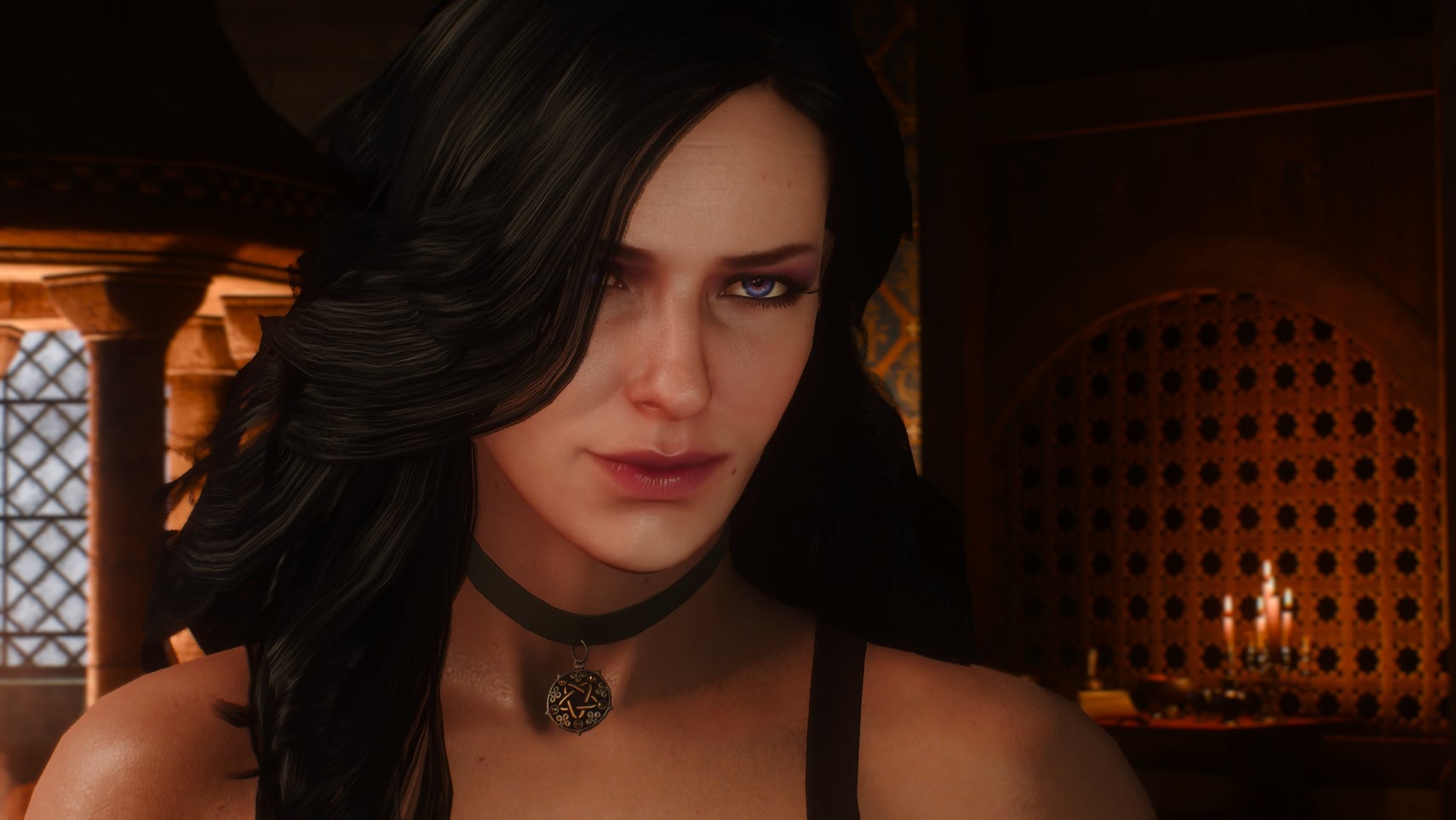
The data indicates that while path tracing creates a level of environmental atmosphere rarely seen in open-world titles, it remains "enormously system-heavy." Even with the latest hardware, players are often forced to choose between the cutting-edge aesthetic of ray-traced global illumination and the high frame rates necessary for fluid combat. This technical tug-of-war is a central theme in the ongoing optimization patches, as CDPR works to bridge the gap between "graphically bleeding-edge" and "consistently playable."
Official Responses and Studio Strategy
CD Projekt Red’s communication strategy has remained consistent: transparent, iterative, and responsive. By maintaining a direct line of communication with the player base, the studio has managed to mitigate the frustration that typically follows a complex update rollout.
Internally, the team’s focus is clearly divided. While one arm of the studio manages the maintenance of the Remastered edition, another is looking toward the future. The mention of the Songs of the Past expansion is the most tangible evidence of this transition. By keeping The Witcher 3 in a state of constant, high-quality repair, CDPR is ensuring that the foundation for this upcoming expansion is stable.
Implications: The Road to "Songs of the Past"
The Songs of the Past expansion, slated for release next year, is positioned as a narrative and mechanical capstone to the Remastered experience. Early glimpses, including a closed-doors preview at Gamescom, suggest that this is not a minor DLC, but a substantial addition that will introduce a new region and a deep, character-driven story focusing on Dandelion and the wider Witcher family.
The implications for the current patch cycle are clear: every stability improvement made today is an investment in the stability of Songs of the Past. If the game engine can handle the demands of the new, expansive region while maintaining the visual standards established in the Remastered update, the expansion will likely be viewed as a masterclass in post-launch support.
Conclusion: A Living Game
The Witcher 3 Remastered is more than just a software update; it is a testament to the idea of the "living game." Through 5.01b and the upcoming Switch 2 patches, CD Projekt Red is proving that a game’s lifecycle does not have to end at its final credits. By iterating on the core mechanics, refining the visual fidelity, and listening to the specific, often granular, feedback of the community, the studio has managed to keep a decade-old title at the center of the modern gaming conversation.
As players continue to explore the Continent, the commitment to "stability and reliability" remains the invisible thread holding the experience together. Whether on a high-end PC, a PS5 Pro, or the eagerly anticipated Switch 2, the world of Geralt of Rivia continues to grow, shift, and shine with renewed intensity. The "Vengerberg is coming," and for fans of the franchise, the future has never looked sharper.
 Asro
Asro  Nana Wu
  Neng Nana