
 By Laily UPN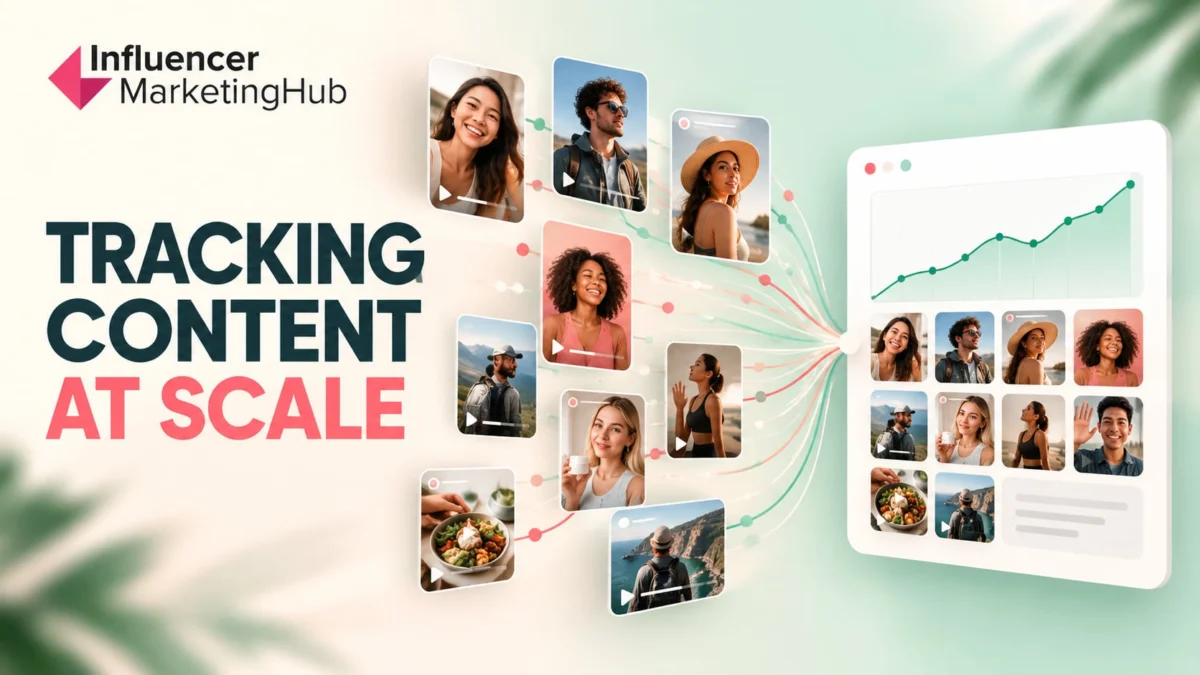
The fundamental mechanics of brand visibility have undergone a seismic shift. For decades, the marketing playbook was governed by a simple, manageable logic: a brand would partner with a select handful of influencers, sign rigid contracts, and track performance through a predictable, manual pipeline of tagged posts and affiliate links. This "old model" offered comfort through control; if you could count the partnerships on one hand, you could measure the return on investment (ROI) with a calculator.
Today, that model is obsolete. We have entered the era of volume. Brands are no longer orchestrating a few polished campaigns; they are managing, or at least observing, thousands of pieces of content—a chaotic blend of paid creators, gifted micro-influencers, brand ambassadors, and unsolicited organic fans—all posting simultaneously. While this decentralized strategy solves the "reach problem" by saturating the social landscape, it has birthed a much more dangerous dilemma: the visibility gap. Brands are now struggling to account for thousands of mentions they didn’t script and, in many cases, don’t even know exist.
The Convergence: Why Brands Shifted to High-Volume Content
To understand why traditional tracking tools have hit a structural wall, one must first recognize the three trends that converged to force this shift.
First, the democratization of the creator economy has radically widened the pool of talent. Brands no longer need to rely on a single, expensive celebrity to carry a campaign; for the same price, they can activate fifty micro-influencers who possess deeper trust within their niche communities. Second, audience fatigue has rendered polished, high-production studio advertisements less effective than raw, user-generated content (UGC). This has pushed brands to commission dozens of varied, "lo-fi" clips rather than a single, high-budget hero asset. Third, the professionalization of affiliate and ambassador programs has turned ordinary customers into a perpetual, unmanaged stream of brand advocacy.
The common thread here is decentralization. Where a brand’s digital footprint was once a controlled, static set of assets, it is now a sprawling, constantly refreshed ecosystem. This is a massive strategic win for reach and authenticity, but it quietly invalidates the foundational assumption of legacy tracking software: the idea that a brand knows, in advance, whose content to watch and what digital "labels" that content will carry.
The Hidden Input Problem: Why Most Tools are Blind
Conventional influencer and social-tracking platforms share a quiet, fatal dependency: they require human input to define the scope of the search. To track a post, a brand must typically supply the creator’s handle as an input. Furthermore, the post itself must contain a "textual hook"—a branded hashtag, an @ mention, a tagged account, or a unique tracking link.
When these hooks are present, tracking is seamless. When they are absent, the post effectively vanishes from the brand’s data lake. In the current content landscape, these hooks are missing with alarming frequency. A creator might rave about a product in a 60-second video without tagging the brand; an ambassador might wear a logo prominently without ever mentioning the company name; a loyal customer might review a launch while forgetting the required hashtag.
The scale of this blind spot is staggering. Research from Brandwatch indicates that approximately 80% of images online containing a brand’s logo do not reference the brand’s name anywhere in the accompanying text. In essence, the vast majority of consumer conversation occurs in the "dark," untagged by the very tools meant to measure it. When a platform only tracks labeled content, it isn’t measuring the brand’s social impact; it is measuring a small, biased sliver of that impact and mistakenly treating it as the whole.
The Trade-off: Compliance vs. Authenticity
Faced with this invisibility, brands have historically been forced into a lose-lose trade-off.
The first option is to mandate compliance: requiring every creator to tag, mention, and hashtag the brand in a prescribed way. While this makes the data "clean," it strips the content of its soul. Audiences are increasingly adept at sniffing out forced advertisements, and the moment a post feels like a scripted commercial, engagement plummets. The more a brand pushes for labeling, the more it dilutes the very authenticity that made creator-led content valuable in the first place.
The second option is to "fly blind"—allowing creators to post naturally while conceding that a large share of the resulting data will go unrecorded. For a campaign with five partners, this is an acceptable cost. For a brand operating a thousand pieces of content, it is a strategic disaster. Without visibility into which messages, creators, and markets are actually moving the needle, the brand is essentially throwing money into a black box.
The AI Revolution: Beyond Keyword Matching
The current market is flooded with tools claiming to be "AI-powered." However, most of these tools merely apply AI to the old, broken model. They use machine learning to speed up sentiment scoring on captions or to perform smarter keyword matching. If the hashtag or mention isn’t present, these tools are still functionally blind. They have made the old method faster, but they have not changed what the method can detect.
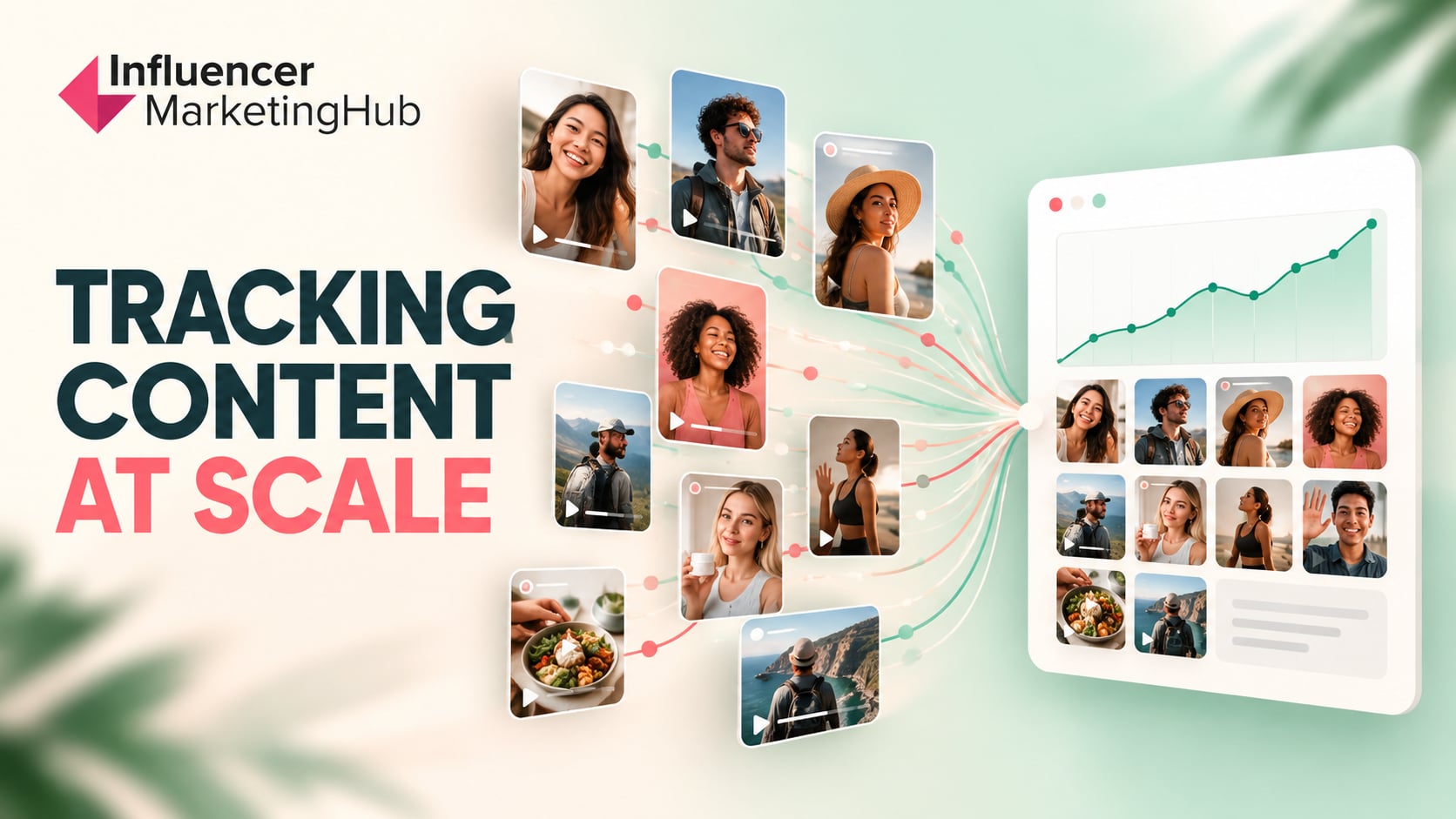
A new, more advanced class of AI agents is finally breaking this input dependency. These systems do not rely on metadata or tags; instead, they analyze the raw content itself. By deploying computer vision to "watch" the video and audio processing to "listen" to the speech, these agents can identify a brand regardless of whether it was tagged, mentioned, or linked.
Implications of Content-Level Analysis
- Visual Detection: If a creator posts a video wearing a shirt with a recognizable logo, the AI identifies the visual signature. Even without a caption, the brand is recorded.
- Audio Detection: If a creator praises a product by name in a voiceover, the AI captures the spoken mention, identifying the sentiment and context that text-based crawlers would miss.
- Historical Scanning: Unlike traditional tools that start tracking from the day an input is provided, advanced AI can scan back through years of a creator’s archive, identifying every past product cameo or mention. This allows for a longitudinal view of brand performance that compounds over time.
From Detection to Deep Understanding
Finding every post is merely the first half of the equation. The second, more valuable half is understanding the response.
When managing a thousand posts, human teams cannot possibly sample the comment sections of every video. However, AI agents can categorize every single comment across every relevant post. They move beyond the crude "positive/neutral/negative" sentiment split to surface the specific themes driving engagement: What are people questioning? What are they praising? What is confusing them?
By pulling audience demographics, market mix, and performance metrics into a single, continuously updated dashboard, brands can move from anecdotal assumptions—"people seem to like it"—to precise, evidence-based insights. This allows for real-time course correction. If a campaign is underperforming, the data surfaces the issue in hours, not weeks. This turns reporting from a "rear-view mirror"—a post-mortem document—into a "live instrument" used to steer the campaign while it is still active.
Strategic Checklist: Assessing Modern Monitoring
As brands look to move beyond legacy tracking, they must hold vendors to a higher standard. When evaluating a potential monitoring solution, leadership teams should pose five critical questions:
- Does it detect brand appearances via visual/audio analysis, or only through text/metadata?
- Can it find posts using keyword searches without requiring a pre-supplied handle or tag?
- Does it possess the capability to scan historical content, or is it limited to future-dated tracking?
- Does it offer thematic sentiment analysis, or does it rely on outdated, crude sentiment scores?
- Is the data refreshed continuously, enabling live action, or is it batch-processed for retrospective reporting?
Conclusion: The New Cost of Doing Business
The trend toward high-volume, organic-heavy creator programs is not a passing phase; it is the new reality of digital marketing. Authenticity is the primary currency of the modern social web, and the most authentic content is often the least scripted and least labeled.
Brands that insist on clinging to old-world tracking methods will continue to operate in the dark, unable to see the vast majority of their own influence. Conversely, those that adopt agent-based AI monitoring gain a massive competitive advantage: the ability to see their entire brand footprint in real-time. In an ecosystem where you cannot optimize what you cannot measure, the transition to content-level, input-agnostic tracking is no longer just an upgrade—it is the baseline cost of relevance.
 Iffa Jayyana
  Reynand Wu
  Asro
Asro 