 By rifanmuazin
By the Editorial Team
Published: Special Marketing Dossier
Every founder, entrepreneur, and digital marketer knows the exact sinking feeling. You spend hours—sometimes days—crafting the ultimate email campaign. The subject line feels razor-sharp, the copy is polished to a high sheen, and the creative assets are pristine. You hit "send" with absolute confidence, certain this is the piece that will drive serious traffic and turn your subscriber list into a revenue-generating engine.
Then, the email lands in inboxes. And… nothing happens.
There is no sudden spike in web traffic. No flurry of sales notifications. No meaningful engagement. Just another broadcast added to the endless graveyard of messages your audience scrolls past without a second glance.
If this scenario feels painfully familiar, you are in good company. Even the most seasoned marketers and high-growth startup founders struggle to build a bridge between high open rates and healthy click-through rates (CTRs). While it is easy to throw your hands up and blame amorphous boogeymen like "email fatigue," decreasing attention spans, or crowded digital spaces, the truth is far more structural. Low click-through rates are rarely a sign of a dying channel; rather, they are the symptom of a handful of avoidable, yet deeply entrenched, execution errors.
The good news? You do not need to overhaul your entire marketing funnel or hire an army of copywriters to turn things around. Small, highly strategic tweaks can dramatically alter your engagement metrics. This in-depth report breaks down the underlying psychology of why subscribers ignore your links, outlines a chronological blueprint to diagnose your campaigns, synthesizes critical industry data, and offers actionable strategies to transform passive readers into active customers.
Main Facts: Deconstructing the Engagement Crisis
To understand why modern email campaigns suffer from low conversion metrics, we must first look at the mechanics of the modern inbox. Email remains one of the highest-yielding channels for digital return on investment (ROI), often cited as returning up to $36 for every $1 spent. Yet, return is entirely dependent on action—specifically, the click.
The fundamental breakdown occurs because of a mismatch between what marketers want to say and what subscribers want to consume. The primary facts driving this disconnect include:
- The Attention Deficit: The average professional receives over 120 emails per day. Inboxes are aggressively triaged in seconds, often on mobile devices while users are in transit.
- The Open vs. Click Fallacy: A strong subject line can trick a user into opening an email, but it holds zero sway over whether they will click a link inside. Opens measure curiosity; clicks measure intent and trust.
- The Friction Barrier: Any element that requires cognitive effort—be it a massive wall of text, a confusing layout, or a vague call to action (CTA)—creates immediate friction. In a high-speed inbox environment, friction equals deletion.
- The Mass-Market Trap: Sending generic, one-size-fits-all blasts to an unsegmented list guarantees that the content will feel irrelevant to at least 80% of the recipients.
Chronology: The Anatomy of an Email’s Journey to the Trash Bin
To fix your click-through rates, it helps to walk backward through the chronological lifecycle of an email as it hits a subscriber’s device. Every step presents a potential point of failure.
Phase 1: The Inbox Triage (The Split-Second Decision)
The clock starts ticking the moment your email hits the server. Within 0 to 3 seconds, the user scans their notification shade or inbox view. They see your sender name and your subject line. If the subject line is predictable, overly corporate, or transparently transactional ("Newsletter #45"), the journey ends here. The user archives or deletes the email without ever registering your brand name.
Phase 2: The Initial Scan (The 5-Second Test)
If you manage to secure an open, a new timer begins. The subscriber opens the email and instantly switches to scanning mode. Their eyes track in an "F" or "Z" pattern, looking for visual anchors, bold text, or a striking image. If they encounter a dense wall of text that looks like a legal contract, their brain registers "time-consuming." Within five seconds, they hit the back button.
Phase 3: The Context Check (The "WIIFM" Question)
As they scan, the subscriber is subconsciously asking one question: What’s in it for me (WIIFM)? If the opening lines launch directly into a corporate pitch, an ego-driven product announcement, or an irrelevant update without acknowledging the reader’s current state of mind, empathy collapses. The reader feels "sold to" rather than "helped."
Phase 4: The Action Point (The CTA Dead-End)
Finally, the reader reaches the bottom of the email—assuming they made it that far. They encounter your call to action. If the button simply reads "Click Here" or "Learn More," it demands that the user do all the heavy lifting of figuring out the value proposition. Hesitating for even a single beat in that micro-moment is enough for the user to close the tab and move on with their day.
Supporting Data: What the Metrics Reveal
Industry benchmarks across major email service providers (ESPs) paint a sobering picture of modern engagement. While average open rates often hover around 20% to 25% depending on the industry, average click-through rates frequently languish between 1.5% and 3.5%.
Data from top marketing analytics firms highlights several key behavioral trends among digital consumers:
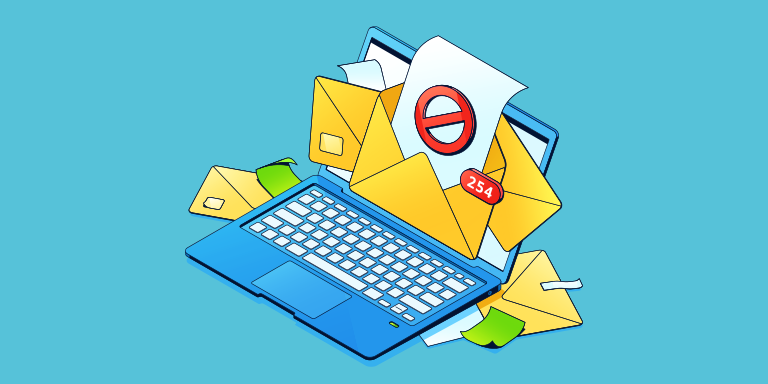
- Mobile Dominance: Over 55% to 60% of all emails are now opened on mobile devices. Data consistently shows that emails not optimized for mobile responsiveness suffer a drop in click-through rates of up to 40%.
- The Power of Segmentation: Campaigns sent to tightly segmented lists—divided by user behavior, purchase history, or onboarding stage—generate up to 760% more revenue and exponentially higher CTRs compared to broad, non-segmented blasts.
- The CTA Specificity Rule: Case studies on call-to-action buttons reveal that swapping generic copy ("Submit" or "Click Here") for benefit-driven, action-oriented text ("Get My Free Template" or "Start Saving Time") can lift click-through rates by 28% to 200%.
- The Length Paradox: Contrary to the belief that more information equals more value, data shows that concise emails—those that cut out 20% to 30% of extraneous fluff—consistently yield higher engagement because they reduce cognitive fatigue.
Official Responses and Expert Insights: The Shift Toward Behavioral Marketing
As digital saturation peaks, marketing leaders and platform executives are shifting away from traditional batch-and-blast methods toward hyper-personalized, behavioral frameworks.
Industry veterans emphasize that email marketing is no longer a broadcasting medium; it is a conversation. According to top customer engagement strategists, the root cause of poor performance is an over-reliance on company-centric narratives rather than customer-centric problem-solving.
"When a brand treats their email list as a megaphone for their own achievements, engagement dies," notes one leading digital growth strategist. "When they treat the inbox as a concierge service designed to solve a specific, urgent problem for the reader at that exact moment, clicks happen naturally."
Platform executives point out that the integration of artificial intelligence and advanced customer data platforms (CDPs) has made behavioral triggers table stakes. Brands that fail to utilize dynamic content—such as showing different product recommendations based on a user’s past browsing behavior—are actively penalizing their own conversion potential. The shift is clear: generic content is dead, and contextual relevance has taken the crown.
Implications: Why Low CTRs Threaten Your Business Ecosystem
Ignoring low click-through rates goes far beyond missing out on a few daily website visits. The implications of a decaying CTR ripple across your entire business ecosystem:
- Deliverability Degradation: Major mailbox providers like Gmail, Yahoo, and Outlook monitor user engagement heavily. If subscribers consistently open your emails and fail to click or interact, algorithms interpret your messages as low-value or spammy. Over time, your sender reputation plummets, landing more of your campaigns in the dreaded spam or promotions folder.
- Wasted Acquisition Spend: If you are spending capital on paid ads, content marketing, or social media to build your email list, a low CTR means you are pouring water into a leaky bucket. You are successfully capturing leads but failing to monetize or nurture them effectively.
- Customer Churn: Subscribers who receive irrelevant, boring, or overly salesy emails do not just ignore them—they unsubscribe. High churn rates force you to constantly spend more resources acquiring new leads just to replace the ones you are burning through poor communication.
- Stunted Revenue Growth: Email should be your most predictable, highest-margin channel. When clicks flatline, downstream metrics—such as cart checkouts, webinar sign-ups, and product adoption—follow suit, directly restricting top-line growth.
How to Fix It: A Step-by-Step Practical Blueprint
Revitalizing your email performance does not require a complete rewrite of your marketing philosophy. By implementing a systematic, step-by-step optimization framework, you can turn your email channel into a high-converting machine.
1. Re-Engineer Your Subject Lines
Your subject line has one job: to earn the open by sparking curiosity or promising undeniable value. Eliminate corporate clichés and generic statements.
- Focus on the reader: Shift the phrasing from what you are sending to what they are getting.
- Use curiosity gaps: Frame the subject line to pose a question or highlight an overlooked mistake (e.g., "The one setting most founders miss").
2. Implement Deep Segmentation
Stop treating your email list as a monolith. Begin by carving out simple, high-impact segments based on real behavior:
- New Subscribers vs. Power Users: Do not send the same onboarding tips to someone who has been on your list for two years.
- Purchase History: Tailor recommendations based on what products or services they have already interacted with.
- Engagement Levels: Create re-engagement flows for inactive subscribers and VIP perks for hyper-engaged readers.
3. Personalize Beyond the First Name
Using a merge tag to insert [First Name] is no longer true personalization—it is baseline hygiene. True personalization relies on context:
- Reference past interactions, recent purchases, or specific milestones in their customer journey.
- Ensure that the content inside the email matches the specific trigger or link that brought them into that automated sequence.
4. Apply Behavioral Psychology to Your CTAs
Your call to action should feel like a natural, frictionless continuation of the reader’s thought process, not a sudden roadblock.
- Make it explicit: Swap "Click Here" for outcome-based phrases like "Claim My 50% Discount" or "Show Me the Framework."
- Prioritize hierarchy: Use high-contrast buttons and ensure your primary CTA appears early enough for skimmers to find it without scrolling to the footer.
5. Optimize for Skimmability and Mobile
Assume your reader is looking at your email on a smartphone while walking down the street.
- Break massive paragraphs down into punchy, one-to-two-sentence lines.
- Utilize whitespace, bullet points, and bold text to guide the eye directly to the core takeaways.
- Run a mobile preview test on every single campaign before hitting send.
6. Test, Measure, and Iterate
Treat every email send as a live data experiment. A/B test your subject lines, test button placements against text links, and experiment with email lengths. Let the numbers dictate your strategy rather than guesswork.
Quick Wins You Can Implement Today
If you need an immediate lift in your engagement metrics without waiting weeks for a strategy overhaul, apply these quick fixes to your next scheduled broadcast:
- Upgrade Your CTA Copy: Audit your upcoming email and replace any vague action text with a clear, benefit-driven statement.
- Move Your CTA Up: Place a secondary or primary call to action higher in the email body so mobile skimmers catch it immediately.
- Trim the Fat: Cut roughly 20% of the word count from your draft. Tighter copy reduces friction and focuses attention squarely on the main message.
- Add a Curiosity Hook: Open your email with a provocative question or a counterintuitive statement that forces the reader to keep scrolling.
Conclusion
The emails that consistently pull the highest click-through rates are rarely the loudest, the flashiest, or the most aggressively designed. They are the ones engineered with a deep respect for how human beings actually think, read, and make decisions in a chaotic digital world.
By combining sharp psychological triggers, clean layouts, and relevant segmentation, you can transform your email marketing from a neglected chore into your company’s most reliable growth engine.
 Pevita Pearce
  Reynand Wu
  Basiran