
 By Laily UPN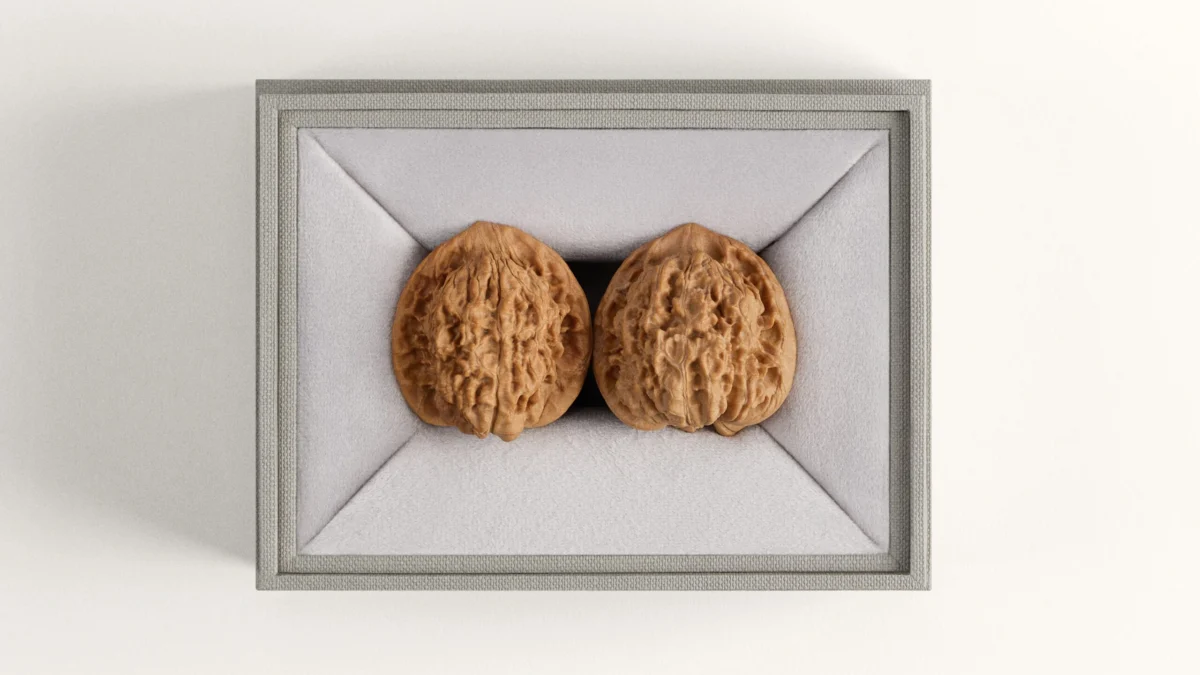
PARIS — In the high-stakes theater of global fashion, the runway show has long been the primary stage for a brand’s creative expression. Yet, the performance no longer begins when the house lights dim and the bass drops. Today, the spectacle commences weeks in advance, landing silently on the doorsteps of editors, influencers, and industry titans in the form of physical objects that defy the conventions of a traditional invitation.
Gone are the days when a heavy cardstock envelope was the gold standard. In the current landscape of Paris Fashion Week, the invitation has been reimagined as a piece of performance art—an inflatable lobster claw, a functional cassette player, or a literal loaf of bread. These objects serve as the opening act, a tangible, tactile "golden ticket" that serves as the first brushstroke in a designer’s seasonal narrative.
A Legacy of Object-Based Storytelling
While the current fervor for show ephemera feels like a modern invention driven by social media, the practice of using physical objects to pique interest has deep historical roots. Fashion history is peppered with legendary teasers, most notably John Galliano’s seminal work for his Fall 1998 collection. Galliano famously sent out leopard-print purses stuffed with lipstick, crumpled currency, and confetti—a chaotic, evocative assemblage that set the tone for the collection long before a model stepped onto the catwalk.
Today, however, the intent has shifted. In an era where a simple QR code is the functional standard for mass-market events, the elaborate physical invitation has become a critical component of a high-octane marketing strategy. It is no longer just a notification of time and place; it is a communication tool designed to be photographed, unboxed, and shared.

"When you create an invitation that’s so spectacular that everyone is photographing it and posting it on Instagram, that helps to drive engagement," says Sarah Andelman, founder of the consulting agency Just an Idea. "It gives brands an additional communication tool to play with. In a world of digital fatigue, these collectible invites make a profound impact precisely because they represent a departure from the sterile, paperless norm."
The Masters of the Genre
Certain creative directors have elevated the show invitation from a mere administrative necessity to a masterclass in brand identity. The late Virgil Abloh remains the touchstone for this movement. His invitations for Louis Vuitton—which included functional wall clocks—have transcended their original purpose, now commanding thousands of dollars on secondary markets like Sotheby’s.
Pharrell Williams, following in the footsteps of his predecessor at Louis Vuitton, furthered the trend with a miniature stained-glass window for his debut, signaling a shift toward artisanal, narrative-heavy gifting. Yet, perhaps no one has perfected the current iteration of the "art of the tease" quite like Jonathan Anderson at Dior.
Since assuming the mantle of creative director at the storied house, Anderson has transformed the invitation into a ritual. His list of contributions includes porcelain plates adorned with trompe-l’oeil eggs, black disco balls, fans, and sets of miniature park chairs—all housed in meticulously designed, beribboned gray cases.

The Philosophy of the "Visual Gift"
For Dior, the invitation is a bridge between the heritage of the house and the vision of the future. Olivier Bialobos, deputy managing director in charge of global communication and image at Dior, describes the objects as "a visual gift before the show."
"It is a new art of teasing, expressed not only in the virtual world, through images, but through the experience of discovering a new object to decipher," Bialobos explains. "Each invitation contributes to the storytelling around the show. Like scattered clues, signs to interpret, they spark the imagination in a poetic, sometimes humorous way. They carry multiple layers of meaning, making them priceless, which is why our guests enjoy keeping and collecting them."
These objects often pull from the house’s deep archives. The trompe-l’oeil egg plates, for instance, were inspired by a 1975 archive piece, referencing Christian Dior’s own fascination with 18th-century decor and fine tableware. By creating these items, the brand not only sets the stage for the runway but reinforces its status as a purveyor of lifestyle, not just clothing. The success of these invitations is such that they have spawned spin-off lines; the egg plates, originally designed as show invites, now retail in Dior stores for upwards of $700.
Chronology of an Invitation: From Utility to Artifact
The evolution of the invitation can be mapped against the changing technological landscape of the industry:

- Pre-2000s: The Era of Elegance. High-quality paper, calligraphy, and minimalist design were the marks of exclusivity.
- 2000–2015: The Era of the Object. Designers like Galliano and Moschino began incorporating "clues"—keys, books, and trinkets—to hint at the collection’s theme.
- 2020–2021: The Pandemic Pivot. With physical shows shuttered, "shows-in-a-box" became the standard. Brands like Loewe, Gucci, and Prada sent luxury care packages, food, and tactile design elements to recreate the show experience in the homes of editors.
- 2022–Present: The Social Media Unboxing Era. The invitation is now optimized for the "unboxing" video. The design is as much for the camera lens as it is for the recipient, fueling a sense of mystery and desire that carries over into the digital sphere.
The "Not Invited" Phenomenon and Secondary Markets
Not all invitations are destined for the shelves of luxury collectors. French photographer Meyabe, who has spent the last decade documenting the discarded debris of Paris Fashion Week, recently published Not Invited, a book chronicling the forgotten notes and cards left behind by showgoers.
The irony of the book is palpable: while the industry obsesses over the limited-edition, bespoke objects sent to the inner circle, the humble, discarded paper invitation offers a more candid glimpse into the reality of the fashion cycle. Printed by Imprimerie du Marais—the gold standard for high-end fashion printing—the book serves as a meta-commentary on the fleeting nature of luxury.
The Museum Conundrum
As these invitations grow in size, complexity, and cultural significance, they are presenting a new set of challenges for cultural institutions. Iain R. Webb, a writer, curator, and professor at the Kingston School of Art, has curated exhibitions such as The Fashion Show: Everything but the Clothes, which examine the intersection of fashion and ephemera.
"From a museum point of view, these will definitely be included in the future because they capture a moment in time," Webb notes. "However, the sheer volume and materiality of these objects are changing how we archive fashion. They are no longer flat paper documents; they are three-dimensional, multi-material artifacts."

Emilie Hammen, director of the Palais Galliera, echoes this sentiment. "Traditionally, show invitations were considered supplementary documentation. Now, we are having to rethink our classification. We are running out of library shelf space; we have to treat them like shoes or hats. Their aging must be monitored, and their storage is a growing concern."
Implications for the Future of Fashion
The rise of the "hyper-invitation" suggests a fundamental shift in the industry’s priorities. The invitation has become a totem of status and a prerequisite for digital relevance. As the physical experience of a fashion show becomes increasingly rare compared to its digital reach, the invitation serves as the final, tangible point of contact between the house and the guest.
Yet, this culture of showmanship and "one-upmanship" raises questions about sustainability and excess. When brands produce hundreds of elaborate, non-recyclable objects to generate a few minutes of social media traction, the environmental cost becomes a part of the conversation.
Despite this, the appetite for the "tease" shows no sign of waning. For designers like Jonathan Anderson, the invitation is a necessary vessel for narrative. Whether it is a pair of Wenwan walnuts intended to be rolled in the hand—a nod to the brand’s upcoming expansion into Asia—or a porcelain plate, the invitation remains a powerful tool to assert a brand’s creative vision.

In the end, as Iain R. Webb aptly puts it, "It does seem that the experience around the clothes has become as important as the clothes themselves." As we look toward future seasons, the invitation will likely continue to evolve, pushing the boundaries of art, technology, and marketing, ensuring that before a single garment is seen, the house has already made its mark.
 Ali Ikhwan
  Sagoh
Sagoh  Nana
Nana 