
 By Asro
WASHINGTON — A comprehensive new study released by the Pew Research Center reveals that members of the Church of Jesus Christ of Latter-day Saints—commonly referred to as Mormons—stand out among the most actively religious populations in the United States. Their rates of spiritual practice and institutional engagement frequently rival, and sometimes exceed, those of evangelical Protestants and members of historically Black Protestant churches.
The findings are part of a broader, multi-faceted project titled "Tradition and Change Among Latter-day Saints in the U.S." The research examines the shifting demographic makeup, religious practices, spiritual self-assessments, and political and social perspectives of the faith’s U.S. adherents.
The data highlights that while Latter-day Saints maintain a uniquely robust level of overall religious commitment, this dedication is not distributed uniformly. Significant variations emerge depending on geographic concentration—particularly within the American Mountain West—and levels of formal education.
Main Facts and Core Findings
The Pew Research Center’s latest data underscores a profound devotion to daily spiritual rituals and communal worship among Latter-day Saints.
- High Daily Devotion: Approximately 73% of Latter-day Saint adults report engaging in daily prayer. This places them on par with evangelical Protestants and members of historically Black Protestant traditions (both at 72%), and far ahead of other religious cohorts such as Roman Catholics (51%) or Buddhists (22%).
- Weekly Attendance: Nearly seven in ten Latter-day Saints (69%) attend religious services in person at least once a week. By comparison, weekly attendance stands at 50% for evangelical Protestants, 33% for historically Black Protestants, 29% for Catholics, and 23% for mainline Protestants.
- Growing Religiosity: When asked to reflect on how their spiritual lives have changed over time, nearly half of Latter-day Saints (48%) say they have grown more religious over the course of their lives, compared to just 12% who say they have grown less religious. This trajectory sharply contrasts with the broader American public, where equal shares report becoming more religious (28%) and less religious (29%). Furthermore, 58% of Latter-day Saints report becoming more spiritual over their lifetimes, while only 8% report a decline.
- Geographic and Educational Divides: Adherents living in the eight-state Mountain region (including Utah) display even higher levels of religious engagement than their peers elsewhere in the nation. Additionally, unlike broader national trends where higher education often correlates with lower religious observance, Latter-day Saints with a bachelor’s degree or higher demonstrate greater religious and spiritual engagement than those with less formal education.
Chronology and Research Context
The foundation of the current study rests on a rich lineage of demographic and sociological research tracking American religious life.
- January 2012: The Pew Research Center published "Mormons in America," a landmark major survey that provided baseline comprehensive data on the beliefs, practices, political views, and cultural experiences of Latter-day Saints in the United States.
- 2018: The leadership of the Church of Jesus Christ of Latter-day Saints officially initiated a concerted effort to discourage the use of the term "Mormon" when referring to the church, its institutions, or its members, emphasizing the proper name of the faith.
- July 17, 2023 – March 4, 2024: The Pew Research Center conducted its broad Religious Landscape Study (RLS). This massive national survey sampled 36,908 randomly selected U.S. adults. The subset for the Latter-day Saint analysis included detailed interviews with 565 individuals who currently identify with the faith (comprising 414 lifelong members and 151 converts), alongside 316 former members.
- February 26, 2025: Pew released preliminary findings from the RLS indicating that the broader decline of Christianity in the United States had slowed and potentially leveled off.
- September 22, 2026: Pew officially published the comprehensive project "Tradition and Change Among Latter-day Saints in the U.S.," authored by researchers Jonathan and Rebecca Leppert, detailing the nuanced metrics of regional concentration, educational divides, and cultural views.
Supporting Data and Demographic Analysis
The quantitative data collected during the Religious Landscape Study illustrates the distinctive nature of Latter-day Saint culture in America.
Regional Nuances: The Mountain Region Hub
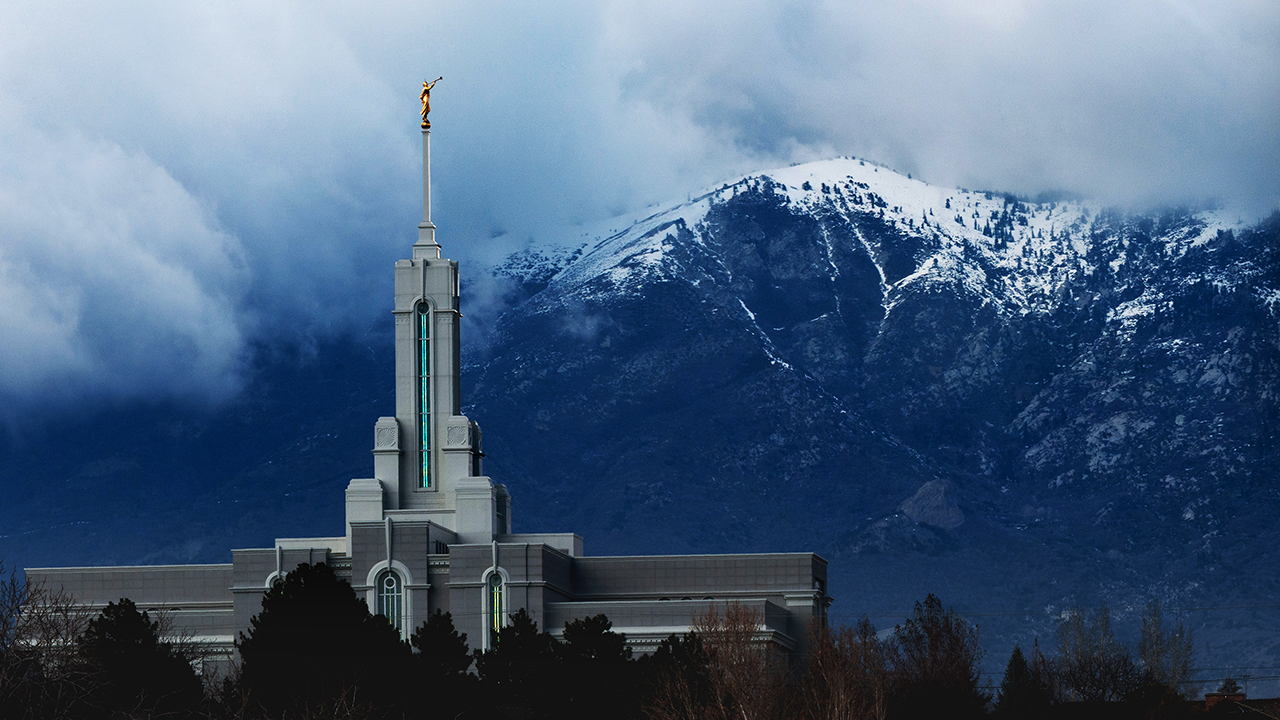
About half of all U.S. Latter-day Saints reside in the Mountain region, spanning from Montana down to New Mexico. While the faith accounts for roughly 2% of the total U.S. adult population, its local footprint is drastically higher in this region—reaching roughly 50% of the adult population in Utah alone.
Latter-day Saints living within this regional hub outpace their co-religionists in the rest of the country across several metrics:
- The Transcendent View: Virtually all Latter-day Saints in the Mountain region (98%) believe there is something spiritual beyond the natural world, even if unseen, compared to 88% of those living in other parts of the U.S.
- Daily Prayer: 79% of Mountain region adherents pray daily, compared to 66% elsewhere.
- Value of Religion: 78% in the Mountain region state that religion is very important in their lives, compared to 66% in other regions.
- Social Impact: 79% of Mountain region members believe religion does more good than harm, compared to 64% of members living outside the region.
The Educational Anomaly
In the broader American population, higher education levels are frequently correlated with lower rates of religious participation. However, among Latter-day Saints, the exact opposite pattern appears—echoing findings from Pew’s 2011 survey.
Latter-day Saints holding a bachelor’s degree or higher display significantly higher rates of religious observance than those with less formal education:
- Weekly Attendance: An impressive 86% of college-educated Latter-day Saints attend services weekly, compared to 59% of those with less education—a striking 27 percentage point gap. (By contrast, the gap among all Christians based on education is a mere 7 points).
- Importance of Religion: 85% of college-educated members say religion is very important in their lives, compared to 65% of those with less education.
- Daily Prayer: 85% of college-educated members pray daily, compared to 66% of those with less education.
- Societal Value: 82% of college-educated Latter-day Saints believe religion does more good than harm, compared to 67% of those without a college degree.
Official Responses and Terminological Evolution
The study also addressed the evolving terminology surrounding the church. Historically, the terms "Mormon" and "LDS" were widely embraced by both outside observers and the church itself—evidenced by prominent institutional branding such as the Mormon Tabernacle Choir and the early 2010s "I’m a Mormon" public relations campaign.
However, in late 2018, church leadership issued formal guidance emphasizing the full name of the church—The Church of Jesus Christ of Latter-day Saints—and discouraging the use of "Mormon" as a shorthand descriptor.
In its methodological notes, the Pew Research Center clarified its approach: "In this analysis, we primarily use the church’s full name and refer to members of the faith as ‘Latter-day Saints.’ We include limited references to the term ‘Mormon’ in parentheses for readers who are unfamiliar with the full name of the church."
Church representatives and religious scholars have noted that this ongoing linguistic shift reflects an internal desire among leadership to ground the identity of members strictly in the divinity and central role of Jesus Christ, rather than cultural colloquialisms.
Implications for Sociologists and Religious Leaders
The findings carry significant implications for sociologists studying American religion, political scientists, and church leaders alike.
- Resilience Against Secularization: While mainline Protestantism, Catholicism, and the religiously unaffiliated have navigated significant cultural shifts over the last few decades, the data indicates that Latter-day Saints maintain exceptionally tight-knit communal structures. The fact that nearly half of adherents report growing more religious over time suggests that the internal socialization mechanisms of the church remain remarkably potent.
- The Intersection of Faith and Intellect: The positive correlation between higher education and religious observance among Latter-day Saints challenges conventional secularization theories. For sociologists, understanding why advanced degrees reinforce rather than diminish devotion within this specific faith tradition offers a compelling area for future qualitative research.
- Geographic Centrality: The heavy concentration of highly active members in the Mountain West cements the region’s status not only as a cultural heartland for the church, but as a bastion of traditional religious vitality that largely resists the broader secular currents affecting coastal and urban population centers.
As researchers continue to unpack the complete datasets from the 2023–24 Religious Landscape Study, the insights into the demographic, political, and spiritual makeup of Latter-day Saints will continue to provide a critical benchmark for tracking the evolving religious map of the United States.
 Muslim
  Nana Muazin
  Siti Muinah