
 By Muslim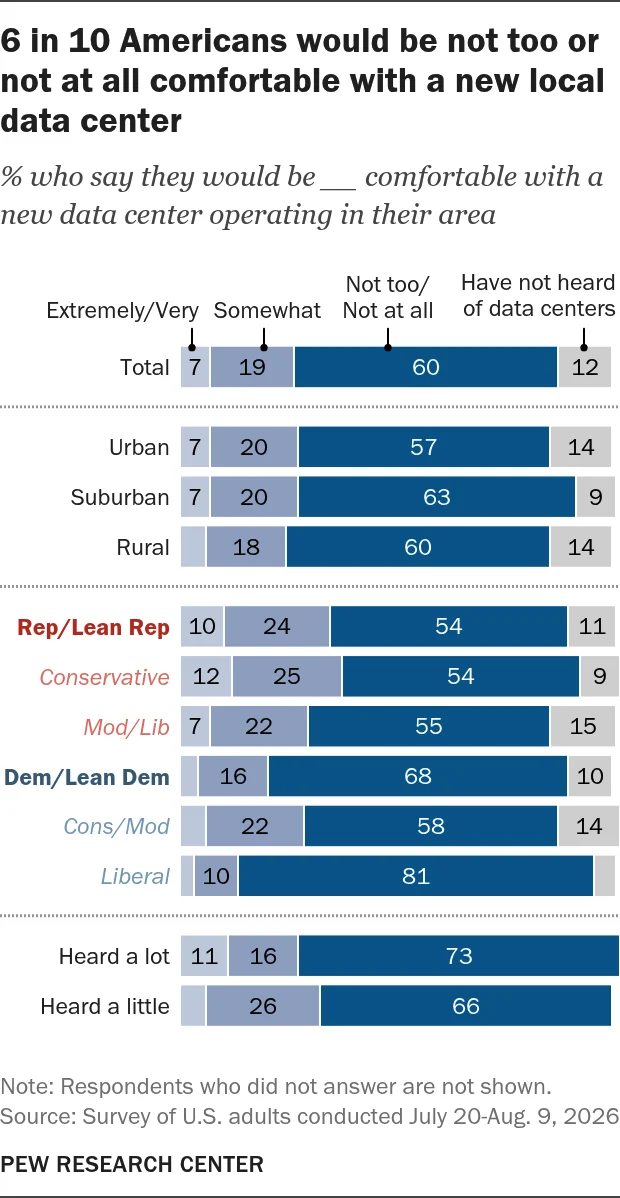
WASHINGTON — Public sentiment toward the sprawling data center infrastructure that powers modern artificial intelligence, cloud computing, and digital connectivity has turned sharply negative across the United States. According to a comprehensive new survey released by the Pew Research Center, Americans have grown significantly more critical of the environmental and economic effects associated with these facilities since the beginning of the year.
The findings arrive amid a wave of grassroots protests, local zoning board battles, and legislative maneuvering. As data processing facilities multiply to meet the insatiable demands of the tech sector—particularly generative AI workloads—communities nationwide are increasingly pushing back against the physical footprint of the digital age.
The Pew Research Center survey, conducted from July 20 to August 9 among 10,548 U.S. adults, reveals a widespread public unease. A decisive majority of Americans—60%—state they would be "not too" or "not at all comfortable" if a new data center began operating in their local area. By contrast, only 19% report being "somewhat comfortable," and a mere 7% say they would be "extremely" or "very comfortable" hosting such a facility in their backyard.

This deep-seated skepticism spans demographic divides, crossing party lines, urban-rural boundaries, and educational strata, signaling a major reputational and operational hurdle for technology firms and policymakers alike.
Main Facts: The Scope of Growing Public Skepticism
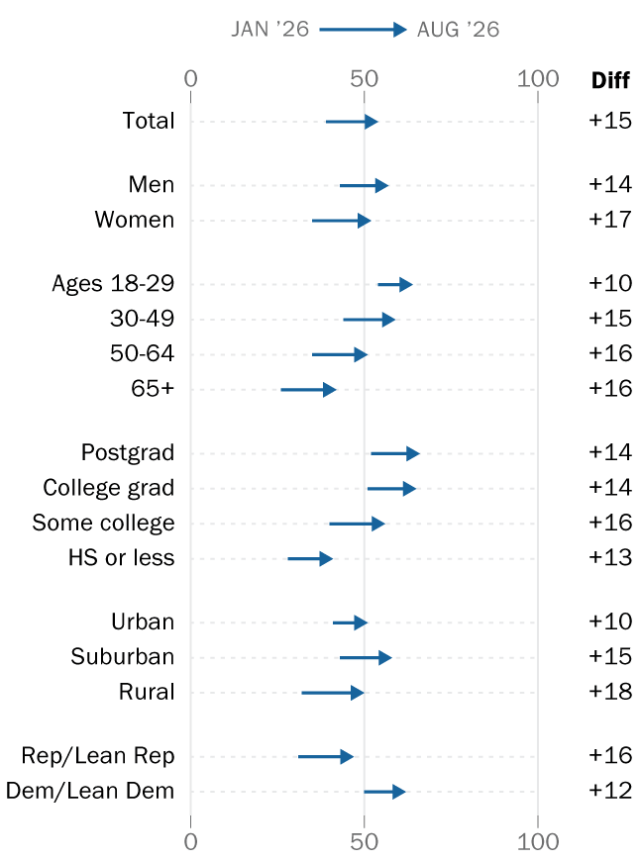
The data highlights a marked shift in public perception between January and August 2026. Across nearly every measured metric, negative views of data centers have surged by double-digit percentages:
- Environmental Concerns: More than half of Americans (54%) now view data centers as "mostly bad" for the environment, a steep increase from 39% in January.
- Rising Home Energy Costs: Half of all U.S. adults (50%) believe data centers are mostly bad for home energy costs, up from 38% at the start of the year. This reflects mounting anxieties over the massive electricity demands of server farms draining regional power grids.
- Quality of Life: Nearly half of the population (49%) views the facilities as mostly bad for the quality of life of people living nearby, a dramatic jump from 30% in January.
- Economic Impact: Views on local jobs and tax revenue remain more divided, though skepticism is rising here as well. Roughly 24% view data centers as mostly bad for local jobs (up from 15%), while 22% view them as mostly good. Similarly, 21% see them as mostly bad for local tax revenue (up from 12%), compared to 22% who view them as mostly good.
- Awareness is Growing: Familiarity with the subject is on the rise. About 9 in 10 Americans (88%) have now heard or read at least a little about data centers. Those saying they have heard a lot jumped from 25% in January to 35% in August.
Chronology of the Shift: From Tech Boom to Local Backlash
The rapid souring of public opinion does not happen in a vacuum; it is the culmination of a year marked by escalating friction between local communities and the tech industry.

- Early 2026 (January): Pew’s initial baseline survey revealed moderate public caution. While tech companies touted data centers as engines of the AI revolution, roughly 39% of Americans already had environmental concerns, and 25% reported knowing nothing at all about the facilities.
- Spring 2026 (March–April): Reports began highlighting that the vast majority of new, massive data centers were slated for rural and semi-rural areas due to land availability and cheap transmission access. Local resistance began coalescing around water usage for server cooling and strain on local electrical grids.
- Mid-Summer 2026 (July–August): Opposition crystallized into formal policy battles. In August, Texas Governor Greg Abbott made headlines by issuing a statewide moratorium on new data center applications, citing grid reliability concerns. Concurrently, grassroots protests erupted across multiple states, drawing national media coverage and intensifying public debate just ahead of the midterm election cycle.
- Late Summer 2026 (July 20 – August 9): Pew conducted its follow-up national survey during the height of these summer clashes, capturing a population that had become significantly more informed—and significantly more alarmed—about the proliferation of digital infrastructure.
Supporting Data: Demographic and Partisan Breakdown
The erosion of support is not confined to a single political party or geographic pocket; it is systemic.
Environmental Perceptions Across Groups
When asked if data centers are mostly bad for the environment, nearly every demographic group recorded double-digit increases in negative sentiment between January and August:
- Total U.S. Adults: Rose from 39% to 54% (+15)
- Men: Rose from 43% to 57% (+14)
- Women: Rose from 35% to 52% (+17)
- Ages 18–29: Rose from 54% to 64% (+10)
- Ages 65+: Rose from 26% to 42% (+16)
- Rural Residents: Rose sharply from 32% to 50% (+18), a critical shift given that most new builds target rural expanses.
- Suburban Residents: Rose from 43% to 58% (+15)
- Urban Residents: Rose from 41% to 51% (+10)
- Republicans / Lean Rep: Rose from 31% to 47% (+16)
- Democrats / Lean Dem: Rose from 50% to 62% (+12)
The Local Proximity Factor
When questioned about hosting a data center in their immediate area, discomfort is the dominant baseline. Majorities across all community types reject the idea:
- Urban areas: 57% uncomfortable (7% comfortable, 14% unaware)
- Suburban areas: 63% uncomfortable (7% comfortable, 9% unaware)
- Rural areas: 60% uncomfortable (6% comfortable, 14% unaware)
Partisan splits persist regarding local presence as well, though neither side shows enthusiasm. While 54% of Republicans and Republican-leaners express discomfort with a local data center, that figure climbs to 68% among Democrats and Democratic-leaners. Among self-identified liberal Democrats, opposition reaches a staggering 81%.
Official Responses and Political Divergence
The growing public backlash has forced elected officials at all levels of government to recalibrate their messaging and policy stances, creating a complex political landscape ahead of upcoming elections.
- The Federal Level: President Donald Trump has positioned himself as a vocal supporter of data center expansion, championing the infrastructure as vital to maintaining American dominance in artificial intelligence and technological competition.
- State-Level Pushback: Despite federal enthusiasm for tech expansion, state executives are increasingly feeling the heat from constituents. Texas Governor Greg Abbott’s August moratorium on new data center approvals marked a dramatic policy pivot for a traditionally business-friendly state, driven by fears that server energy consumption could destabilize the power grid.
- Bipartisan Caution: Democratic governors have also stepped up oversight. Pennsylvania Governor Josh Shapiro issued executive actions targeting data center operations, while Illinois Governor JB Pritzker moved to suspend certain tax breaks for data centers, urging a broader public discussion on resource allocation and utility rates. These actions reflect a growing bipartisan realization that unbridled tech expansion carries heavy political costs.
Implications for the Future of Technology and Infrastructure
The shift in public sentiment poses profound strategic challenges for the technology sector, utility providers, and municipal planners.

- Grid Capacity and Energy Costs: With half of Americans linking data centers to rising home energy costs, tech companies are under intense pressure to secure independent clean energy sources—such as dedicated nuclear or renewable microgrids—rather than drawing exclusively from public municipal grids.
- Permitting and Siting Bottlenecks: With 60% of citizens uncomfortable with local facilities and rural opposition surging to 50% on environmental grounds, acquiring land and securing zoning approval will likely become costlier, lengthier, and more litigious.
- The Political Tightrope: As data centers become a flashpoint in local and national politics, politicians must balance the economic promises of high-tech investment against the immediate, tangible anxieties of voters worried about their environment, quality of life, and monthly utility bills.
Ultimately, the Pew Research Center data suggests that the honeymoon phase of the AI and cloud infrastructure boom is over. As data centers scale up to meet the demands of tomorrow’s technology, winning public trust will require greater transparency, robust environmental safeguards, and proactive engagement with the communities asked to host the digital backbone of the modern economy.
 Nana Muazin
  Siti Muinah
  Asro
Asro 