
 By Layla Zulfa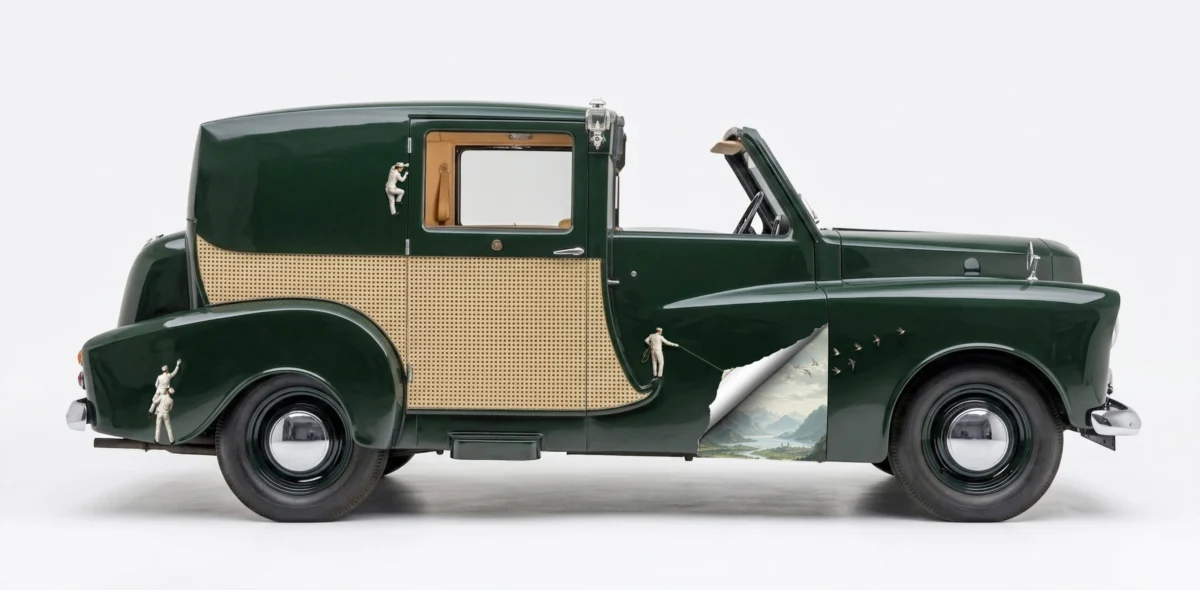
As the art world descends upon the British capital for the annual Frieze London pilgrimage, The Peninsula London has unveiled a creative intervention that blurs the lines between automotive heritage and contemporary fine art. In a move that elevates the hotel’s signature fleet from mere luxury transport to a dynamic, moving installation, the property has announced a six-vehicle collaboration with the acclaimed Brooklyn-based artist Eden Kozokaro, known globally by his professional moniker, Kozo.
The project, titled "A World Within," reimagines the hotel’s iconic green livery as a canvas for micro-realism, turning the streets of Belgravia into an open-air gallery. This ambitious undertaking arrives just in time for the city’s peak cultural season, signaling a sophisticated alignment between high-end hospitality and the global art market.
The Art of the Surface: Conceptualizing the Intervention
At the heart of this collaboration is Kozo’s signature style—a meticulous, hyper-detailed approach to visual storytelling that has earned him a cult following in the spheres of fine art and tattooing. For this specific commission, Kozokaro sought to challenge the viewer’s perception of the vehicles themselves.
The designs employ a clever "trompe l’oeil" effect. Each of the six vehicles—which include two Rolls-Royce Phantom IIs, a Bentley Bentayga, an electrified Austin Taxi, a BMW i7, and a LEVC—appears to have its signature Peninsula Green surface "torn away." Beneath these exterior layers, Kozokaro has illustrated lush, idyllic British pastoral scenes. These revealed vistas feature rolling parklands, meandering rivers, dense woodlands, and stately homes, all rendered with a level of micro-realist precision that invites passersby to lean in closer to inspect the details.
"The collection brings past and present into conversation, creating unexpected juxtapositions that allow history and myth to feel alive again," Kozokaro explained during the project’s unveiling. "I want the viewer to feel as though they are peeling back the veil of the modern city to reveal the timeless nature of the English countryside underneath. By transforming these cars into moving art, I am inviting the public to become part of the story, journeying within the ‘Art Fleet’ as it traverses London."
A Three-Month Odyssey: The Chronology of Creation
The transition of a standard luxury vehicle into a rolling masterpiece is far from a simple aesthetic choice; it is an exercise in engineering and precision. The project, facilitated by the art connector and publisher Larry Warsh, took three months of intensive development.
Phase 1: Digital Mapping (Months 1–2)
The process began with meticulous digital sketches layered over high-resolution photographs of each individual vehicle. Because each model—from the stately lines of the Rolls-Royce Phantom to the utilitarian silhouette of the LEVC—possesses unique geometry, the artwork had to be custom-fitted. Kozokaro spent weeks studying the contours of the doors, hoods, and side reflectors, ensuring the "torn paper" effect aligned perfectly with the physical architecture of the cars.
Phase 2: Technical Detailing (Month 3)
Once the designs were finalized, the execution phase moved to the detailing experts at Topaz. The team had to adapt the intricate illustrations into a specialized, high-grade vinyl wrap. This was not merely a matter of applying stickers; the material had to be heat-molded to the curves of the vehicles to ensure a seamless finish that would withstand the rigors of London’s unpredictable autumn weather.
Phase 3: The Unveiling
The culmination of this three-month period coincided with the lead-up to Frieze London. By mid-October, the six vehicles were officially introduced to the fleet, ready to ferry guests between the hotel and the fair’s various satellite events.
Supporting Data: An Automotive Heritage Reimagined
To understand the significance of this collaboration, one must look at The Peninsula’s long-standing obsession with automotive excellence. The brand’s relationship with the motorcar is not a recent marketing trend but a core pillar of its identity.

- The Rolls-Royce Legacy: The Peninsula Hotels group holds the distinction of having commissioned what was, at the time, the largest single order of Rolls-Royce Phantoms in history for their Hong Kong property. This commitment to the British marque has remained a cornerstone of their global operations.
- Fleet Composition: The "Art Fleet" represents a cross-section of modern transport. The inclusion of the electrified Austin Taxi and the LEVC reflects a nod to London’s iconic black cab history, while the BMW i7 underscores the group’s shift toward sustainable, high-end luxury.
- The Role of the Facilitator: Larry Warsh, founder of Cart Department, played a pivotal role in bridging the gap between the hotel’s luxury constraints and Kozokaro’s artistic vision. Warsh’s expertise in connecting blue-chip artists with luxury brands has been instrumental in ensuring the project retains its "art-world credibility" rather than appearing as a simple commercial wrap.
Official Responses: Bridging Hospitality and High Art
The collaboration has been met with enthusiasm from both the arts and hospitality sectors.
"The Peninsula London was a natural fit for this project," said Larry Warsh. "There are very few institutions that balance a deep reverence for history with such an aggressive pursuit of contemporary innovation. When you combine the world’s most recognized hotel car fleet with the distinct, narrative-driven work of an artist like Kozo, you aren’t just decorating a car—you are creating a traveling exhibition that brings art into the public sphere."
For The Peninsula, the project is an extension of their "Art in the Lobby" initiative, which brings world-class sculpture and painting into their properties. However, by moving this art onto the streets, the hotel is effectively decentralizing the gallery experience. Guests are no longer expected to stand still in a hushed room; they are invited to experience the art in motion, framed by the backdrop of London’s historic architecture.
Implications: The Future of Branded Artistic Interventions
The success of the "Art Fleet" suggests a growing trend in the luxury sector. As ultra-high-net-worth travelers look for more immersive, curated experiences, hotels are moving beyond traditional amenities toward "experiential curation."
1. The Rise of the "Living" Brand
By turning their fleet into a collaborative art project, The Peninsula has effectively turned a depreciating asset—a vehicle—into a piece of cultural capital. This move increases the brand’s relevance during high-traffic cultural events like Frieze, ensuring that the hotel is top-of-mind for collectors and artists alike.
2. Micro-Realism as the New Luxury
Kozokaro’s choice of medium—micro-realism—aligns with a broader shift in the art market toward intricate, labor-intensive craftsmanship. The "torn paper" aesthetic serves as a metaphor for the hotel itself: a place that houses layers of history while maintaining a modern, polished surface.
3. Public-Private Cultural Dialogue
Perhaps the most significant implication of this project is its accessibility. While the experience of staying at The Peninsula London remains exclusive, the "Art Fleet" is public-facing. By allowing these cars to drive through the streets of London, the hotel provides a gift to the city, fostering a dialogue between the private luxury sector and the public cultural life of the city.
Conclusion
As Frieze London continues to expand its reach, the convergence of art and commerce will only grow more pronounced. With "A World Within," The Peninsula London has set a high bar for what such collaborations can achieve. By allowing an artist like Kozo to recontextualize their most visible assets, the hotel has done more than just wrap a car; it has turned the act of transportation into a narrative journey.
Whether one is a guest of the hotel or simply a passerby on the streets of Mayfair, the sight of a Rolls-Royce Phantom II "peeling away" to reveal a serene English countryside is a potent reminder of the power of creativity to transform the mundane into the extraordinary. For the duration of October, London’s roads are not just conduits for traffic—they are the corridors of an evolving, rolling museum.
 Siti Muinah
  Muslim
  Nana Muazin