
 By Ammar Sabilarrohman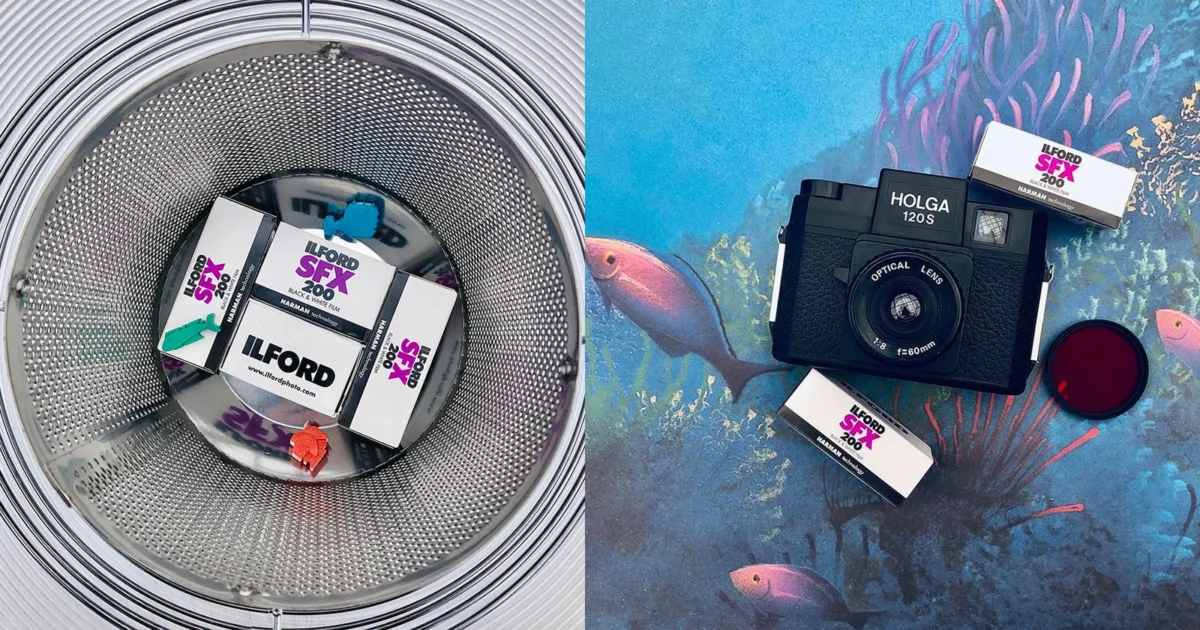
Main Facts
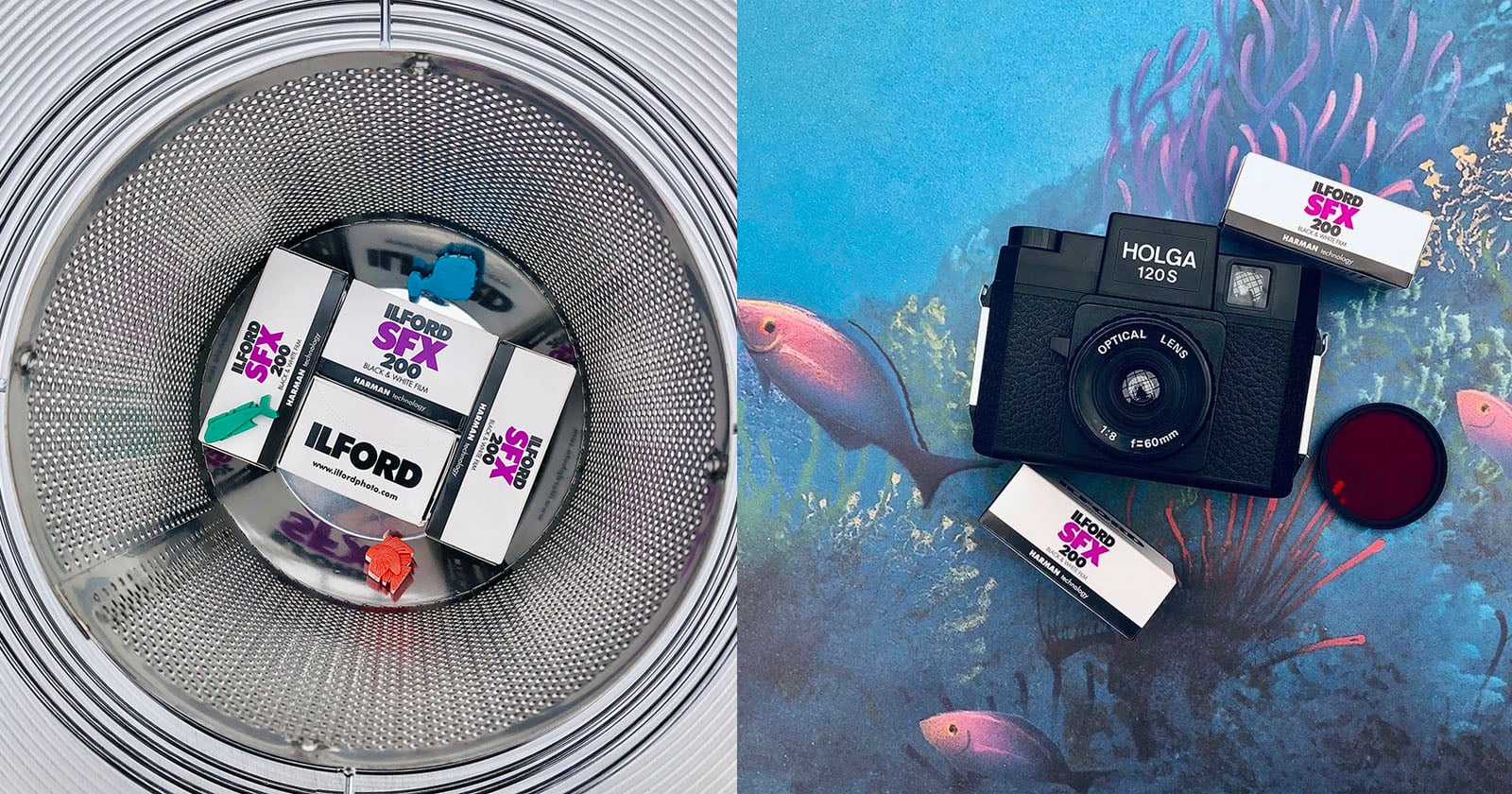
For decades, the analog photography community has celebrated the predictable, classic tones of traditional panchromatic black-and-white films. Yet, tucked away in specialized catalogs lies a more experimental medium that bends the rules of standard light capture: Ilford SFX 200. Rated at an ISO of 200, SFX is a superpanchromatic, near-infrared-sensitive black-and-white film. While it functions seamlessly as a standard medium-speed film under normal conditions, its true potential is unlocked when paired with heavy red or dedicated infrared filters.
The film transforms ordinary landscapes into dramatic, high-contrast vistas with pitch-black skies and glowing white foliage, while rendering portraits with an ethereal, luminous skin texture and deep, piercing eyes. Available in both 35mm and 120 formats—making it a versatile multi-format medium—Ilford SFX 200 bridges the gap between conventional street photography and the surreal, otherworldly aesthetics of classic infrared imaging. Despite its niche status, it remains a favorite for adventurous photographers looking to capture the invisible spectrum of light.
Chronology: From Discontinuation to Renaissance
The history of Ilford SFX is a testament to the resilience of specialized analog manufacturing. Developed and introduced during an era when traditional film makers were constantly innovating to capture specialized spectral responses, SFX carved out a unique space for itself as an accessible alternative to discontinued true-infrared emulsions like Kodak’s legendary HIE (High Speed Infrared).
However, the turn of the millennium brought severe financial turbulence to the analog industry. In the early 2000s, as digital photography began its aggressive ascent and parent companies restructured, Ilford faced immense corporate restructuring. During this financially fragile period, production of several niche products was halted, and Ilford SFX was temporarily discontinued, seemingly relegated to the history books of analog experimentation.
Fortunately, Ilford weathered the storm. When the company successfully emerged from its financial restructuring, it revived several beloved emulsions, bringing SFX back from the dead. This "zombie film" status has ironically lent it a cult following, making it a fitting staple for Halloween-season shooting and a symbol of the broader resurgence of specialty film stocks in the modern era.
Supporting Data and Technical Breakdown
Understanding how to shoot Ilford SFX 200 requires a grasp of photographic physics, filter factors, and spectral sensitivities. Technically categorized as a "near-infrared" film, SFX is sensitive to wavelengths running from the edge of the visible spectrum (around 700 to 750 nm) out into the near-infrared range (up to roughly 1050 nm).

The Filter Ecosystem
To harness the infrared characteristics of SFX, photographers rely on specific glass filtration to block out visible light and let the infrared exposure dominate:
- The Red 25 Filter: The most popular entry point for SFX shooters. It is widely available, relatively inexpensive, and requires an exposure compensation of only about 2.5 stops. Crucially, photographers can still see through a Red 25 to compose, focus, and meter TTL (Through The Lens). As a bonus, this filter enhances contrast and tonal separation on virtually any standard panchromatic black-and-white film.
- The Red 29 Filter: A slightly deeper red than the 25, the Red 29 demands roughly an extra half-stop of exposure compensation (3 stops total) and yields a marginally more dramatic infrared effect. While prized by purists, the visual difference is subtle enough that hunting one down is optional if a Red 25 is readily available.
- The R72 Filter: For true near-infrared aesthetics, the R72 cuts off almost all light below 700 nm, effectively eliminating visible exposure and forcing SFX to operate almost exclusively in the infrared spectrum.
Exposure and Focusing Challenges
Shooting through an R72 or deep red filter introduces unique technical hurdles. Because an R72 filter completely blinds standard in-camera light meters, TTL metering becomes unreliable. Photographers generally must meter un-filtered before attaching the glass, or use a handheld light meter and manually calculate the filter factor. Field testing often reveals that bracketing exposures at +6 to +8 stops yields the best results, with the +6 stop serving as the sweet spot for rich shadow detail and glowing highlights.

Furthermore, infrared light does not focus at the exact same plane as visible light. While shooting at narrow apertures (such as f/8 or f/11) masks this discrepancy through sheer depth of field, shooting wide open at f/2 or f/2.8 requires manual adjustment. Photographers must focus a fraction closer than indicated, a reality acknowledged by vintage lenses featuring dedicated red infrared focus alignment dots on their barrels.
Beyond its infrared capabilities, SFX boasts a distinct physical property: extreme grain. It is noticeably grainier than standard ISO 400 films, rendering images with a gritty, textured aesthetic that polarizes minimalists but delights texture enthusiasts. Coupled with its inherently high contrast—even without filters—SFX produces punchy, dramatic imagery straight out of the box.

Official Responses and Industry Perspective
Industry professionals and specialized laboratories have long championed SFX 200 as an indispensable creative tool. Experts at institutions like Blue Moon Camera and Machine in Portland, Oregon, note that the film occupies a rare sweet spot in contemporary analog workflows.
According to seasoned printers and technicians, working with SFX encourages photographers to slow down, observe how different materials reflect light differently, and rethink their approach to natural environments. Laboratories report a steady demand for the film, particularly during seasonal shifts when photographers seek high-contrast, moody aesthetics for outdoor and landscape projects. While major manufacturers have largely abandoned exotic emulsions, Ilford’s continued commitment to producing SFX in both 35mm and 120 formats stands as an official vote of confidence in the viability of specialty and experimental analog photography.

Implications for the Modern Analog Community
The enduring presence of Ilford SFX 200 carries significant implications for the contemporary film photography renaissance. As digital sensors become increasingly clinical and hyper-accurate, a counter-movement of photographers is actively seeking out mediums that introduce unpredictability, tactile grit, and altered realities.
SFX satisfies this desire by democratizing infrared photography. Historically, true infrared imaging required rare, expired, or hyper-sensitive emulsions that were notoriously difficult to load and store. By offering a stable, commercially available superpanchromatic film that responds predictably to affordable filters, Ilford provides a gateway for everyday shooters to explore scientific and artistic visualization techniques once reserved for advanced specialists.
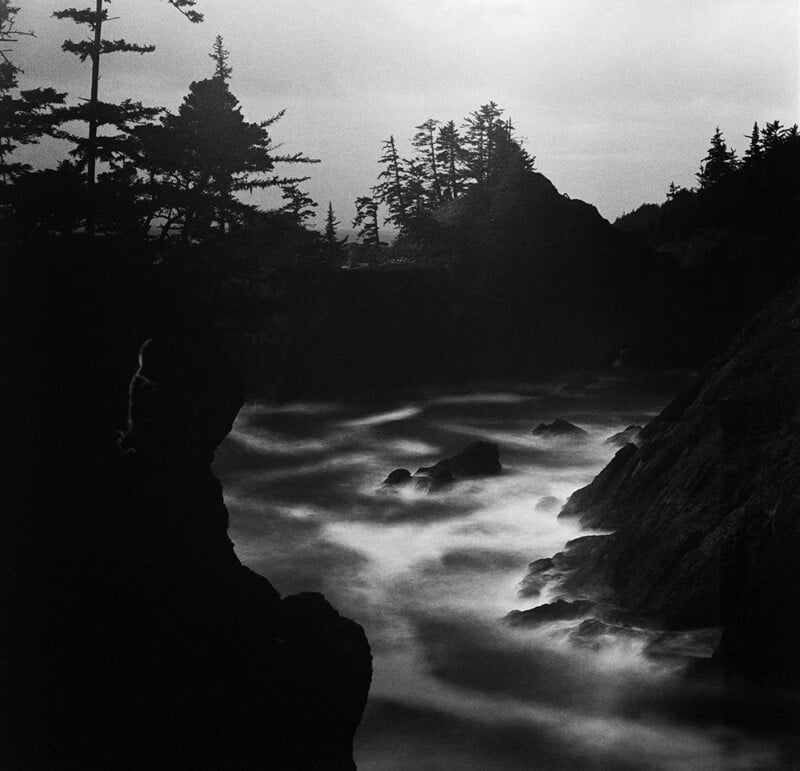
Ultimately, shooting with Ilford SFX 200 alters how one perceives the physical world. Foliage no longer looks merely green; it glows with an eerie, snow-like luminescence under a bruised, darkened sky. By rendering the invisible visible, SFX reminds the modern photography community why analog endures: not just to document reality, but to invent entirely new ways of seeing it.
 Basiran
  Dwi Wanna