
 By Ali Ikhwan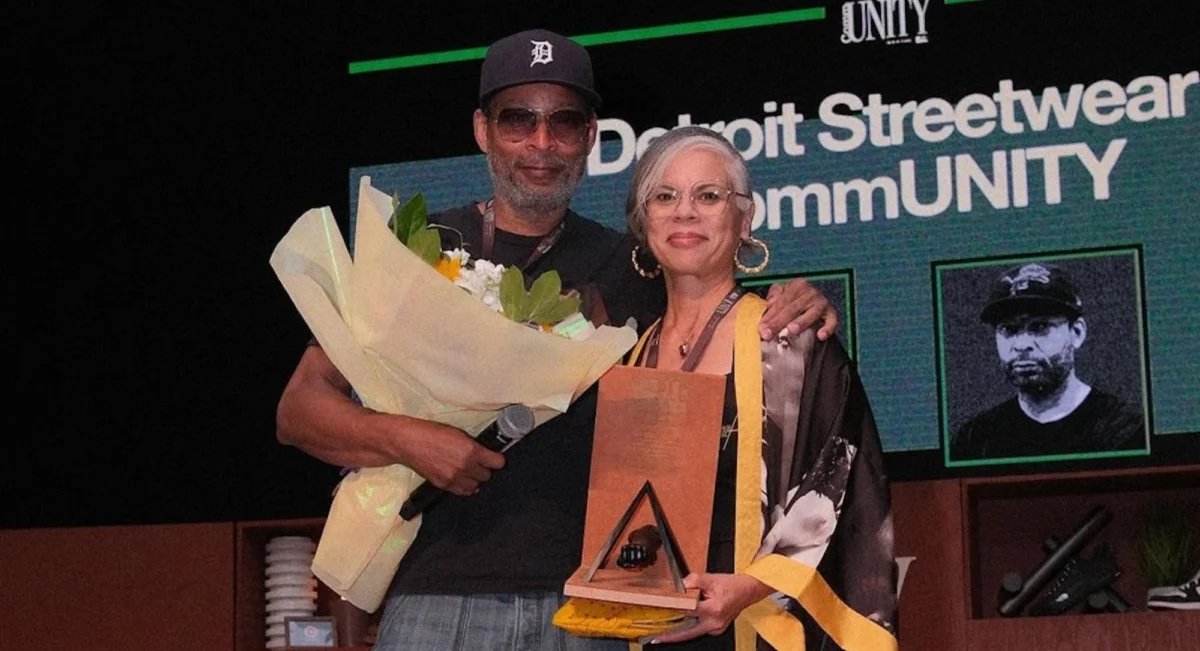
In the history of American fashion, few narratives are as synonymous with the rise of street culture as that of Maurice Malone. A visionary designer, entrepreneur, and cultural catalyst, Malone has spent four decades reshaping the intersection of hip-hop and high fashion. From a 19-year-old in Detroit struggling to source materials for a homemade hat to a CFDA-nominated titan of the industry, his journey is a testament to the power of self-taught ingenuity and the defiance of systemic barriers.
Recently, at the 2026 Black Footwear Forum in Detroit, Malone sat down with fellow industry pioneer April Walker—the mastermind behind Walker Wear—to reflect on a career that not only defined the aesthetic of the 1990s but paved the way for the high-end streetwear landscape we inhabit today.
The Genesis of an Icon: 1984 to 1990
The Maurice Malone story began not in a design studio, but in the practical necessity of a teenager. In 1984, while browsing through a music video, a 19-year-old Malone saw a hat that he felt compelled to own. When he couldn’t find it in stores, he decided to create it himself.
The challenge was immediate: the Detroit leather supplier he approached only sold wholesale, requiring a business license he did not possess. That singular hurdle forced him to formalize his operation, effectively launching his career. With no formal training, Malone turned to the local library in Oak Park, Michigan, to master sewing techniques, often commandeering his mother’s sewing machines to experiment with designs.

Because he lacked a traditional education in garment construction, Malone was forced to innovate out of necessity. "Because I wasn’t formally taught and I was learning on the fly, I didn’t know how to make a zipper fly," Malone admitted during the Black Footwear Forum. "So I made things like pull-up pants with an elastic waistband and denim with leather stripes. What I made looked different simply because I couldn’t make it the way it ‘should’ be made."
This lack of "proper" training became his signature. His iconic double-sided, reversible paisley-print overalls, for instance, were a byproduct of his inability to execute traditional zipper installations. These unconventional pieces became cultural artifacts, eventually earning the admiration of peers like April Walker, who remarked on stage, "Your overall jeans, I still would love a pair because they were everything."
A Dual Life: The Rhythm Kitchen and The Hip-Hop Shop
Malone’s business model was as radical as his designs. In the late 1980s, he operated a club called the U.N. in Detroit, which served as a studio by day and a nightlife venue by night. This fluidity allowed him to host fashion shows and sell his designs directly to his audience. However, as the local authorities frequently shuttered his venues, Malone sought a larger stage, leading him to New York City.
The exposure to New York’s burgeoning hip-hop scene in the early 1990s was transformative. Upon returning to Detroit in 1990, he aimed to inject that high-octane energy back into his hometown. Partnering with a friend, he launched "The Rhythm Kitchen" inside a local Chinese restaurant, Stanley’s. The events were wildly successful, providing him the capital to scale his production.

A pivotal moment occurred when a local retailer, Strictly Sportswear, provided the investment required for him to produce 1,000 pairs of jeans—a goal he reached before the production cycle even concluded. This success led to the opening of the legendary "Hip-Hop Shop," a space that served as a incubator for Detroit’s hip-hop royalty, including a young Eminem.
The shop functioned as a cultural hub, hosting battle raps every Saturday afternoon. This atmosphere was later immortalized in the film 8 Mile. Malone, who served as a consultant on the movie, shared how the filmmakers used his personal, historical footage of these battles to recreate the authentic tension of the era’s rap scene.
The Glass Ceiling: Navigating Retail and Institutional Bias
As Malone’s brand grew, he faced the harsh realities of a fashion industry that was not designed to accommodate Black designers. Throughout the 1990s, urban brands were consistently sidelined by major department stores, despite their undeniable market dominance.
Malone’s experience at a DNR retailers’ conference in Palm Beach remains a defining moment of his advocacy. Confronting the president of Macy’s, who was touting the success of brands like Tommy Hilfiger and Ralph Lauren, Malone pointedly asked why successful, high-selling urban brands were systematically excluded.

"I told him, you guys sell Tommy, you sell Ralph Lauren and they sell. They’re big in the urban community, but you don’t let any urban brands in your stores," Malone recalled. "We’ve already proven that we have a market, so I want to know what’s the holdup."
Malone believes this act of defiance led to him being "blackballed" by industry gatekeepers. While other labels eventually found shelf space, the systemic exclusion of independent Black designers remained a battleground for years. His work—and the work of his peers—had to fight for every inch of recognition, including editorial placements in major magazines that were often reluctant to feature urban aesthetics.
Chronology of Influence
- 1984: Maurice Malone launches his first company, driven by the need to secure wholesale leather for a self-designed hat.
- 1980s: Operates the U.N. club in Detroit, blending nightlife with retail.
- 1990: Returns to Detroit from New York to launch the Rhythm Kitchen and expand his fashion footprint.
- 1993-1995: The Hip-Hop Shop becomes the epicenter of the Detroit rap scene.
- 1997: Becomes one of the first designers from the hip-hop community to be nominated for the CFDA Perry Ellis Award for menswear, alongside titans like Marc Jacobs.
- 2002: Consults on the film 8 Mile, providing authentic archival footage of Detroit’s underground rap battles.
- 2012: Launches Williamsburg Garment Co., focusing on premium, American-made denim and education.
- 2026: Honored with the Trailblazer Award at the Black Footwear Forum.
Implications: The Legacy of Mentorship
Today, Malone’s focus has shifted toward institutional knowledge and sustainability. Through Williamsburg Garment Co., he has committed himself to the "Denim Workshop," a nine-week intensive course designed to teach the next generation of designers how to construct jeans from scratch.
By prioritizing transparency and education, Malone is effectively reversing the "trickle-down" theory of fashion that once dictated his exclusion. He is proving that the future of the industry lies in technical mastery and direct community engagement.

The 2026 Black Footwear Forum served as a long-overdue celebration of his contributions. As April Walker passed the Trailblazer Award to him, the gesture signaled a shifting tide in the industry—one where the pioneers of the urban fashion movement are finally receiving the formal recognition they earned decades ago.
A Final Reflection
Maurice Malone’s career represents a bridge between the raw, DIY ethos of the 1980s and the sophisticated, global streetwear market of today. He survived the skepticism of retail giants, the volatility of the music industry, and the lack of institutional infrastructure to create a body of work that is as much about social progress as it is about style.
In his own words, "We had to fight for everything." That fight resulted in the elevation of an entire cultural aesthetic. As the fashion industry continues to reckon with its history of exclusion, the story of Maurice Malone remains a necessary blueprint for resilience, innovation, and the enduring power of the creator’s voice. Through his continued mentorship and his dedication to American-made craftsmanship, Malone is not just preserving his legacy—he is ensuring that the architects of the future are better equipped to build the houses they deserve.
 Evan Lee Salim
  Reynand Wu