
 By Asep Darmawan
For years, the gaming community has been defined by a cycle of hardware envy. When the PlayStation 5 Pro launched two years ago, it arrived with a promise of unprecedented graphical fidelity, anchored by the headline feature: PlayStation Spectral Super Resolution (PSSR). This AI-powered upscaling technology allowed the premium console to bridge the gap between performance and visual clarity, rendering lower-resolution inputs into breathtaking, sharp 4K imagery.
However, the launch created a palpable rift. For the millions of users who had invested in the standard PlayStation 5, the Pro represented a $900 hurdle—a price point that felt exclusionary to many. Why should peak visual performance be locked behind a mid-generation hardware refresh? For a long time, it seemed that the chasm between the base console and the Pro was permanent, defined by the specific architectural requirements of PSSR.
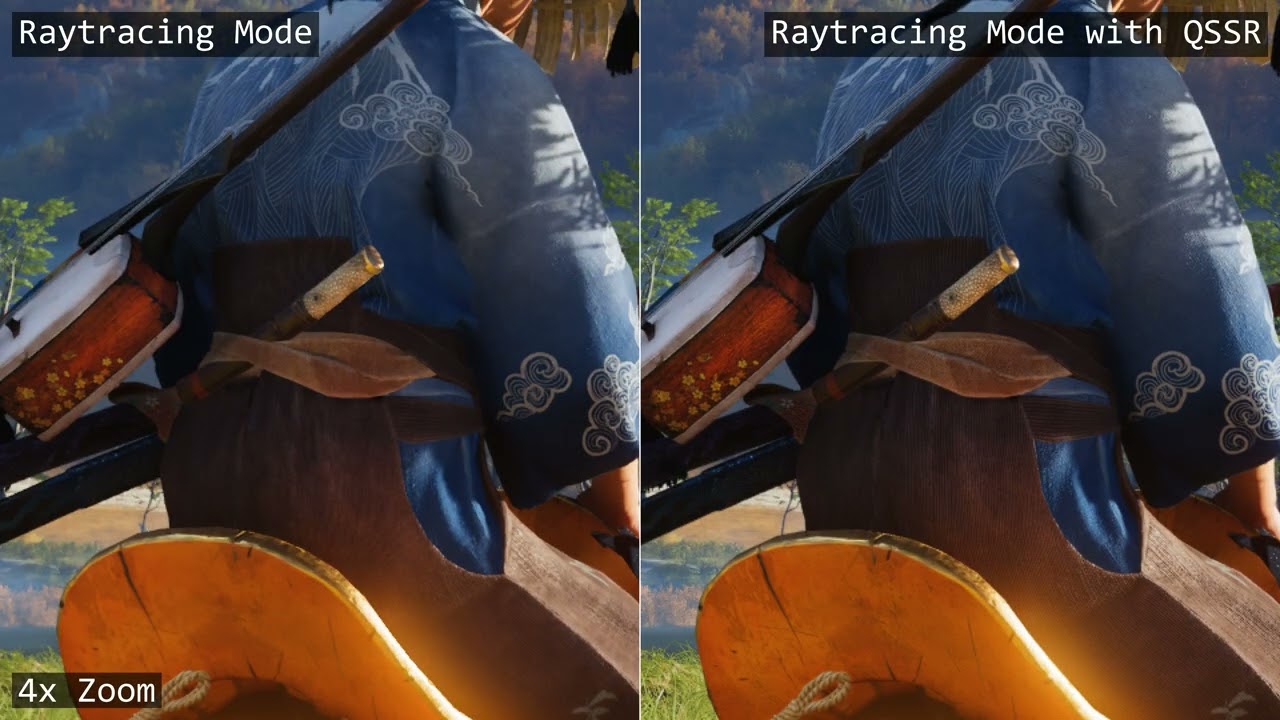
That narrative has now shifted. In a surprising move that bolsters the longevity of the original hardware, Sony has introduced "Quick Spectral Super Resolution" (QSSR), a new tier of AI-driven upscaling specifically engineered for the standard PS5. This development not only bridges the visual gap between the two consoles but also sets a new precedent for how manufacturers should support aging hardware in an era of rapid technological advancement.
The Evolution of Upscaling: From PSSR to QSSR
To understand the significance of QSSR, one must first understand the technical bottleneck. PSSR, the flagship upscaling solution for the PS5 Pro, relies on intensive, pixel-by-pixel image analysis. It leverages the Pro’s specialized machine learning hardware to reconstruct details that aren’t natively rendered by the game engine. Because the standard PS5 lacks this dedicated AI silicon, Sony’s R&D department faced a significant engineering challenge: how to bring the benefits of modern upscaling to a machine that was never designed for it.
The answer, according to Daniel Craig, principal engineer of graphics R&D at Sony Interactive Entertainment, lies in a "streamlined neural network architecture." Unlike PSSR, which is computationally expensive and requires the beefed-up architecture of the Pro, QSSR was built from the ground up for the base model’s constraints. By utilizing a "hand-tuned implementation," Sony has managed to maximize the performance of the standard PS5’s existing GPU, achieving a level of image stability and detail that was previously considered impossible for the original hardware.
A New Visual Standard: Chronology of the Rollout
The rollout of QSSR began with targeted patches for two of the most anticipated titles in the current ecosystem: Marvel’s Wolverine and Ghost of Yōtei. By integrating QSSR into these specific titles, Sony has provided a controlled environment to demonstrate the efficacy of the new tech.
- The Announcement: Following weeks of speculation regarding the PS5’s competitive edge, Sony officially confirmed the existence of QSSR on the PlayStation Blog on October 1st.
- The Implementation: Shortly after the announcement, developers began pushing live updates. For Ghost of Yōtei, players reported an immediate reduction in shimmering edges and a marked increase in texture clarity.
- The Integration: Insomniac Games, the studio behind Marvel’s Wolverine, was quick to adopt the technology. According to Mike Fitzgerald, head of technology at Insomniac, the implementation was seamless, allowing the team to push the visual fidelity of their environments without compromising the frame rate that players expect.
Technical Analysis: Precision Without Overreach
One of the most contentious topics in current graphics technology is the "AI creep"—the concern that upscaling algorithms might deviate too far from the original artistic intent. Recent industry discussions, often centered on Nvidia’s DLSS 5 and its controversial AI filters, have highlighted a fear among purists that AI might "hallucinate" details, effectively rewriting lighting or altering character appearances in ways the developers never intended.

QSSR avoids this pitfall by design. It functions as a reconstructive sharpening tool rather than a generative one. It respects the original assets, focusing on "pixel-level clarity and stability" rather than asset replacement. This distinction is crucial; it ensures that the developer’s artistic vision remains intact while providing the player with a cleaner, more refined image.
In Marvel’s Wolverine, for instance, the busy streets of Madripoor and the dense alleyways of Shinjuku serve as the perfect testing ground. Without QSSR, these complex environments can suffer from aliasing—the jagged, "stair-step" look on the edges of objects. With QSSR enabled, those edges become stable, allowing for a much more immersive experience that feels closer to a high-end PC rendering.
Official Responses and Industry Impact
The industry response has been largely positive, viewing this move as a pivot toward consumer-centric longevity. Sony’s decision to upgrade the standard PS5—a console nearing its sixth year on the market—is an anomaly in a business model that typically encourages users to upgrade every few years.
"Our goal was never to leave the original PS5 community behind," stated a Sony spokesperson during the recent briefing. "We wanted to ensure that as our rendering techniques evolve, our players feel that their initial investment is being respected."
Developers have also echoed this sentiment. By providing tools that are easier to implement than full-scale PSSR, Sony is encouraging more studios to go back and patch older titles. While it remains to be seen how many developers will retroactively apply QSSR to the extensive back catalog of PS5 titles, the framework is now there.
The Broader Implications: Longevity vs. Planned Obsolescence
The introduction of QSSR carries deep implications for the future of the gaming industry. We live in an era where software-defined hardware is becoming the norm. By updating the "logic" of the PS5 without needing to update its physical components, Sony is effectively extending the lifecycle of a console that many thought had reached its peak.
However, it is impossible to discuss this success without addressing the "elephant in the room": the hardware decisions that remain unpopular. While QSSR is a triumph of software engineering, it does not erase the controversy surrounding Sony’s move toward a disc-less future. Many enthusiasts continue to push back against the loss of physical media, arguing that no amount of AI upscaling can replace the tangible ownership of a game.
Nevertheless, for the average player, QSSR is a win. It is a rare example of a manufacturer offering a "free" performance upgrade long after the point of sale. In a market where consumers are increasingly wary of being forced into expensive upgrades, Sony’s commitment to the standard PS5 is a savvy move that preserves brand loyalty.
Looking Ahead: The Future of AI in Consoles
As we look toward the next generation of consoles, it is clear that AI-powered upscaling is not merely a "pro" feature—it is a necessity. The divide between the PS5 Pro and the standard PS5 will continue to exist, but the gap has been narrowed significantly.
The success of QSSR proves that "AI" in gaming doesn’t always have to be about pushing the absolute limits of photorealism; it can also be about accessibility. By democratizing high-quality imagery, Sony is ensuring that the gaming experience remains premium, regardless of which console version sits under the television.
For now, the message to PS5 owners is clear: you no longer need to look at the Pro with envy. With QSSR, your console has been given a new lease on life, proving that sometimes, a few lines of clever code are more valuable than a hardware refresh. Whether this marks the beginning of a more sustained period of software-first optimization remains to be seen, but for the millions of PS5 users worldwide, the future of their hardware looks sharper, clearer, and more stable than ever before.
As developers continue to experiment with these tools, we can expect to see further refinements. The era of the "standard" console is far from over; in fact, thanks to AI, it may just be hitting its stride.
 Asro
Asro  Neng Nana
  Lina Hope